
In the world of power transmission, few components are as fundamental and widely relied upon as the Roller chain. At its core, a roller chain is a series of short cylindrical rollers held together by side links. It is designed to mesh with sprockets, efficiently transferring mechanical power from one rotating shaft to another. Since their invention in the late 19th century, roller chains have been the backbone of countless industrial, agricultural, and automotive applications due to their simplicity, durability, and high efficiency. The Raydafon Group has been at the forefront of advancing roller chain technology, engineering solutions that meet the rigorous demands of modern machinery.
Choosing the right roller chain is critical for operational efficiency and longevity. Raydafon Group manufactures chains that stand out in the global market. Here are the definitive features of our product line:
Understanding the specifications is key to selecting the correct chain for your application. Below is a detailed breakdown of standard parameters, followed by a specification table for common ANSI series chains from Raydafon Group.
| ANSI Chain Number | Pitch (P) inches/mm | Roller Diameter (Dr) inches/mm | Inner Width (W) inches/mm | Ultimate Tensile Strength (lbs/kN) | Average Ultimate Tensile Strength (lbs/kN) | Typical Applications |
|---|---|---|---|---|---|---|
| 35 | 3/8" (9.525 mm) | 0.200" (5.08 mm) | 3/16" (4.76 mm) | 1,400 lbs (6.23 kN) | 1,200 lbs (5.34 kN) | Light machinery, conveyors, low-speed drives |
| 40 | 1/2" (12.7 mm) | 0.312" (7.92 mm) | 5/16" (7.92 mm) | 3,125 lbs (13.9 kN) | 2,500 lbs (11.12 kN) | General purpose industrial drives, agricultural equipment |
| 50 | 5/8" (15.875 mm) | 0.400" (10.16 mm) | 3/8" (9.52 mm) | 4,500 lbs (20.02 kN) | 3,700 lbs (16.46 kN) | Heavier industrial drives, construction machinery |
| 60 | 3/4" (19.05 mm) | 0.469" (11.91 mm) | 1/2" (12.7 mm) | 6,500 lbs (28.91 kN) | 5,600 lbs (24.91 kN) | Primary drives, logging equipment, pumps |
| 80 | 1" (25.4 mm) | 0.625" (15.88 mm) | 5/8" (15.88 mm) | 12,500 lbs (55.6 kN) | 10,000 lbs (44.48 kN) | Heavy-duty mining, oil field, and large industrial applications |
| 100 | 1.25" (31.75 mm) | 0.750" (19.05 mm) | 3/4" (19.05 mm) | 19,000 lbs (84.51 kN) | 15,600 lbs (69.39 kN) | Extreme-duty applications, large conveyor systems, heavy machinery |
Note: The Raydafon Group also supplies chains in ISO (British) standards (e.g., 08B, 10B, 12B, etc.) and a full range of attachment chains. All specifications are subject to design improvements; please consult our latest technical catalog for current data.
Q: How do I determine the correct size of roller chain for my application?
A: Selecting the correct size involves several factors. First, identify the horsepower to be transmitted and the RPM of the faster shaft. Use standard horsepower rating tables (available from Raydafon Group or engineering guides) that correlate these values to chain size. You must also consider the service factor (based on load type and operating conditions), the number of teeth on the driving sprocket, and the center distance between shafts. For conveyor applications, the total weight of the material and the pulling force are primary considerations. When in doubt, consulting with a Raydafon Group application engineer is recommended.
Q: What is the difference between standard, heavy series, and sealed roller chains?
A: Standard series chains (like ANSI 40, 50, 60) are for general power transmission. Heavy series chains (e.g., ANSI 80H, 100H) have identical pitch but feature thicker plates and larger rollers for higher tensile strength in demanding applications. Sealed chains (often called O-Ring or Lube-Free chains) incorporate rubber or polymer rings seated between the side plates. These seals retain factory-fitted lubricant inside the pin and bushing area while keeping dirt and moisture out, leading to significantly longer life with minimal maintenance, albeit at a higher initial cost.
Q: How often should I lubricate my roller chain, and what type of lubricant should I use?
A: Lubrication frequency depends entirely on operating conditions (speed, load, temperature, environment). A high-speed drive in a clean environment may require continuous drip lubrication, while a slow-moving conveyor might need manual lubrication weekly. For manually lubricated chains, a good quality SAE 30-50 machine oil or dedicated chain oil is ideal. Avoid heavy greases as they can be too viscous to penetrate the internal pin/bushing clearances. Raydafon Group provides detailed lubrication guidelines for each chain type. Remember, proper lubrication is the single most important factor for maximizing chain life.
Q: My roller chain is making noise and appears to be "stretching." What is happening?
A: What is commonly called "stretch" is actually wear. As the chain articulates, friction causes wear at the pin and bushing interfaces. This wear elongates the pitch (the distance between pins), making the chain longer. A chain that has elongated 2-3% beyond its original length is considered worn out and should be replaced, as it will not mesh properly with sprockets, causing noise, vibration, accelerated sprocket wear, and potential failure. Noise can also result from insufficient lubrication, misalignment, or a worn sprocket. Regular inspection for wear and proper tensioning is crucial.
Q: Can I use a connecting link or should I always use a riveted master link?
A: Connecting links (which use a spring clip or cotter pin) are acceptable for many applications, especially those with low to moderate speeds and loads, and they allow for easy disassembly. However, for high-speed, high-load, or critical applications, a riveted master link is strongly recommended by the Raydafon Group. The riveted link is permanently assembled, eliminating the risk of the clip coming off due to vibration or foreign object impact, which could lead to catastrophic chain failure.
Q: What are the signs that my sprockets need to be replaced along with the chain?
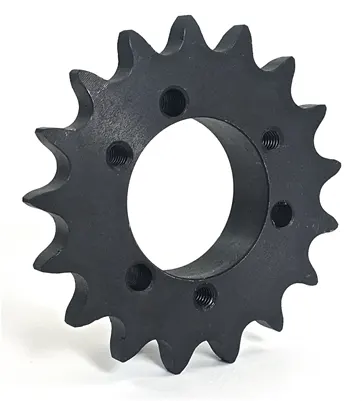
A: Always inspect sprockets when replacing a worn chain. Key signs of sprocket wear include: a hooked or curved shape to the tooth profile (instead of a straight flank), a reduced tooth thickness, and the presence of a shiny groove at the root of the teeth where the chain rollers have been riding. Installing a new chain on worn sprockets will cause the new chain to wear rapidly to match the old sprocket's incorrect pitch, drastically reducing its service life. As a best practice, sprockets should be replaced if any significant wear is detected.
The versatility of roller chains makes them indispensable. Raydafon Group supplies chains engineered for sector-specific challenges:

 Raydafon