
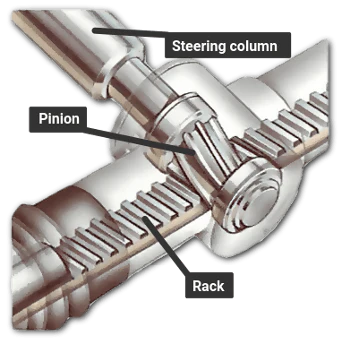
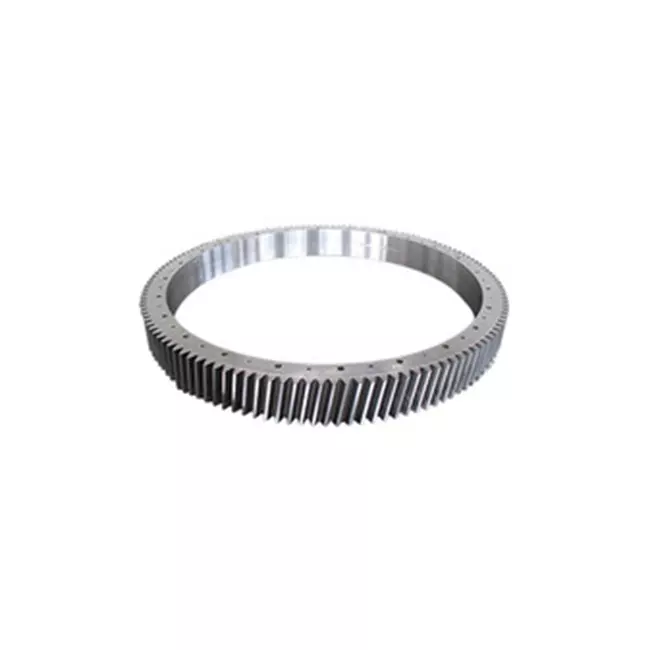
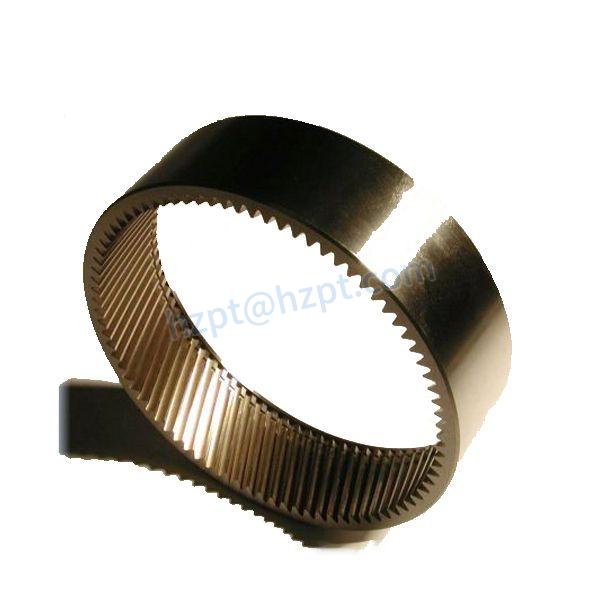
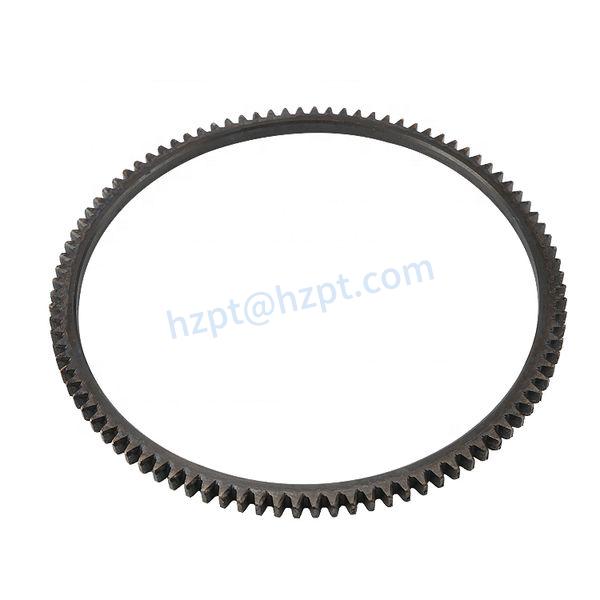
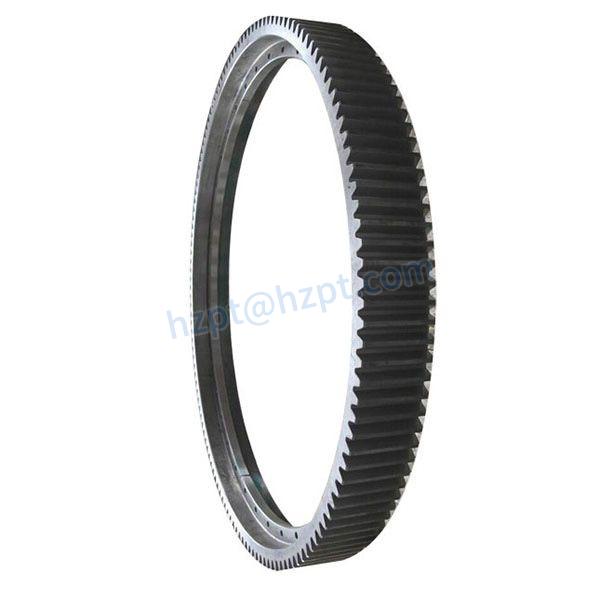
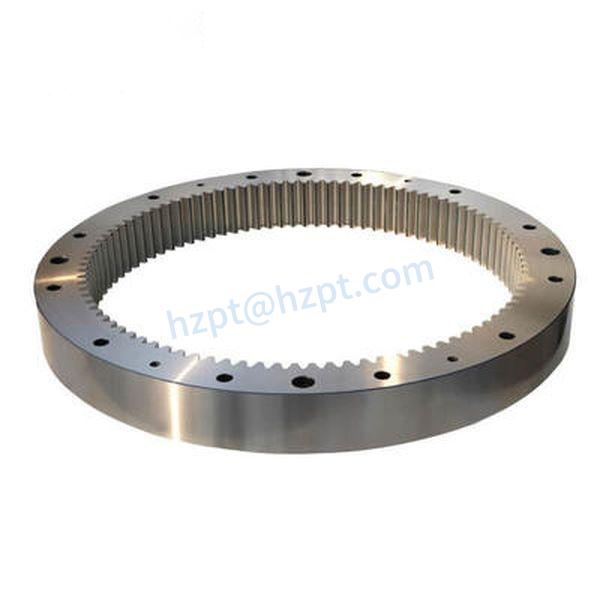
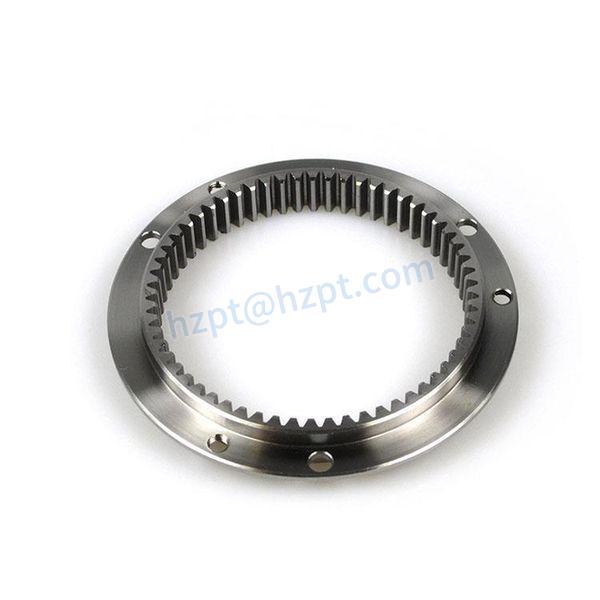
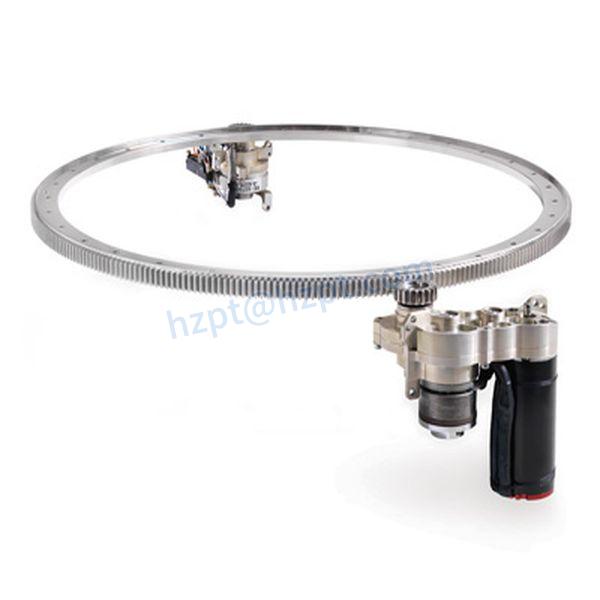
A Ring Gear, also known as an internal gear or an annular gear, is a crucial component in numerous mechanical power transmission systems. Characterized by teeth cut on the inner surface of a cylinder or cone, it meshes with a smaller external gear (pinion) to achieve significant speed reduction, torque multiplication, and precise motion control within a compact space. Unlike external gears that rotate around each other, a pinion rotates inside the ring gear, making the assembly exceptionally space-efficient. This design is fundamental in applications ranging from planetary gear sets in automotive transmissions and heavy-duty industrial machinery to sophisticated robotics and aerospace actuators. The precision, durability, and material quality of a ring gear directly determine the efficiency, noise level, and lifespan of the entire gearbox or drive system.
Ring gears are indispensable in engineering where high torque and compact design are paramount.
At Raydafon Group, we engineer ring gears that set the industry standard for performance and longevity. Our manufacturing process integrates advanced metallurgy, state-of-the-art CNC machining, and rigorous quality control to produce components that excel in the most demanding environments. Below are the detailed specifications and material options for our standard product line.
| Parameter | Specification Range & Details |
|---|---|
| Module (Metric) / Diametral Pitch (Imperial) | Module: 1.0 to 20.0 mm | DP: 1.5 to 24 |
| Number of Teeth | 24 to 500+ teeth, custom configurations available |
| Pressure Angle | 14.5°, 20°, or 25° (20° is standard for high load capacity) |
| Face Width | 10 mm to 300 mm, optimized for bending strength and alignment |
| Internal Diameter (Bore) | 50 mm to 2500 mm, with precise tolerance (IT6-IT8) |
| Tooth Profile | Fully involute, optimized for low noise and high efficiency. Option for profile modifications to prevent interference. |
| Accuracy Grade (per AGMA/ISO) | AGMA 10-12 (Commercial), AGMA 13-14 (Precision), ISO 6-8 (High Precision) available. |
| Heat Treatment | Case hardening (HRC 58-62), through hardening (HRC 45-55), nitriding, or induction hardening based on application. |
| Surface Finish | Ground, shaved, or honed teeth for superior surface finish (Ra 0.4 - 1.6 μm) and quiet operation. |
Choosing the right material is critical. Raydafon Group offers a range of alloys tailored to operational needs.
| Material Grade | Key Properties | Typical Applications |
|---|---|---|
| Carbon Steel (AISI 1045, 4140) | Good strength, toughness, and machinability. Economical for moderate loads. | General industrial machinery, agricultural equipment. |
| Alloy Steel (AISI 4340, 8620) | Excellent core strength and response to heat treatment. High fatigue resistance. | Heavy-duty gearboxes, mining equipment, construction machinery. |
| Case Hardening Steel (20MnCr5, SAE 4320) | Hard, wear-resistant surface with a tough, ductile core. Superior for shock loads. | Automotive transmissions, planetary gear sets, high-cycle applications. |
| Stainless Steel (AISI 304, 316) | Excellent corrosion resistance. Suitable for food, marine, and chemical environments. | Food processing, pharmaceutical, marine drives. |
| Bronze (C93200, Aluminum Bronze) | Good wear resistance, low friction coefficient, and corrosion resistance. Often used as a mating gear. | Worm wheel applications, maritime, and non-sparking environments. |
Q: What is the primary advantage of using a ring gear over a standard external gear setup?
A: The primary advantage is space efficiency and high torque density. By mounting the pinion inside the ring gear, the overall assembly diameter is minimized. This configuration, especially in planetary systems, allows for very high reduction ratios and torque multiplication within a compact, coaxial package, making it ideal for applications where space is constrained but power requirements are high, such as in vehicle transmissions or robotic joints.
Q: How do I select the correct material and heat treatment for my ring gear application?
A: Selection depends on load (torque, shock), operating speed, environmental conditions (lubrication, contaminants, corrosion), and required lifespan. For high-load, high-cycle applications like automotive gears, case-hardened alloy steel (e.g., 20MnCr5) provides a hard wear surface and tough core. For corrosive environments, stainless steel or bronze is chosen. Through-hardened steels (e.g., 4340) are excellent for heavy, steady loads. Raydafon Group's engineering team can provide a detailed analysis based on your specific operating parameters.
Q: What causes noise and vibration in a ring gear assembly, and how can it be minimized?
A: Noise and vibration primarily stem from inaccuracies in gear tooth geometry, improper alignment, insufficient lubrication, or resonant frequencies. Minimization strategies include specifying a higher accuracy grade (e.g., AGMA 13 or ISO 7), ensuring precise housing bore alignment, using profile and lead crowning on teeth to compensate for deflections, maintaining proper backlash, and employing high-quality, consistent lubrication. Raydafon Group's precision-ground gears are specifically designed for low-noise operation.
Q: Can Raydafon Group manufacture custom ring gears outside the standard specification ranges?
A: Absolutely. While our standard ranges cover most industrial needs, Raydafon Group specializes in custom gear solutions. We can engineer and manufacture ring gears with non-standard diameters, unique tooth profiles (including double helical/herringbone), special keyways or splines, and proprietary material blends. We handle everything from prototype development using advanced 3D modeling and simulation to full-scale production.
Q: What is the importance of the pressure angle in ring gear design?
A: The pressure angle (commonly 20° or 25°) affects the gear's strength, noise, and undercutting tendency. A higher pressure angle (like 25°) results in a stronger tooth with a broader base, providing higher load capacity and reduced risk of undercutting with lower pinion tooth counts. However, it increases bearing loads slightly. The standard 20° offers an excellent balance between strength, efficiency, and smooth operation. The choice is part of the overall system design optimization.
Q: How does Raydafon Group ensure the quality and durability of its ring gears?
A: Quality is ingrained in our process. We start with certified raw materials. Our CNC gear cutting and grinding machines are state-of-the-art. Every production batch undergoes stringent inspection including coordinate measuring machines (CMM) for dimensional accuracy, gear analyzers for tooth profile and lead, and hardness testing. We perform controlled heat treatment in our own facilities. Additionally, we can provide documentation packages including material certifications, inspection reports, and traceability records to meet the strictest industry standards.

 Raydafon