
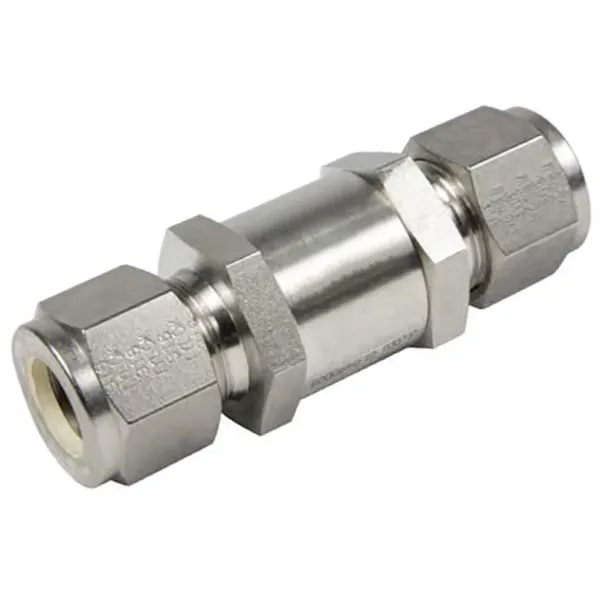
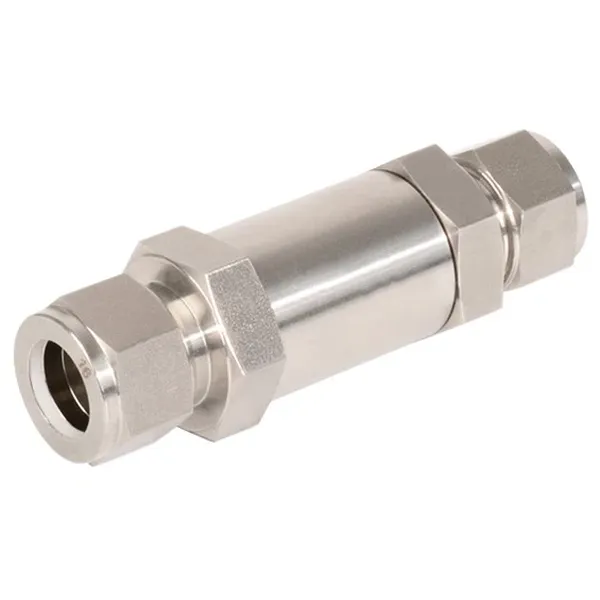
In fluid control systems, preventing reverse flow is critical for safety, efficiency, and equipment protection. This is where Check valves come into play. Also known as non-return valves or one-way valves, these automatic safety devices allow fluid (liquid or gas) to flow in one direction while preventing backflow in the opposite direction. The Raydafon Group has been at the forefront of engineering precision check valves for demanding industrial applications for decades. This guide delves into the technical specifications, selection criteria, and expert insights to help you choose the optimal valve for your system's requirements.
Check valves operate on a simple principle: fluid pressure opens the valve, and when the flow stops or reverses, the valve closes automatically via a closure mechanism (like a disc, ball, or diaphragm) and often with the aid of a spring. This fundamental operation makes them indispensable in numerous applications, from preventing water hammer in plumbing systems to protecting pumps and compressors from damage due to reverse flow.
Selecting the correct check valve requires a detailed analysis of your system's parameters. At Raydafon Group, we specify our valves with the following comprehensive data to ensure a perfect match for your application.
| Component | Standard Material Options | Alternative/Specialty Materials | Key Property & Application Suitability |
|---|---|---|---|
| Body & Bonnet | Carbon Steel (A216 WCB), Stainless Steel 316/316L, Ductile Iron | Alloy 20, Monel, Hastelloy C276, Duplex 2205, Titanium | Provides structural integrity. Choice depends on corrosion resistance needs against process media (acids, caustics, seawater). |
| Disc/Closure Element | Stainless Steel 316, 17-4PH, Carbon Steel with overlay | Alloy 6 Stellite, Aluminum Bronze, PTFE-coated | The moving part that seals. Material is chosen for wear resistance, corrosion resistance, and compatibility with seat material. |
| Seat Ring | 13% Chrome Stainless Steel, 316 SS, EPDM, NBR | Stellite, PTFE, PEEK, Metal-seated with special hardfacing | Critical for leak-tight shut-off. Resilient seats offer bubble-tight sealing; metal seats are for high temps/erosion. |
| Spring | Stainless Steel 302, 316 | Inconel X-750, Hastelloy C276 | Ensures prompt closing and minimizes slam. Material must resist fatigue and corrosion from the medium. |
| Hinge Pin & Bushings | Stainless Steel 316, 17-4PH | Hardened 316, Colmonoy-coated, Bronze | Pivot points for swing/tilting disc valves. Require high wear resistance to prevent seizure and ensure free movement. |
Raydafon Group engineers each valve with these parameters in mind, ensuring not just component compatibility but optimal system integration for longevity and reliability.
Q: What is the main difference between a swing check valve and a wafer check valve?
A: A swing check valve has a disc that swings on a hinge, opening fully with flow and closing by gravity/backflow. It requires space for the disc to swing open and is typically installed between two flanges. A wafer check valve is a compact, lightweight design that fits between pipe flanges without needing additional bolt length. It often uses a dual-plate or single-plate design with a spring to assist closing, making it faster and suitable for horizontal or vertical installation where space is limited. Raydafon Group offers both designs, with wafer valves being ideal for compact piping layouts.
Q: How do I prevent water hammer (or surge pressure) caused by a check valve closing?
A: Water hammer occurs when a fast-closing valve slams shut against reverse flow, creating a destructive pressure wave. Prevention strategies include: 1) Selecting a valve with a damped closing mechanism, such as a spring-assisted tilting disc or a non-slam design with an external damper. 2) Choosing the correct spring strength for your flow velocity—too weak causes slam, too strong increases pressure drop. 3) For swing check valves, using an external lever and weight or a dashpot to control the closing speed. Raydafon Group's technical team can perform surge analysis to recommend the best non-slam solution.
Q: Can a check valve be installed in a vertical pipeline, and what are the considerations?
A: Yes, but the valve type and flow direction are critical. For vertical flow upward, spring-assisted check valves (wafer, piston, lift) are ideal as the spring helps close the valve against gravity. Swing check valves generally require horizontal installation, though some designs with a lever and weight can work. For vertical flow downward, the valve must close against the flow, which is not standard. Special installation orientation and valve type must be carefully selected. Always consult the manufacturer's guidelines; Raydafon Group provides clear installation diagrams for every orientation.
Q: What does "cracking pressure" mean, and why is it important?
A: Cracking pressure is the minimum upstream pressure required to just begin opening the valve and allow detectable flow. It's a crucial parameter, especially in low-pressure systems or for pump protection. A valve with too high a cracking pressure can cause excessive pump load or restrict flow. A valve with too low a cracking pressure may allow backflow or cause undesirable fluttering (rapid open-close cycling). Spring-loaded check valves have a defined, adjustable cracking pressure. Raydafon Group specifies the cracking pressure range for each model to ensure proper system design.
Q: How often do check valves require maintenance, and what does it involve?
A: Maintenance frequency depends on service conditions (abrasive/corrosive media, cycling frequency). Under clean, steady conditions, a well-specified Raydafon check valve can operate for years with minimal attention. Maintenance typically involves: 1) Inspecting internal components for wear, corrosion, or buildup. 2) Checking the disc and seat for sealing integrity. 3) Verifying hinge pins and bushings for free movement. 4) Replacing worn seals or springs. For critical services, a preventive maintenance schedule based on operating hours or cycles is recommended. Many of our valves feature inline maintainable designs.
Q: What certifications and standards do Raydafon Group check valves comply with?
A: Raydafon Group manufactures valves to meet or exceed major international standards, ensuring global applicability and safety. Key certifications and standards include: API 594 (Wafer and Double Flanged Check Valves), API 6D, ASME B16.34 (Valve Design), ASME B16.10 (Face-to-Face Dimensions), ASME B16.5 (Flange Standards), ISO 5752 (Face-to-Face), and PED 2014/68/EU for the European market. Materials are certified to ASTM standards. We also provide valves with NACE MR0175/ISO 15156 compliance for sour service (H2S) environments.
The versatility of check valves means a one-size-fits-all approach is ineffective. Raydafon Group provides specialized solutions tailored to industry challenges.

 Raydafon