

Precision Engineered for Maximum Performance and Safety
In the demanding world of automotive and motorcycle engineering, few components are as critical yet underappreciated as the drive chain. It is the fundamental link that transmits power from the engine to the wheels, a component where failure is not an option. At Raydafon Group, we have dedicated decades to mastering the science of chain manufacturing. Our Auto & Motorcycle Chains are not merely parts; they are meticulously engineered systems designed to deliver unparalleled strength, exceptional durability, and smooth, reliable performance under the most extreme conditions. Whether you're a professional rider pushing the limits on the track, a commuter navigating daily city streets, or an off-road enthusiast tackling rugged terrain, the right chain is paramount to your vehicle's efficiency, safety, and overall driving experience.
Our philosophy is rooted in a relentless pursuit of perfection. Every Raydafon chain undergoes a rigorous design, material selection, and testing process. We utilize advanced metallurgy, cutting-edge manufacturing techniques, and stringent quality control at every stage to ensure that each unit meets our exacting standards and exceeds industry benchmarks. The result is a product line that offers superior wear resistance, reduced maintenance intervals, and a significant extension in service life, providing exceptional value and peace of mind to our customers worldwide.
Core Product Specifications & Technical Data
Understanding the specifications of your chain is key to selecting the perfect match for your vehicle and riding style. Below, we detail the critical parameters that define the performance envelope of Raydafon chains.
Primary Specifications for Motorcycle Chains
- Chain Pitch: The distance between the centers of two adjacent pins. Common pitches include 0.5" (12.7mm), 0.525" (13.34mm), and 0.630" (16mm). Correct pitch is essential for proper sprocket engagement.
- Roller Width (Internal Width): The distance between the inner plates, determining compatibility with your motorcycle's sprocket thickness.
- Gauge (Roller Diameter): The diameter of the chain's rollers. It must correspond precisely with the sprocket's tooth profile for smooth operation.
- Link Count: The total number of links in the chain, which must be counted accurately for a proper fit. Chains are often sold in standard lengths or can be custom-ordered.
- Tensile Strength: Measured in kN (kiloNewtons) or lbs, this is the maximum static load the chain can withstand before breaking. Higher tensile strength indicates a stronger chain.
- Construction: Standard (O-ring-less) or Sealed (X-ring, O-ring). Sealed chains have rings that retain lubricant and exclude contaminants, greatly extending life.
Detailed Product Comparison Table
| Series Model | Pitch (inch/mm) | Tensile Strength (kN/lbs) | Construction Type | Primary Application | Key Feature |
|---|---|---|---|---|---|
| Raydafon R1 Performance | 0.525" / 13.34mm | 9.8 kN / 2,203 lbs | Standard (Non-Sealed) | Lightweight Street Bikes, Vintage Models | Ultra-light design for reduced rotational mass, enhances acceleration. |
| Raydafon X2 Enduro | 0.630" / 16mm | 12.5 kN / 2,810 lbs | X-Ring Sealed | Adventure, Dual-Sport, Off-Road Motorcycles | Superior seal technology for extreme mud, sand, and water resistance. |
| Raydafon G3 Grand Tour | 0.530" / 13.46mm | 11.2 kN / 2,517 lbs | O-Ring Sealed | Touring, Cruiser, Heavy-Duty Street Bikes | Optimized for high mileage, low maintenance, and quiet, smooth operation. |
| Raydafon P4 Pro Race | 0.520" / 13.21mm | 10.5 kN / 2,360 lbs | Standard (Non-Sealed) | Supersport, Track Racing, High-Performance Bikes | Maximum power transfer with minimal friction, requires frequent lubrication. |
| Raydafon T5 Timing | 0.375" / 9.525mm | 8.0 kN / 1,798 lbs | Hybrid Polymer Coated | Automotive Engine Timing Systems | Precision-engineered for exact timing, silent running, and extended camshaft drive life. |
Auto & Motorcycle Chains: Frequently Asked Questions (FAQ)
What is the main difference between a standard chain and an O-ring or X-ring chain?
Standard chains have no internal seals. They are lighter and have less rolling resistance but require frequent lubrication as dirt and grime can easily enter the pin/bushing area, accelerating wear. O-ring and X-ring chains feature rubber seals between the side plates. These seals retain factory-preloaded grease inside the critical friction areas and effectively block external contaminants. X-ring seals, a Raydafon specialty, have a cross-section shape that creates two sealing contact lines, offering even lower friction and better contaminant exclusion than traditional O-rings, leading to significantly longer chain life with less maintenance.
How often should I lubricate my motorcycle chain?
Lubrication frequency depends heavily on the chain type and riding conditions. For a standard (non-sealed) chain, lubrication is needed every 300-500 miles or after any ride in wet conditions. For a sealed (O-ring/X-ring) Raydafon chain, the internal lubricant is protected. External lubrication is still required to prevent rust on the side plates and rollers and to lubricate the roller/sprocket interface. We recommend applying a dedicated chain lube every 500-800 miles of street riding, or immediately after riding in rain, off-road, or on dusty roads. Always clean the chain before applying new lubricant.
My chain is making a squeaking noise. What does this mean?
A squeaking noise is almost always a clear indication of inadequate lubrication at the roller/sprocket contact point or, in severe cases, at the internal pin/bushing joint (for non-sealed chains). The metal-on-metal contact creates friction and heat, leading to rapid wear. You should stop riding as soon as safely possible, thoroughly clean the chain to remove old grit and grease, and apply a fresh coat of high-quality chain lubricant. Persistent squeaking after lubrication may indicate excessive wear, stiff links, or damaged seals, necessitating a professional inspection.
Can I replace just the chain, or do I need to change the sprockets too?
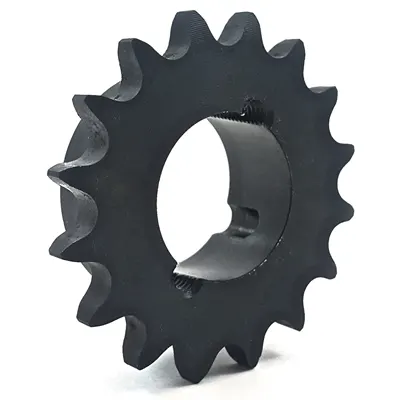
It is highly recommended to replace the chain and both sprockets (front and rear) as a matched set. A worn sprocket has hooked teeth that will not mesh properly with a new chain, causing accelerated and uneven wear on the new chain. Conversely, a worn chain will rapidly destroy new sprockets. For optimum performance, longevity, and safety, always install a new chain with new sprockets. This ensures perfect engagement and maximizes the lifespan of your entire drive system.
What does "tensile strength" mean, and is a higher number always better?
Tensile strength is the maximum amount of longitudinal stress (pulling force) a chain can withstand before it fractures. It is a key indicator of ultimate strength. While a higher tensile strength generally means a stronger, more durable chain capable of handling more power and shock loads, it is not the sole factor. The chain must be appropriately matched to your bike's power output and intended use. An excessively heavy, high-tensile chain on a low-power bike adds unnecessary rotational mass. The engineers at Raydafon Group carefully balance tensile strength with weight, flexibility, and wear characteristics to create optimized solutions for every application.
How do I correctly measure my old chain to order the right replacement?
Accurate measurement is crucial. First, identify the Pitch: Measure the center-to-center distance between any three consecutive pins and divide by two. For example, a common 0.525" pitch will measure 1.05" over three pins. Second, determine the Roller Width: Measure the internal width between the two inner side plates. Finally, count the total number of Links. It's often stamped on the side plate. If unsure, the most reliable method is to consult your motorcycle's owner manual or use our online vehicle lookup tool, which references the precise Raydafon Group part number for your make and model.
The Raydafon Manufacturing Advantage
The superiority of a Raydafon chain is forged long before it reaches your vehicle. Our manufacturing process integrates several proprietary technologies:
- Vacuum Degassed Steel: Our alloy steel is vacuum degassed to eliminate impurities, creating a more homogeneous and stronger base material with superior fatigue resistance.
- Precision Shot Peening: After heat treatment, chain components undergo shot peening. This process bombards the surface with small media to induce compressive stresses, dramatically increasing resistance to crack initiation and propagation under high cyclic loads.
- Salt Bath Hardening & Tempering: We employ precise salt bath furnaces for heat treatment, ensuring uniform temperature distribution and exact control over the hardness depth profile of pins, bushings, and rollers. This results in a tough, wear-resistant core with a hard, durable surface.
- Automated Pre-stretching: Every chain is subjected to a controlled pre-stretching process. This "seats" the components and eliminates initial elastic elongation, ensuring stable and predictable performance from the first ride and providing accurate installation adjustment.
- 100% Dimensional QC: Every batch undergoes full dimensional inspection using coordinate measuring machines (CMM) and laser scanners to guarantee that every pitch, width, and pin diameter conforms to microscopic tolerances.
 Raydafon