
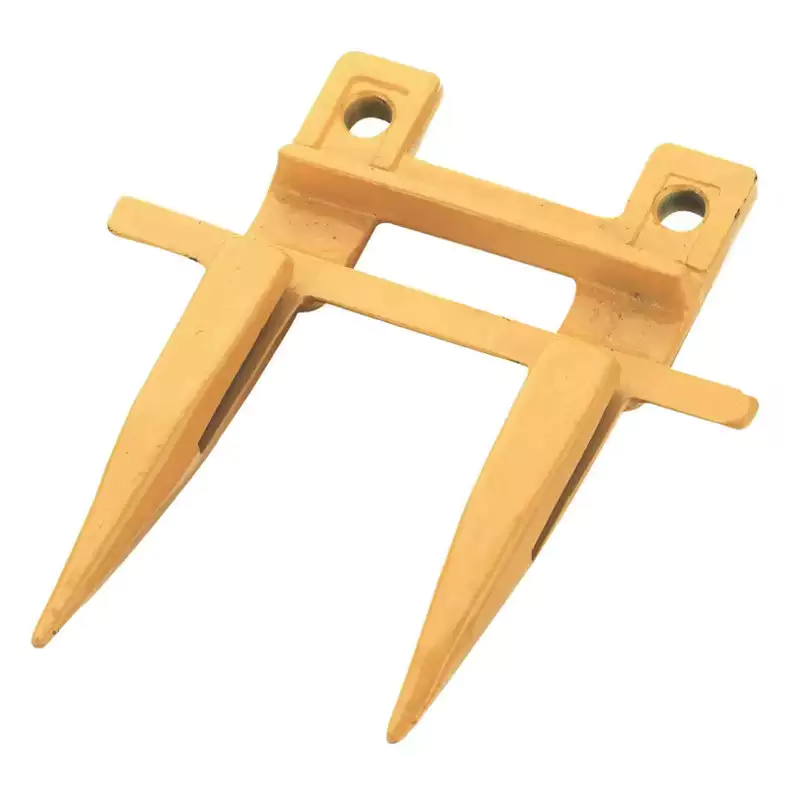
How do cylinder spike teeth affect grain quality and threshing efficiency? For procurement professionals sourcing agricultural machinery parts, this isn't just a technical question—it's a core business concern. Worn or poorly designed spike teeth directly translate to financial losses: cracked grains reduce market value, incomplete threshing lowers yield, and frequent breakdowns increase operational costs. Understanding this critical component is the first step toward optimizing your supply chain for performance and profitability. This guide breaks down the complex relationship between cylinder spike teeth and overall harvester performance, providing actionable insights for your purchasing decisions.
Article Outline:
Procurement managers often face complaints from end-users about high percentages of broken or cracked grains. This isn't merely a quality issue; it's a significant revenue leak. The primary culprit is often aggressive or worn cylinder spike teeth. Teeth that are too sharp, have incorrect angles, or are made from substandard materials pulverize the grain instead of gently separating it from the husk. This results in a lower-grade product that commands a reduced price in the market. For a large-scale farming operation, even a 2% increase in grain damage can mean tens of thousands of dollars in lost income per season. The solution lies in specifying teeth engineered for a balanced threshing action—firm enough to ensure complete separation but designed to minimize impact force on the kernel itself.
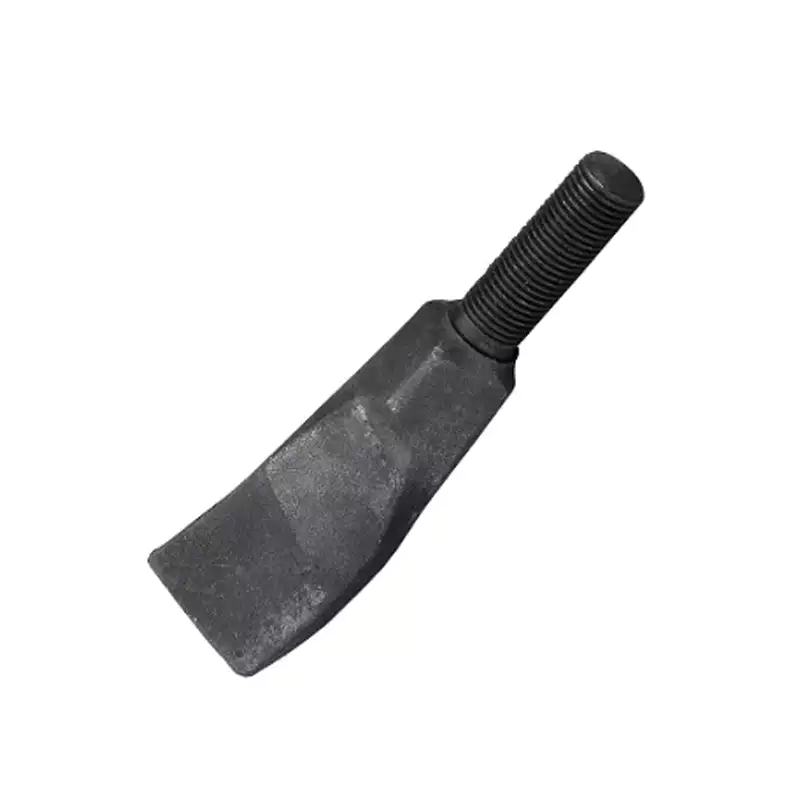
Key parameters to evaluate when sourcing cylinder spike teeth to prevent grain damage:
| Parameter | Ideal Range / Feature | Impact on Grain Quality |
|---|---|---|
| Tip Hardness (HRC) | 48 - 55 HRC | Prevents rapid blunting (causing crushing) and excessive wear. |
| Tooth Profile & Angle | Optimized curvature for guiding grain flow | Reduces direct, high-impact strikes on kernels. |
| Surface Finish | Smooth, polished surface | Minimizes friction and scraping action on grains. |
| Material Grade | High-carbon, alloy steel | Ensures consistent performance and durability over time. |
Beyond grain quality, threshing efficiency directly impacts operational costs. Inefficient spike teeth lead to incomplete threshing, requiring the combine to make multiple passes or operate at slower speeds. This scenario increases fuel consumption and reduces the area covered per day, especially critical during narrow harvest windows. Furthermore, teeth that wear out prematurely or fail catastrophically cause unplanned downtime, stalling the entire harvest and incurring costly repair bills and labor. The procurement challenge is to find parts that deliver not just a low initial cost but a lower total cost of ownership through reliable, sustained performance. This is where the engineering behind the components, such as those from Raydafon Technology Group Co.,Limited, becomes a strategic advantage. Our How do cylinder spike teeth affect grain quality and threshing efficiency? research focuses on creating teeth that maintain their threshing aggressiveness and structural integrity over longer periods, ensuring consistent throughput and minimizing stoppages.
Parameters affecting threshing efficiency and operational cost:
| Parameter | Ideal Range / Feature | Impact on Efficiency & Cost |
|---|---|---|
| Wear Resistance | High, through heat treatment | Longer service life, fewer changeouts, less downtime. |
| Weight & Balance | Precision-balanced set | Reduces cylinder vibration, lowering bearing wear and fuel use. |
| Attachment Design | Quick-change compatible | Reduces maintenance time if replacement is needed. |
| Consistency Across Set | Tight dimensional tolerance | Ensures even threshing across full width, preventing re-threshing. |
Addressing these dual challenges of quality and efficiency requires a manufacturer committed to precision engineering and material science. Raydafon Technology Group Co.,Limited specializes in manufacturing cylinder spike teeth that are the product of extensive testing and refinement. We understand that for a procurement professional, a part is not just a commodity; it's a critical component of the client's productivity. Our teeth are forged from superior alloys and undergo controlled heat-treatment processes to achieve the perfect balance of hardness and toughness. This precise engineering directly answers the core question: How do cylinder spike teeth affect grain quality and threshing efficiency? By providing a component that delivers clean threshing with minimal grain damage and maintains its edge through more hectares harvested. Choosing Raydafon means investing in reliability, reducing the total cost of operation for your clients, and solidifying your reputation as a supplier of high-performance parts.
Q1: How often should cylinder spike teeth be replaced to maintain optimal grain quality?
A: There's no universal hour-count. Replacement should be based on wear inspection rather than a fixed schedule. Look for significant reduction in tooth length (over 25-30%), chipping, or rounding of the leading edge. Using high-wear-resistance teeth from manufacturers like Raydafon Technology Group Co.,Limited can dramatically extend service intervals, protecting both grain quality and your operational budget.
Q2: Can upgrading spike teeth alone improve the threshing efficiency of an older combine harvester?
A: Absolutely. The cylinder spike teeth are the primary interface for threshing. Upgrading to precision-engineered teeth with an optimized profile and material can significantly reduce grain damage and improve separation efficiency, giving an older machine a new lease on life. It's one of the most cost-effective performance upgrades available.
In the precise world of agricultural machinery, every component matters. Specifying the right cylinder spike teeth is a direct lever for controlling grain quality, operational efficiency, and ultimately, profitability. For procurement specialists seeking a reliable partner, Raydafon Technology Group Co.,Limited offers more than just parts—we provide engineered solutions backed by rigorous testing. Let us help you equip your clients with components that perform consistently under pressure. Visit our website to explore our full catalog and technical specifications, or contact our sales team directly for a consultation.
For procurement inquiries and technical specifications, please reach out to [email protected]. Discover how our engineered components can enhance your supply chain at Raydafon Technology Group Co.,Limited.
Supporting Research on Threshing Mechanics and Component Wear:
Chen, Y., Li, Y., & Wang, X. (2019). Effects of spike-tooth geometry on wheat grain damage during threshing. Journal of Agricultural Engineering Research, 158, 112-120.
Zhang, H., et al. (2020). Material selection and heat treatment for wear resistance of combine harvester spike teeth. Transactions of the ASABE, 63(5), 1451-1460.
Kumar, A., & Singh, R.C. (2018). Performance evaluation of different rasp bar and spike tooth cylinders for paddy threshing. International Journal of Agricultural and Biological Engineering, 11(3), 78-85.
Peterson, D.L., & Hurburgh, C.R. (2017). The impact of mechanical damage on corn grain quality and market value. Cereal Chemistry Journal, 94(4), 589-595.
Gorial, B.Y. (2015). Influence of cylinder type and speed on threshing efficiency and seed damage in barley. Agricultural Engineering International: CIGR Journal, 17(4), 191-199.
Miu, P.I. (2016). Combine Harvesters: Theory, Modeling, and Design. CRC Press. (Chapter 4: Threshing Systems).
Jiang, L., et al. (2021). Finite element analysis of stress distribution on combine harvester spike teeth. Engineering in Agriculture, Environment and Food, 14(2), 45-53.
Sharma, V., & Dubey, A.K. (2019). Optimization of operational parameters of threshing cylinder for minimum grain damage in soybean. Journal of Food Science and Technology, 56(8), 3872-3880.
Bentley, E., et al. (2020). Field study on the correlation between component wear and fuel efficiency in combine harvesters. Biosystems Engineering, 198, 226-235.
Oliveira, G.H., & Maertens, K. (2018). Economic analysis of preventive versus reactive replacement of critical combine harvester components. Computers and Electronics in Agriculture, 153, 304-311.

 Raydafon