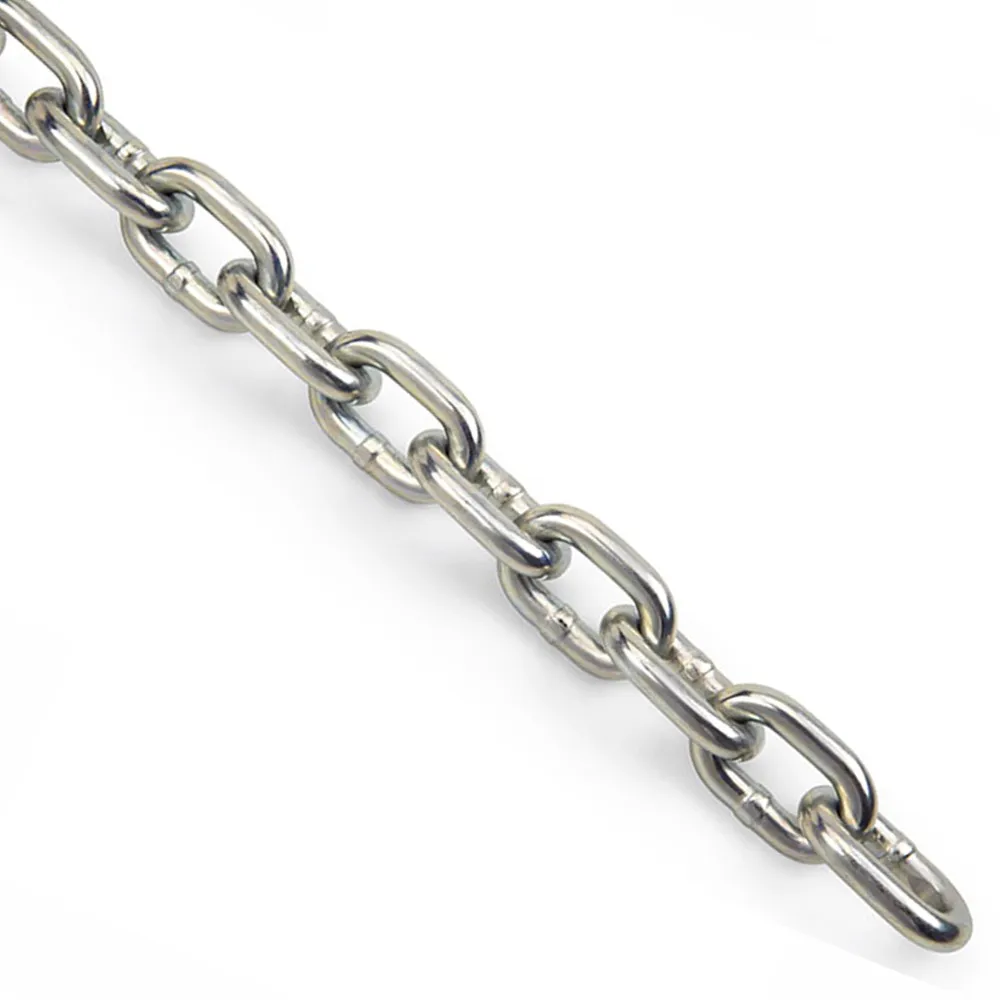
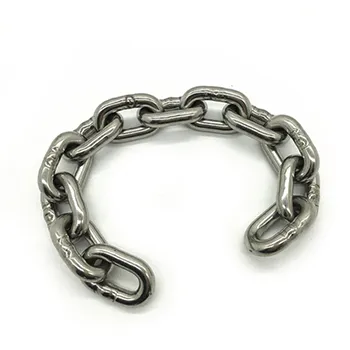
Link Chains are the unassuming yet critical components that form the backbone of countless industrial, commercial, and marine applications. For professionals who demand reliability, strength, and precision in their lifting, towing, securing, and assembly operations, the quality of the chain is non-negotiable. At Raydafon Group, we have dedicated decades to engineering and manufacturing link chains that don't just meet industry standards—they define them. Our commitment to metallurgical excellence, rigorous testing, and innovative design ensures that every meter of chain bearing our name delivers unparalleled performance and safety.
Understanding the precise specifications of a link chain is paramount for selecting the right product for your specific job. A chain is only as strong as its weakest link, which is why Raydafon Group provides complete transparency regarding the parameters of our products.
**Key Product Parameters for Raydafon Link Chains**
* **Material Grade:** We specialize in high-grade alloy steel chains, primarily Grade 80 and Grade 100. These grades indicate the minimum breaking force in relation to the chain's size.
* **Grade 80 (High-Test):** Offers an excellent strength-to-weight ratio, ideal for general construction, logging, and cargo securement.
* **Grade 100 (Alloy):** Provides superior strength and wear resistance for the most demanding applications like heavy lifting, mining, and offshore operations.
* **Diameter/Size:** The nominal diameter of the chain's wire rod, measured in inches or millimeters, is the primary factor determining its working load limit (WLL).
* **Working Load Limit (WLL):** The maximum mass or force that the chain is authorized to support in general service under specific conditions. It is calculated with a designated safety factor (typically 4:1 for Grade 80 and 4:1 for Grade 100).
* **Minimum Breaking Force (MBF):** The actual force at which the chain will fail under tensile testing. This is significantly higher than the WLL.
* **Finish/Coating:** To combat corrosion and extend service life, Raydafon chains are available with various finishes:
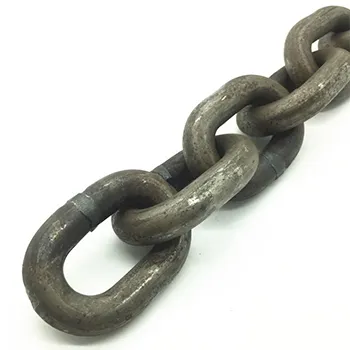
* **Self-Colored (Black):** A plain, oxidized finish suitable for general use where corrosion isn't a primary concern.
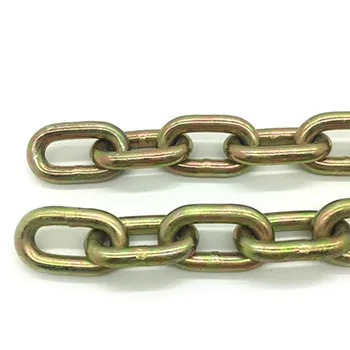
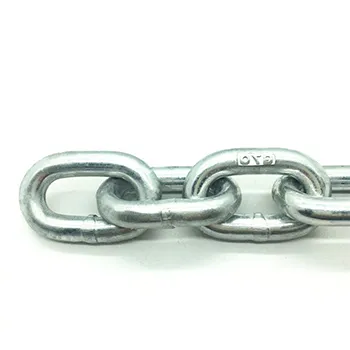
* **Hot-Dip Galvanized:** A thick zinc coating applied by immersion, offering exceptional corrosion resistance for marine, chemical, and outdoor environments.
* **Bright Zinc Plated:** A thinner, aesthetic zinc coating providing basic rust prevention for indoor applications.
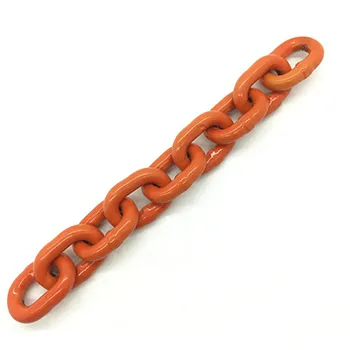
* **Powder Coated:** Available in various colors (e.g., yellow, red) for high visibility and additional corrosion protection.
* **Certification:** All Raydafon Grade 80 and Grade 100 chains are manufactured, tested, and certified to meet or exceed international standards such as ASME B30.9, OSHA, and ISO 1834. Each batch is traceable, and certification documents are available upon request.
The following table provides a detailed comparison of key Raydafon Link Chain models to illustrate the critical relationship between size, grade, and capacity.
### Raydafon Link Chains: Technical Specification Table
| Chain Size (in) | Chain Size (mm) | Grade | Material | Working Load Limit (WLL) - lbs | Working Load Limit (WLL) - tonnes | Minimum Breaking Force (lbs) | Standard Finish | Primary Application Area |
| :-------------- | :--------------- | :---- | :------- | :----------------------------- | :-------------------------------- | :--------------------------- | :-------------- | :----------------------- |
| 1/4" | 6 mm | 80 | Alloy Steel | 3,250 lbs | 1.47 t | 13,000 lbs | Hot-Dip Galvanized | Tie-downs, Light lifting |
| 5/16" | 8 mm | 80 | Alloy Steel | 5,000 lbs | 2.27 t | 20,000 lbs | Self-Colored / Galvanized | Towing, Rigging |
| 3/8" | 10 mm | 80 | Alloy Steel | 7,100 lbs | 3.22 t | 28,400 lbs | Hot-Dip Galvanized | General Construction |
| 1/2" | 13 mm | 80 | Alloy Steel | 12,500 lbs | 5.67 t | 50,000 lbs | Self-Colored / Galvanized | Logging, Heavy Rigging |
| 5/8" | 16 mm | 100 | Alloy Steel | 17,600 lbs | 7.98 t | 70,400 lbs | Hot-Dip Galvanized | Mining, Shipyard |
| 3/4" | 20 mm | 100 | Alloy Steel | 25,000 lbs | 11.34 t | 100,000 lbs | Self-Colored / Galvanized | Offshore, Heavy Lifting |
| 1" | 26 mm | 100 | Alloy Steel | 44,000 lbs | 19.96 t | 176,000 lbs | Hot-Dip Galvanized | Marine Mooring, Major Engineering |
*Note: The values in this table are for reference. Always consult the official Raydafon Group load chart and safety instructions for the specific product before use. WLL is based on a straight-line pull. Angles and sling configurations significantly reduce the effective WLL.*
### Frequently Asked Questions (FAQ) About Link Chains
**What is the difference between Grade 70, Grade 80, and Grade 100 chain?**
The "Grade" refers to the chain's strength classification. Grade 70 (Transport Chain) is common for tow chains and binders but has a lower strength-to-weight ratio. Grade 80 (High-Test) is stronger and lighter than Grade 70, making it the industry standard for overhead lifting and rigging. Grade 100 (Alloy) is the premium grade, offering the highest strength and durability for severe service conditions, allowing for a smaller diameter chain to achieve the same WLL as a larger, lower-grade chain.
**How do I calculate the correct Working Load Limit for a sling configuration?**
The WLL listed on our charts is for a single, straight-line pull. When a chain is used in a basket hitch or choke hitch, the capacity changes drastically. For a basket hitch (where the load is cradled by two legs of chain), the combined capacity can be up to twice the single leg WLL if the angle is minimal. For a choke hitch, the capacity is reduced. Always use a qualified rigging calculator or chart that accounts for the angle between the legs. As a rule, never exceed a 120-degree included angle between legs.
**Why does Raydafon Group emphasize hot-dip galvanizing for certain applications?**
Hot-dip galvanizing is a process where the finished chain is immersed in molten zinc. This creates a metallurgical bond that provides a thick, durable barrier against corrosion. It is essential for applications exposed to saltwater, chemicals, or constant weathering. Unlike plating, which can chip or wear off, galvanizing offers sacrificial protection—the zinc corrodes first, protecting the underlying steel for decades. This significantly reduces maintenance and replacement costs in harsh environments.
**How often should I inspect my Raydafon link chains, and what am I looking for?**
Regular inspection is critical for safety. Conduct a thorough visual inspection before each use (pre-use). Perform a more detailed periodic inspection monthly or as dictated by the frequency and severity of service. Look for signs of wear, particularly at the bearing points of each link. Measure for elongation (stretch); if a link has stretched more than 5% from its original length, the chain must be removed from service. Check for nicks, gouges, cracks, and corrosion. Any distortion, heat damage (discoloration), or worn links below 90% of the original diameter warrant immediate retirement of the chain.
**Can I repair a damaged link chain by welding a broken link?**
Absolutely not. Never attempt to weld, heat-treat, or mechanically repair a damaged alloy steel link chain. Repair welding alters the metallurgical structure of the steel, creating brittle zones that can fail catastrophically without warning. If a chain is damaged, it must be taken out of service entirely. Raydafon chains are designed and manufactured as complete systems; any modification voids all certifications and compromises safety.
**What are the advantages of using Grade 100 chains over Grade 80?**
The primary advantage is efficiency and longevity. For a given Working Load Limit, a Grade 100 chain will have a smaller diameter and be lighter than a Grade 80 chain. This makes it easier to handle, store, and transport. Furthermore, Grade 100 alloy steel offers greater resistance to wear, abrasion, and deformation under load, leading to a longer service life in high-cycle or high-abrasion applications, ultimately providing a better total cost of ownership despite a higher initial investment.
**How does Raydafon Group ensure the quality and traceability of its chains?**
Quality is ingrained in our manufacturing process. We start with certified raw alloy steel. Our proprietary flash-butt welding and heat-treatment processes are digitally controlled for consistency. Every single batch of chain undergoes destructive testing in our in-house lab to verify its Minimum Breaking Force meets the grade specification. Each chain or coil is marked with our brand and grade. We maintain full batch traceability from raw material to finished product, and a Certificate of Conformance detailing the test results accompanies every shipment.
**What is the proper way to store and handle link chains to maximize their life?**
Proper care extends service life significantly. Always store chains in a clean, dry, well-ventilated area off the ground. Use racks or bins to prevent tangling and kinking. Avoid dragging chains over abrasive surfaces. When coiling a chain, use the "figure-8" method to prevent twisting and kinking. Before storage, clean off any dirt or debris and consider a light application of a suitable lubricant or rust inhibitor for long-term storage, especially for self-colored chains.
**Are there specific hooks and attachments compatible with Raydafon link chains?**
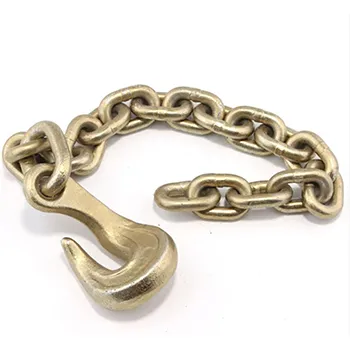
Yes, for overhead lifting applications, the chain must be used with compatible, rated components. This includes master links, coupling links (shortening clutches), and hooks that are of the same grade or higher (e.g., use Grade 100 hooks with Grade 100 chain). These components must be properly assembled and proof-tested as a complete assembly. Using mismatched or sub-standard fittings is a major safety hazard. Raydafon Group supplies complete certified chain sling assemblies tailored to customer specifications.


 Raydafon