
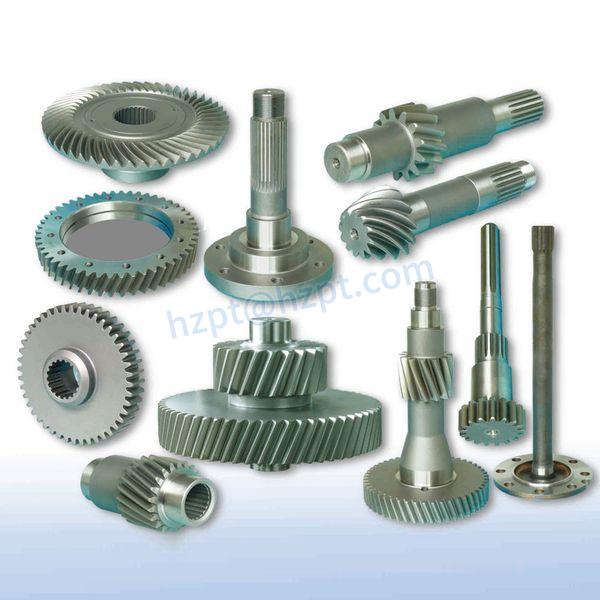
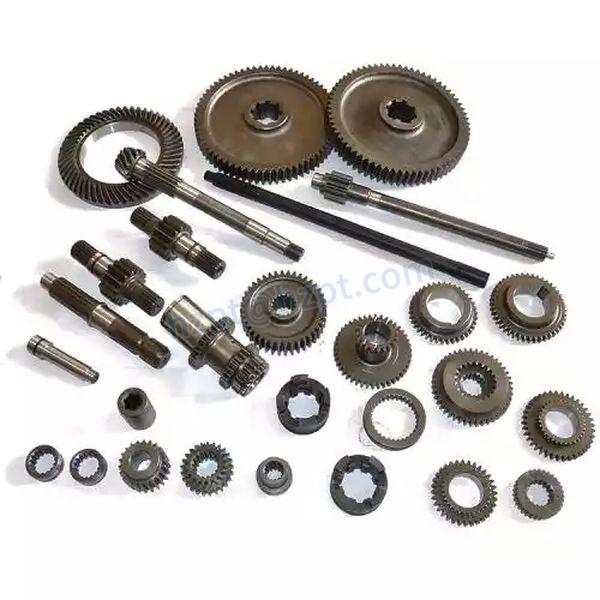
In the intricate world of mechanical power transmission, specialized components often make the critical difference between optimal performance and systemic failure. For over two decades, Raydafon Group has been at the forefront of designing and manufacturing high-performance mechanical components, with our range of Other Gears standing as a testament to engineered excellence. These are not generic spare parts; they are mission-critical transmission elements engineered for applications where standard bevel, spur, or helical gears are not suitable. Our Other Gears encompass a sophisticated array of specialized gear types, including worm gears, hypoid gears, internal gears, and custom non-standard gear profiles, each fabricated to solve specific torque, angle, and space constraints.
Raydafon Group's philosophy is rooted in precision, durability, and application-specific design. We understand that the efficiency of an entire drive system can hinge on the performance of a single, seemingly minor component. Therefore, every Other Gear that leaves our facility undergoes rigorous material science analysis, precision machining with CNC and gear hobbing technology, and multi-stage quality assurance testing. Whether integrated into heavy-duty industrial machinery, advanced robotics, aerospace mechanisms, or specialized automotive differentials, our gears deliver unmatched reliability, reduced noise emission, and extended service life, ultimately driving down your total cost of ownership.
To ensure compatibility and performance, specifying the correct gear parameters is essential. Below are the critical specifications for Raydafon Group's Other Gears, presented in both list and table formats for clarity and professional reference.
| Gear Type | Primary Application | Typical Gear Ratio Range | Max Efficiency (%) | Key Advantage | Standard Material Pairing |
|---|---|---|---|---|---|
| Worm Gear Set | High-ratio speed reduction, right-angle drives, locking mechanisms | 5:1 to 100:1 | 50 - 90 | Compact, high reduction ratio, self-locking capability | Hardened Steel Worm / Bronze Wheel |
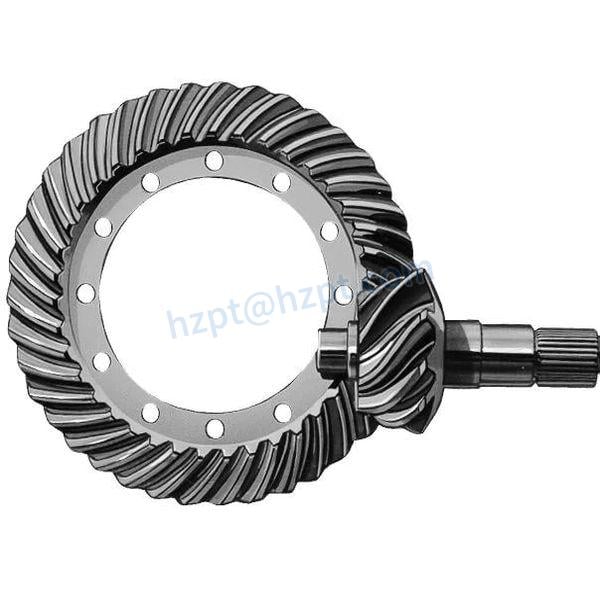
| Hypoid Gear | Automotive differentials, high-torque right-angle drives | 1:1 to 10:1 | 85 - 95 | Higher strength & smoother operation than spiral bevels, offset axes | Case-Hardened Alloy Steel Pinion & Gear |
| Internal Gear | Planetary gear systems, compact coaxial assemblies | 1.5:1 to 10:1 | 95 - 98 | Compact design, high torque density, coaxial shaft arrangement | Case-Hardened Alloy Steel |
| Non-Circular Gear | Specialized machinery, variable motion transmission, packaging equipment | Variable | 70 - 85 | Transmits variable angular velocity, enables unique motion profiles | Precision Machined Steel or Aluminum |
Q: What exactly are classified as "Other Gears" by Raydafon Group?
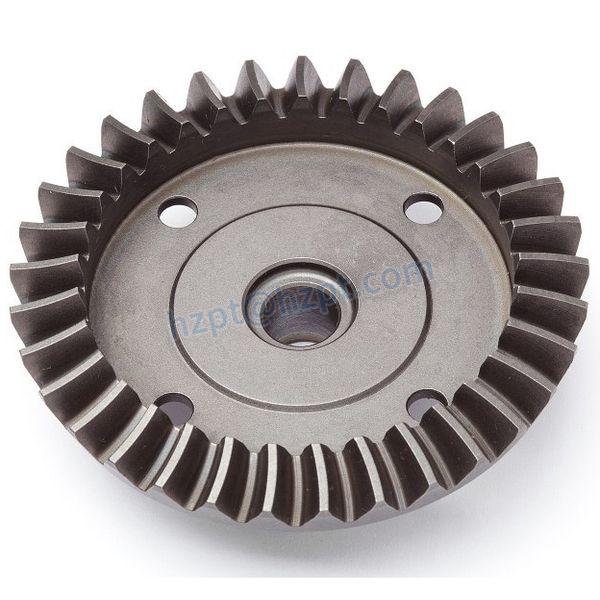
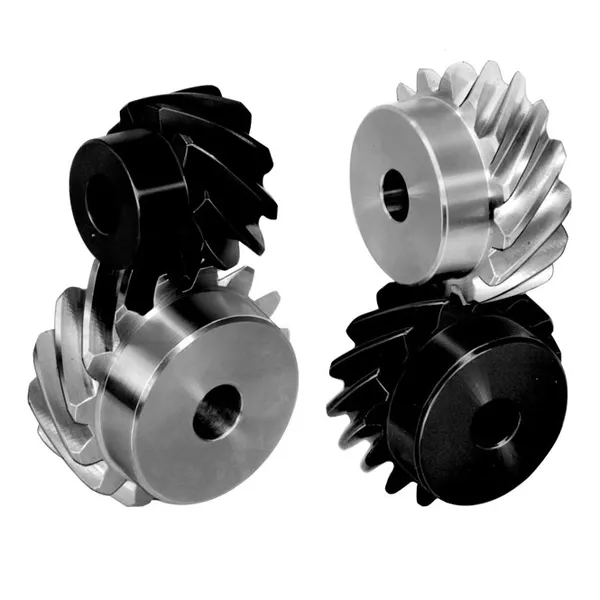
A: At Raydafon Group, "Other Gears" is a comprehensive category for specialized gear types that fall outside the standard spur, helical, or bevel gear classifications. This includes, but is not limited to, worm gears, hypoid gears, internal (ring) gears, face gears, non-circular gears, and custom-designed gear profiles for unique kinematic requirements. These gears are engineered for specific mechanical challenges involving non-parallel, non-intersecting shafts, high reduction ratios, compact spaces, or non-uniform motion transmission.
Q: How do I select between a hypoid gear and a standard spiral bevel gear for a right-angle drive application?
A: The choice hinges on design requirements for strength, smoothness, and shaft arrangement. Hypoid gears, a specialty of Raydafon Group, have axes that are offset (non-intersecting). This allows for larger-diameter pinions with more teeth contact, resulting in greater strength, higher torque capacity, and significantly smoother, quieter operation compared to spiral bevels. They are the preferred choice in high-performance automotive differentials and heavy-duty industrial drives. Spiral bevels, with intersecting axes, are suitable where offset is not needed and cost may be a slightly more sensitive factor.
Q: What are the key considerations for specifying a custom worm gear set from Raydafon Group?
A: Specifying a custom worm gear set requires several critical inputs: 1) Center Distance & Ratio: Determine the required speed reduction and the physical space for the gear set. 2) Load Cycle & Duty: Define the input torque, output torque, operational hours, and shock load potential. 3) Material Selection: The worm is typically hardened steel for wear resistance, while the wheel is often bronze for compatibility and heat dissipation, but other materials like polymers or sintered metals can be used for specific needs. 4) Lubrication & Environment: Specify if the set will run in an oil bath, with grease, or in a dry/contaminated environment. Our engineering team at Raydafon Group will collaborate with you to analyze all factors.
Q: Can Raydafon Group manufacture Other Gears to metric, imperial, or proprietary drawing standards?
A: Absolutely. Raydafon Group operates a globally compliant manufacturing ecosystem. We routinely produce gears to AGMA (American), DIN/ISO (European/International), JIS (Japanese), and other regional standards. More importantly, we excel at working from your proprietary drawings and 3D CAD models (STEP, IGES, SolidWorks, etc.). Our advanced metrology and gear inspection equipment ensure that every product, regardless of the standard, meets the specified tolerances for profile, helix, pitch, and runout.
Q: What quality control and testing protocols are implemented for Other Gears?
A: Quality is integral at every stage. Post-machining, gears undergo dimensional inspection using coordinate measuring machines (CMMs) and specialized gear testers (e.g., Gleason, Klingelnberg) to verify tooth geometry accuracy. Material integrity is confirmed through hardness testing (Rockwell, Vickers) and sometimes spectroscopy. For critical applications, we perform functional testing, including noise/vibration analysis under load and endurance testing in simulated real-world conditions. A comprehensive inspection report, including gear geometry charts, is provided with each shipment to guarantee traceability and conformance.
Q: For prototype or low-volume needs, does Raydafon Group offer a cost-effective solution for Other Gears?
A: Yes, we cater to the full spectrum, from R&D prototypes to high-volume production. For prototypes and low volumes, we leverage our state-of-the-art 5-axis CNC machining centers and wire EDM capabilities. This allows for rapid turnaround of precision gears without the need for expensive, dedicated hobbing or shaping tools initially. While per-unit cost may be higher than mass production, this path provides immense flexibility for design validation and small-batch production. As volumes scale, we seamlessly transition to optimized, cost-effective dedicated tooling processes.
Q: How does the design of an internal gear differ, and what are its main applications?
A: An internal gear has teeth cut on the inner surface of a cylinder or ring, meshing with a smaller external pinion. The design allows the shafts of the pinion and the internal gear to be coaxial, leading to extremely compact assemblies. The main application is in planetary gear systems, where multiple planet gears rotate inside a central ring gear, providing high reduction ratios and torque density in a small package. They are also used in specialized couplings and gear-type clutches. Raydafon Group precisely machines internal gears with strict control over tooth profile and root clearance to prevent interference and ensure smooth, efficient power transfer.


 Raydafon