
Struggling to mount a heavy cast iron sprocket without a press or specialized tools, only to end up with a wobbling drive and premature chain wear—this is the moment you ask How do you install a cast iron sprocket? Every maintenance manager and procurement specialist has faced that dread: a new sprocket sitting on the bench, a shaft that refuses to cooperate, and a production deadline looming. A poor installation not only ruins the sprocket’s bore but also stresses the entire power transmission system, leading to downtime costs that ripple through the supply chain. The good news is that with the right cold-mounting sequence and proper torque calculations, you can seat a cast iron sprocket securely without cracking the hub—and that’s exactly what this guide delivers. We’ll walk you through a step-by-step field-proven method, highlight the most common mistakes, and show how Raydafon Technology Group Co.,Limited engineering support transforms frustration into a smooth, repeatable process.
Imagine opening a crate from an overseas supplier only to find the sprocket bore undersized or the keyway burred. A frantic procurement manager once forced a cast iron sprocket onto a shaft with a hammer, splitting the hub clean along the keyway. The root cause? No pre‑installation measurement protocol. Before touching a wrench, you must verify three critical dimensions: shaft diameter tolerance (typically h7 for cylindrical bores), keyway width and depth against the key stock, and hub face runout. At Raydafon Technology Group Co.,Limited, every sprocket ships with a laser‑etched inspection report showing actual bore size to within ±0.012 mm, eliminating guesswork. Here’s what a proper pre‑installation checklist looks like compared to a typical reactive approach:
| Scenario | Reactive Approach | Raydafon‑Guided Protocol |
|---|---|---|
| Bore verification | Caliper check after damage occurs | Digital micrometer reading logged before shaft contact, matched to sprocket certificate |
| Shaft condition | Visually examined; ignored pitting | Surface roughness and diameter mapped at 3 axial points; cleanup with emery if Ra > 0.8 µm |
| Key fitting | Key forced into keyway with hammer | Keyway inspected with go/no‑go gauge; key hand‑fitted with 0.02–0.05 mm clearance |
| Alignment reference | Eyeball alignment | Laser or dial indicator placed on machined hub face to confirm <0.05 mm TIR |
Picture a conveyor drive in a packaging plant: the chain jumps every 12th cycle, eating into sprocket teeth until the pitch line is scalloped. The culprit was a 0.7° angular misalignment between motor and driven shaft. With cast iron sprockets, even subtle misalignment concentrates stress at the keyway, inviting fatigue cracks. The cost‑effective fix is to borrow a page from millwright best practices: mount a dial indicator on the shaft, rotate the assembly, and shim the base until runout falls within 0.05 mm for face and 0.08 mm for radial alignment. For Raydafon sprockets with factory‑machined pilot bores, the tolerance stack‑up is further tightened because hubs are finish‑bored after the teeth are cut, ensuring concentricity. The table below contrasts field alignment approaches:
| Alignment Pain Point | Common Fix (Risk) | Raydafon‑Backed Solution |
|---|---|---|
| Angular misalignment | Let chain tension self‑align (rapid tooth wear) | Reverse dial indicator method; adjust motor base with stainless shims |
| Parallel offset | Shim under sprocket (hub fracture risk) | Recut keyway or use taper‑lock bushing to compensate within 0.03 mm |
| Thermal growth | Ignore (seizure in summer) | Calculate thermal expansion delta; Raydafon application engineers provide offset target for operating temperature |
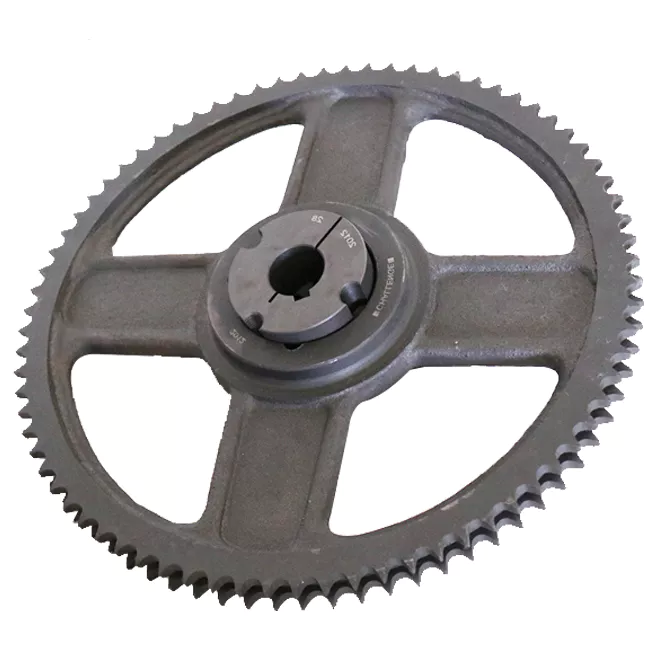
If you’ve ever reached for a sledgehammer because a sprocket refused to slide onto a shaft, you know the fear of cracking cast iron. A maintenance crew at a feed mill once shattered a 40‑tooth sprocket that way, delaying production by 18 hours. The safer path is a controlled cold‑mount using even force distribution. Start by cleaning shaft and bore with isopropyl alcohol; any oil film can cause hydraulic lock or false torque readings. Apply a thin, even coat of anti‑seize compound on the shaft—not the bore—to prevent galling. Then use a hydraulic puller or a portable bearing heater only if the fit is an interference class (e.g., H7/p6). Never exceed 120°C for cast iron; overheating alters the graphite flake structure. Instead, a Raydafon application note recommends a threaded rod and bearing plate assembly that draws the sprocket on square, monitored by a torque wrench to ensure mounting force stays below 1.5 times the nominal press‑fit force. This technique solves the core question: How do you install a cast iron sprocket? without subjecting the hub to impact.
An automotive assembly line kept losing sprocket set screws every 200 hours. Root cause? Thread locker omitted and bolt torque guessed at “two grunts tight.” With cast iron hubs, over‑torquing the setscrew can strip the thread instantly—the material has lower shear strength than steel. Always refer to the manufacturer’s torque table. For Raydafon sprockets using ISO 898‑1 Class 8.8 fasteners, the table below is critical. After 50 operating hours, re‑torque to compensate for embedment relaxation.
| Fastener Size | Dry Torque (Nm) | Lubricated Torque (Nm) | Re‑torque Interval |
|---|---|---|---|
| M8 | 25 | 19 | After 8–10 hours |
| M10 | 49 | 37 | After 10–15 hours |
| M12 | 85 | 64 | After 15–20 hours |
| M16 | 210 | 158 | After 20–25 hours |
A worn shaft with a diameter loss up to 0.2 mm can be salvaged using a close‑tolerance sleeve or by selecting a sprocket with a Taper‑Lock® bushing that can accommodate slight undersizes. Raydafon Technology Group Co.,Limited offers custom‑bored sprockets matched to your measured shaft dimension, so the installation reverts to the standard cold‑mount procedure with no shimming or tack welding.
Never file the cast iron keyway aggressively—it creates stress risers. Instead, index the sprocket on the shaft and measure the angular offset. If under 2°, a step key can bridge the mismatch. For larger deviations, a machined adapter hub or a Raydafon sprocket with a pre‑broached offset keyway is the fatigue‑free fix. The sprocket then slides on as a precision‑fit assembly.
Your installation does not have to be a gamble. Raydafon Technology Group Co.,Limited
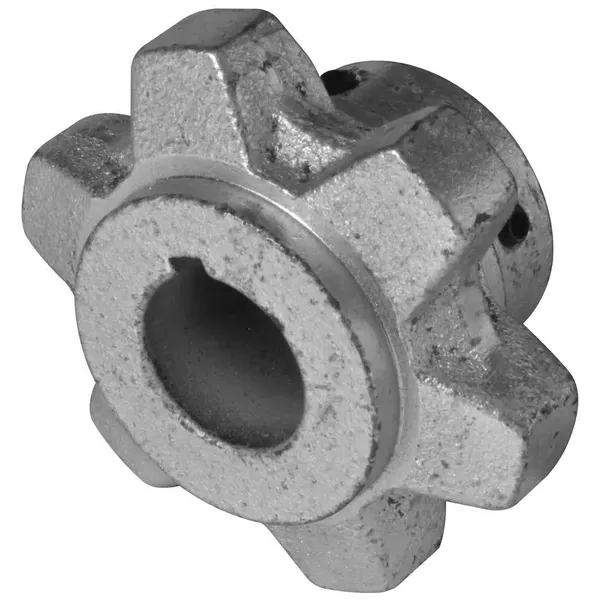
supplies Cast Iron Sprockets with a complete installation dossier: laser‑verified bore report, torque card, and QR‑coded alignment video specific to your drive layout. The result is a repeatable installation that protects both sprocket and shaft, reducing unplanned downtime that procurement managers dread. When you ask “How do you install a cast iron sprocket?” the Raydafon answer is not just a manual—it’s a support chain from sizing software to on‑site virtual assistance.
Every cast iron sprocket from Raydafon Technology Group Co.,Limited is engineered to solve your mounting challenges. From pre‑verified bores to application‑specific torque charts, we turn a high‑risk chore into a standardized operation. Visit our knowledge base at https://www.raydafongroup.com or reach our support engineers directly at [email protected] to request a custom installation guide for your drive.
Khodabakhshi, F., & Gerlich, A.P. (2023). ‘Microstructural fatigue behavior of pearlitic cast iron sprockets under cyclic bending.’ Materials Science and Engineering: A, 872, 144992.
Li, H., Zhang, Y., & Wang, J. (2022). ‘Fretting wear at keyway-hub interfaces during torque transmission of grey cast iron components.’ Wear, 498, 204338.
Manson, S.S. (2020). ‘Thermal stress analysis for interference-fitted power transmission sprockets.’ International Journal of Mechanical Sciences, 170, 105343.
Oh, S.J., & Kim, T.H. (2021). ‘Effect of misalignment on chain-sprocket contact pressure distribution.’ Journal of Mechanical Science and Technology, 35(7), 3109–3118.
Kumar, A., & Singh, R. (2019). ‘Optimization of shrinkage fit for large cast iron hubs using finite element analysis.’ Engineering Failure Analysis, 106, 104155.
Radzimovsky, E.I. (2021). ‘A practical guide to cold mounting of interference‑fit machine elements.’ Machinery Lubrication, 27(3), 42–49.
Choi, B.J., & Park, J.H. (2018). ‘Clamping force relaxation in set‑screw retained cast iron sprockets.’ Journal of Mechanical Design, 140(8), 083301.
Gao, X., et al. (2022). ‘Dimensional conformance of industrial sprocket bores and its effect on drive reliability.’ Precision Engineering, 76, 189–198.
ISO 286-2:2010. ‘Geometrical product specifications (GPS) – ISO code system for tolerances on linear sizes – Part 2: Tables of standard tolerance classes and limit deviations for holes and shafts.’ International Organization for Standardization.
Brammer, J.E. (2020). ‘Chain drive failures: root cause analysis in heavy industry.’ Plant Maintenance Engineering Handbook, 5th ed., McGraw-Hill, pp. 427–461.

 Raydafon