
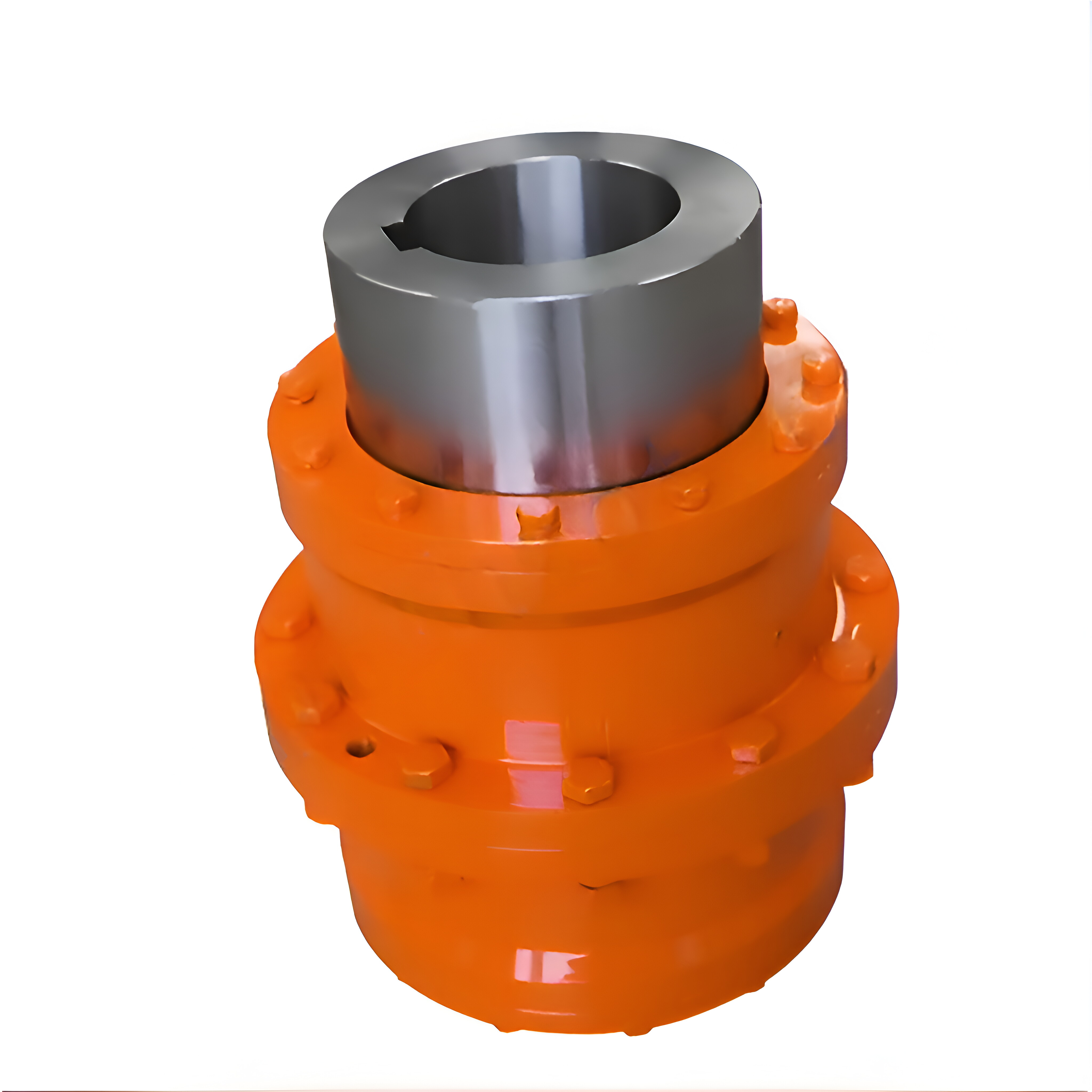
In the realm of industrial machinery, the reliable transfer of torque and motion between shafts is paramount. Among the myriad of coupling solutions available, gear couplings stand out for their robustness, high torque capacity, and ability to accommodate misalignment. For demanding applications across sectors like steel, mining, pulp and paper, and heavy manufacturing, selecting the right gear coupling is critical for operational efficiency and longevity. Raydafon Group has been at the forefront of designing and manufacturing premium-grade gear couplings that meet the most stringent requirements of modern industry.
Raydafon Group's gear couplings are engineered for performance and durability. They consist of two hubs with external gear teeth, which are connected by a sleeve (or sleeves) with corresponding internal gear teeth. This design offers several distinct advantages:
Raydafon Group provides a comprehensive range of standard and custom gear couplings. The selection depends on key application parameters. Below are the critical specifications for our standard series.
| Component | Standard Material | Material Grade / Treatment | Alternative Options |
|---|---|---|---|
| Hubs | Forged Carbon Steel | AISI 1045, Quenched & Tempered | Alloy Steel (4140, 4340), Stainless Steel (for corrosive environments) |
| Sleeve(s) | Alloy Steel | AISI 4140, Carburized & Hardened (58-62 HRC) | Nitrided Steel, Cast Steel for large sizes |
| Fasteners | High-Tensile Steel | Grade 10.9 or 12.9 | Stainless Steel A2-70/A4-80 |
| Seals | Synthetic Rubber (NBR) | Standard Lip Seals | Fluoroelastomer (FKM/Viton) for high temp, Polyurethane for abrasion resistance |
| Lubricant | High-Viscosity EP Gear Oil | NLGI Grade 1 or 2 Grease (Lithium or Polyurea complex) | Synthetic PAO or PAG-based lubricants for extreme temperatures |
| Model | Max Bore (mm) | Rated Torque (Nm) | Peak Torque (Nm) | Moment of Inertia (kg·m²) | Approx. Weight (kg) |
|---|---|---|---|---|---|
| RGC-101 | 40 | 2,800 | 5,600 | 0.008 | 5.2 |
| RGC-105 | 75 | 12,500 | 25,000 | 0.045 | 15.8 |
| RGC-110 | 110 | 38,000 | 76,000 | 0.210 | 42.5 |
| RGC-120 | 150 | 85,000 | 170,000 | 0.850 | 98.0 |
| RGC-135 | 200 | 180,000 | 360,000 | 2.950 | 225.0 |
Note: The above table is illustrative. Raydafon Group offers extensive sizing charts. Please consult our engineering catalog or contact our technical team for specific model data.
Q: How do I select the correct size of gear coupling for my application?
A: Proper selection requires analyzing several factors: the continuous and peak torque requirements of the driven machine (considering start-up and shock loads), the operating speed (rpm), the type and degree of shaft misalignment present, the bore sizes and keyways of the connected shafts, and the ambient environmental conditions (temperature, presence of contaminants). Raydafon Group provides detailed selection software and technical support to guide you through this process, ensuring the chosen coupling has adequate service factor for reliable operation.
Q: Can Raydafon gear couplings be used in high-speed applications like turbine drives?
A: Absolutely. We offer specialized high-speed gear couplings designed for turbine, compressor, and generator applications. These models feature precision-machined components, advanced balancing (to G2.5 or better grades), and often utilize diaphragm or specially engineered seals to handle high centrifugal forces. It is crucial to consult with our engineering team for high-speed applications to address dynamics like lateral critical speeds and torsional stiffness.
Q: What is the difference between a flexible and a rigid gear coupling?
A: A flexible gear coupling uses crowned gear teeth on the hubs and allows for misalignment between the connected shafts, absorbing vibration and shock. A rigid gear coupling, also known as a sleeve coupling, has straight-sided gear teeth and physically locks the two shafts together, allowing for zero angular or parallel misalignment. Rigid types are used where precise shaft alignment is guaranteed and maintained, often for torque multiplication or connection in perfectly aligned systems.
Q: What is the recommended procedure for installing a gear coupling?
A: Correct installation is vital. Key steps include: 1) Clean all components and shaft ends thoroughly. 2) Check and record the actual misalignment before installation. 3) Slide the hubs onto the shafts, ensuring proper fit (press fit or clearance fit as specified). 4) Align the machinery to within the coupling's specified tolerances using dial indicators or laser alignment tools. 5) Assemble the sleeve(s) over the hubs, ensuring proper engagement. 6) Tighten all fasteners to the specified torque values in a crisscross pattern. 7) Fill the coupling with the prescribed type and quantity of lubricant.
Q: How often should a gear coupling be lubricated and inspected?
A: The lubrication interval depends on operating conditions (speed, temperature, duty cycle). For standard applications with grease lubrication, initial re-lubrication is typically recommended after the first 500-1000 hours of operation, followed by intervals of 6 to 12 months. Oil-lubricated couplings may have longer intervals. Regular visual inspections for lubricant leakage, unusual noise, vibration, or signs of wear should be performed monthly. Raydafon couplings feature lubrication ports and often sight glasses for easy maintenance checks.
Q: What are the common signs of gear coupling failure or wear?
A> Warning signs include: excessive vibration or noise during operation, visible lubricant leakage from seals, discoloration (blueing) of the sleeve due to overheating, the presence of metallic particles in the drained lubricant (indicating tooth wear), fretting corrosion on the shaft under the hub, and increased backlash when the coupling is moved by hand (when disconnected from power). Addressing these signs promptly can prevent catastrophic failure.
Q: Can Raydafon Group provide custom-bored couplings or special configurations?
A: Yes, customization is a core strength of Raydafon Group. We routinely manufacture couplings with non-standard bore sizes, special keyways (including splined shafts), unique flange designs, specific material upgrades for corrosion or high-temperature resistance, and custom paint or plating for identification or environmental protection. We also engineer specials like shear-pin couplings, overload protection models, and couplings for extreme ambient conditions.
Q: What is meant by "torsional stiffness" and why is it important?
A> Torsional stiffness is a measure of a coupling's resistance to angular twist under applied torque. It is expressed in units of torque per angular deflection (e.g., Nm/rad). High torsional stiffness is critical in applications requiring precise positional synchronization between shafts, such as in multi-motor drives or servo systems, to prevent torsional wind-up and resonance. Raydafon provides torsional stiffness data for all our couplings to aid in system dynamic analysis.
Q: How do environmental factors like temperature and dust affect coupling selection?
A> Extreme temperatures dictate the choice of lubricant and seal materials. For sub-zero or high-temperature applications (>120°C), synthetic lubricants and FKM seals are used. In dusty or abrasive environments, such as cement plants, we recommend couplings with double-lip or labyrinth seals and may suggest more frequent lubrication intervals to purge contaminants. For wet or corrosive environments, stainless steel components and special coatings are available.

 Raydafon