Agricultural chains are the unsung heroes of modern farming. As the critical link between power and performance, they are engineered to withstand the most demanding conditions in agriculture, from heavy tillage and harvesting to material handling and processing. At Raydafon Group, with decades of industry leadership, we understand that reliability isn't just a feature; it's the foundation of productivity. Every piece of equipment is only as strong as its chain, making the selection of a high-quality, durable agricultural chain paramount for minimizing downtime, reducing maintenance costs, and maximizing operational efficiency throughout the growing season and beyond.
Our commitment at Raydafon Group is to provide chains that are not merely components but robust solutions tailored for the agricultural sector. We combine advanced metallurgy, precision manufacturing, and rigorous testing to deliver products that offer exceptional wear resistance, high tensile strength, and superior fatigue life. Whether you operate a small family farm or a large-scale agribusiness, our comprehensive range of chains is designed to meet your specific application needs, ensuring seamless power transmission and long service life under constant stress and exposure to abrasive environments.
### Core Product Lines & Technical Specifications
Raydafon Group's agricultural chain portfolio is categorized to address specific functions within the farm ecosystem. Below is an overview of our primary product lines.
**1. Drive and Conveyor Chains**
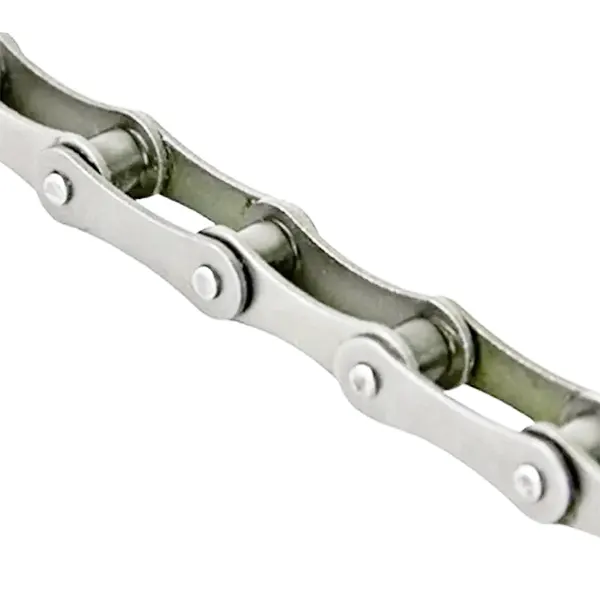
These chains are designed for power transmission in equipment such as combines, forage harvesters, and grain augers, as well as for conveying harvested materials.
* **Series:** Heavy-Duty (HD) Series, Standard (STD) Series, Corrosion-Resistant (CR) Series.
* **Key Features:** High tensile strength, excellent shock load resistance, pre-stressed pins and bushes for reduced initial elongation, optional hardened rollers.
* **Common Pitches:** 1/2", 5/8", 3/4", 1", 1-1/4".
* **Material:** Alloy Steel (Grade 80), Heat Treated for durability.
**2. Harvesting Chains**
Specialized chains used in the critical crop gathering and processing sections of combines and harvesters.
* **Series:** Combine Table Chains (CTC), Elevator Chains (EC), Specialty Harvest (SH) Series.
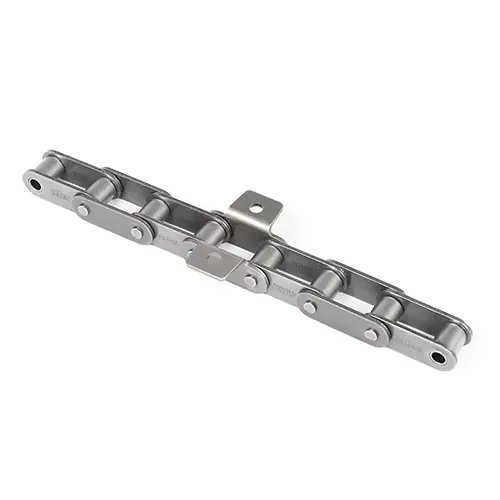
* **Key Features:** Precision-built for smooth operation at varying speeds, designed to handle sticky residues (e.g., from corn, sugar beet), often feature special attachments or flights.
* **Common Specifications:** Vary widely by OEM model; we provide exact OEM replacements or improved aftermarket versions.
**3. Barn & Hay Equipment Chains**
Utilized in stationary equipment like balers, mixer wagons, manure spreaders, and silo unloaders.
* **Series:** Bale Chain (BC) Series, Mixer (MX) Series.
* **Key Features:** High resistance to abrasion from silage, hay, and manure, often feature case-hardened components for extended wear life.
* **Typical Construction:** Steel rollers, hardened bushings.
### Detailed Product Parameter Tables
To facilitate precise selection and underscore the engineering behind our products, please review the following detailed parameter tables.
**Table 1: Raydafon Heavy-Duty (HD) Drive Chain Series (Sample Specifications)**
| Chain Designation | Pitch (Inches) | Roller Diameter (Inches) | Inner Width (Inches) | Ultimate Tensile Strength (Lbs) | Average Ultimate Strength (Lbs) | Primary Application |
| :--- | :--- | :--- | :--- | :--- | :--- | :--- |
| **HD-40** | 0.500 | 0.312 | 0.250 | 3,750 | 4,700 | Light augers, conveyors |
| **HD-50** | 0.625 | 0.400 | 0.312 | 6,100 | 7,600 | Grain augers, medium drives |
| **HD-60** | 0.750 | 0.469 | 0.375 | 8,500 | 10,600 | Combine drives, feeders |
| **HD-80** | 1.000 | 0.625 | 0.500 | 14,000 | 17,500 | Main drives, heavy conveyors |
| **HD-100** | 1.250 | 0.750 | 0.625 | 21,000 | 26,000 | High-torque PTO applications |
*Note: All HD Series chains feature heat-treated link plates, pre-lubricated bushings, and are manufactured to ASA/ANSI standards.*
**Table 2: Raydafon Combine Table Chain (CTC) Attributes**
| Parameter | Specification | Benefit/Reasoning |
| :--- | :--- | :--- |
| **Link Plate Material** | Carbon Manganese Steel, Heat Treated | Provides optimal balance of strength and flexibility to absorb crop impacts. |
| **Pin & Bushing** | Case Hardened to 55-60 HRC | Maximizes wear resistance in the high-friction articulation points. |
| **Surface Finish** | Phosphate Coating | Retains lubricant, provides corrosion inhibition during storage periods. |
| **Pre-Stressing** | Standard on all CTC chains | Minimizes operational elongation, maintaining proper tension and alignment. |
| **Attachment Options** | Welded-on flights, tabs, or extended pins | Customizable for specific header widths and crop types (e.g., poly attachments for gentle crop handling). |
### Material Science & Manufacturing Excellence
The performance of an agricultural chain is dictated by its material composition and production process. Raydafon Group employs state-of-the-art technology and stringent quality control at every stage.
* **Advanced Metallurgy:** We use specific alloy steels with precise carbon and manganese content. This ensures the optimal microstructure for withstanding repetitive stress and impact loads common in field operations.
* **Precision Forming:** Link plates are stamped using high-tonnage presses with precision dies to guarantee dimensional consistency, which is critical for smooth engagement with sprockets.
* **Heat Treatment:** A critical differentiator. Components undergo controlled processes like quenching and tempering to achieve the desired hardness profile—tough, wear-resistant surfaces with a ductile core to prevent brittle fracture.
* **Assembly & Pre-Lubrication:** Pins and bushings are assembled under high pressure. Our proprietary pre-lubrication process forces grease into the core clearance areas, ensuring immediate and effective lubrication upon start-up, reducing initial wear.
* **Quality Assurance:** Every production batch undergoes sample destructive testing for tensile strength and hardness. Dimensional checks are performed using calibrated gauges to ensure compliance with international standards.
### Raydafon Group Agricultural Chains: Frequently Asked Questions (FAQ)
**What is the most important factor when selecting an agricultural chain?**
The single most important factor is matching the chain's **working load rating** to the **actual operational loads** of your application, with a significant safety factor. Under-sizing a chain leads to premature failure and safety hazards. Always consult equipment manuals or a Raydafon technical specialist to ensure correct selection based on horsepower, torque, and the type of load (steady vs. shock).
**How often should I lubricate my agricultural chains?**
Lubrication frequency depends heavily on operating conditions (dusty, muddy, wet). As a general rule, drive chains on critical equipment like combines should be lubricated **at least every 10-15 operating hours**. Conveyor chains in abrasive conditions may require attention more frequently. Always use a high-quality, penetrating chain lubricant designed for agriculture. The goal is to replenish the internal lubricant between pins and bushings, not just coat the exterior.
**What are the signs that my agricultural chain needs to be replaced?**
Visible signs include **excessive wear on the link plates (hooking)**, **stiff or frozen links** that do not articulate freely, **significant elongation** (over 3% stretch beyond the original length), and **visible cracks or severe corrosion**. A tell-tale sign is also increased noise or vibration from the drive system. Regular inspection for these symptoms can prevent catastrophic failure.
**Can I replace just a damaged section of chain, or must I replace the entire length?**
While it is possible to repair a chain by replacing a damaged section, it is **not recommended for high-load, critical applications** like main drives. Mismatched wear between old and new sections can cause uneven load distribution and premature failure. For critical applications, and especially with Raydafon's pre-stressed chains, replacing the entire drive length is the best practice for reliability and safety.
**What makes Raydafon chains more resistant to wear and elongation?**
Our advantage comes from three core areas: **1. Material Science:** Superior alloy steel with precise heat treatment. **2. Manufacturing Process:** Pre-stressing of pins and bushings during assembly to "seat" them, which drastically reduces the initial run-in elongation period. **3. Precision:** Tighter tolerances in manufacturing ensure better load distribution across more chain links and sprocket teeth, reducing point stresses.
**Are Raydafon chains compatible with my OEM equipment?**
Yes. Raydafon Group manufactures chains to meet or exceed original equipment manufacturer (OEM) specifications for most major brands of agricultural machinery, including John Deere, Case IH, New Holland, CLAAS, and others. We provide both direct dimensional replacements and enhanced versions with superior materials or coatings for longer life.
**How should I properly store spare agricultural chains?**
Store chains in a **cool, dry, and clean environment** away from direct moisture. They should be kept in their original packaging or wrapped in a rust-inhibitive paper or coating. Before installation, inspect the chain and lightly lubricate it if it has been in storage for an extended period. Proper storage prevents corrosion which can initiate microscopic cracks.
**What is the difference between standard and hardened roller chains?**
Standard rollers are typically made from carbon steel. **Hardened rollers** have been through an additional heat-treating process to increase their surface hardness. This makes them significantly more resistant to wear from abrasive materials (like soil and plant matter) and are highly recommended for conveyor applications and in muddy or sandy conditions. Raydafon offers hardened rollers as an option on many of our drive and conveyor series.
**Does Raydafon offer corrosion-resistant chains for liquid manure handling or fertiliser applications?**
Absolutely. Our **Corrosion-Resistant (CR) Series** chains are treated with specialized coatings or are manufactured from stainless steel components where required. These chains provide extended service life in highly corrosive environments such as liquid manure spreaders, slurry pumps, and chemical applicators, where standard carbon steel would rapidly degrade.


 Raydafon