
In the demanding world of mechanical power transmission, the connection between a shaft and a component is not merely a junction; it is the definitive point of efficiency, torque transfer, and operational longevity. At the heart of this critical connection lies the splined hub. As a foundational technology with decades of proven application, splined connections offer a superior alternative to traditional keyed shafts, providing enhanced torque capacity, reduced stress concentration, and exceptional alignment accuracy. For engineers, designers, and procurement specialists across industries such as aerospace, heavy machinery, automotive, and industrial automation, specifying the correct splined hub is a decision that directly impacts performance, safety, and total cost of ownership.
Raydafon Group stands at the forefront of this precision engineering domain. With a legacy of manufacturing excellence, we specialize in the design and production of high-tolerance splined hubs that meet the most rigorous application demands. Our commitment is not just to deliver a component, but to provide a reliable, high-strength connection solution engineered for peak performance and durability.
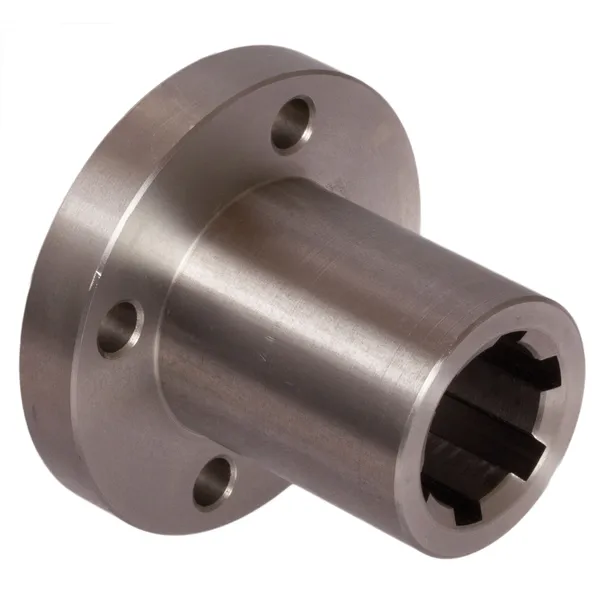
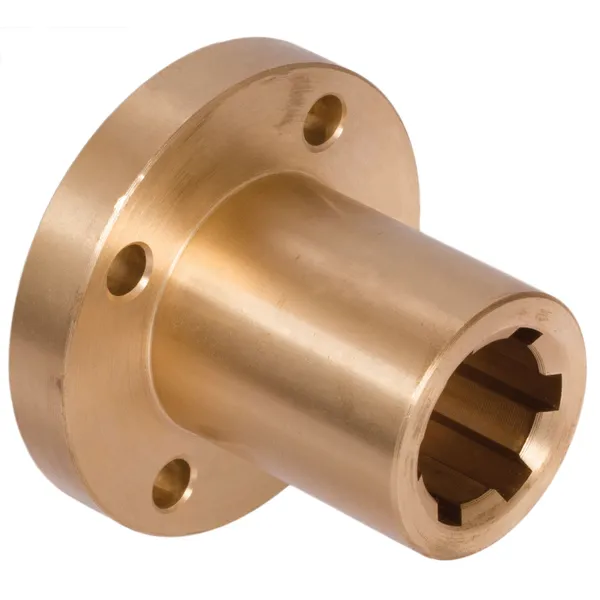
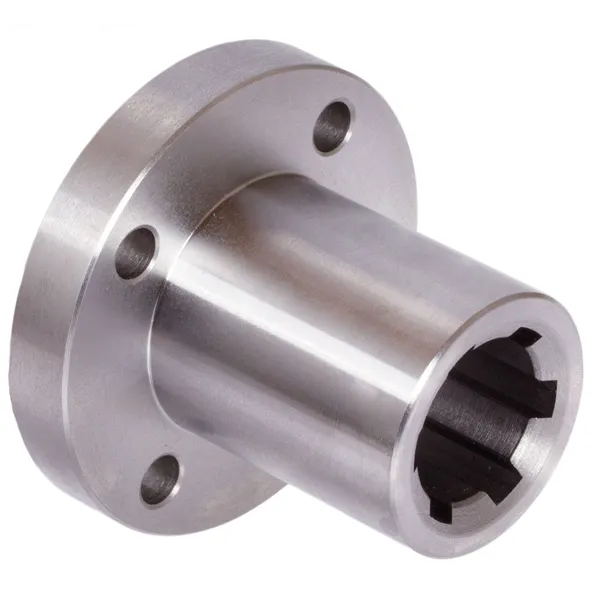
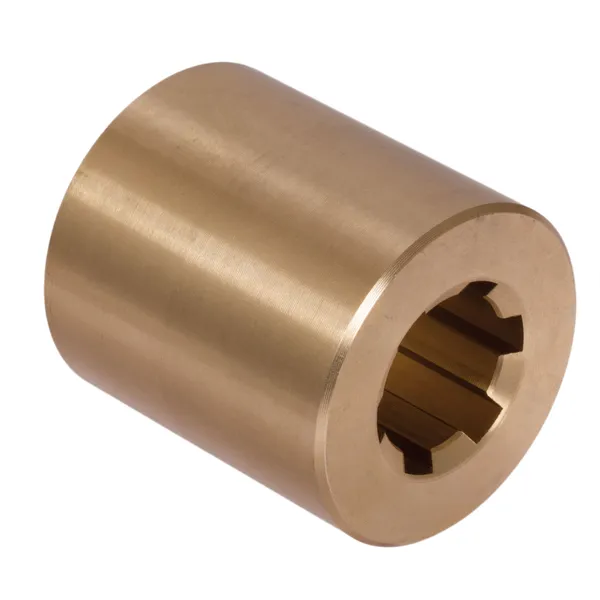
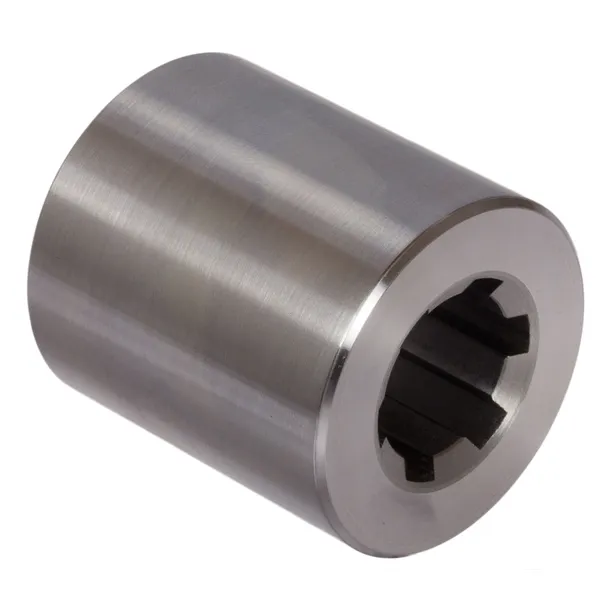
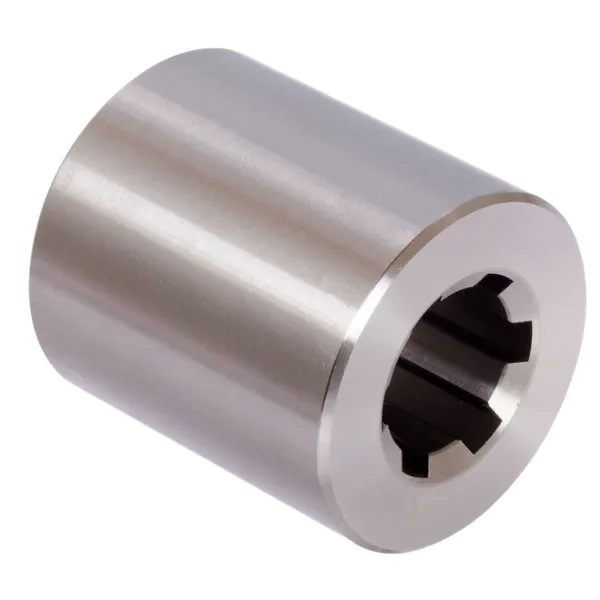
A splined hub is a mechanical component featuring internal grooves (splines) that mesh perfectly with corresponding external splines on a shaft. This interlocking design creates a multi-toothed connection that distributes torque and rotational forces evenly across a much larger surface area compared to a single keyway. The result is a connection that is significantly stronger, more reliable, and capable of handling higher loads with minimal backlash.
Common spline types include:
Our manufacturing process utilizes state-of-the-art CNC machining, precision grinding, and rigorous quality control to ensure every splined hub meets exact specifications. Below is a detailed breakdown of our standard and custom capabilities.
| Material Grade | Typical Hardness (Core) | Surface Treatment / Case Hardening | Best For Applications Requiring: |
|---|---|---|---|
| 1045 Carbon Steel | 28-32 HRC | Black Oxide, Phosphate Coating | Good strength, cost-effectiveness, general industrial use. |
| 4140/4142 Alloy Steel | 28-34 HRC | Induction Hardening (to 50-55 HRC), Nitriding | High strength, good toughness, fatigue resistance. Our most common standard. |
| 4340 Alloy Steel | 32-38 HRC | Carburizing (to 58-62 HRC), Nitriding | Exceptional strength and toughness for severe duty and high-impact loads. |
| Stainless Steel (304, 316) | Brinell 150-200 | Passivation, Electropolishing | Corrosion resistance, food & beverage, marine, chemical environments. |
| Custom Alloys (8620, 9310) | As per specification | Custom Case Hardening Profiles | Aerospace, defense, and ultra-high-performance racing applications. |
Raydafon Group hubs are manufactured to AGMA (American Gear Manufacturers Association), ANSI (American National Standards Institute), ISO (International Organization for Standardization), and DIN (Deutsches Institut für Normung) standards, or to exact customer drawings.
| Parameter | Symbol | Description & Raydafon Capability |
|---|---|---|
| Number of Teeth | N | Range: 6 to 120 teeth. Optimized for balance between torque density and tooth strength. |
| Pitch / Module | P / m | Common pitches: 16/32, 24/48, 48/96 DP. Modules: 0.5mm to 5mm+. |
| Pressure Angle | Φ | Standard: 30°, 37.5°, 45°. 30° offers best balance of strength and engagement. |
| Fit Class | Class | Manufactured to Class 4 (close fit), Class 5 (medium fit), or Class 7 (sliding fit) per ANSI B92.1. Tighter fits for zero-backlash, sliding fits for frequent axial movement. |
| Tooth Tolerance | - | Maintained to AGMA quality levels 10-13, ensuring smooth meshing and load distribution. |
| Major/Minor Diameter | Do / Di | Precision ground or machined to customer specifications within ±0.0005" (0.0127mm) or tighter. |
Q: What are the primary advantages of using a splined hub over a traditional keyed connection?
A: Splined hubs offer several critical advantages: Higher Torque Capacity: Load is distributed over multiple teeth, not a single keyway. Reduced Stress Concentration: The even load distribution eliminates the high-stress "notch effect" found at the ends of a keyway. Better Alignment & Concentricity: The spline interface naturally centers the hub on the shaft. Axial Movement Capability: Many spline designs allow for controlled axial sliding while under torque, ideal for gearboxes or adjustable components. Longer Fatigue Life: The superior stress profile significantly extends the component's life under cyclic loading.
Q: How do I select the correct fit class (e.g., Class 4, Class 5, Class 7) for my splined hub application?
A: Fit class selection is crucial for performance. Class 4 (Close Fit): Used for permanent or semi-permanent assemblies where zero backlash is critical. It requires precise alignment and is not intended for disassembly under normal service. Class 5 (Medium Fit): The most common selection. It allows for slight clearance for easier assembly and disassembly while maintaining excellent torque transmission with minimal backlash. Suitable for most industrial applications. Class 7 (Sliding Fit): Provides greater clearance to allow the hub to slide freely along the shaft under load, as required in synchronizers, sliding gears, or couplers.
Q: Can Raydafon Group manufacture splined hubs to a custom spline profile not found in AGMA or ANSI standards?
A: Absolutely. While we maintain extensive tooling for all standard profiles, a core strength of Raydafon Group is our engineering-to-order capability. We routinely produce splined hubs with custom pressure angles, modified tooth forms, special root fillets for stress relief, and unique tooth proportions to meet specific load, space, or performance constraints. Our engineering team will collaborate with you to analyze the application and design the optimal spline geometry.
Q: What information do I need to provide to Raydafon Group to request a quote for a custom splined hub?
A: To ensure an accurate and timely quote, please provide the following: 1) A detailed drawing (PDF, STEP, or DWG format) if available. 2) If no drawing exists, specify: Spline type (Involute/Straight), Number of Teeth, Pitch/Module, Pressure Angle, Fit Class, Major & Minor Diameters, Face Width. 3) Material and hardness requirements. 4) Application details (torque values, RPM, type of load - shock, cyclic, etc.). 5) Annual volume requirements. Our sales engineers are available to guide you through this process.
Q: For high-corrosion environments, what material and coating combinations does Raydafon Group recommend for splined hubs?
A: For severe environments (marine, chemical processing, offshore), we recommend a base material of martensitic stainless steel (like 440C) or precipitation-hardening stainless (like 17-4 PH) for their combination of strength and corrosion resistance. For less severe but wet environments, alloy steel (4140) with a robust coating is effective. Our top coating recommendations are: Electroless Nickel (EN): Provides excellent, uniform corrosion and wear resistance. Zinc-Nickel Plating: Offers superior sacrificial corrosion protection. DLC Coating: Provides an extremely hard, inert, and low-friction surface, excellent for both corrosion and wear.
Q: How does proper lubrication affect the performance and lifespan of a splined connection?
A: Lubrication is non-negotiable for optimal spline performance. It reduces friction between mating teeth during engagement and sliding, prevents fretting corrosion (wear caused by small oscillatory movements), and helps dissipate heat. For static or slowly rotating hubs, a high-pressure grease is often sufficient. For high-speed or sliding splines, a continuous oil flow or spray is typically required. We design lubrication grooves and ports into our hubs to ensure lubricant reaches the entire active spline length, dramatically increasing service life and reducing maintenance intervals.

 Raydafon