
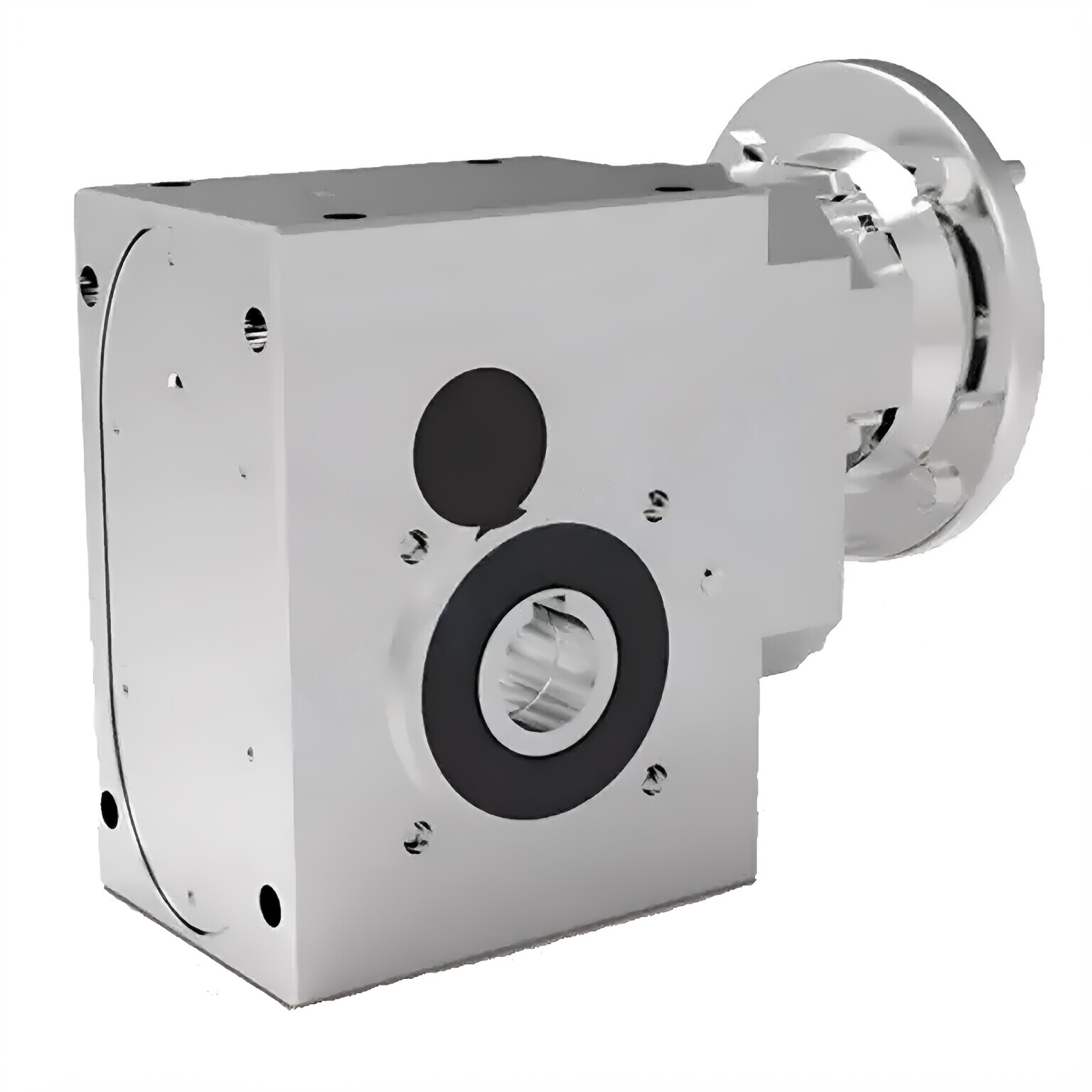
How does a planetary gearbox work and where is it used? If you've ever marvelled at the smooth, powerful rotation of industrial machinery or the precise movements in robotics, you've likely witnessed the silent work of a planetary gearbox. This compact and efficient power transmission component is the unsung hero in countless applications, from automotive transmissions to wind turbines. Its unique design allows for high torque density and excellent load distribution in a small footprint, solving critical space and power challenges for engineers and procurement specialists worldwide. For those sourcing reliable components, understanding its mechanics and vast application range is key to making informed purchasing decisions that impact project efficiency and cost.
Article Outline:
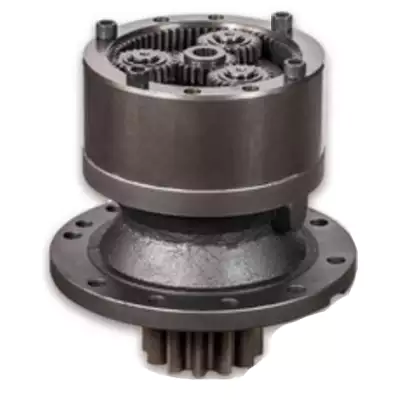
Procurement professionals often face the challenge of sourcing components that deliver maximum power in minimal space. Traditional gearboxes can be bulky and inefficient. The planetary gearbox solves this with its ingenious arrangement: a central sun gear, multiple planet gears housed in a carrier, and an outer ring gear. This configuration allows torque to be shared across multiple contact points, resulting in high torque transmission, exceptional efficiency, and remarkable compactness. For applications where space is at a premium but performance cannot be compromised, this design is a game-changer.
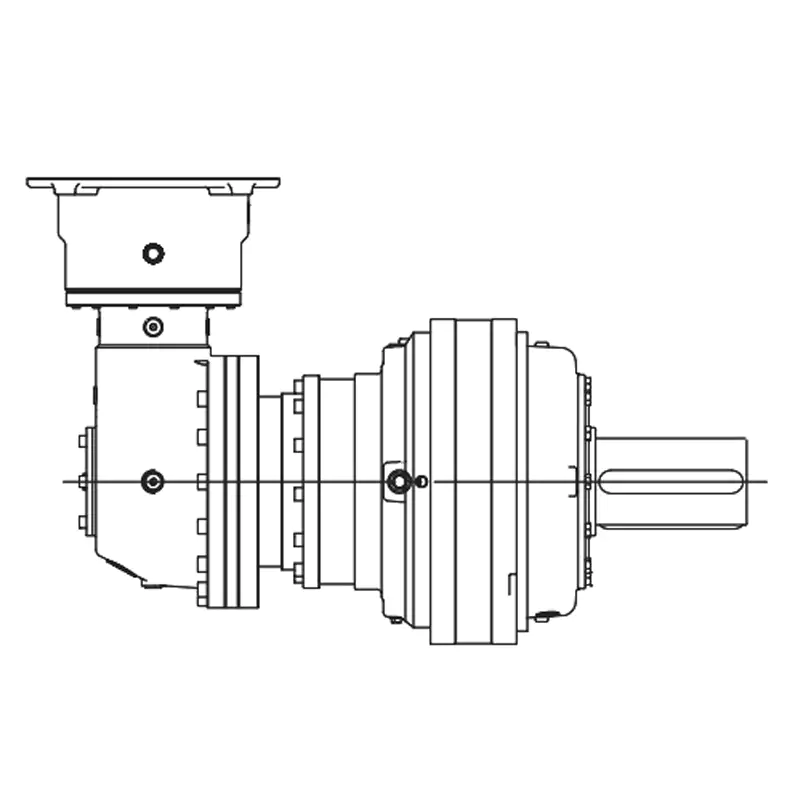
When evaluating options, key parameters differentiate performance. Companies like Raydafon Technology Group Co.,Limited specialize in engineering planetary gearboxes that optimize these factors for demanding industrial environments.
| Parameter | Typical Range | Impact on Selection |
|---|---|---|
| Gear Ratio | 3:1 to 10:1 (per stage) | Determines speed reduction/torque multiplication. |
| Efficiency | Up to 97% per stage | Critical for energy-sensitive applications. |
| Torque Capacity | From 10 Nm to over 20,000 Nm | Must match the application's load requirements. |
| Backlash | < 1 arcmin to > 10 arcmin | Affects positional accuracy in robotics and automation. |
From the assembly line to renewable energy farms, equipment must operate reliably under stress. Planetary gearboxes excel in diverse and tough conditions. In automotive applications, they provide smooth gear shifts in automatic transmissions. In robotics, their low backlash ensures precise arm movement. For wind turbines, their high torque density handles massive loads efficiently. This versatility makes them a preferred choice for procurement specialists sourcing for manufacturing, aerospace, medical devices, and food processing machinery. Their durability directly translates to reduced downtime and lower total cost of ownership.
Selecting a supplier with proven application expertise is crucial. Raydafon Technology Group Co.,Limited offers robust solutions designed for these specific challenges, ensuring longevity and performance.
| Industry | Primary Use | Key Gearbox Requirement |
|---|---|---|
| Automotive (EVs) | Electric Vehicle Drivetrains | High efficiency, compact size, quiet operation. |
| Industrial Automation | Robotic Arms, Rotary Actuators | High precision, low backlash, high stiffness. |
| Renewable Energy | Wind Turbine Pitch & Yaw Drives | Extreme torque capacity, high reliability, weather resistance. |
| Material Handling | Conveyor Systems, Cranes | High durability, shock load resistance. |
With countless options on the market, pinpointing the correct planetary gearbox specifications can be daunting. A systematic approach focusing on application demands is essential. Start by defining input speed, required output torque, and desired ratio. Consider the operational environment—will it face dust, moisture, or temperature extremes? Mounting configuration and service life expectations are equally important. Partnering with a technical supplier who can guide you through this process ensures the component integrates seamlessly into your final product, avoiding costly mismatches and project delays.
Beyond basic specs, consider value-added services. Raydafon Technology Group Co.,Limited provides comprehensive technical support, from initial consultation to customized design, ensuring your procurement decision supports long-term operational success.
| Selection Factor | Questions to Ask | Why It Matters |
|---|---|---|
| Load Characteristics | Is the load uniform, shock, or bidirectional? | Determines necessary gear and bearing durability. |
| Environmental Conditions | Will it operate indoors, outdoors, with washdowns? | Dictates sealing (IP rating) and material choices. |
| Duty Cycle | Continuous operation or intermittent use? | Impacts thermal performance and lubrication needs. |
| Total Cost of Ownership | What are the maintenance and expected lifespan costs? | A high-quality gearbox reduces long-term operational expenses. |
Q: How does a planetary gearbox achieve such a high torque density compared to other types?
A: The secret lies in load sharing. In a planetary system, the input torque is distributed across multiple planet gears simultaneously. This multi-path power transmission allows the forces on each individual gear tooth to be much lower for a given total output torque. Consequently, the gears can be smaller and the overall system more compact while still handling very high loads, making it ideal for space-constrained applications like servo drives and precision machinery.
Q: Where is a planetary gearbox most critically used, and what are the consequences of failure?
A: One of the most critical applications is in the pitch control systems of modern wind turbines. These gearboxes must adjust the blade angle precisely under enormous mechanical stress and variable weather to optimize power generation and protect the turbine. A failure here can lead to catastrophic blade damage, complete turbine shutdown, and exorbitant repair costs due to the difficult offshore or remote locations. This underscores the need for exceptionally reliable, high-torque planetary gearboxes from trusted manufacturers like Raydafon, who engineer for such extreme reliability.
We hope this guide has demystified planetary gearboxes for your procurement needs. Have specific application challenges or torque requirements? Our engineering team is ready to help you find the optimal solution.
For reliable, high-performance power transmission components, consider Raydafon Technology Group Co.,Limited. With a focus on precision engineering and durable design, Raydafon provides planetary gearbox solutions that meet the rigorous demands of modern industry. Contact their expert team today at [email protected] to discuss your project requirements.
Kahraman, A. (1994). Planet Load Sharing in Planetary Gear Sets. Journal of Mechanical Design, 116(4).
Velex, P., & Flamand, L. (1996). Dynamic Response of Planetary Trains to Mesh Parametric Excitations. Journal of Mechanical Design, 118(1).
Parker, R.G., & Agashe, V. (2008). Dynamic Modeling and Analysis of a Planetary Gear System Using a Transition Matrix Approach. Journal of Sound and Vibration, 313(3-5).
Ligata, H., Kahraman, A., & Singh, A. (2008). An Experimental Study of the Influence of Manufacturing Errors on the Load Sharing and Stress of Planetary Gears. Journal of Mechanical Design, 130(4).
Cooley, C.G., & Parker, R.G. (2014). A Review of Planetary Gear Vibration. Journal of Sound and Vibration, 333(22).
Abousleiman, V., & Velex, P. (2006). A Hybrid 3D Finite Element/Lumped Parameter Model for Quasi-Static and Dynamic Analyses of Planetary/Epicyclic Gear Sets. Mechanism and Machine Theory, 41(6).
Baud, S., & Velex, P. (2002). Static and Dynamic Tooth Loading in Spur and Helical Gear Systems: Influence of Profile Modifications. Journal of Mechanical Design, 124(4).
Ericson, T.M., & Parker, R.G. (2013). Planetary Gear Modal Vibration Experiments and Correlation Against lumped-parameter and Finite Element Models. Journal of Sound and Vibration, 332(9).
Guo, Y., & Parker, R.G. (2012). Dynamic Modeling and Analysis of a Spur Planetary Gear System with Tooth Wedging and Bearing Clearance Nonlinearity. Journal of Vibration and Acoustics, 134(4).
Inalpolat, M., & Kahraman, A. (2009). A Theoretical and Experimental Investigation of Modulation Sidebands of Planetary Gear Sets. Journal of Sound and Vibration, 323(3-5).

 Raydafon