
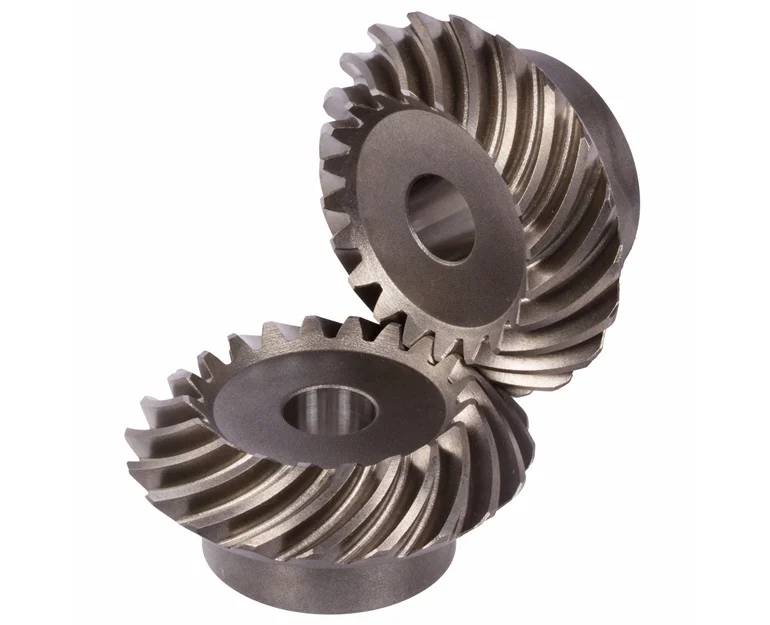
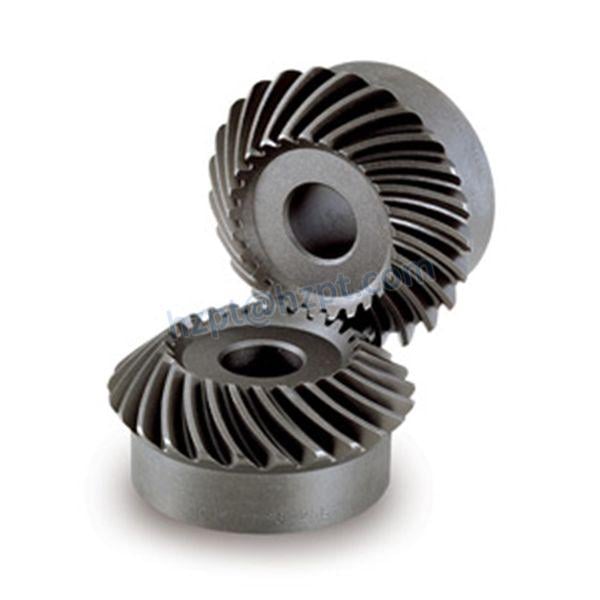
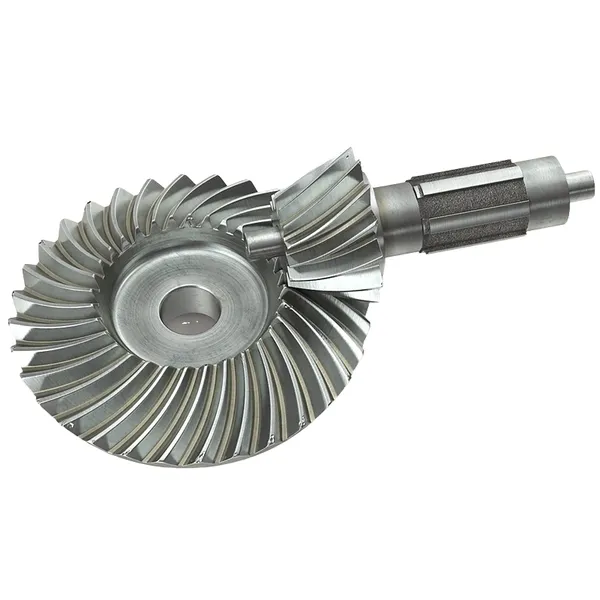
In the realm of mechanical power transmission where efficiency, durability, and quiet operation are paramount, Spiral Bevel Gears stand out as a superior engineering solution. Unlike their straight-tooth counterparts, these gears feature curved, oblique teeth that engage gradually. This design is fundamental to their performance, allowing for smoother meshing, higher load capacity, and significantly reduced noise and vibration. They are the component of choice for transmitting power between intersecting shafts, typically at a 90-degree angle, in demanding applications across automotive, aerospace, marine, and heavy industrial machinery. At Raydafon Group, we specialize in the precision engineering and manufacturing of high-performance spiral bevel gears, built to meet the exacting standards of modern industry.
The choice to implement spiral bevel gears is driven by a clear set of operational benefits that directly impact system performance and longevity.
Raydafon Group's spiral bevel gears are engineered from the ground up for reliability. Our standard and custom offerings are defined by a comprehensive set of parameters.
The following table outlines the core design variables for Raydafon Group's spiral bevel gear sets. Custom designs can vary significantly.
| Parameter | Symbol | Standard Range | Description |
|---|---|---|---|
| Shaft Angle | Σ | 90° (Standard), 60° - 120° (Custom) | The angle between the axes of the two shafts. 90 degrees is most common. |
| Module (Metric) / Diametral Pitch (Imperial) | m / Pd | m: 1 - 10 mm Pd: 20 - 3 DP |
Defines the tooth size. A larger module or smaller DP indicates a larger, stronger tooth. |
| Number of Teeth (Pinion/Gear) | z1 / z2 | z1: 5 - 30 z2: 15 - 80 |
Determines the gear ratio (i = z2/z1). Pinion often has fewer teeth. |
| Spiral Angle | β | 35° - 40° (Common), up to 45° | The angle of the tooth curvature relative to the gear axis. Affects smoothness and axial thrust. |
| Face Width | b | Up to 30% of Cone Distance | The length of the teeth along the pitch cone. Impacts load capacity. |
| Pressure Angle | α | 20° (Standard), 14.5° - 25° | The angle defining the tooth profile shape. Higher angles offer greater strength but higher bearing loads. |
| Hand of Spiral | - | Left Hand / Right Hand | Describes the direction of tooth curvature. A mated set must have opposite hands. |
| Gear Set Size (Module) | Approx. Torque Capacity (Nm) | Recommended Max RPM (Pinion) | Typical Efficiency (%) |
|---|---|---|---|
| m = 3 mm | Up to 450 Nm | 6,000 | 98 - 98.5 |
| m = 5 mm | Up to 1,200 Nm | 4,500 | 98.5 - 99 |
| m = 8 mm | Up to 3,500 Nm | 3,000 | 98.5 - 99 |
Note: Actual performance depends on material, heat treatment, lubrication, and installation accuracy. Contact Raydafon Group engineering for precise calculations.
The unique advantages of spiral bevel gears make them indispensable in high-performance systems.
Here are answers to some of the most frequently asked questions about spiral bevel gears and Raydafon Group's expertise.
What is the main difference between straight and spiral bevel gears?
Straight bevel gears have teeth that are straight and tapered, converging at the gear axis. They engage with a single impact per tooth, which can be noisy. Spiral bevel gears have curved, oblique teeth that engage gradually and multiple teeth share the load simultaneously. This results in smoother, quieter operation and a higher load-carrying capacity.
How do I select the correct spiral angle for my application?
The spiral angle (typically 35°-40°) is a critical design choice. A larger spiral angle increases the number of teeth in contact, enhancing smoothness and load capacity, but it also generates greater axial thrust loads on the bearings. Raydafon Group's engineering team can optimize this angle based on your specific requirements for noise, load, and bearing life.
Why is proper lubrication so crucial for spiral bevel gears?
Lubrication serves three key functions: it reduces friction and wear between meshing teeth, carries away heat generated during operation, and helps protect against corrosion. An incorrect lubricant type, viscosity, or level can lead to premature pitting, scuffing, and catastrophic gear failure. We provide specific lubrication recommendations with every Raydafon Group gear set.
Can Raydafon Group manufacture spiral bevel gears for non-90-degree shaft angles?
Yes, absolutely. While 90 degrees is standard, we regularly design and manufacture spiral bevel gears (often referred to as angular bevel gears in this context) for a wide range of shaft angles, typically between 60 and 120 degrees. These require specialized design calculations to ensure proper tooth contact and performance.
What are the signs of wear or failure in a spiral bevel gear set?
Common indicators include increased noise or vibration during operation, visible pitting or spalling (flaking) on the tooth surfaces, scuffing or scoring marks, excessive backlash (play), and the presence of metallic particles in the lubricant. Regular inspection and preventive maintenance are essential to avoid unexpected downtime.
How does Raydafon Group ensure the quality and precision of its gears?
Quality is ingrained in our process. We utilize state-of-the-art CNC gear cutting, grinding, and lapping machines. Every batch undergoes rigorous inspection using coordinate measuring machines (CMM), gear analyzers, and hardness testers to verify dimensional accuracy, tooth profile, surface finish, and material properties against AGMA and customer specifications.
What information do I need to provide for a custom gear quote?
To provide an accurate and efficient quote, our engineers typically require: Shaft angle, desired gear ratio (or number of teeth), center distance constraints, input torque and speed, operating environment, duty cycle, and any specific material or heat treatment requirements. Submit your application details to the Raydafon Group team for a comprehensive analysis.

 Raydafon