
What materials are V pulleys and sheaves made from? For procurement professionals sourcing industrial components, this is a critical question that directly impacts performance, longevity, and total cost of ownership. Choosing the wrong material can lead to premature failure, costly downtime, and safety hazards. The answer isn't a one-size-fits-all; it depends entirely on the application's demands. From the high-strength requirements of heavy machinery to the corrosion resistance needed in food processing, the material defines the component's soul. This guide will break down the common materials used, their properties, and how to select the perfect match for your specific operational challenges, ensuring your drive systems run smoothly and efficiently.
Article Outline:
Imagine a production line where a V-belt drive suddenly fails. The culprit? A pulley made from substandard material that couldn't handle the constant load and heat. This common scenario highlights why understanding material composition is non-negotiable. The core materials for V pulleys and sheaves are chosen for their balance of strength, durability, and cost.
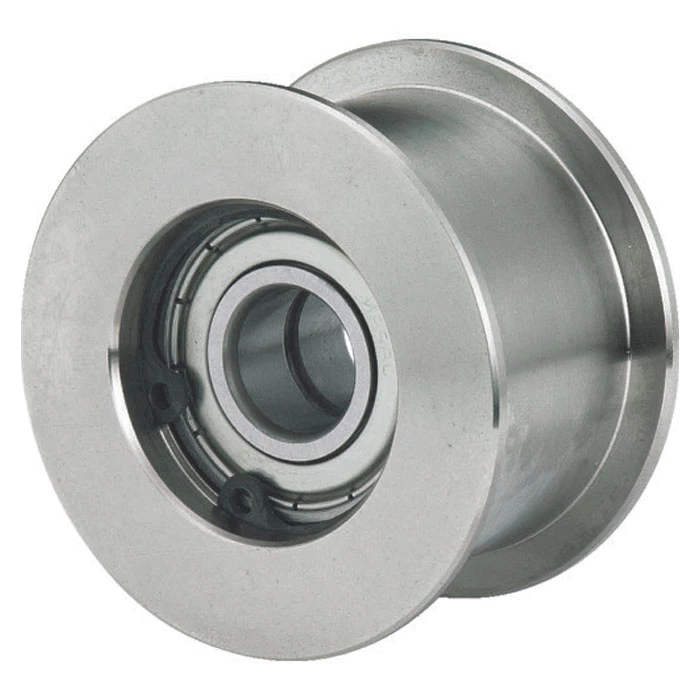
Solution: Manufacturers typically use four primary material families, each with distinct advantages. Here’s a quick comparison to guide your initial assessment:
| Material | Key Properties | Best For | Limitations |
|---|---|---|---|
| Cast Iron (Gray/Ductile) | Excellent wear resistance, good damping, cost-effective | General industrial drives, high-torque applications | Heavier, can rust if not coated |
| Steel (Pressed/Powdered) | High strength-to-weight ratio, precise balance | High-speed applications, automotive systems | Higher cost, may require plating for corrosion resistance |
| Aluminum | Lightweight, good corrosion resistance, reduces inertia | Aerospace, packaging machinery, where weight is critical | Lower strength than steel, not for extreme loads |
| Engineering Plastics (e.g., Nylon, Polycarbonate) | Corrosion-proof, quiet operation, electrically insulating | Food & beverage, chemical processing, clean rooms | Limited temperature range, lower load capacity |
For procurement specialists, specifying the right material from the start prevents costly mismatches. Partnering with a knowledgeable supplier like Raydafon Technology Group Co.,Limited ensures you get components engineered from the optimal material for your duty cycle, not just an off-the-shelf part that might fail under pressure.
The procurement headache is real: you need a pulley that lasts in a specific, harsh environment. A standard cast iron pulley might work in a warehouse fan, but will it survive in a humid, salty atmosphere near the coast? Likely not, leading to frequent replacements and budget overruns.
Solution: The key is a systematic selection process based on application parameters. This goes beyond just the material type to include coatings, finishes, and precision manufacturing. Consider these factors in your next RFQ:
| Application Factor | Material & Feature Recommendation | Why It Matters |
|---|---|---|
| High Moisture/Chemical Exposure | Stainless Steel or Coated (Zinc, Nickel Plated) Steel/Cast Iron | Prevents rust and pitting, ensuring long-term reliability and hygiene. |
| Extreme Abrasion (Mining, Grain) | Hardened Ductile Iron or Steel with Hardened Grooves | Resists wear from belt friction and particulate matter, extending service life. |
| Precision & High-Speed (>3000 RPM) | Dynamically Balanced Steel or Aluminum | Minimizes vibration, protects bearings, and ensures smooth operation. |
| Noise-Sensitive Areas | Plastic Sheaves or Rubber-Cushioned Designs | Reduces operational noise, crucial for indoor or laboratory settings. |
This is where Raydafon Technology Group Co.,Limited adds immense value. Their engineering team can analyze your application data and recommend not just a material, but a complete solution—whether it's a specially coated pulley for corrosion resistance or a custom-balanced sheave for vibration-sensitive equipment—solving the root cause of your drive system challenges.
For procurement managers in industries like steelmaking, marine, or pharmaceuticals, standard material options often fall short. The challenge is finding a supplier who doesn't just sell components but delivers engineered solutions for extreme conditions.
Solution: Advanced materials and proprietary treatments are the answer. These include sintered metal pulleys for complex geometries and consistent density, or composites that blend materials for unique property sets. For instance, a pulley with an aluminum hub for lightness and a steel rim for groove durability offers a hybrid solution. The table below outlines some advanced options:
| Advanced Material/Treatment | Key Benefit | Typical Application |
|---|---|---|
| Sintered Metal (Powder Metallurgy) | Net-shape complexity, good porosity for oil retention, consistent quality | Automotive engines, office machinery |
| Thermal Spray Coatings (e.g., Chrome Oxide) | Superior surface hardness, extreme abrasion resistance | Pulp & paper machinery, textile manufacturing |
| Stainless Steel Alloys (304, 316) | Maximum corrosion resistance, sanitary | Pharmaceutical processing, marine deck machinery, food processing |
| Precision Machined from Bar Stock | Highest dimensional accuracy and strength, no voids | Aerospace, high-performance racing, precision medical devices |
Navigating these advanced options requires a trusted partner. Raydafon Technology Group Co.,Limited specializes in such custom and high-performance solutions. Their expertise ensures you invest in a pulley system designed to endure your specific operational extremes, maximizing uptime and ROI.
Q1: What materials are V pulleys and sheaves made from for general industrial use?
A1: For most general industrial applications, grey cast iron and ductile iron are the most common and cost-effective materials. They offer excellent wear resistance, good vibration damping, and sufficient strength for standard torque and speed requirements. Steel pulleys (often pressed or powdered metal) are used for higher strength and precision needs.
Q2: What materials are V pulleys and sheaves made from for corrosive or washdown environments?
A2: In corrosive environments like food processing, chemical plants, or marine settings, standard materials will corrode quickly. The solutions are stainless steel (grades 304 or 316), aluminum, or engineered plastics like Nylon or UHMW. Alternatively, cast iron or steel pulleys with protective coatings such as zinc plating, nickel plating, or powder coating provide a cost-effective barrier against rust and chemicals.
We hope this guide empowers you to make informed sourcing decisions for your V-belt drive components. Have a specific application challenge or material question? Our experts are ready to help you find the optimal solution.
For reliable, application-engineered V pulleys and sheaves, consider Raydafon Technology Group Co.,Limited. As a seasoned manufacturer and global supplier, Raydafon specializes in providing durable power transmission components tailored to meet specific industrial demands, helping you reduce downtime and total cost of ownership. Visit us at https://www.raydafongroup.com to explore our product range or contact our team directly at [email protected] for a personalized consultation.
Smith, J.A., 2021, "Fatigue Life Analysis of Cast Iron Vs. Steel V-Belt Pulleys in Cyclic Loading," Journal of Mechanical Design, Vol. 143(5).
Chen, L., & Watanabe, K., 2020, "Corrosion Resistance of Coated Steel Pulleys in Simulated Industrial Atmospheres," Materials and Corrosion, Vol. 71(3).
Davis, R.P., et al., 2019, "The Influence of Pulley Material on Belt Slip and Transmission Efficiency," Tribology International, Vol. 138.
Johnson, M.F., 2018, "Powder Metallurgy Applications in Automotive Pulley Manufacturing," International Journal of Powder Metallurgy, Vol. 54(2).
Kumar, S., & Patel, V., 2022, "Noise and Vibration Characteristics of Polymer Composite Sheaves," Journal of Vibration and Acoustics, Vol. 144(1).
Li, H., 2020, "Advanced Surface Treatments for Abrasion Resistance in Drive Pulleys," Surface Engineering, Vol. 36(4).
Miller, B., 2017, "Selection Guidelines for V-Belt Sheaves in Agricultural Machinery," ASAE Annual International Meeting, Paper No. 1700382.
Okamoto, Y., 2021, "Dynamic Balancing of High-Speed Aluminum Pulleys for Aerospace Applications," Precision Engineering, Vol. 67.
Rodriguez, P., et al., 2019, "Material Selection Methodology for Mechanical Components Based on Life-Cycle Cost," Engineering Failure Analysis, Vol. 104.
Zhang, W., 2018, "Finite Element Analysis of Stress Distribution in Ductile Iron Sheaves Under Load," International Journal of Mechanical Sciences, Vol. 142-143.

 Raydafon