
In the world of mechanical power transmission and motion control, securing components firmly and accurately on a shaft is a fundamental requirement. Among the various solutions available, Hex & D Bore Shaft Collars have emerged as a superior choice for engineers and maintenance professionals demanding unwavering reliability, precise positioning, and ease of installation. Unlike standard set screw collars that rely on a single point of contact, these advanced collars utilize multiple clamping forces distributed evenly, creating a more robust and vibration-resistant connection. This guide delves deep into the design, advantages, applications, and technical specifications of Hex & D Bore Shaft Collars, providing the detailed insight needed for optimal component selection.
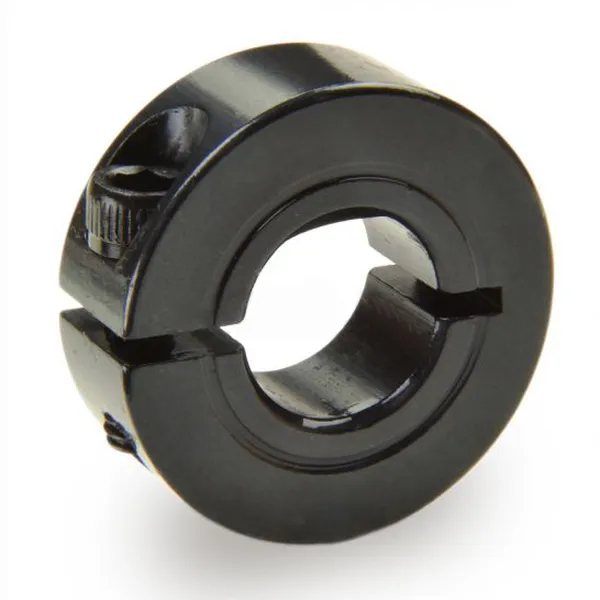
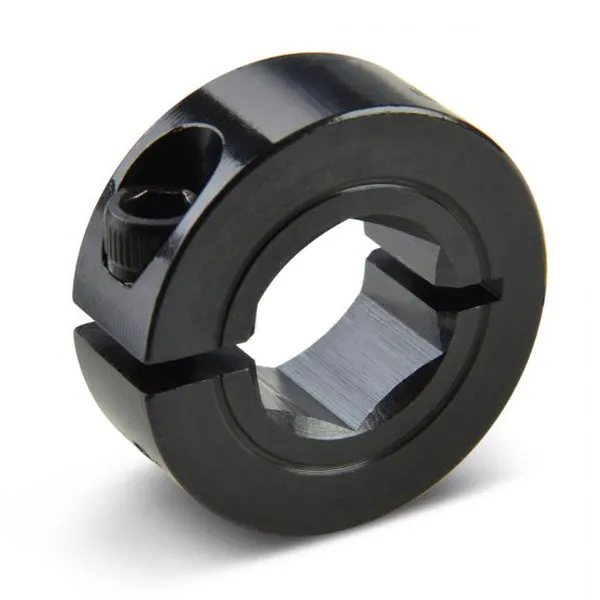
A Hex & D Bore Shaft Collar is a two-piece clamping device. Its name derives from its two defining features: an external hexagon body and an internal "D" shaped bore. The hex body allows for easy installation and removal using a common wrench, a significant improvement over slotted or round collars that can slip during torque application. The D-shaped bore is created when the two halves of the collar are assembled, forming a perfect circle with a flat segment. This flat acts as a precision registration surface against a corresponding flat on the shaft (often created by a setscrew dimple, a milled flat, or a keyway), preventing any rotational slip under load.
The primary advantages of this design are substantial:
Raydafon Group manufactures Hex & D Bore Shaft Collars to exacting standards, offering a wide range of sizes and materials to suit diverse industrial needs. Our collars are precision machined from high-grade materials and undergo rigorous quality checks to ensure consistent performance.
Selecting the correct collar requires attention to three key dimensions: Bore Diameter, Collar Outside Diameter (O.D.), and Width. Below is a reference table for a segment of Raydafon Group's standard product line.
| Shaft Diameter (Bore Size) (inch/mm) | Outside Diameter (O.D.) (inch/mm) | Collars Width (inch/mm) | Clamp Screw Size (Quantity) | Typical Static Holding Torque (ft-lbs / N-m)* | Recommended Material |
|---|---|---|---|---|---|
| 1/4" (6.35 mm) | 7/8" (22.2 mm) | 3/8" (9.5 mm) | #8-32 (2) | 25 / 33.9 | Steel, Aluminum |
| 3/8" (9.53 mm) | 1-1/8" (28.6 mm) | 7/16" (11.1 mm) | #10-32 (2) | 45 / 61.0 | Steel, Stainless |
| 1/2" (12.7 mm) | 1-1/2" (38.1 mm) | 1/2" (12.7 mm) | 1/4"-20 (2) | 100 / 135.6 | Steel, Stainless, Aluminum |
| 3/4" (19.05 mm) | 2" (50.8 mm) | 5/8" (15.9 mm) | 5/16"-18 (2) | 220 / 298.3 | Steel, Stainless |
| 1" (25.4 mm) | 2-1/2" (63.5 mm) | 3/4" (19.1 mm) | 3/8"-16 (2) | 400 / 542.3 | Steel, Stainless |
| 1-1/2" (38.1 mm) | 3-1/2" (88.9 mm) | 1" (25.4 mm) | 1/2"-13 (2) | 950 / 1287.8 | Steel |
*Holding torque values are approximate for steel collars on a steel shaft and can vary based on surface finish, lubrication, and installation torque. Always consult engineering data for critical applications.
Q: How does a D Bore differ from a standard round bore with a setscrew?
A: A standard round bore collar relies entirely on the friction created by the tip of a setscrew digging into the shaft. This creates a high-stress point, can damage the shaft, and is prone to slipping under vibration. A D Bore collar has a pre-machined flat inside the bore. When assembled and tightened, the two halves clamp uniformly around the shaft while the flat provides a positive mechanical lock against a corresponding flat on the shaft, preventing any rotation without causing concentrated damage.
Q: Do I need to machine a flat on my shaft to use a D Bore collar?
A: Yes, for the collar to function correctly and provide the anti-rotation feature, a flat must be present on the shaft. This flat should be at least as wide as the flat in the collar's bore and deep enough to provide a secure seat. For existing shafts, a simple flat can be filed or milled. In many new designs, specifying a shaft with a standard milled flat is a best practice when using these collars.
Q: What is the recommended installation torque for the clamp screws?
A: Correct installation torque is critical for performance. Under-tightening can lead to slippage; over-tightening can strip threads or distort the collar. Raydafon Group provides specific torque guidelines based on screw size and material. As a general rule, for steel collars with steel screws, use a calibrated torque wrench. A common reference is 75-80% of the screw's proof load torque. Always refer to the manufacturer's data sheet for precise values.
Q: Can I use a Hex & D Bore Shaft Collar on a stainless steel or plated shaft?
A: Absolutely. This is one of their key benefits. Because the holding force is clamping-based rather than point-indentation-based, they are ideal for use on hardened, ground, coated, or stainless steel shafts where surface integrity is important. Ensure the collar material is compatible to avoid galvanic corrosion (e.g., use stainless steel collars on stainless shafts in corrosive environments).
Q: Are these collars suitable for high-speed or dynamic applications?
A: Yes, their excellent concentricity and secure grip make them well-suited for dynamic applications. The balanced clamping minimizes imbalance, which is crucial at high RPMs. They are commonly used on drive shafts, motor shafts, and spindle assemblies. For extremely high-speed or safety-critical applications, a detailed dynamic analysis based on the specific loads is recommended.
Q: How do I select between carbon steel, stainless steel, and aluminum?
A: The choice depends on your application requirements:
Q: Does Raydafon Group offer custom sizes or special configurations?
A: Yes, Raydafon Group's engineering team specializes in providing custom solutions. We can manufacture collars with non-standard bore sizes, unique outside diameters, special widths, different screw configurations, or proprietary coatings to meet specific OEM requirements or solve unique design challenges.
The versatility and reliability of Hex & D Bore Shaft Collars make them indispensable across a broad spectrum of industries. Their primary function is to act as a mechanical stop, to secure components in position, or to serve as a load-bearing face.
To ensure maximum performance and longevity from your shaft collars, follow these professional installation steps:

 Raydafon