
In the world of mechanical power transmission and material handling, the sheave is a fundamental yet often underappreciated component. For two decades, engineers, project managers, and maintenance professionals have relied on precision-engineered sheaves to ensure the smooth, efficient, and safe operation of countless systems, from industrial conveyors and construction cranes to agricultural machinery and automotive engines. At Raydafon Group, we understand that the reliability of your entire system hinges on the quality of its most basic parts. This guide delves into the critical aspects of sheave selection, presents our detailed product specifications, and answers the most common questions to help you make an informed decision for your application.
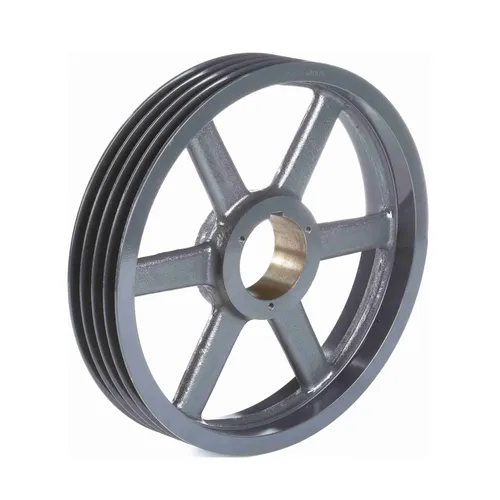
A sheave, essentially a wheel with a grooved rim, is designed to hold a belt, rope, or cable. Its primary function is to change the direction of a force or transmit rotational motion and power between shafts. The groove ensures the driving element (like a V-belt or wire rope) stays securely in place, preventing slippage and maximizing power transfer efficiency. Sheaves are not universal; their design varies drastically based on the drive medium, load capacity, operational speed, and environmental conditions.
Key design elements include:
Raydafon Group manufactures a comprehensive range of sheaves for diverse industrial applications. Our products are machined to exacting tolerances, using high-grade materials and advanced heat-treatment processes to ensure longevity and consistent performance under demanding conditions.
Our most common line, designed for general power transmission with standard V-belts (A, B, C, D profiles) and high-performance narrow-wedge belts (3V, 5V, 8V profiles).
| Model Series | Belt Profile | Pitch Diameter Range | Bore Range | Standard Material | Key Features |
|---|---|---|---|---|---|
| RDF-VS | A, B, C, D | 3" to 60" | 1/2" to 6" | Grade 30 Cast Iron | Static balanced, finished bore, single or multi-groove. |
| RDF-NW | 3V, 5V, 8V | 2.5" to 45" | 3/8" to 5" | Ductile Iron (65-45-12) | Dynamic balanced, higher power capacity, lighter weight. |
For applications requiring precise, non-slip synchronization between shafts, such as in robotics, CNC machinery, and packaging equipment.
| Model Series | Tooth Profile (Pitch) | Number of Grooves | Bore Type | Standard Material | Key Features |
|---|---|---|---|---|---|
| RDF-TMXL | XL (0.200") | 10 to 120 | Plain, setscrew, or QD bushing | Carbon Steel | Black oxide finish, stock sizes for rapid delivery. |
| RDF-TMHTD | HTD (3M, 5M, 8M, 14M) | 12 to 90 | Finished bore & keyway | Alloy Steel | Hardened teeth, high torque transmission, flanged options. |
Engineered for lifting, hoisting, and rigging applications. These sheaves are built to handle the severe radial loads and abrasive wear from wire rope.
| Model Series | Rope Diameter Range | Sheave Diameter (Min. Rec.) | Bearing Type | Standard Material | Key Features |
|---|---|---|---|---|---|
| RDF-WRL | 1/4" to 2" | 18x Rope Dia. | Sleeve Bearing / Bronze Bushing | Forged Carbon Steel | U-Groove, heat-treated for high yield strength. |
| RDF-WRH | 1/2" to 3" | 20x Rope Dia. | Tapered Roller Bearing | Alloy Steel (4140) | Sealed & lubricated bearings, hardened groove surface. |
Choosing the correct sheave involves more than just matching a belt size. Use this checklist to specify your requirements accurately.
Q: What is the main difference between a sheave and a pulley?
A: In mechanical terminology, the words are often used interchangeably. However, a distinction is frequently made in industry: a sheave typically refers to a grooved wheel used with ropes, cables, or belts, and is often part of a block and tackle system or a complex drive. A pulley can be a simpler, non-grooved wheel or the entire assembly (including the wheel, bearings, and housing). At Raydafon Group, we use "sheave" to denote the precision grooved wheel component itself.
Q: How do I determine the correct minimum sheave diameter for my wire rope?
A: Using an undersized sheave is a leading cause of premature wire rope failure due to accelerated fatigue. The general rule is a minimum sheave diameter of 18 to 20 times the nominal rope diameter for standard lifting applications (e.g., D/d ratio). For more severe duty cycles, such as in mining or draglines, ratios of 30:1 or higher are mandated. Always consult the rope manufacturer's specifications and relevant safety standards (like OSHA or ASME). Raydafon Group engineers can help you calculate the optimal diameter for your service life and safety goals.
Q: Why is balancing important for a sheave, and how do I know if I need dynamically balanced sheaves?
A: An unbalanced sheave acts like an out-of-round wheel, creating centrifugal force that causes vibration. This vibration leads to increased bearing load, premature bearing failure, seal damage, noise, and reduced efficiency. As a rule of thumb: If your drive operates below 1500 RPM, statically balanced sheaves are usually adequate. For drives operating above 1500 RPM, or in high-precision applications (like medical equipment, high-speed spindles), dynamically balanced sheaves are essential. Raydafon Group marks all dynamically balanced sheaves with the residual unbalance value.
Q: Can I use a standard V-belt sheave with a different brand or type of V-belt?
A: It is strongly discouraged. While belts and sheaves are often standardized (e.g., A, B, C sections), groove angles and precise dimensions can vary slightly between manufacturers. Mixing brands can lead to improper belt seating, which reduces contact area, increases slippage, generates excess heat, and drastically shortens the life of both the belt and the sheave. For optimal performance and warranty support, use a matched drive system. Raydafon Group guarantees performance when our sheaves are paired with belts from our recommended partners.
Q: My application is in a corrosive environment (e.g., marine, chemical processing). What material options does Raydafon Group offer?
A: Standard cast and ductile iron offer good general corrosion resistance but can succumb to harsh chemicals or saltwater. For corrosive environments, we offer:
Q: What maintenance is required for sheaves?
A: Proper maintenance is key to maximizing sheave and drive life. Implement a regular inspection schedule:
For over twenty years, Raydafon Group has built its reputation on precision, reliability, and deep technical expertise in power transmission components. Our sheaves are not just commodity items; they are the result of rigorous engineering, quality-controlled manufacturing, and continuous testing. We offer:
Selecting the right sheave is a critical engineering decision that impacts efficiency, safety, and total cost of ownership. By understanding the parameters outlined in this guide and leveraging the expertise and product quality of Raydafon Group, you can ensure your systems operate at peak performance for years to come.

 Raydafon