
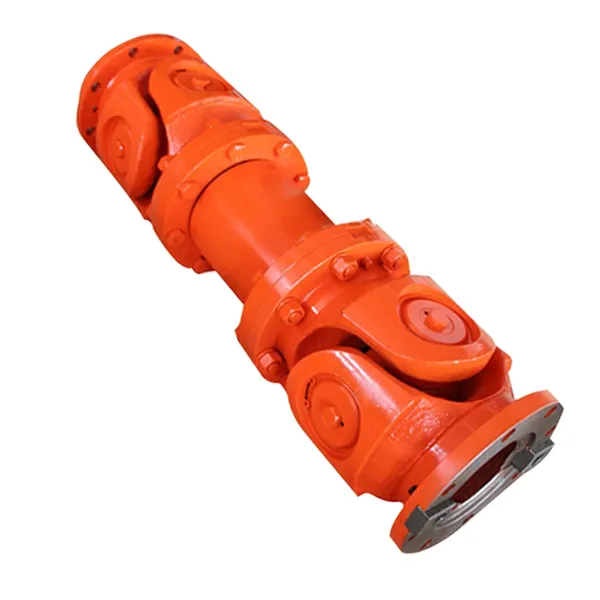
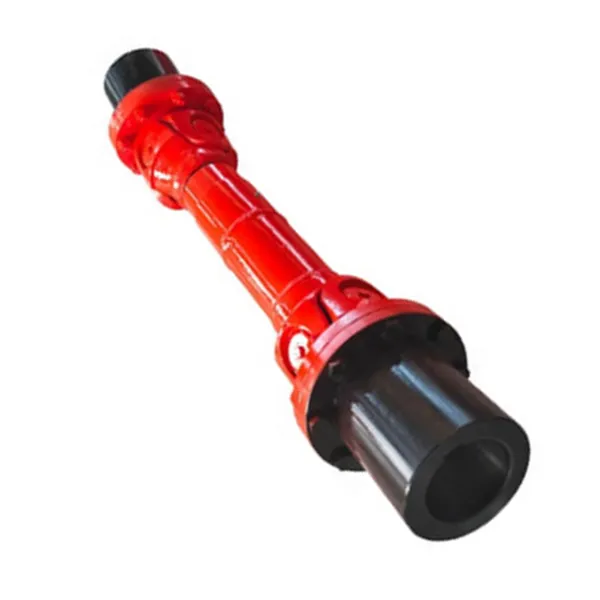
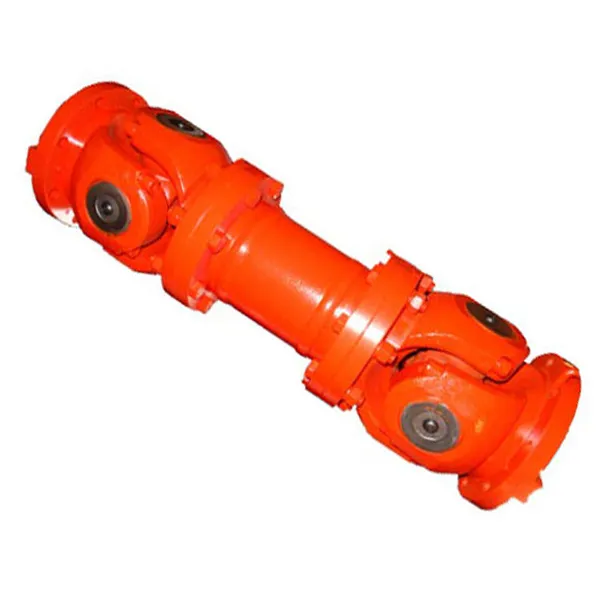
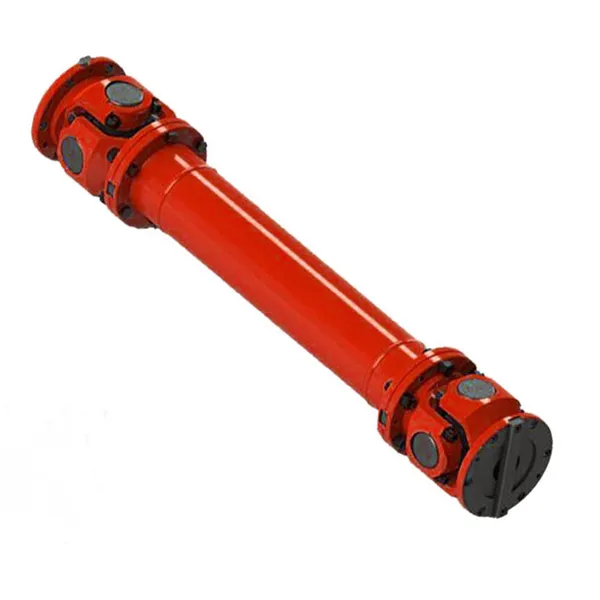
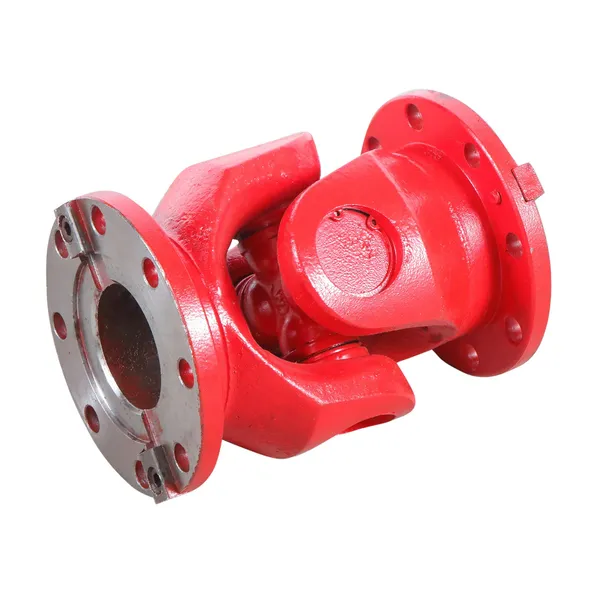
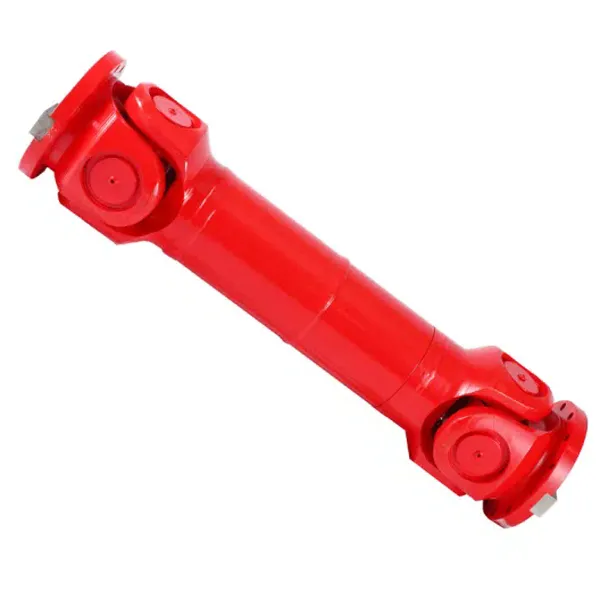
The SWP universal coupling is a cornerstone component in power transmission systems. Also widely recognized as a Cardan joint or Hooke's joint, its primary function is to connect two shafts at an angle, efficiently transmitting torque and rotary motion while compensating for misalignment. This capability makes it indispensable across a vast spectrum of machinery where perfect shaft alignment is either impossible or impractical to maintain. The design principle involves a cross-shaped bearing block that connects two yokes, allowing for smooth power transfer despite angular offset.
Industrial applications demand components that are not only effective but also durable and reliable under strenuous conditions. This is where the engineering and manufacturing excellence of the Raydafon Group comes into play. Our commitment to precision and quality ensures that every coupling delivers consistent performance, minimal maintenance, and extended service life, providing exceptional value for your operational needs.
The superiority of Raydafon's SWP universal couplings stems from a combination of advanced design features and robust construction. These features are engineered to address the common challenges in power transmission, such as vibration, wear, and efficiency loss.
Selecting the correct coupling requires a thorough understanding of its technical specifications. The following table outlines the key parameters for the standard SWP series offered by Raydafon Group. These specifications are critical for engineers and maintenance professionals to ensure optimal compatibility and performance within their systems.
| Model Designation | Bore Diameter Range (mm) | Max. Torque Capacity (Nm) | Max. Speed (rpm) | Max. Permissible Angular Misalignment | Standard Flange Type | Approx. Weight (kg) |
|---|---|---|---|---|---|---|
| SWP 50 | 12 - 20 | 125 | 6,500 | 15° | DIN 115 | 0.85 |
| SWP 80 | 20 - 32 | 400 | 5,000 | 15° | DIN 115 | 1.95 |
| SWP 120 | 32 - 50 | 1,100 | 4,300 | 15° | DIN 116 | 4.80 |
| SWP 180 | 50 - 70 | 2,500 | 3,600 | 15° | DIN 117 | 10.50 |
| SWP 260 | 70 - 100 | 6,300 | 2,800 | 12° | DIN 118 | 24.00 |
| SWP 350 | 100 - 140 | 12,500 | 2,200 | 10° | SAE 2-Bolt | 48.50 |
Note: Specifications are for standard models. Custom configurations with different bore sizes, flanges, and materials are available upon consultation with Raydafon Group engineering teams.
The versatility of the SWP universal coupling makes it a preferred choice in numerous sectors. Its ability to transmit high torque at varying angles is crucial for:
Q: What is the primary difference between a SWP universal coupling and a flexible jaw coupling?
A: The fundamental difference lies in how they handle misalignment. A SWP universal coupling (Cardan joint) is designed to transmit torque through an angle, handling primarily angular misalignment. A flexible jaw coupling uses an elastomeric insert to accommodate parallel and angular misalignment as well as minor axial movement and vibration damping. SWP couplings are for higher torque and angular displacement, while jaw couplings are for lower torque with multi-directional flexibility.
Q: How do I select the correct size of SWP universal coupling for my application?
A: Selection requires analyzing several key parameters: 1) The maximum torque to be transmitted (including shock loads), 2) The operational RPM, 3) The required bore sizes for both connected shafts, 4) The maximum angular misalignment between shafts, and 5) The service environment. Cross-reference these needs with the torque and speed ratings in the product tables, ensuring your values are within the coupling's rated capacity. The engineering team at Raydafon Group can provide expert selection assistance.
Q: Can two SWP couplings be used together?
A: Yes, this is a very common configuration known as a double Cardan joint or a constant-velocity (CV) joint assembly. Using two couplings spaced apart with an intermediate shaft helps to cancel out velocity fluctuations inherent in a single joint operating at an angle. It also allows for the transmission of power over longer distances and can accommodate both angular and parallel offset.
Q: What are the critical steps for properly installing a SWP universal coupling?
A: Proper installation is key to performance and longevity. Key steps include: 1) Ensuring shafts are clean and free of burrs. 2) Aligning the connected machinery as closely as possible within the coupling's permissible misalignment before tightening flange bolts. 3) Using a torque wrench to tighten flange bolts to the manufacturer's specified value in a star pattern. 4) For keyed connections, ensuring a proper fit without excessive play. 5) Checking that the coupling moves freely through its entire angular range without binding.
Q: What lubrication is required, and what is the recommended maintenance schedule?
A: Maintenance depends on the bearing type. Sealed-for-life bearings require no routine lubrication. Couplings with grease nipples (zerk fittings) require periodic greasing with a high-quality, extreme-pressure (EP) lithium-based grease. The interval depends on operating conditions (speed, temperature, load) but is typically between 100 to 500 hours of operation. During greasing, purge until fresh grease is seen at all four seals to displace old grease and contaminants. Regularly inspect for seal damage, unusual play, or noise.
Q: What are the common signs of SWP coupling failure or wear?
A> Watch for these indicators: 1) Vibration: Increased or sudden vibration, especially at specific speeds, often indicates imbalance or worn bearings. 2) Noise: Clicking, knocking, or grinding sounds from the joint area. 3) Visible Wear or Looseness: Excessive play when manually moving the coupling, visible rust or pitting on the cross, or damaged seals. 4) Grease Leakage: Excessive grease purged from seals can indicate over-lubrication or seal failure, while a dry, rusty cross suggests under-lubrication.
Q: Why does a single universal joint cause velocity fluctuation, and how is it managed?
A> A single joint operating at an angle does not provide constant angular velocity between input and output shafts; it causes a cyclic variation (second-order harmonics). The output speed accelerates and decelerates twice per revolution. This is managed by ensuring the input and output yokes are in phase (aligned in the same plane) and by keeping operating angles as low as possible. For applications sensitive to vibration, a double Cardan joint setup is used to cancel out these fluctuations.
Q: What are the temperature and environmental limits for standard SWP couplings?
A> Standard couplings with standard seals and lubricants are typically rated for continuous operation in environments ranging from -30°C to +100°C. For applications outside this range (e.g., high-temperature steel mills or cryogenic applications), Raydafon Group offers special options including high-temperature seals, specific lubricants, and alternative materials to ensure reliable performance.
Q: Can I request a custom-designed SWP coupling for a unique application?
A> Absolutely. The Raydafon Group specializes in providing engineered solutions. Our technical team can design and manufacture custom couplings with specific bore sizes, special flange patterns, unusual lengths, specific material grades (like stainless steel for corrosive environments), or unique performance characteristics to meet the exact demands of your specialized machinery.

 Raydafon