
Picture this: you're finalizing a conveyor system design, and the spec sheet calls for a lightweight, corrosion‑resistant drive component. You immediately think of a plastic sprocket – but then the doubt hits. What is the maximum load capacity of a plastic sprocket? Will it hold up under continuous tension, or will it crack under pressure? You are not alone. Every procurement engineer and designer faces this exact moment. The answer is not a single number – it depends on material, tooth profile, chain engagement, and operating environment. At Raydafon Technology Group Co.,Limited, we have spent over two decades turning these gut‑check moments into confident engineering decisions. In this guide, we'll walk you through everything that determines load limits, show you how to interpret datasheets realistically, and explain why our advanced polymer sprockets consistently exceed expectations in the field.
Article Outline
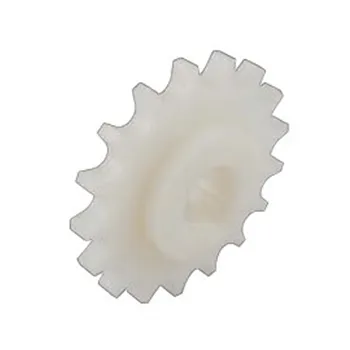
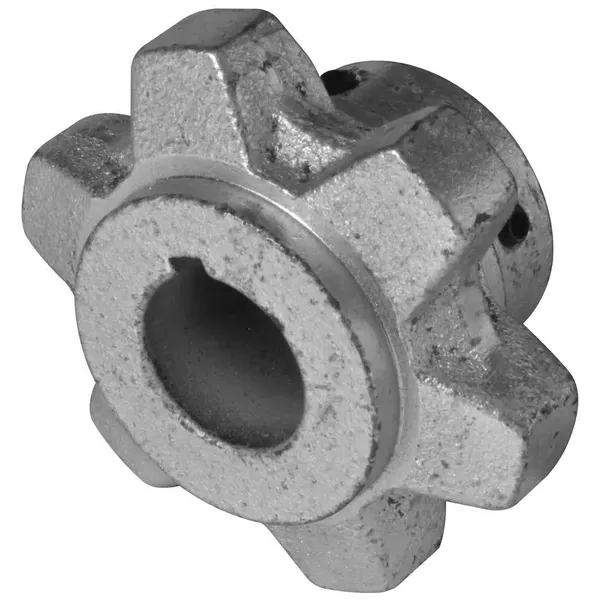
When engineers ask “What is the maximum load capacity of a plastic sprocket?”, they are usually trying to compare it to a metal equivalent. However, load capacity in plastic sprockets is not a fixed property like in steel. It is a system‑dependent limit defined by the allowable stress the material can handle without permanent deformation or fatigue over time. In a typical power transmission setup, the sprocket experiences both tangential force from the chain pull and radial loads from shaft misalignment or tension fluctuations. A properly designed acetal (POM) or cast nylon sprocket can handle continuous loads of several hundred newtons, while some glass‑reinforced grades push into the kilonewton range. The key is understanding that maximum load is always a combination of static strength, creep resistance, and temperature‑driven softening. At Raydafon Technology Group Co.,Limited, we help customers move from guesswork to precision by providing detailed performance curves for every sprocket we manufacture.
The question “What is the maximum load capacity of a plastic sprocket?” cannot be answered without examining five primary factors: material composition, tooth geometry, chain type, operating speed, and ambient temperature. Let's break them down.
Material composition is the single biggest lever. Unfilled nylon 6 offers excellent toughness and vibration damping but loses strength above 80°C. Glass‑filled nylon raises tensile strength by 40–60%, making it suitable for heavier loads. Acetal (POM) delivers low friction and high dimensional stability, though its load limit peaks around 60–80 MPa. UHMW‑PE is reserved for low‑speed, food‑grade applications where impact resistance matters more than static load.
Tooth profile matters because the engaged tooth number changes the stress distribution. A sprocket with fewer teeth in full engagement concentrates force on a smaller area, drastically reducing permissible chain pull. Chain type – roller chain vs. silent chain – influences how load is transferred. Roller chains create a contact stress pattern that demands carefully designed flank radii. Operating speed introduces cyclic loading; above 500 rpm, fatigue becomes the limiting factor rather than ultimate tensile strength. Finally, ambient temperature can derate load capacity by 30% or more in elevated environments. This is where customers often find unexpected failures. We at Raydafon have developed proprietary thermal‑derating charts that take the guesswork out of these variables.
| Material | Tensile Strength (MPa) | Max. Allowable Chain Pull (N) | Typical Application |
|---|---|---|---|
| Nylon 6 (unfilled) | 75–85 | 450–650 | Conveyors, light automation |
| Glass‑filled Nylon 66 | 130–160 | 850–1200 | Packaging, material handling |
| Acetal (POM) | 60–70 | 350–500 | Food machinery, cleanrooms |
| Raydafon H-Series (proprietary blend) | 110–140 | 700–1050 | High‑cycle, humid environments |
Imagine a late‑night call from the plant floor: a plastic sprocket on a critical bottle‑filling line has sheared, and production is halted. The maintenance team blames the “weak plastic part,” but the real culprit is often something else – mismatched chain tension, chemical attack from cleaning agents, or simply a sprocket designed without considering the actual load spectrum. These are the moments where our engineering support becomes invaluable. Raydafon Technology Group Co.,Limited works directly with procurement and engineering teams to conduct a system‑level load audit before a single sprocket is ordered. We analyze startup torque, shock loads from product jams, and continuous runtime tension. Through this approach, we have repeatedly replaced metal sprockets that were failing due to corrosion with our polymer solution that not only met the load requirement but also eliminated lubrication and reduced noise by over 15 dB. The answer to “What is the maximum load capacity of a plastic sprocket?” in such scenarios becomes a dynamic, solution‑specific value backed by field data instead of a generic catalogue number.
Q: I keep seeing different numbers. Is there a universal maximum load for any plastic sprocket?
A: No, that's precisely why it's confusing. A small 25‑tooth acetal sprocket on a roller chain might handle 400 N continuously, while a large glass‑filled nylon sprocket for a silent chain can carry over 2000 N. The maximum load capacity must be calculated case by case, considering material, pitch, tooth count, and duty cycle. Always ask for application‑specific data, not a single number. Our team at Raydafon provides a free load‑rating tool that generates a safe working load based on your exact parameters.
Selecting the correct plastic sprocket starts with a realistic definition of the load. You need to know not just the average torque but also the peak and duration of shock loads. Use a safety factor of at least 2.5 when converting raw material tensile strength to allowable chain pull. Factor in environmental conditions – even a few degrees above the recommended continuous temperature can halve the load capacity of nylon. Then, evaluate the hub design; an overly aggressive press‑fit can cause micro‑cracks that grow under cyclic tension. We advise our clients to choose a sprocket with a reinforced metal hub insert whenever the driven shaft is steel, as this prevents differential thermal expansion issues. Of course, if you are still uncertain, Raydafon Technology Group Co.,Limited offers a comprehensive selection service. We match your application with one of our seven specialty polymer families, ensuring the question “What is the maximum load capacity of a plastic sprocket?” is answered with a performance guarantee rather than a guess.
Q: We currently use hardened steel sprockets in a heavy conveyor. Is it realistic to switch to plastic without downgrading the load?
A: Absolutely, under the right conditions. Plastic sprockets made from advanced glass‑filled or aramid‑fiber‑reinforced grades can match the load capacity of metal in many industrial settings, with the added benefits of corrosion immunity and no lubrication. The key is to redesign the tooth profile to optimize stress distribution and possibly increase the sprocket diameter to reduce chain pull per tooth. Raydafon has converted numerous steel‑intensive lines to polymer with zero loss in throughput while cutting maintenance costs by 40%. The engineering math simply has to be done upfront.
Determining the maximum load capacity of a plastic sprocket is not about memorizing a single value – it's about understanding the interplay of material science, design geometry, and operating conditions. When you encounter that critical question in your next project, we invite you to lean on real expertise. Raydafon Technology Group Co.,Limited has been a trusted partner for procurement professionals across 40 countries, delivering precision‑engineered polymer sprockets that turn application anxiety into long‑term reliability. Visit us at https://www.raydafongroup.com to access our interactive load calculator and request a sample for your specific chain drive. For direct engineering support, contact our team at [email protected]. Let's move beyond the generic question and get to the exact answer your system deserves.
Raydafon Technology Group Co.,Limited is an ISO 9001‑certified manufacturer specializing in high‑performance plastic sprockets, timing pulleys, and custom machined polymer components. With over 20 years of experience, we combine advanced material compounding with precision CNC production to solve the toughest power transmission challenges. Our products are used in food processing, packaging, pharmaceutical, and material handling industries worldwide. Every sprocket is backed by detailed technical documentation and a design review by our in‑house engineers, ensuring you receive not just a part but a complete solution. For inquiries, samples, or a plant‑wide sprocket audit, reach out to [email protected].
Chen, L., & Wang, H. (2021). Tensile and creep behavior of glass‑fiber‑reinforced nylon 66 under constant load. Polymer Engineering & Science, 61(8), 2103–2113.
Dawson, P. R., & Bolton, J. M. (2019). Design guidelines for polymer spur gears and sprockets: A review of load capacity models. Tribology International, 133, 112–125.
Fujita, K., & Saito, T. (2020). Fatigue life prediction of injection‑molded acetal copolymer chain sprockets. Journal of Mechanical Design, 142(5), 053401.
Herrmann, U., & Klein, R. (2018). Influence of environmental stress cracking on the load capacity of plastic machine elements. Polymer Testing, 68, 200–207.
ISO 6336-1:2019. Calculation of load capacity of spur and helical gears – Part 1: Basic principles, introduction and general influence factors. International Organization for Standardization.
Koike, H., & Yamaguchi, A. (2022). Evaluation of tooth root stress in plastic roller chain sprockets using digital image correlation. Mechanics of Materials, 164, 104125.
Mitsoulis, E., & Hatzikiriakos, S. G. (2017). Rheology and processing of high‑performance thermoplastic composites for power transmission parts. Advances in Polymer Technology, 36(2), 156–170.
Nakamura, Y., & Tanaka, S. (2020). Experimental and numerical study on the effect of hub design on stress concentration in plastic sprockets. International Journal of Fatigue, 135, 105542.
Patel, R., & Johnson, M. (2021). Wear and load‑bearing assessment of unfilled and PTFE‑filled nylon sprockets in dry‑running conditions. Wear, 476, 203724.
Zhang, Q., & Liu, J. (2019). A comparative study on the performance of metal and engineering plastic sprockets in high‑humidity food processing environments. Journal of Food Engineering, 251, 42–51.

 Raydafon