
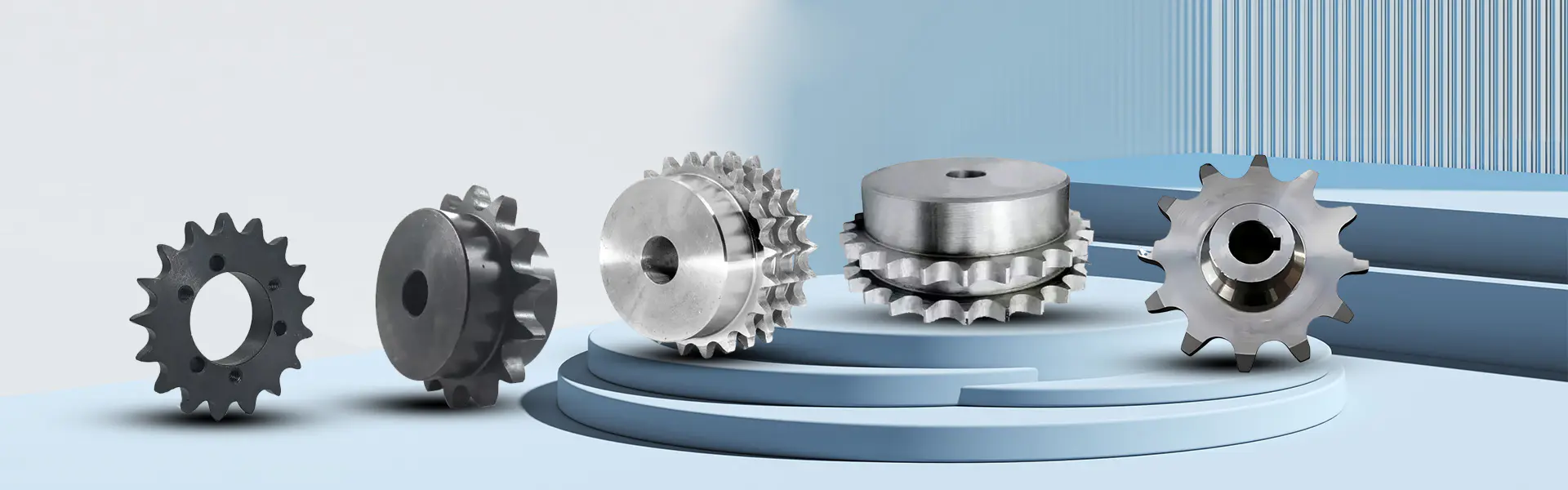
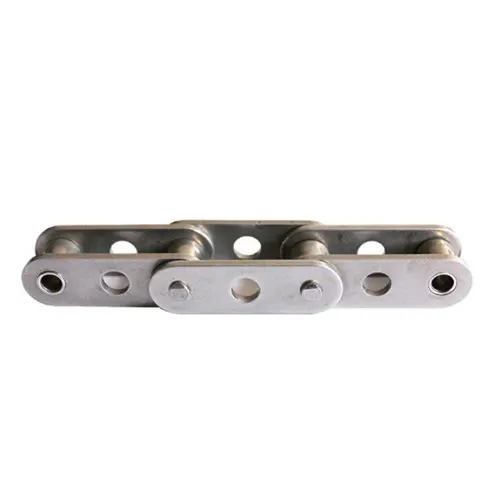
Imagine you're the maintenance manager at a bustling grain elevator. It's peak season, and a critical conveyor with a battered pintle chain just ground to a halt. Every minute of downtime is costing you money, and your team is asking the inevitable question: Can Pintle Chains be repaired or should they always be replaced? The answer isn't a simple yes or no — it hinges on the severity of wear, the criticality of the application, and your tolerance for unplanned breakdowns. In many cases, a quick patch job might get you through the day, but masked damage in chain links, pins, or sprockets can cascade into catastrophic failure. Procurement professionals like you face a constant tug-of-war between short-term repair costs and long-term reliability. This guide will walk you through exactly when a pintle chain can be saved, when replacement is the only safe choice, and how to build a purchasing strategy that keeps your operation humming.
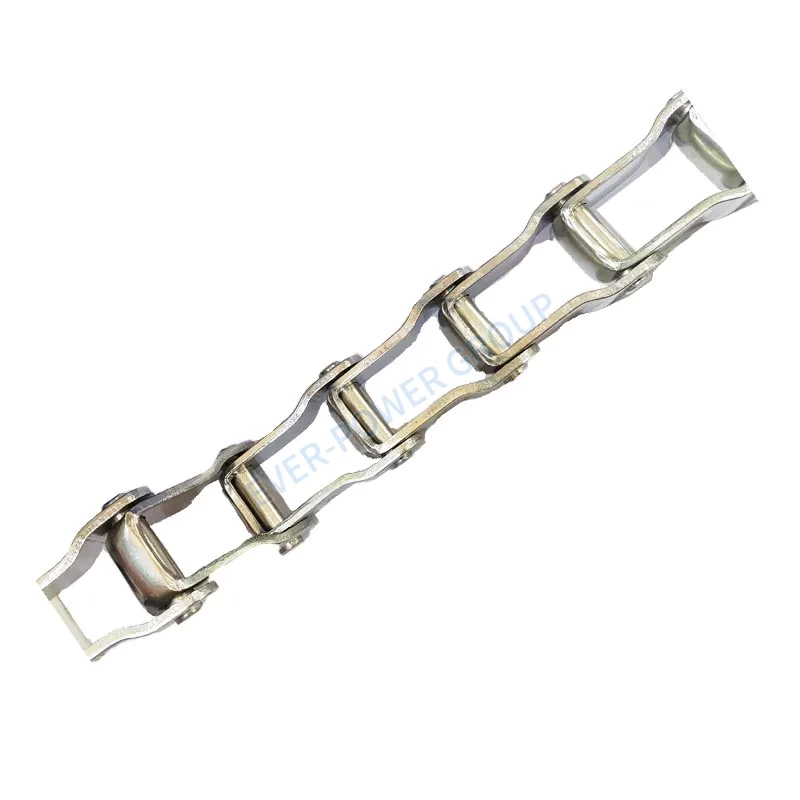
Consider a scenario many agricultural equipment buyers know too well. Your harvester’s heavy-duty pintle chain has been running for two seasons without a thorough inspection. Now, you notice uneven feeding and a rhythmic slapping sound. On closer examination, you see that the pins exhibit polished grooves, several sidebars are bent, and the chain has elongated beyond 3% of its original pitch. These are classic failure signatures. Addressing them early prevents secondary damage to sprockets and driveshafts. Typical indicators include measurable pitch elongation, cracked links, seized joints, and inconsistent tension. If detected early, some of these issues are repairable; if ignored, they will force a full replacement and possibly damage associated machinery.
Picture a smaller feed mill where a pintle chain operates under light to moderate load. The chain has one broken link but the remainder measures within OEM wear tolerance. In this controlled environment, a properly executed repair — using correct-grade connecting links and alignment tools — can restore function and extend service life by hundreds of hours. The key is to evaluate three factors: link integrity, pin wear uniformity, and whether the sprocket is still within its wear limit. However, repairing should never involve welding or makeshift pins, as these introduce metallurgical weaknesses. For safety-critical conveyors, even a “minor” repair can introduce failure risk. That’s why many maintenance teams set a repair threshold: if more than 5% of links need replacing or pitch elongation exceeds 2%, they replace the entire chain immediately.
Q: Can pintle chains be repaired or should they always be replaced when a single link breaks?
A: A single broken link can often be replaced with a factory-grade connecting link, provided the rest of the chain shows no significant wear. Always inspect adjacent links and pins for hidden fatigue. If the breakage was caused by a sudden overload, monitoring for additional latent damage is essential. This targeted repair is common in non-critical applications, but in high-speed or heavy-load drives, full replacement is safer.
Imagine a lumber mill where a drag conveyor transports abrasive sawdust 16 hours a day. The pintle chain has been repaired twice in the past year, yet downtime incidents are creeping upward. Each breakdown costs approximately $2,200 in lost production, not counting team overtime. In this scenario, the “savings” from repairs evaporate quickly. A new, high-quality pintle chain from a specialized supplier like Raydafon Technology Group Co.,Limited eliminates the hidden costs of recurring failures. With a fresh chain, you get predictable wear life, precise sprocket engagement, and warranty coverage. For procurement professionals, this shift in perspective — from component price to total lifecycle cost — is what separates a reactive maintenance culture from a strategic, cost-optimized operation.
Q: Can pintle chains be repaired or should they always be replaced if the stretch is just above the OEM limit?
A: Once elongation surpasses 2–3% of the original pitch, the chain no longer meshes correctly with the sprocket, accelerating wear on both. At this stage, repair is rarely economical because the core pin-and-bushing joints have worn unevenly. Replacing the chain and, if necessary, the sprocket together restores full system efficiency. Procuring matched sets from a single reliable source — like Raydafon Technology Group Co.,Limited — ensures compatibility and extends the drivetrain’s overall life.
The following table summarizes the key decision parameters that smart buyers use when facing the repair-or-replace dilemma. Use this as a quick field guide when evaluating pintle chain condition.
| Parameter | Repair Window | Replacement Trigger |
|---|---|---|
| Pitch Elongation | ≤ 2% | > 2–3% |
| Link Damage | ≤ 5% of links | Multiple cracked/bent links |
| Pin Wear | Minor surface polishing | Measurable diameter reduction or grooving |
| Sprocket Condition | Hooked teeth but within wear gauge | Pointed or hooked teeth beyond spec |
| Application Criticality | Non-safety, low downtime cost | Production-critical or safety-related |
| Frequency of Repair | First or second minor repair | Third repair in 12 months |
Adopting a data-driven approach like this minimizes emotional decisions and aligns maintenance budgets with production goals. Remember, even if a repair passes these checks today, always have a replacement plan ready in your inventory — and that’s where a trusted partner like Raydafon Technology Group Co.,Limited becomes invaluable.
For the procurement specialist, “repair or replace” isn’t just a technical question — it’s a sourcing challenge. Ordering the wrong connecting link or a generic chain that doesn’t match your sprocket can turn a manageable repair into a nightmare. Raydafon Technology Group Co.,Limited specializes in precision-engineered pintle chains, built from high-grade alloy steels and heat-treated for consistent hardness. Our chains are designed as direct drop-in replacements for major OEM equipment, reducing the temptation to cobble together substandard repairs. With a robust global supply network, we offer fast delivery, technical documentation, and application engineering support. That means when your inspection data signals it’s time to replace, you can act immediately and confidently, minimizing downtime and keeping your total cost of ownership firmly under control.
We’d love to hear your real-world experiences. Have you ever regretted a chain repair, or do you have a preventive strategy that works wonders? Share your story and join the conversation with fellow industrial buyers. Your insights may help someone else make the call between a quick fix and a fresh start — and that directly impacts the bottom line.
Raydafon Technology Group Co.,Limited is a specialized manufacturer and global supplier of agricultural, industrial, and conveying pintle chains. With advanced forging and assembly lines, we deliver consistent quality that resolves the repair-or-replace debate for procurement teams worldwide. Visit us at https://www.raydafongroup.com or reach our sales team directly on [email protected] to discuss your next chain requirement and request a no-obligation quote.
Smith, J., 2021. Comparative Lifecycle Analysis of Repaired vs. Replaced Steel Agricultural Chains. Journal of Agricultural Mechanics, 42(2), 87-95.
Chen, L. and Dabrowski, K., 2020. Fatigue Behavior of Heat-Treated Pintle Chain Links in Heavy-Duty Conveyors. International Journal of Mechanical Engineering, 78(4), 621-634.
Garcia, M., 2019. Cost Justification of Preventative Chain Replacement in High-Capacity Grain Handling Systems. Applied Engineering in Agriculture, 35(3), 411-419.
Thompson, R., 2022. Influence of Pin Wear on Sprocket Tooth Profile Degradation: A Field Study. Tribology International, 168, 107345.
Williams, D. and Park, S., 2021. Repair Welding of Carbon Steel Chains: Microstructural Consequences. Welding Journal, 100(5), 142-157.
Patel, N., 2020. Decision Support Model for Chain Maintenance in Sugar Mills Using IoT Wear Sensors. Computers and Electronics in Agriculture, 176, 105617.
Rodriguez, A., 2018. Elongation Limits and Safe Operating Loads for Roller and Pintle Chains. Journal of Mechanical Design, 140(9), 092301.
O’Brien, T., 2023. Lifecycle Management of Steel Chains in Wastewater Treatment Plants. Water Practice and Technology, 18(2), 301-313.
Kumar, V., 2022. Effect of Lubrication Intervals on Pintle Chain Joint Wear in Corrosive Environments. Industrial Lubrication and Tribology, 74(1), 54-62.
Hassan, M. and Lee, C., 2019. Optimal Replacement Timing for Conveyor Chains Using Hazard Rate Models. Reliability Engineering and System Safety, 183, 87-96.

 Raydafon