
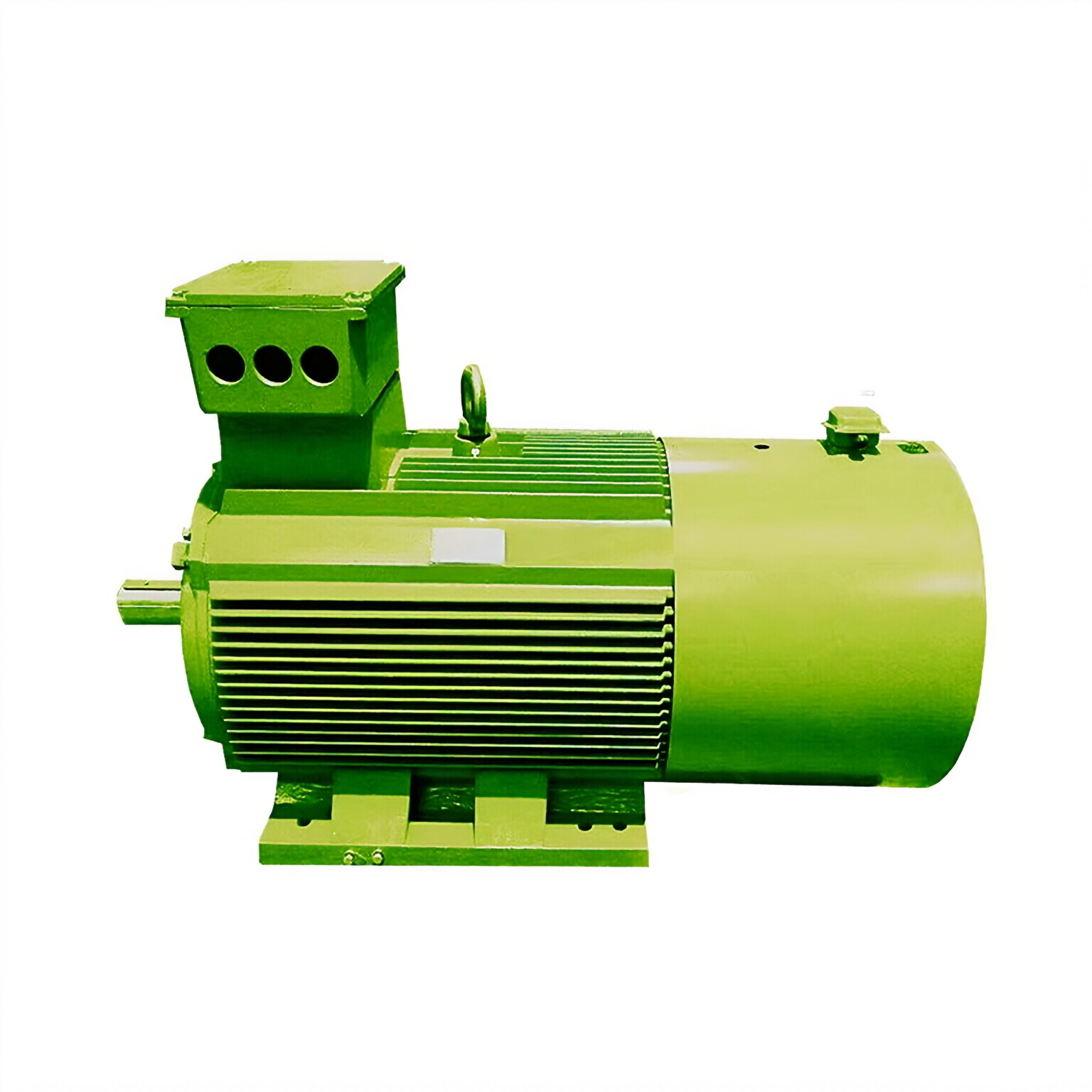
Imagine a critical pump stops at 2 a.m. Your maintenance team opens the motor junction box, checks the capacitor, and confirms the single-phase AC motor has failed. Now you have only hours to source a replacement that fits the frame, matches the duty cycle, and ships fast. If you have ever been in this position, you know one central question matters: What is a single-phase AC motor? In simple terms, it is an electric motor that runs on a single-phase alternating current supply, typically 120V or 230V, and converts electrical energy into mechanical rotation. It is widely used in household appliances, small compressors, pumps, fans, and light industrial machines. Unlike three-phase motors, a single-phase AC motor usually needs a starting mechanism such as a capacitor start, split-phase, or shaded-pole design to generate initial torque. For procurement professionals, understanding this product is not just academic; it directly affects lead times, replacement compatibility, and total cost of ownership. Raydafon Technology Group Co.,Limited helps buyers move from urgent confusion to confident sourcing with verified specifications, consistent quality control, and fast communication.
When you ask “What is a single-phase AC motor?” you are really asking how to match a power source to a reliable mechanical output. A single-phase AC motor operates on one alternating current waveform. Because the single-phase supply alone cannot produce a rotating magnetic field, manufacturers add auxiliary windings, capacitors, or shaded poles to create starting torque. The most common designs include capacitor-start, capacitor-run, split-phase, and shaded-pole motors.
Procurement teams often face confusion when suppliers mix terms like “PSC motor” or “capacitor-start motor” without explaining output characteristics. Raydafon Technology Group Co.,Limited simplifies this by providing clear motor type classifications, wiring diagrams, and test reports. The table below summarizes common design choices and their typical applications.
| Motor Type | Starting Torque | Typical Applications | Notes |
|---|---|---|---|
| Shaded-Pole | Low | Small fans, exhaust vents | Simple, low cost |
| Split-Phase | Moderate | Blowers, light pumps | For intermittent duty |
| Capacitor-Start | High | Compressors, conveyors | Strong locked-rotor torque |
| PSC (Permanent Split Capacitor) | Low to moderate | Fans, blowers, pumps | Quiet, energy efficient |
A purchasing manager at an HVAC company needed 200 single-phase AC Motors for condenser fan replacements. The first supplier quoted a low price but delivered motors with undersized capacitors and weak starting torque. The result was field failures, warranty claims, and a delayed production line. This is not an isolated story. Buyers frequently report four main problems: unclear nameplate data, inconsistent frame dimensions, missing certification documents, and slow technical support.
Raydafon Technology Group Co.,Limited addresses these pain points by standardizing pre-shipment inspection reports and sharing real-time production updates. Every motor quotation includes voltage, frequency, horsepower, RPM, frame size, insulation class, and protection rating. Instead of hiding behind sales jargon, our team confirms whether the motor meets NEMA, IEC, or custom mounting requirements before you commit.
| Pain Point | Typical Consequence | Raydafon Response |
|---|---|---|
| Missing torque curves | Motor stalling under load | Provides tested performance data |
| Unclear protection rating | Premature failure in wet areas | Confirms IP rating and sealing |
| Long delivery delays | Production downtime | Offers stock options and expedited shipping |
| No compatibility check | Wrong shaft or mounting | Reviews drawings before production |
Imagine receiving a container of single-phase AC motors and discovering the shaft diameter is off by 2 mm. The entire batch cannot be installed, and your production schedule collapses. Raydafon Technology Group Co.,Limited prevents this scenario by confirming mechanical drawings, electrical parameters, and packaging requirements before mass production. We act as your sourcing partner, not just a seller.
Our team supports buyers in selecting the right capacitor-start or PSC motor based on actual load behavior. We also provide pre-shipment samples, video inspection, and certificate validation for CE, UL, or other regional approvals. The table below shows the typical selection range we can supply.
| Parameter | Common Range | Custom Options |
|---|---|---|
| Power | 0.06 kW – 2.2 kW | Up to 3.7 kW for special designs |
| Voltage | 110V, 220V, 230V, 240V | Custom winding voltage |
| Frequency | 50 Hz / 60 Hz | Dual-frequency capable |
| Frame | IEC 56 – 90, NEMA 48 – 56 | Custom flange or foot mounting |
| Protection | IP20 – IP55 | Higher IP on request |
Many purchasing decisions focus only on price per unit. A more reliable approach is to compare total cost of ownership using key parameters. For example, a low-cost motor with Class A insulation may run hotter and fail sooner than a Class B or F motor. When you ask “What is a single-phase AC motor?” the answer must include more than voltage and horsepower. You need to know its insulation class, duty rating, ambient temperature range, and starting method.
Raydafon Technology Group Co.,Limited encourages buyers to request a complete data sheet for every single-phase AC motor. The following table highlights the parameters that matter most in field performance.
| Parameter | Why It Matters | Raydafon Standard |
|---|---|---|
| Insulation Class | Determines heat resistance | Class F standard, Class H optional |
| Service Factor | Allows safe overload margin | 1.0 or 1.15 based on design |
| Duty Cycle | Prevents overheating | S1 continuous or S2/S3 on request |
| Starting Torque | Ensures load starts reliably | Tested at rated voltage |
| Noise Level | Affects user comfort | Measured in dB(A) at 1m |
A bottling plant needed compact single-phase AC motors for conveyor drives. Their existing shaded-pole motors overheated because the load was too high. After reviewing the application, Raydafon Technology Group Co.,Limited recommended capacitor-run PSC motors with Class F insulation and continuous duty rating. The new motors reduced surface temperature by 18°C and lasted three times longer.
Matching the motor to the application is the fastest way to avoid costly returns. The table below offers a quick selection guide based on common equipment.
| Application | Typical Load Type | Recommended Motor Type | Key Requirement |
|---|---|---|---|
| Domestic water pump | High starting load | Capacitor-start | High starting torque |
| HVAC blower | Variable airflow | PSC | Low noise, continuous duty |
| Small air compressor | Pulsating torque | Capacitor-start | Strong locked-rotor torque |
| Exhaust fan | Light start | Shaded-pole or PSC | Cost-effective, quiet |
| Food mixer | Intermittent start | Split-phase or PSC | Frequent starts acceptable |
A single-phase AC motor is used in equipment where three-phase power is not available, such as homes, small workshops, and remote installations. Common applications include pumps, fans, compressors, garage door openers, and portable tools. If your facility has only single-phase power, this motor becomes the practical choice unless you add a phase converter.
A single-phase AC motor requires a starting mechanism such as a capacitor or shaded pole to create initial rotation, while a three-phase motor produces a rotating magnetic field directly from the supply. Single-phase motors are generally smaller, simpler to install on residential power, and cost-effective below about 2 kW. Three-phase motors offer higher efficiency and smoother torque at larger power ratings. Raydafon Technology Group Co.,Limited can help you decide which type fits your power supply and load profile.
Before you place an order for a single-phase AC motor, confirm five points: rated voltage and frequency, mounting dimensions, starting torque requirement, duty cycle, and required certifications. If any of these are uncertain, a supplier that only pushes for payment is not the right partner. Raydafon Technology Group Co.,Limited reviews your technical drawings and application details, then proposes a motor specification that reduces the risk of field failure.
We welcome you to share your motor specification or a photo of the failed unit. Our sourcing engineers will respond with a clear quotation, lead time, and technical recommendation. This simple step can save you weeks of guessing and prevent thousands of dollars in downtime.
Raydafon Technology Group Co.,Limited is a professional supplier of single-phase AC motors and related motion control products. The company combines strict quality inspection, responsive technical support, and global logistics experience to help buyers source reliable motors with less risk. Visit https://www.raydafongroup.com to explore product categories or contact [email protected] for a tailored quotation and pre-shipment inspection plan.
Popescu, M., Miller, T. J. E., & McGilp, M. (2003). Unified analysis of single-phase induction motors. IEEE Transactions on Industry Applications, 39(5).
Williamson, S., & Smith, A. C. (1982). Steady-state analysis of single-phase induction motors with auxiliary windings. IEE Proceedings B - Electric Power Applications, 129(5).
Collins, E. R. (1990). Torque and slip behavior of single-phase induction motors. IEEE Transactions on Energy Conversion, 5(1).
Faiz, J., & Sharifian, M. B. B. (1995). Optimal design of a single-phase induction motor for high efficiency. Electric Machines & Power Systems, 23(4).
Ha, K. H., & Hong, J. P. (2001). Dynamic analysis of single-phase induction motor considering magnetic saturation. IEEE Transactions on Magnetics, 37(4).
Veinott, C. G. (1959). Performance calculation methods for single-phase induction motors. Transactions of the American Institute of Electrical Engineers, Part III: Power Apparatus and Systems, 78(3).
Krause, P. C., & Wasynczuk, O. (1989). Electromechanical motion devices and single-phase induction machine modeling. IEEE Transactions on Education, 32(2).
Bose, B. K. (2006). Power electronics and motor drives: Advances and trends for single-phase AC applications. IEEE Transactions on Industrial Electronics, 53(6).
Lipo, T. A. (2004). A new approach to teaching single-phase induction machines using dq models. IEEE Transactions on Power Systems, 19(3).
Mademlis, C., & Kioskeridis, I. (2004). Optimization of single-phase induction motor performance using field-oriented control. IEEE Transactions on Industrial Electronics, 51(3).
-



 Raydafon