

The Definitive Guide to Industrial Drive Shafts: Powering the World's Machinery
In the heart of every complex mechanical system—from massive mining excavators to precision paper mills—lies a component whose reliability is non-negotiable: the Industrial Drive Shaft. Often called the "spine of power transmission," this critical assembly is responsible for the efficient transfer of rotational power and torque between non-coaxial components, accommodating misalignment and movement while maintaining structural integrity under extreme loads. For facility managers, maintenance engineers, and procurement specialists, selecting the correct drive shaft is a decision that directly impacts operational uptime, safety, and total cost of ownership. This comprehensive guide delves into the engineering, specifications, and selection criteria for industrial drive shafts, showcasing the advanced solutions engineered for peak performance by Raydafon Group.
Core Components and Engineering Design
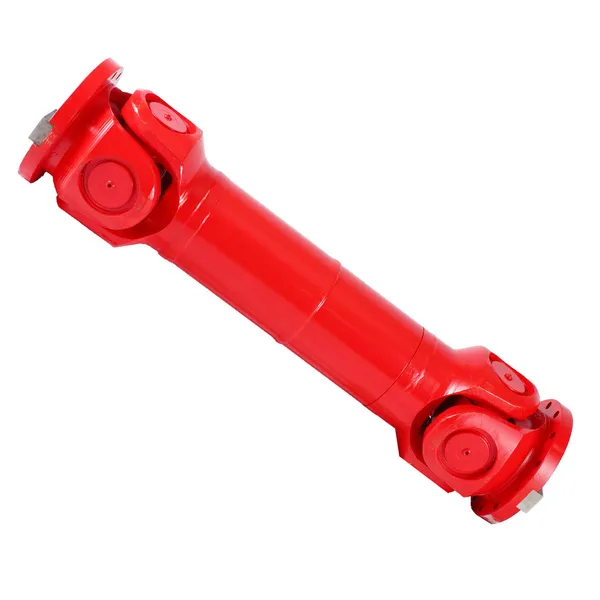
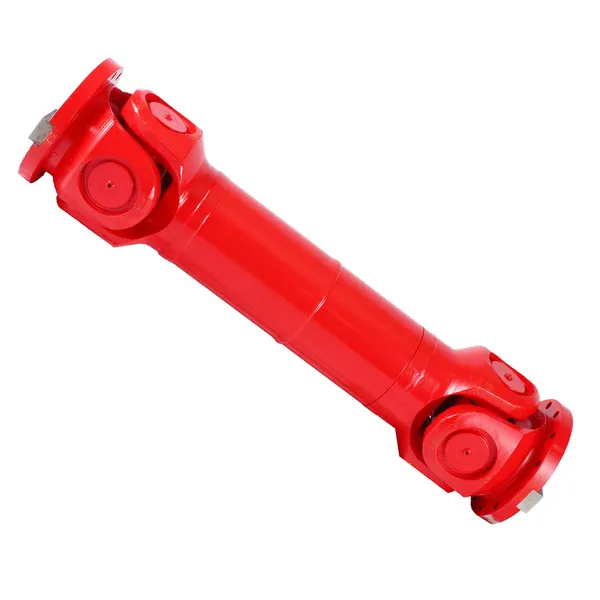
A modern industrial drive shaft is a sophisticated assembly, not merely a solid bar. Its design ensures flexibility, strength, and longevity. The primary components include:
- Tube or Solid Bar: The main structural member, typically constructed from high-strength alloy steel, stainless steel, or in specialized cases, composites. The tube's diameter and wall thickness are precisely calculated to handle specified torque and rotational speeds without critical whirling.
- Universal Joints (U-Joints) or Constant Velocity Joints (CV Joints): These couplings at each end allow the shaft to transmit power at an angle. U-joints are common for applications with varying angles, while CV joints provide a constant rotational speed even at sharp angles, essential for smooth operation.
- Splined Ends or Keyways: These features provide a secure, sliding connection to the driving and driven components (e.g., gearboxes, pumps), allowing for length variation and efficient torque transfer.
- Balance Weights and Dampers: To counteract vibration caused by centrifugal forces at high speeds, shafts are dynamically balanced. Dampers may be incorporated to absorb torsional vibrations, protecting both the shaft and connected machinery.
- Protective Guards and Seals: Safety guards are mandatory for operator protection. High-quality seals retain lubrication within the joints and prevent contamination from dust, water, or abrasive particles.
Critical Product Parameters and Specifications
Selecting the optimal drive shaft requires a detailed analysis of application parameters. The following tables outline the key specifications engineers must evaluate.
Table 1: Primary Performance Specifications
| Parameter | Description | Typical Range / Units | Importance |
|---|---|---|---|
| Rated Torque | The maximum continuous torque the shaft can transmit without failure. | 500 Nm to 200,000+ Nm | Core design criterion. Must exceed peak operational torque. |
| Peak Torque | The maximum short-duration torque (e.g., during startup or shock load). | 1.5x to 3x Rated Torque | Ensures resilience against sudden load spikes. |
| Maximum RPM | The highest rotational speed the shaft can safely operate at, considering balance. | 500 to 10,000+ RPM | Prevents catastrophic failure due to centrifugal forces and vibration. |
| Operating Angle | The maximum angle between the driving and driven shafts. | Up to 25° for single U-joint; compound angles for multi-joint shafts. | Affects joint selection, efficiency, and bearing life. |
| Length & Collapse | Installed length and the allowable telescopic travel for length compensation. | Custom lengths; ±50mm to ±150mm collapse | Accommodates mounting distance variations and axial movement. |
Table 2: Material, Construction & Environmental Specifications
| Category | Specification | Options & Standards |
|---|---|---|
| Tube Material | Determines strength, weight, and corrosion resistance. | Alloy Steel (e.g., 4140, 4340), Stainless Steel (304, 316), Aluminum, Composite. |
| Joint Type | Defines angular capability and rotational smoothness. | Single/Double Universal Joint (Cardan), Constant Velocity Joint (CV), Guibo Flex Disc. |
| Bearing Type | Affects maintenance interval and load capacity. | Needle Roller (lubricated-for-life), Tapered Roller (serviceable), Polymer Bushings. |
| Balance Standard | Quality of dynamic balancing to minimize vibration. | ISO 1940 G6.3 (Commercial), G2.5 (Precision), G1 (High-Speed). |
| Protection Rating | Resistance to environmental factors. | IP54 (Dust & water splashes), IP67 (Temporary immersion), Corrosion-resistant coatings. |
| Safety Standards | Compliance with regional machinery directives. | CE Marking, OSHA Guarding Requirements, ISO 14120. |
Raydafon Group engineers each drive shaft system against these rigorous parameters, utilizing Finite Element Analysis (FEA) for stress simulation and advanced metallurgy to ensure every unit meets or exceeds its rated specifications.
Industrial Drive Shaft FAQ: Expert Answers from Raydafon Group
Q: How often should an industrial drive shaft be inspected and maintained?
A: Inspection frequency depends entirely on the operating environment and duty cycle. For heavy-duty, continuous operation (e.g., in a steel mill), a visual inspection for loose hardware, seal integrity, and obvious damage should be conducted weekly. A formal detailed inspection, checking for yoke wear, joint play, and balance, should be performed quarterly. Lubrication intervals vary: sealed-for-life joints require none, while serviceable U-joints may need greasing every 200-500 operating hours. Always follow the OEM manual, but increase frequency in high-heat, high-contamination, or high-cyclical load applications.
Q: What are the most common signs of drive shaft failure, and what causes them?
A: Early detection is key to preventing secondary damage. Common signs include: 1) Excessive Vibration: Often caused by lost balance weights, tube denting, worn joints, or yoke distortion. 2) Clunking Sounds on Load Change: Typically indicates excessive backlash or wear in the U-joint crosses or splines. 3) Grease Leakage or Visible Joint Wear: Failed seals lead to lubricant loss and rapid bearing wear. Primary causes are misalignment beyond design limits, operating above rated RPM (critical speed), corrosion due to environmental exposure, improper installation (e.g., over-tightening straps), and lack of scheduled maintenance.
Q: Can a damaged drive shaft be repaired, or must it always be replaced?
A: This depends on the component damaged and the shaft's design. For shafts with serviceable universal joints, worn bearing crosses, seals, and even yokes can often be replaced as a repair kit, restoring the shaft to service. However, if the main tube is bent, cracked, or has significant corrosion, replacement of the entire shaft assembly is almost always required, as a bent tube cannot be safely straightened. For high-speed or safety-critical applications, Raydafon Group generally recommends replacement of the complete assembly to guarantee original performance and balance standards.
Q: How do I select the correct drive shaft for a new application or a replacement?
A: Follow a systematic selection process. First, gather all application data: Continuous and Peak Torque (Nm or lb-ft), Maximum Operating Speed (RPM), Operating Angle (static and dynamic), Available Installation Space (length, collapse), and Environmental Conditions (temperature, chemicals, moisture). Second, match these to the manufacturer's specifications, ensuring a safety factor (often 1.5x) is applied to torque ratings. Third, consider the joint type: CV joints for high-angle, smooth operation; heavy-duty U-joints for high-torque, moderate angles. Finally, consult with an application engineer from a reputable supplier like Raydafon Group, who can provide CAD models and perform load analysis.
Q: What are the advantages of custom-engineered drive shafts versus off-the-shelf catalog parts?
A: Catalog parts work for standard applications, but custom-engineered solutions from Raydafon Group offer significant advantages for demanding environments. Customization allows for: 1) Optimal Material Selection: Specifying exotic alloys or coatings for extreme corrosion or heat resistance. 2) Precision Length and Fit: Eliminating compromises that can lead to installation stress. 3) Enhanced Performance: Designing for higher balance grades (G2.5, G1) to enable smoother high-speed operation. 4) Integrated Design: Incorporating special flanges, spline profiles, or protective features specific to the machine. This results in longer service life, reduced vibration, and higher system reliability, lowering the total lifecycle cost despite a higher initial investment.
Applications Across Industries
The versatility of industrial drive shafts makes them indispensable. Key sectors include:
- Mining & Quarrying: Conveyor systems, crushers, and draglines. Shafts must withstand immense shock loads and abrasive dust.
- Marine & Offshore: Pump drives, winches, and propulsion systems. High corrosion resistance (316 Stainless Steel) is critical.
- Power Generation: Cooling tower fans, pump drives in coal, gas, and nuclear plants. Reliability is paramount for continuous operation.
- Material Handling: Automated warehouse systems, rolling mills, and packaging lines. Precision and smooth operation are key.
- Agricultural & Forestry: Tractors, combines, and forestry machinery. Shafts must accommodate large angular misalignment and dirty conditions.
Raydafon Group: Engineering Excellence in Power Transmission
With decades of experience serving global industries, Raydafon Group has established itself as a leader in precision-engineered power transmission components. Our approach to industrial drive shafts is rooted in a deep understanding of metallurgy, dynamics, and real-world application stresses. We don't just manufacture parts; we provide engineered solutions. Our in-house design team uses state-of-the-art simulation software to prototype and test every custom design, ensuring it delivers reliable performance under specified conditions. From our ISO-certified manufacturing floors to our final balance testing, quality is embedded in every step. Whether you require a direct replacement for a failed unit or a custom shaft for a new machine build, partnering with Raydafon Group means investing in durability, safety, and operational efficiency.
 Raydafon