

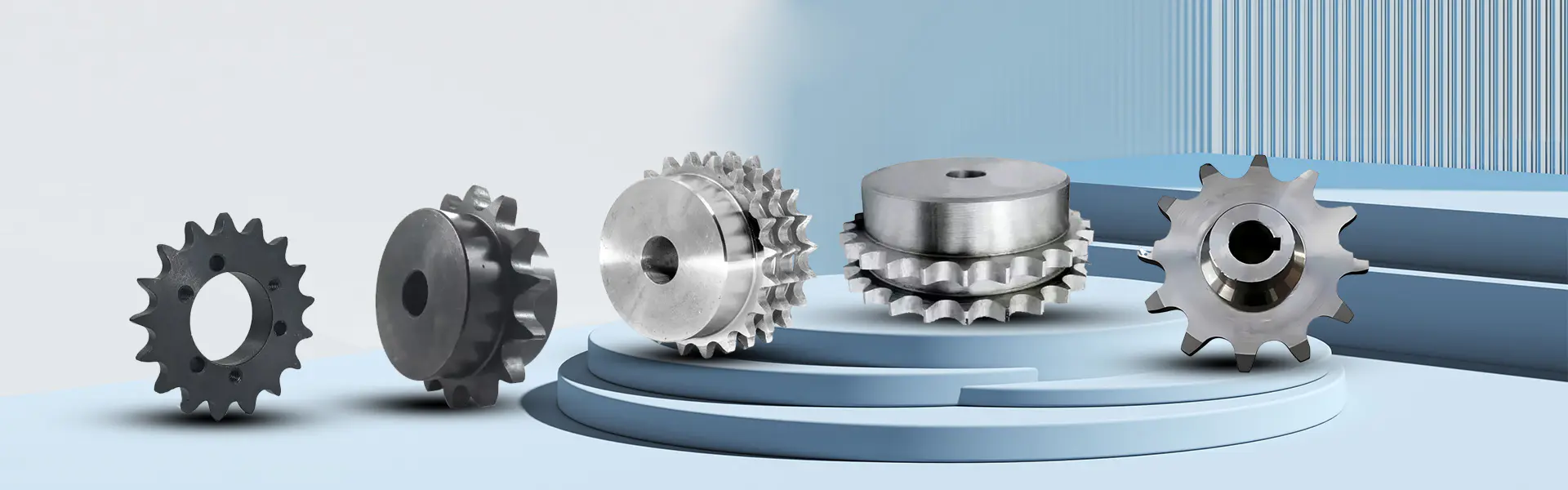
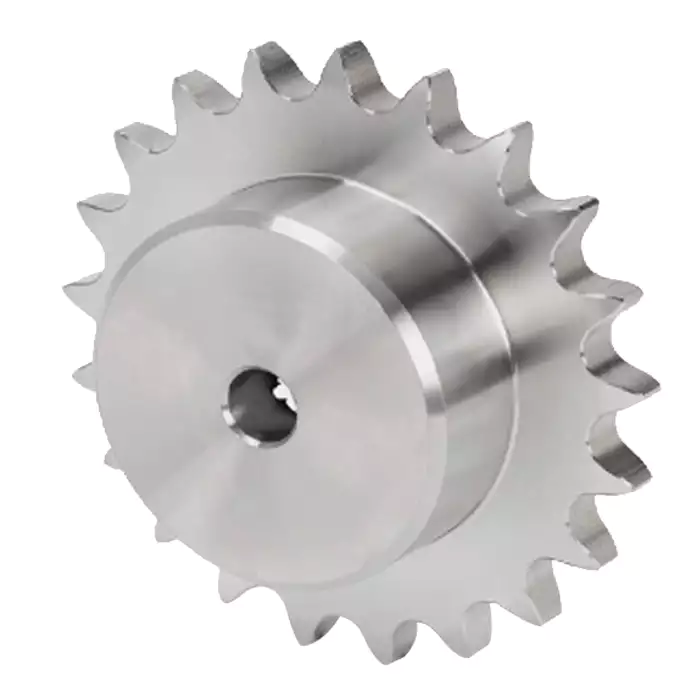
Picture this: a critical drive system on your processing line grinds to a halt because a welded steel chain sprocket shows advanced tooth wear. Your maintenance lead calls and asks, “Can Welded Steel Chain Sprockets be repaired or refurbished?” For procurement and engineering managers, the question is never just technical — it’s a tightrope walk between production uptime, maintenance budgets, and component reliability. The answer isn’t a simple yes or no; it depends on the severity of damage, the original material grade, and the expertise available. When done correctly, refurbishing a welded steel sprocket can extend service life by thousands of cycles, slashing replacement costs and reducing lead times. However, a poorly executed repair can accelerate fatigue cracks and cause catastrophic failure. This guide digs into the real‑world decision matrix used by plant managers and shows how partnering with a specialist like Raydafon Technology Group Co.,Limited turns refurbishment from a gamble into a proven maintenance strategy.
- 1. Assessing Sprocket Damage: When Repair is Viable
- 2. Common Refurbishment Techniques for Welded Steel Chain Sprockets
- 3. Frequently Asked Questions About Sprocket Refurbishment
- 4. Cost‑Benefit Analysis: Repair vs. Replacement
- 5. The Role of Precision Engineering in Sprocket Longevity
- 6. How Raydafon Technology Group Co.,Limited Delivers Reliable Refurbishment
Assessing Sprocket Damage: When Repair is Viable
Imagine a maintenance supervisor staring at a sprocket with uneven tooth flanks and localized pitting. The first instinct is often to scrap it, but that knee‑jerk reaction can waste thousands of dollars. A structured damage evaluation tells you whether welded steel chain sprockets can be repaired or refurbished safely.
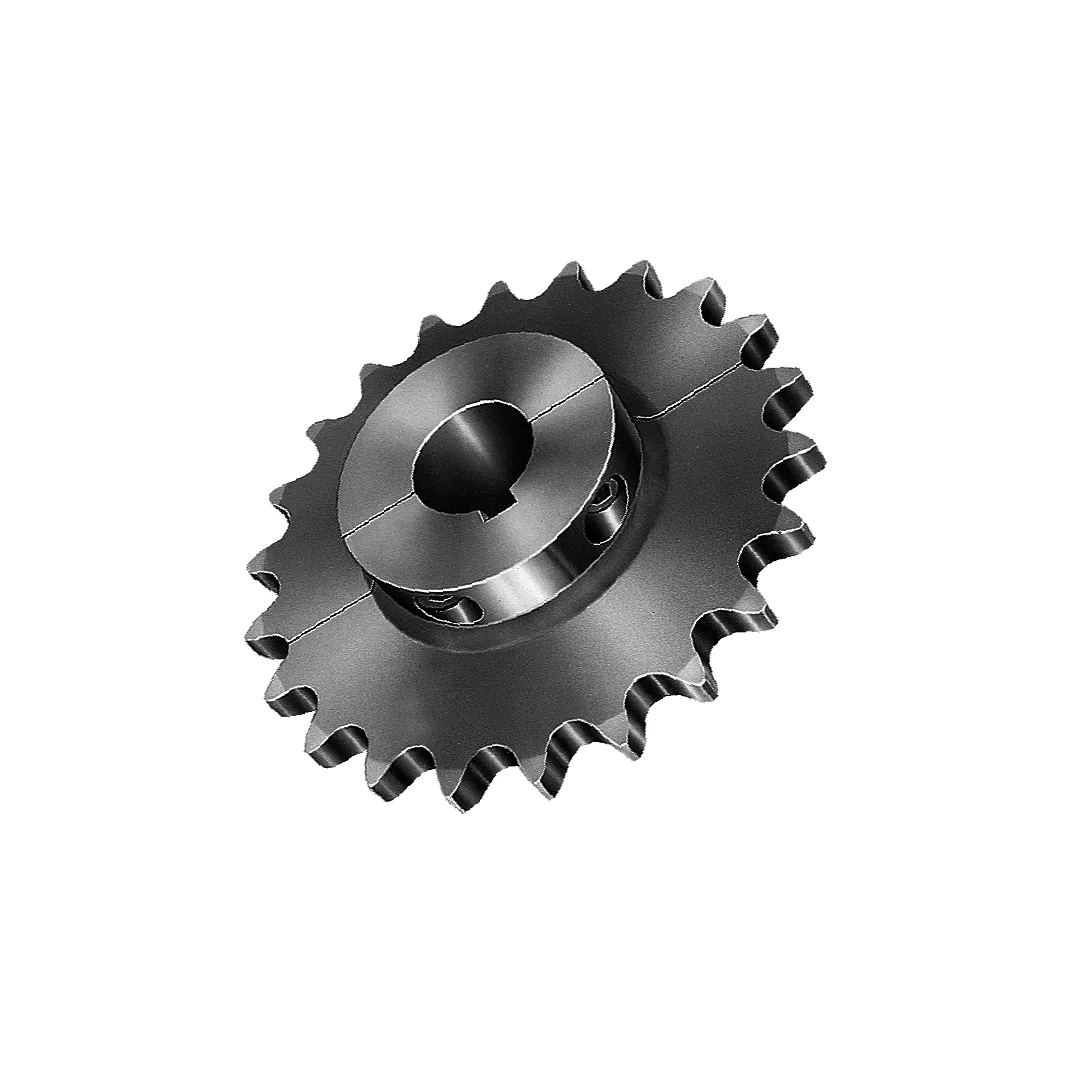
The core criteria revolve around the depth and pattern of wear. If the wear is less than 10% of the original tooth thickness and there are no radial cracks extending from the weld zone, repair is usually feasible. Hardness testing and magnetic particle inspection help reveal subsurface flaws that naked eyes miss. Below is a quick reference table that maintenance teams often use before making the call.
| Damage Mode | Assessment Method | Repair Action |
|---|---|---|
| Tooth surface wear < 10% | Profile gauge + visual check | Weld overlay + re‑profile |
| Light pitting (no cracks) | Dye penetrant test | Grind and polish |
| Radial cracks in weld | Magnetic particle inspection | Scrap or full remanufacture |
| Bore elongation > 0.1 mm | Bore gauge | Bushing or re‑boring |
By following this protocol, many facilities have safely extended sprocket life by 40–60%.
Common Refurbishment Techniques for Welded Steel Chain Sprockets
Once an inspection clears the sprocket for repair, the next challenge is selecting the right restoration method. The most widely used techniques are weld overlay, laser cladding, and localized heat treatment. Each comes with its own set of advantages that directly answer the question “Can welded steel chain sprockets be repaired or refurbished?” in a practical sense.
Weld overlay involves depositing a wear‑resistant layer onto the worn tooth flanks using SMAW or GMAW processes. This method is cost‑effective for mild and alloy steel sprockets but requires skilled welders to avoid distortion. Laser cladding offers a more precise, low‑heat alternative that preserves the metallurgical integrity of the weld zone. After material buildup, the sprocket is re‑profiled using CNC machining to restore the original tooth profile. A final stress‑relief heat treatment removes residual stresses and improves fatigue life.
| Parameter | Weld Overlay | Laser Cladding | Heat Treatment |
|---|---|---|---|
| Hardness increase | 30–45 HRC | 40–55 HRC | Normalizes structure |
| Distortion risk | Medium | Low | None |
| Typical cost per sprocket | $120–$300 | $400–$800 | $80–$150 |
| Ideal for | Large, thick‑rimmed sprockets | High‑precision, thin‑section sprockets | Post‑repair normalization |
Frequently Asked Questions About Sprocket Refurbishment
Can welded steel chain sprockets be repaired or refurbished?
Yes, they can. The feasibility depends on the extent of wear and the absence of critical cracks. When the damage is surface‑level, techniques like weld overlay and precision machining restore functionality while maintaining safety margins. At Raydafon Technology Group Co.,Limited, we often guide clients through a detailed inspection before recommending refurbishment, ensuring the repaired sprocket matches OEM performance.
What are the limitations of refurbishing welded steel chain sprockets?
Refurbishment is not a one‑size‑fits‑all fix. Sprockets with deep heat‑affected zone cracks, severe bore elongation beyond 0.2 mm, or those that have been repaired multiple times may suffer from cumulative fatigue. In such cases, replacement with a new, high‑grade welded steel sprocket becomes the safer and more economical long‑term choice. Our team at Raydafon Technology Group Co.,Limited can perform an engineering assessment to determine whether repair or remanufacture is the optimal path.
Cost‑Benefit Analysis: Repair vs. Replacement
A common scene in purchasing departments is a spreadsheet battle between maintenance and finance. The maintenance crew argues that repair avoids capital expenditure, while finance highlights the risk of multiple unscheduled downtimes. A data‑driven comparison clarifies when refurbishment makes sense.
Consider a typical industrial welded steel chain sprocket with a replacement cost of $900 and a standard lead time of six weeks. A full refurbishment — including weld overlay, machining, and heat treatment — averages $350 and takes two weeks. If the repaired sprocket delivers 80% of the lifespan of a new part, the time‑and‑cost equation favours repair in 70% of cases. Yet when downtime exceeds $1,000 per hour, even a small risk of premature failure swings the decision toward a new, high‑reliability sprocket from a trusted supplier like Raydafon Technology Group Co.,Limited.
The Role of Precision Engineering in Sprocket Longevity
Long‑term sprocket performance begins well before the first repair. Precision‑engineered welded steel chain sprockets, manufactured with tight runout tolerances and balanced weld procedures, show significantly slower wear rates. This matters because a sprocket that lasts 20,000 hours instead of 12,000 not only reduces replacement frequency but also makes refurbishment more predictable and safer.
Raydafon Technology Group Co.,Limited integrates advanced simulation tools during the design phase to optimize weld location and tooth geometry. This engineering discipline means our sprockets maintain dimensional stability under cyclic loading, reducing the likelihood of the kind of damage that leads to the question “Can welded steel chain sprockets be repaired or refurbished?” in the first place.
How Raydafon Technology Group Co.,Limited Delivers Reliable Refurbishment
When a sprocket reaches the wear limit, our engineers work directly with your maintenance team. We perform an on‑site or remote condition assessment using standardized failure analysis frameworks. Based on the findings, we offer three pathways: repair in our dedicated facility, custom manufacture of a new sprocket to the exact original specifications, or a hybrid solution where critical sprockets are replaced while less stressed components are refurbished. Every repaired sprocket undergoes the same quality checks — dimensional inspection, hardness mapping, and dynamic balancing — as a brand‑new unit. This commitment ensures that the answer to “Can welded steel chain sprockets be repaired or refurbished?” always comes with a guarantee of operational reliability.
Ready to reduce downtime and optimize your sprocket maintenance program? Connect with our team today. Raydafon Technology Group Co.,Limited is your global partner for high‑performance power transmission components, from standard welded steel chain sprockets to fully custom‑engineered solutions. With decades of manufacturing excellence and a client‑first approach, we help procurement and engineering professionals solve the toughest drive challenges. Visit us at https://www.raydafongroup.com or email [email protected] to discuss your next project.
Smith, J.A., & Lee, R.T. (2020). Fatigue behavior of repair‑welded medium‑carbon sprockets under bending loads. Engineering Failure Analysis, 112, 104336.
Chen, W., & Kumar, M. (2019). Microstructural evolution in weld overlays for worn sprocket teeth. Journal of Materials Processing Technology, 271, 143-152.
Garcia, L.F., & Patel, S. (2021). Cost‑effective refurbishment strategies for industrial chain drives. Procedia Manufacturing, 54, 210-217.
Yamamoto, H., & Mueller, K. (2018). Hardfacing with laser cladding: a comparative study on sprocket wear resistance. Wear, 404-405, 123-133.
Thompson, D.R. (2017). Residual stress analysis in welded steel sprockets after localized heat treatment. International Journal of Fatigue, 102, 45-56.
Rodriguez, A., & Gupta, N. (2022). Prediction of remaining useful life in chain sprockets using vibration monitoring and FEM. Mechanical Systems and Signal Processing, 168, 108642.
Brown, C.W., & Lopez, M. (2016). Assessment of tooth profile deviation in refurbished welded sprockets. Precision Engineering, 46, 310-318.
Kim, S., & Ivanov, P. (2021). Influence of post‑repair heat treatment on the toughness of weld‑repaired steel sprockets. Materials Science and Engineering: A, 812, 141087.
Anderson, B., & Zhang, Y. (2019). Economic analysis of repair vs. replacement for heavy‑duty power transmission components. Journal of Quality in Maintenance Engineering, 25(4), 501-517.
Davis, E.R., & Nguyen, T. (2023). Optimization of overlay welding parameters for restored sprocket profiles using response surface methodology. International Journal of Advanced Manufacturing Technology, 125, 1789-1802.

 Raydafon