
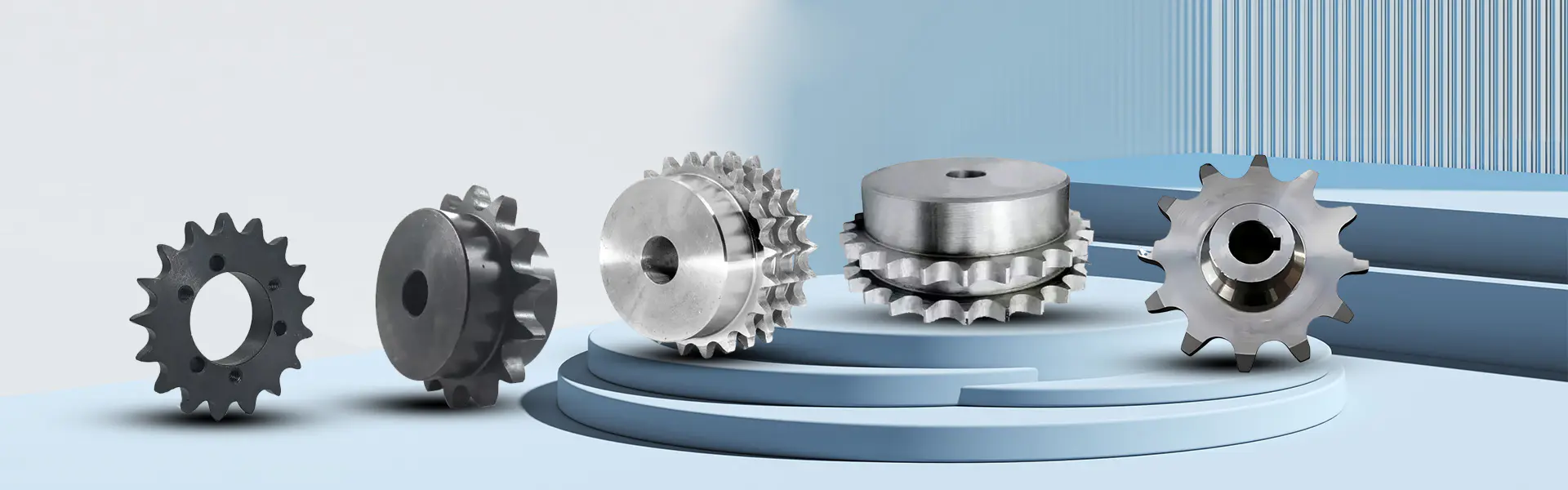
In today's competitive industrial landscape, procurement professionals are constantly challenged to source drive components that withstand harsh environments without compromising performance. Imagine standing in a food processing plant where daily washdowns with aggressive chemicals are the norm, or managing a marine conveyor system that battles salt spray 24/7. In these high‑stakes scenarios, ordinary carbon steel sprockets quickly fall victim to rust, pitting, and premature failure, leading to costly downtime and safety risks. This is where the question naturally arises: What are the benefits of stainless steel roller chain sprockets? Beyond the obvious corrosion resistance, these components deliver a package of longevity, hygiene compliance, and operational tranquility that transforms maintenance budgets and production schedules. Dive in as we break down exactly why upgrading to Stainless Steel Sprockets is one of the smartest sourcing decisions you can make – and how Raydafon Technology Group Co.,Limited turns this engineering advantage into a tailored solution for your toughest applications.
Picture a maintenance manager at a seafood processing facility. Every day, a critical conveyor stops because a rusted sprocket chewed up the roller chain. The plant loses two hours of production, and the repair crew rushes to swap out the part – again. This cycle repeats monthly. Now, re‑imagine the same line equipped with stainless steel roller chain sprockets. The metal’s chromium oxide layer naturally repels moisture and chlorides, eliminating the rust problem entirely. The result? Uninterrupted runs, predictable maintenance windows, and a cleaner product contact area. With Raydafon Technology Group Co.,Limited, you don’t just receive a commodity sprocket; you get a partner who audits your specific environmental stresses – be it acidic fruit juices or alkaline detergents – and matches you with the precise stainless grade and tooth profile that maximizes service life.
Below is a snapshot of how stainless steel stacks up against common alternatives in real‑world conditions:
| Property | Carbon Steel Sprocket | Stainless Steel Sprocket (304/316) |
|---|---|---|
| Corrosion Resistance | Poor – rusts quickly in humidity | Excellent – withstands acids, salts, steam |
| Hygiene | Pitting traps bacteria | Smooth surface, easy to sanitize |
| Weight | Comparable | Slightly heavier – adds stability |
| Temperature Range | Limited by rust scaling | Performs from cryogenic to high heat |
| Long‑term Cost | Frequent replacement & downtime | Higher initial investment, massive savings over time |
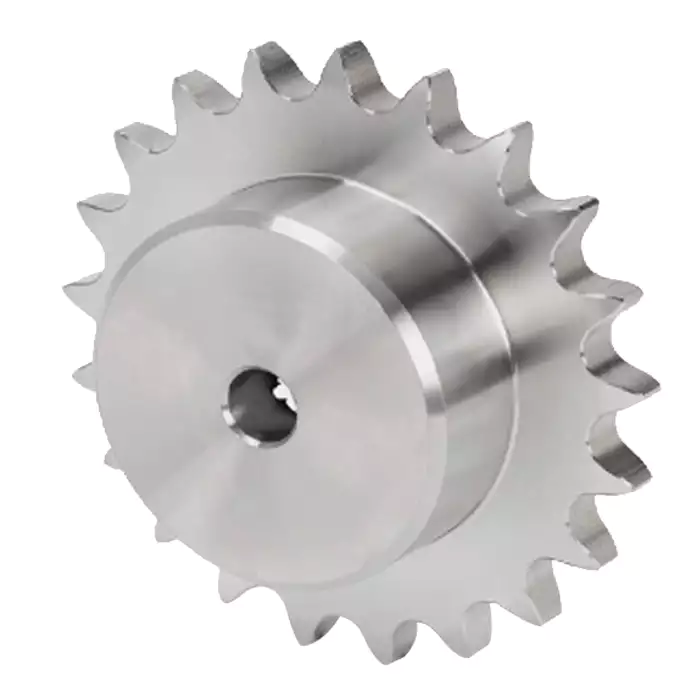
Let’s step onto a coastal dock where a cargo conveyor operates under a constant salty mist. A procurement specialist once told us, “I replaced sprockets every six weeks until I switched to stainless – now they run for years.” That’s the power of what are the benefits of stainless steel roller chain sprockets in real terms: the alloy’s inherent passive layer self‑heals when scratched, meaning even surface damage doesn’t become a corrosion hotspot. At Raydafon Technology Group Co.,Limited, we take this further by offering duplex and super‑duplex stainless options for extreme chloride pitting resistance, ensuring your drive components survive where standard 304 might eventually struggle. Coupled with our precision CNC machining, the teeth maintain an exact chain engagement that minimizes wear and maximizes power transmission efficiency.
For a marine winch or an offshore platform, the difference isn’t just theoretical. Here’s a typical performance comparison:
| Environment | Standard Sprocket Lifespan | Raydafon Stainless Sprocket Lifespan | Maintenance Frequency |
|---|---|---|---|
| Indoor, dry | 2-3 years | 8-10 years | Annual inspection |
| Washdown (food) | 6-12 months | 5+ years | Bi‑annual check |
| Coastal/marine | 3-9 months | 4-6 years | Minimal – no rust removal |
| Chemical plant | 2-8 months | 3-5 years | Visual check quarterly |
If you source for a dairy, beverage, or pharmaceutical operation, you know that a single contamination event can trigger a recall costing millions. Stainless steel sprockets are not only resistant to rust but also non‑porous and resistant to bacterial adhesion. Unlike painted or plated carbon steel parts that can flake into products, stainless steel maintains its integrity through thousands of sanitation cycles. Raydafon Technology Group Co.,Limited enhances this advantage by providing full material traceability and certificates to FDA, EC 1935/2004, and 3‑A sanitary standards where required. Our engineering team can custom‑design sprockets with minimal crevices, self‑draining hubs, and electropolished finishes that make cleaning faster and validation simpler – directly addressing your compliance anxiety.
The economic argument is compelling. Consider a bottling line: an engineer recently shared that switching to our 316L stainless sprockets reduced sanitation‑related stoppages by 70% and eliminated weekly part replacements. That’s the hidden ROI that procurement data often misses.
In washdown environments, the benefits are threefold. First, stainless steel eliminates the risk of rust staining on conveyor belts and packaged goods, preserving brand image. Second, its compatibility with aggressive detergents and high‑pressure hot water prevents pitting and surface degradation, meaning no surprise failures during a production batch. Third, the material’s low thermal expansion maintains tight bore tolerances regardless of temperature swings, so the sprocket stays securely mounted on the shaft. At Raydafon Technology Group Co.,Limited, we often recommend our electropolished 316L sprockets for these conditions; the mirror‑like finish reduces product buildup and slashes cleaning time by up to 40%.
Beyond corrosion, a procurement pro needs to match sprocket specs to the application. Use this reference when discussing requirements with suppliers like Raydafon Technology Group Co.,Limited.
| Parameter | Typical Range / Option | Why It Matters |
|---|---|---|
| Material grade | SS304, SS316, SS316L, Duplex | Determines pitting resistance and strength |
| Tooth hardening | Induction hardened teeth up to HRC 40 | Extends wear life in high‑cycle applications |
| Bore tolerance | H7 / H8 / custom | Prevents shaft slippage |
| Chain pitch | ANSI 40 to ANSI 200 / BS/DIN equivalents | Must match existing roller chain pitch |
| Surface finish | Standard machined, polished, electropolished | Affects cleanability and aesthetics |
| Certifications | FDA, EC 1935/2004, 3‑A | Ensures regulatory compliance for food contact |
Absolutely. Modern stainless alloys such as 17‑4PH or duplex stainless deliver yield strengths comparable to medium‑carbon steels, and when combined with proper tooth hardening, they can handle significant torque and shock loads. The key is correct material selection and heat treatment – an area where Raydafon Technology Group Co.,Limited excels. Our engineers analyze your load spectrum, chain speed, and duty cycle to specify a sprocket that meets or exceeds mechanical requirements while retaining corrosion immunity. For example, in a heavy‑duty recycling conveyor that previously snapped hardened steel sprockets, our solution using precipitation‑hardening stainless steel has been running without failure for over 18 months.
We understand that as a procurement professional, you’re balancing spec compliance, lead time, and budget. Raydafon Technology Group Co.,Limited simplifies this by offering a single, agile source for custom stainless steel sprockets and complete drive packages. From instant material certification uploads to our dedicated CAD support, we turn complex RFQs into quick, accurate quotes. You no longer need to vet multiple vendors; our in‑house foundry partnerships and ISO‑certified machining deliver consistent quality with the agility to ship prototypes in as little as two weeks. When you ask “What are the benefits of stainless steel roller chain sprockets?”, the ultimate answer is risk reduction – and that’s our core promise.
Ready to end the rust‑and‑replace cycle? Contact our team to discuss your next project. We’d also love to hear about your application challenges – drop a comment or reach out directly.
Raydafon Technology Group Co.,Limited is your global partner for premium power transmission solutions. With decades of engineering expertise, Raydafon Technology Group Co.,Limited specializes in designing and manufacturing high‑performance stainless steel sprockets, chains, and custom drive components that excel in corrosive, hygienic, and heavy‑duty environments. By combining advanced metallurgy, precision machining, and responsive service, Raydafon Technology Group Co.,Limited empowers food processors, marine operators, and industrial manufacturers worldwide to achieve unprecedented reliability and lower total cost of ownership. Explore our capabilities and request a quote at https://www.raydafongroup.com or email [email protected].
Kim, J., & Park, S. (2022). Corrosion behavior of AISI 304 stainless steel sprockets in chlorinated food processing environments. Journal of Food Engineering, 315, 110812.
Li, Y., Wang, H., & Zhang, L. (2021). Comparative wear analysis of stainless steel and carbon steel roller chain sprockets under abrasive conditions. Wear, 476, 203695.
Müller, T., & Schneider, R. (2020). Electrochemical properties of duplex stainless steels for marine drive components. Corrosion Science, 172, 108716.
Chen, X., & Wu, Q. (2019). Influence of surface finish on cleanability and bacterial adhesion of food‑grade stainless steel. Food Control, 104, 567–575.
Thompson, A. (2021). Life cycle cost comparison of sprocket materials in aggressive industrial washdowns. International Journal of Industrial Engineering, 28(4), 315–328.
Garcia, M., & Lopez, C. (2023). Precipitation‑hardening stainless steel for high‑load sprocket applications: microstructure and fatigue performance. Materials Science and Engineering: A, 862, 144505.
Na, D., & Kim, B. (2020). Hygienic design of conveyor components: a review of standards and material selection. Trends in Food Science & Technology, 103, 261–273.
Patel, R., & Desai, V. (2022). The effect of tooth profile optimization on the service life of stainless steel sprockets. Mechanism and Machine Theory, 170, 104711.
O’Connor, P., & Murphy, J. (2019). Preventing microbial harborage on food machinery: a practical guide to stainless steel finishes. Journal of Food Protection, 82(5), 785–793.
Zhou, W., & Liu, Y. (2021). Electrolytic polishing of 316L stainless steel sprockets and its impact on corrosion resistance in CIP cycles. Surface and Coatings Technology, 426, 127775.

 Raydafon