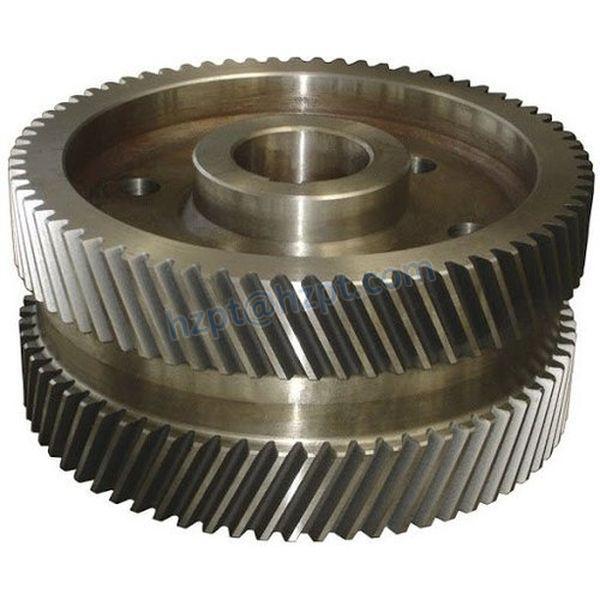
Helical Gears represent a cornerstone of modern mechanical power transmission, offering a superior performance profile compared to their straight-cut spur gear counterparts. At Raydafon Group, with decades of engineering excellence, we specialize in the design, precision manufacturing, and supply of high-performance helical gear sets for a vast array of industrial applications. Their distinctive angled teeth engage more gradually, resulting in smoother, quieter, and more efficient torque transfer under significant loads. This article provides a comprehensive technical overview of helical gears, detailing Raydafon Group's product specifications, key parameters, and answers to frequently asked questions.
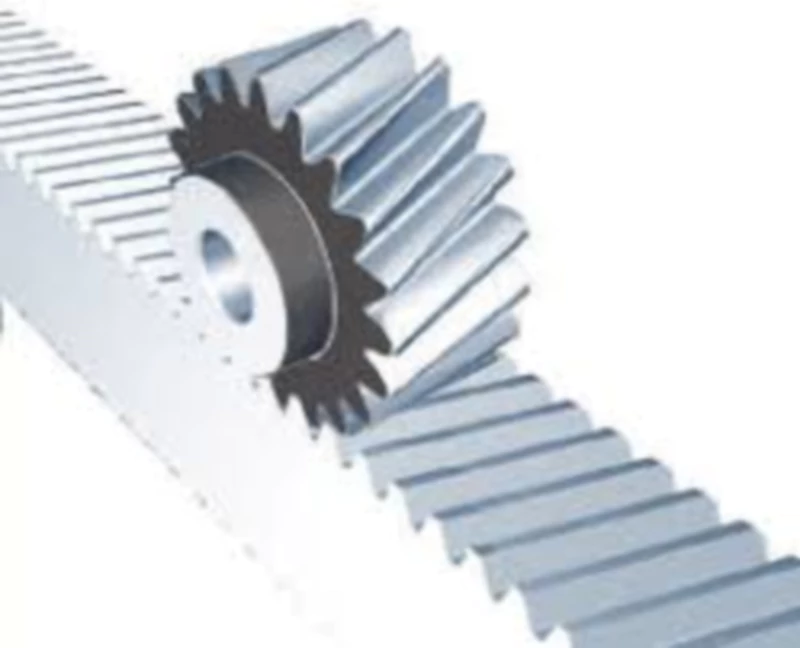
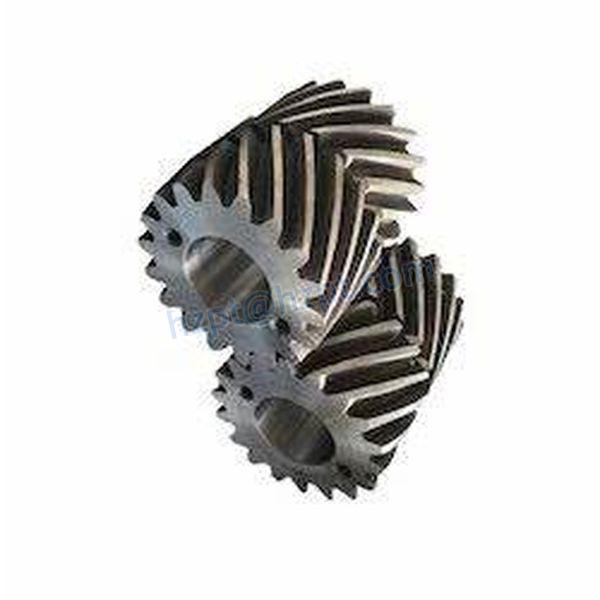
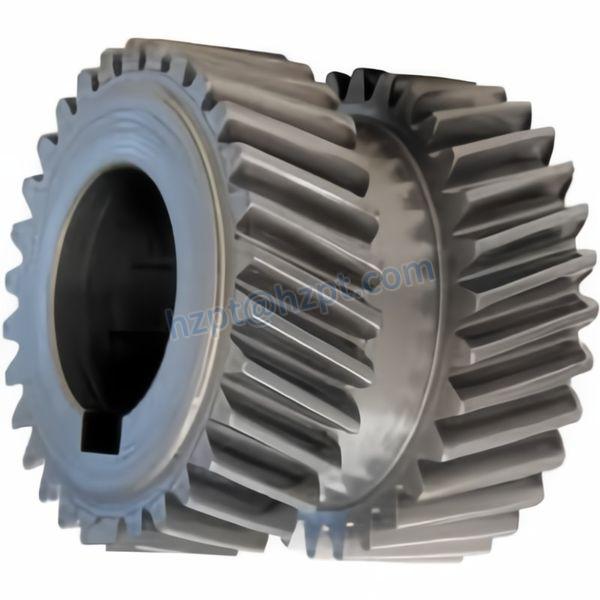
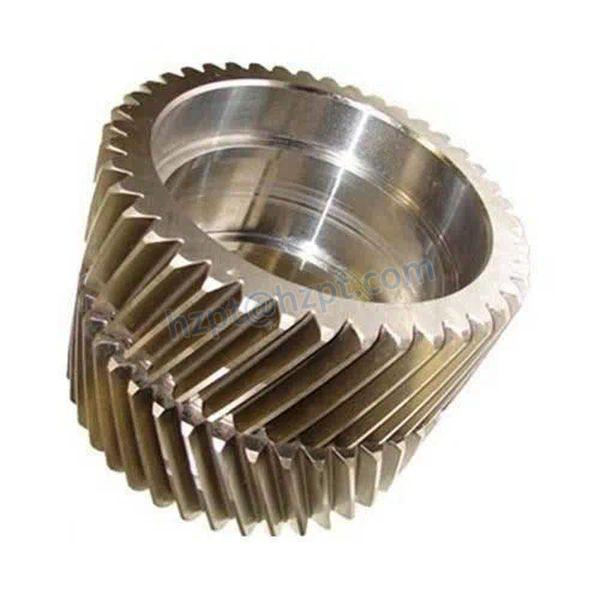
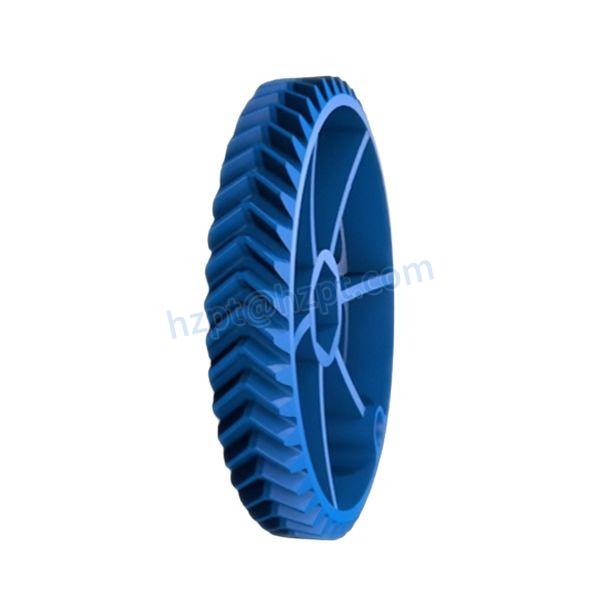
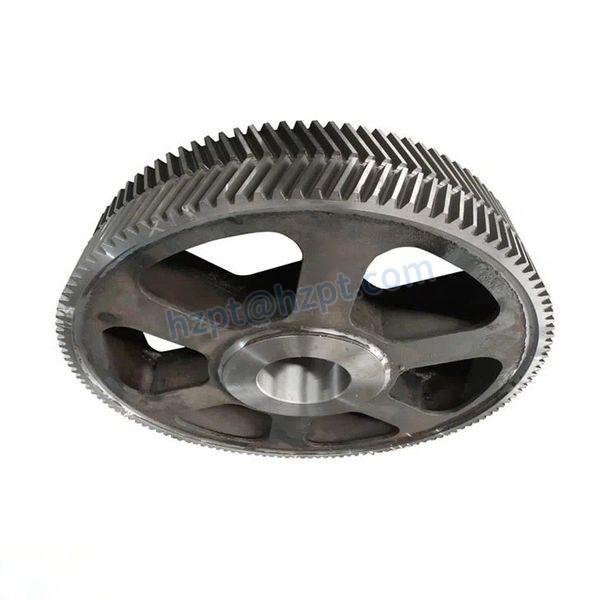
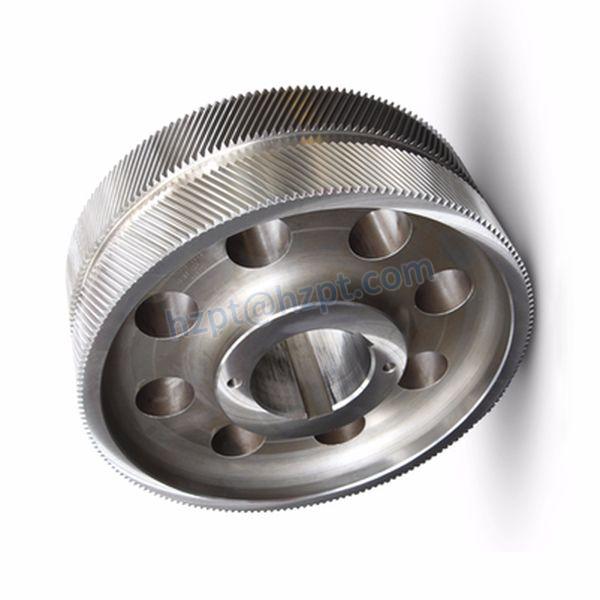
The fundamental advantage of helical gears lies in their tooth geometry. The teeth are cut at an angle (the helix angle) to the gear axis. This helix allows for multiple teeth to be in contact at any given moment during rotation—a state known as gradual engagement. This contrasts with spur gears, where contact is sudden and along the entire face width simultaneously. The implications are profound: reduced noise and vibration, higher load-carrying capacity for a given size, and the ability to transmit motion between parallel or crossed (non-parallel, non-intersecting) shafts, depending on the helix hand.
**Key Product Specifications & Parameters at Raydafon Group**
At Raydafon Group, our helical gears are engineered to meet the most demanding operational criteria. We utilize advanced materials, state-of-the-art CNC machining, and rigorous heat treatment processes to ensure longevity, reliability, and peak efficiency. Below are the detailed parameters that define our product range.
**Material Selection:**
* **Case Hardened Alloy Steels (e.g., AISI 4140, 4340, 8620):** Our standard for high-stress applications. Provides an excellent balance of a tough core and a wear-resistant surface.
* **Carbon Steels (e.g., AISI 1045, 4140):** Used for general-purpose applications requiring good strength and machinability.
* **Stainless Steels (e.g., 304, 316):** For applications demanding exceptional corrosion resistance in harsh environments (food processing, marine, chemical).
* **Bronze and Brass:** Typically used for worm wheels in worm gear sets where the worm is steel, offering good wear characteristics and compatibility.
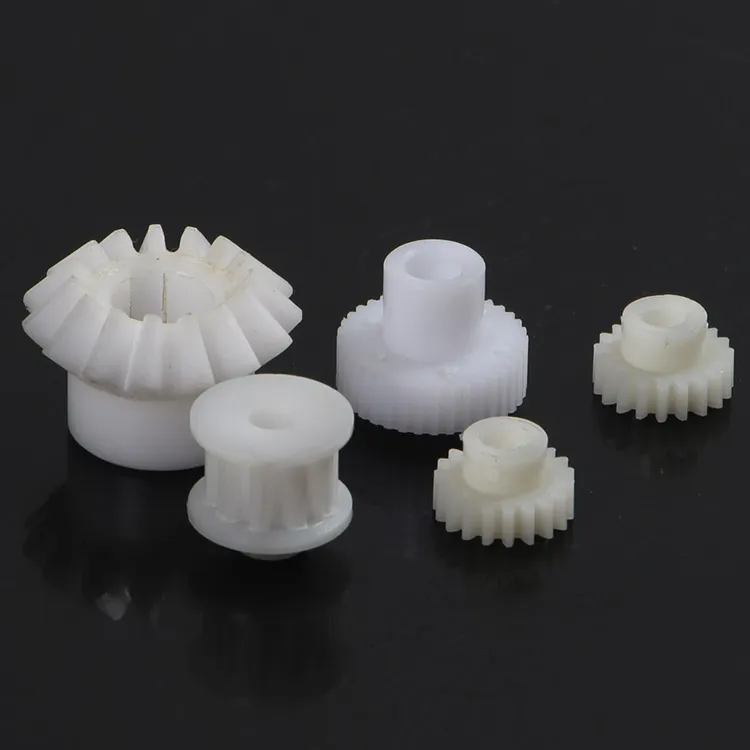
* **Engineering Plastics (e.g., Nylon, Acetal/Delrin, Polycarbonate):** For lightweight, low-noise, and non-lubricated applications.
**Gear Parameters Table:**
The following table outlines the critical dimensional and performance parameters for our standard helical gear offerings. Custom specifications beyond these ranges are available upon consultation.
| Parameter | Symbol | Standard Range (Raydafon Group) | Description & Importance |
| :--- | :--- | :--- | :--- |
| **Module (Metric)** | m | 1.0 to 12.0 mm | A fundamental measure of tooth size. Larger module indicates larger, stronger teeth for higher loads. |
| **Diametral Pitch (Imperial)** | P
d | 2 to 20 DP | Imperial equivalent of module. Defines tooth size (teeth per inch of pitch diameter). |
| **Number of Teeth** | N or Z | 12 to 150+ | Determines gear ratio and, along with module, the pitch diameter. |
| **Helix Angle** | ψ (Psi) | 15° to 30° (Standard) | The angle of the teeth relative to the gear axis. Affects axial thrust, smoothness, and load capacity. |
| **Pressure Angle** | φ (Phi) | 20° (Standard), 14.5° or 25° available | The angle between the line of action and the tangent to the pitch circle. Influences tooth strength and contact ratio. |
| **Face Width** | F | 20 mm to 200 mm+ | The length of the gear teeth along the axis. Wider face width increases load capacity and durability. |
| **Accuracy Grade (AGMA/ISO)** | - | AGMA 10-14 (ISO 6-9) | Defines tolerances for tooth profile, pitch, and runout. Higher grades (lower numbers like ISO 6) indicate higher precision for high-speed/low-noise applications. |
| **Heat Treatment** | - | Carburizing & Hardening, Induction Hardening, Nitriding, Through Hardening, Tempering | Enhances surface hardness, wear resistance, and core toughness. Treatment is selected based on material and application. |
| **Surface Finish** | R
a | 0.8 µm to 3.2 µm | Smoothness of the tooth flank. A finer finish reduces friction, heat generation, and wear. |
**Design and Manufacturing Capabilities:**
Raydafon Group's expertise extends beyond standard specifications. Our in-house design team uses sophisticated CAD/CAM software to optimize gear geometry for specific performance goals. Our manufacturing suite includes:
* **Gear Hobbing:** For high-volume production of high-quality helical gears.
* **Gear Shaping:** Ideal for internal helical gears and specific profiles.
* **CNC Gear Grinding:** For achieving the highest levels of accuracy (ISO 4-6) and superior surface finish on hardened gears, essential for aerospace and high-speed transmissions.
* **Shot Peening & Honing:** Post-machining processes that increase fatigue strength and improve final tooth surface texture.
**Helical Gears: Frequently Asked Questions (FAQ)**
**Q: What are the main advantages of using helical gears over spur gears?**
A: Helical gears offer three primary advantages. First, they operate much more quietly and with less vibration due to the gradual, sliding contact of their angled teeth. Second, for gears of the same size and material, helical gears can handle greater loads because the load is distributed across several teeth in contact. Third, they can transmit power between parallel shafts as well as crossed shafts, offering more design flexibility.
**Q: What is axial thrust, and how is it managed in helical gear systems?**
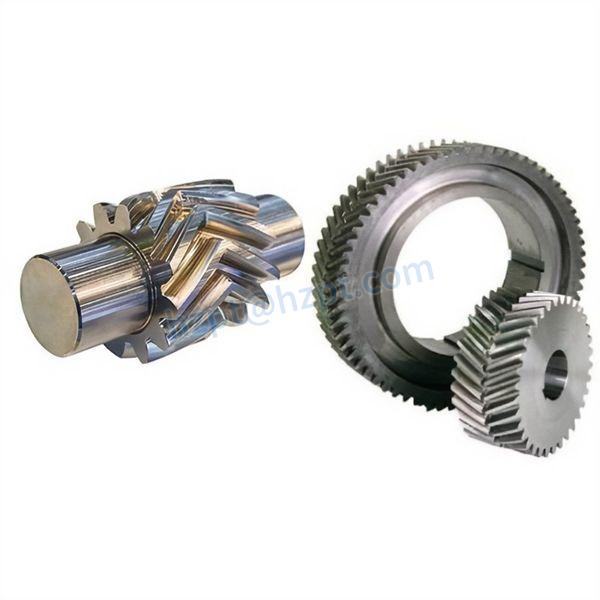
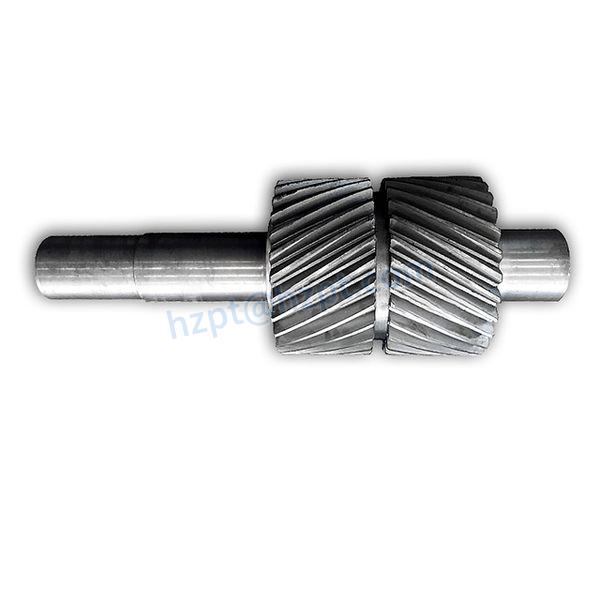
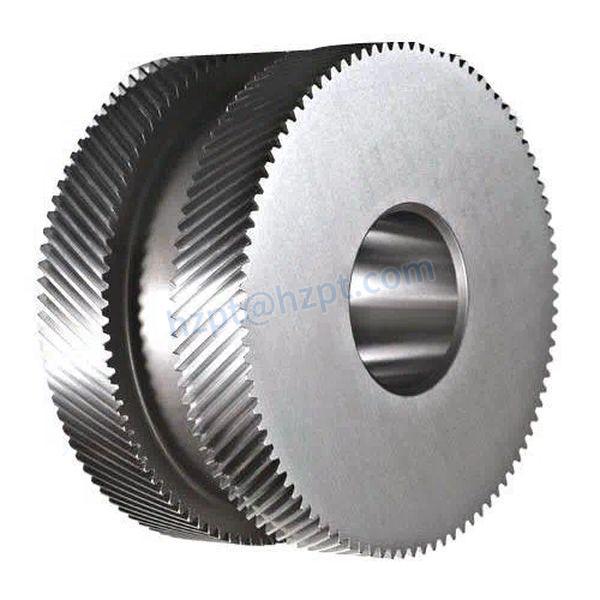
A: Axial thrust is a side force generated along the gear's axis due to the helix angle of the teeth. This force pushes the gear along its shaft and must be accommodated by suitable thrust bearings. The magnitude of thrust increases with helix angle and transmitted torque. It can be effectively canceled out by using a herringbone (double helical) gear arrangement or by using two single helical gears with opposite hand on parallel shafts.
**Q: What is the difference between a "hand" of a helix (right-hand vs. left-hand)?**
A: The hand of a helix describes the direction in which the teeth twist. If you look at the gear face, a **right-hand helical gear**'s teeth angle away from you to the right as they recede. A **left-hand helical gear**'s teeth angle away to the left. For a pair of gears on parallel shafts to mesh correctly, they must have opposite hands (one right, one left). For crossed shaft applications (like a worm gear setup), the hands can be the same.
**Q: How do I select the correct helix angle for my application?**
A: Selection is a balance of priorities. A **larger helix angle (e.g., 20°-30°)** provides smoother operation, higher contact ratio, and greater load capacity but generates higher axial thrust, requiring robust bearings. A **smaller helix angle (e.g., 10°-20°)** produces less axial thrust but may be slightly noisier and have marginally lower load capacity. Raydafon Group's engineers typically recommend angles between 15° and 23° for a balanced performance in most industrial applications.
**Q: What lubrication is required for helical gears, and why is it critical?**
A: Proper lubrication is non-negotiable for helical gear longevity. The sliding action between meshing teeth generates heat and wear. Lubrication forms a protective film to minimize metal-to-metal contact, reduce friction, dissipate heat, and prevent corrosion. The specific lubricant (oil or grease, viscosity grade, EP additives) depends on operating speed, load, temperature, and environment. Raydafon Group provides lubrication guidelines with every gear set shipment.
**Q: Can Raydafon Group provide custom-designed helical gears for unique applications?**
A: Absolutely. While we maintain an extensive inventory of standard gears, our core strength lies in custom engineering. We routinely design and manufacture gears with non-standard modules, pressure angles, helix angles, profile modifications (tip and root relief), and special materials to solve unique power transmission challenges in sectors like mining, energy, robotics, and specialized machinery.
**Q: What information should I provide when requesting a quote for helical gears from Raydafon Group?**
A: To ensure an accurate and prompt quotation, please provide the following: 1) **Center Distance** of the gear pair, 2) Desired **Gear Ratio** (or number of teeth for each gear), 3) **Transmitted Power (kW/HP)** and input **Speed (RPM)**, 4) **Type of Application** and service factor (shock load, continuous vs. intermittent duty), 5) **Preferred Material** and **Heat Treatment**, 6) **Required Accuracy Grade**, 7) Any **Space Constraints** (maximum O.D., face width), and 8) **Shaft Configuration** (parallel or crossed, bore size and keyway specifications).


 Raydafon