
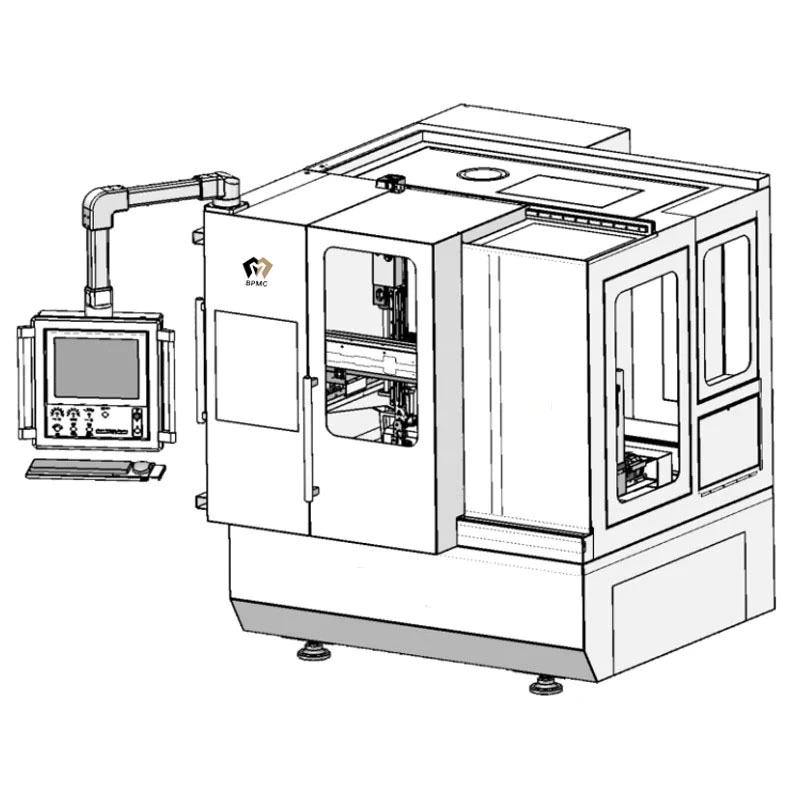
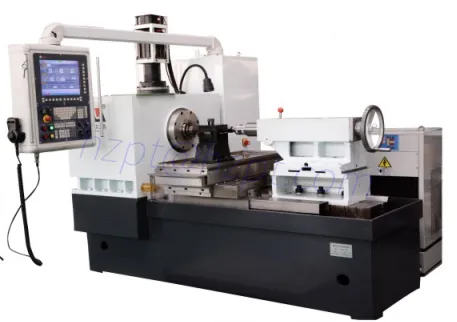
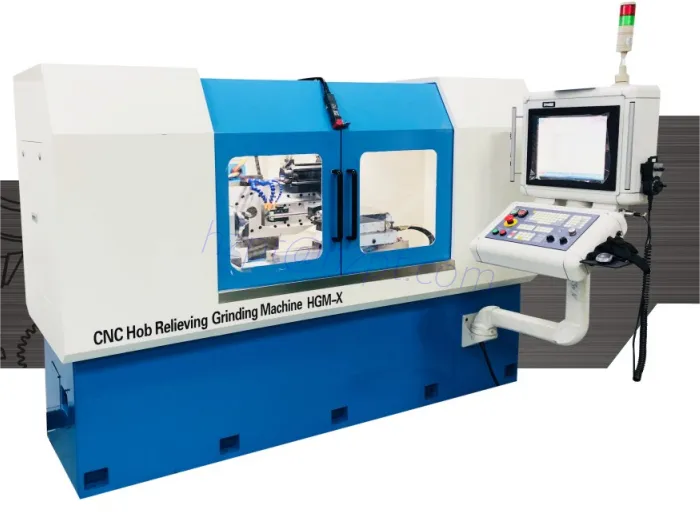
For manufacturers and machine shops specializing in high-precision gear production, the efficiency and accuracy of hob sharpening and relieving operations are paramount. A dedicated HOB Relieving Lathe is not merely a luxury but a critical investment for maintaining tool life, ensuring consistent gear tooth profiles, and achieving superior surface finishes. The Raydafon Group, with decades of expertise in advanced machine tool design, presents its state-of-the-art series of HOB Relieving Lathes, engineered to meet the rigorous demands of modern gear hobbling applications. Our machines are built to deliver unmatched precision, reliability, and user-centric operation, solidifying your competitive edge in precision machining.
The core function of a HOB Relieving Lathe is to accurately re-sharpen the cutting edges of a gear hob and, more specifically, to generate the precise relieving (or back-off) behind the cutting edge. This relieving is essential to prevent the non-cutting flank of the hob tooth from rubbing against the workpiece during the hobbing process, which would cause excessive heat, poor surface finish, and rapid tool wear. Performing this operation on a standard lathe is impractical and inaccurate. Raydafon's dedicated lathes automate this complex kinematic motion, ensuring each tooth is relieved with exacting consistency, directly translating to longer hob life and flawless gear production.
The following table outlines the standard specifications for our flagship RHL-800 series HOB Relieving Lathe. Custom configurations are available to suit specific production needs.
| Parameter | Specification (RHL-800 Model) |
|---|---|
| Maximum Hob Diameter | 320 mm (12.6 inches) |
| Maximum Hob Length | 800 mm (31.5 inches) |
| Distance Between Centers | 850 mm (33.5 inches) |
| Spindle Bore Diameter | 105 mm (4.13 inches) |
| Spindle Speed Range | 10 - 500 rpm (Infinitely Variable) |
| Relieving Stroke (Max) | 25 mm (0.98 inches) |
| Indexing Range | Any number of divisions up to 999 |
| Grinding Wheel Head Motor | 5.5 kW (7.4 HP) |
| Main Drive Motor | 7.5 kW (10 HP) |
| Control System | SINUMERIK 828D CNC (Standard) |
| Machine Weight (Approx.) | 6,800 kg (15,000 lbs) |
| Power Requirement | 400V, 3 Phase, 50/60 Hz |
To achieve optimal results, Raydafon Group offers a range of precision attachments and recommended tooling:
Q: What is the primary difference between hob sharpening and hob relieving?
A: Hob sharpening refers to the process of regrinding the worn-out rake face (front) of the hob tooth to restore its sharp cutting edge. Hob relieving is the subsequent (or sometimes combined) operation that grinds a specific clearance or "relief" behind the cutting edge on the tooth flank. This relief is a controlled curved or linear surface that ensures only the cutting edge contacts the gear blank. A HOB Relieving Lathe is specifically designed to generate this precise relief geometry consistently across all teeth.
Q: Can a standard engine lathe or tool & cutter grinder perform hob relieving?
A: While it might be attempted, it is highly inefficient and inaccurate. Generating a consistent, synchronized relieving profile that coordinates spindle rotation with a radial tool feed requires specialized kinematics. A dedicated HOB Relieving Lathe has this mechanical linkage (via a cam or CNC interpolation) built-in. Using a standard machine leads to inconsistent relief depth, poor surface finish, and incorrect hob geometry, which will damage the hob and produce defective gears.
Q: What are the key factors to consider when selecting a HOB Relieving Lathe?
A: Key selection criteria include: 1) Maximum Hob Capacity: Diameter and length you need to accommodate. 2) Relieving Method: Mechanical cam vs. CNC-controlled. CNC offers greater flexibility for different relief curves. 3) Precision & Rigidity: Look for specifications on spindle runout, bed construction, and guideway quality. 4) Control System & Automation: User-friendly CNC with features for easy parameter input and program storage. 5) Manufacturer Support & Service: The reputation of the builder, availability of technical support, and spare parts is critical, an area where Raydafon Group excels.
Q: How does the relieving process impact the final gear quality?
A: Directly and significantly. Correct and uniform relieving ensures the hob cuts cleanly without friction on the non-working flank. This minimizes heat generation during hobbing, reduces cutting forces, prevents chatter, and results in a superior gear tooth surface finish with accurate profile. Incorrect relieving causes rapid hob wear, increased power consumption, poor surface finish (scoring, tearing), and potential profile errors on the gear.
Q: What maintenance does a Raydafon HOB Relieving Lathe require?
A: Regular maintenance is straightforward but essential. Daily checks include coolant level and cleanliness, lubrication system operation, and visual inspection. Weekly tasks involve cleaning chips and debris from guideways and the work area. Periodic maintenance (every 6-12 months) should include checking alignment, verifying spindle runout, replacing way wipers, and having a qualified technician from Raydafon Group perform a full machine calibration and inspection to ensure ongoing precision.
Q: Can the Raydafon lathe handle different types of hobs, like worm hobs or shaper cutters?
A: Yes. With the appropriate fixtures and correct machine setup, Raydafon HOB Relieving Lathes can process various rotary cutting tools that require relieving. This includes straight and helical gear hobs, worm hobs, spline hobs, and even some types of taper hobs or shaper cutters. The CNC control allows for easy input of different helical angles and tooth counts. It is important to consult with our application engineers to confirm compatibility for specific, non-standard tool geometries.
Q: What is the typical setup and operation time for a new hob job?
A: With a modern CNC-based Raydafon machine, setup time is greatly reduced. Once the hob is mounted and centered, the operator simply inputs the key parameters (hob OD, number of gashes, helix angle, desired relief amount) into the control panel. The CNC calculates the necessary movements. For a skilled operator, initial setup for a new hob can often be completed in under 30 minutes. The automatic indexing and cycle operation then allow the machine to run unattended for the duration of the relieving process on all teeth.
The Raydafon Group HOB Relieving Lathe is indispensable in any industry that relies on precision gear manufacturing. Primary applications include:

 Raydafon