
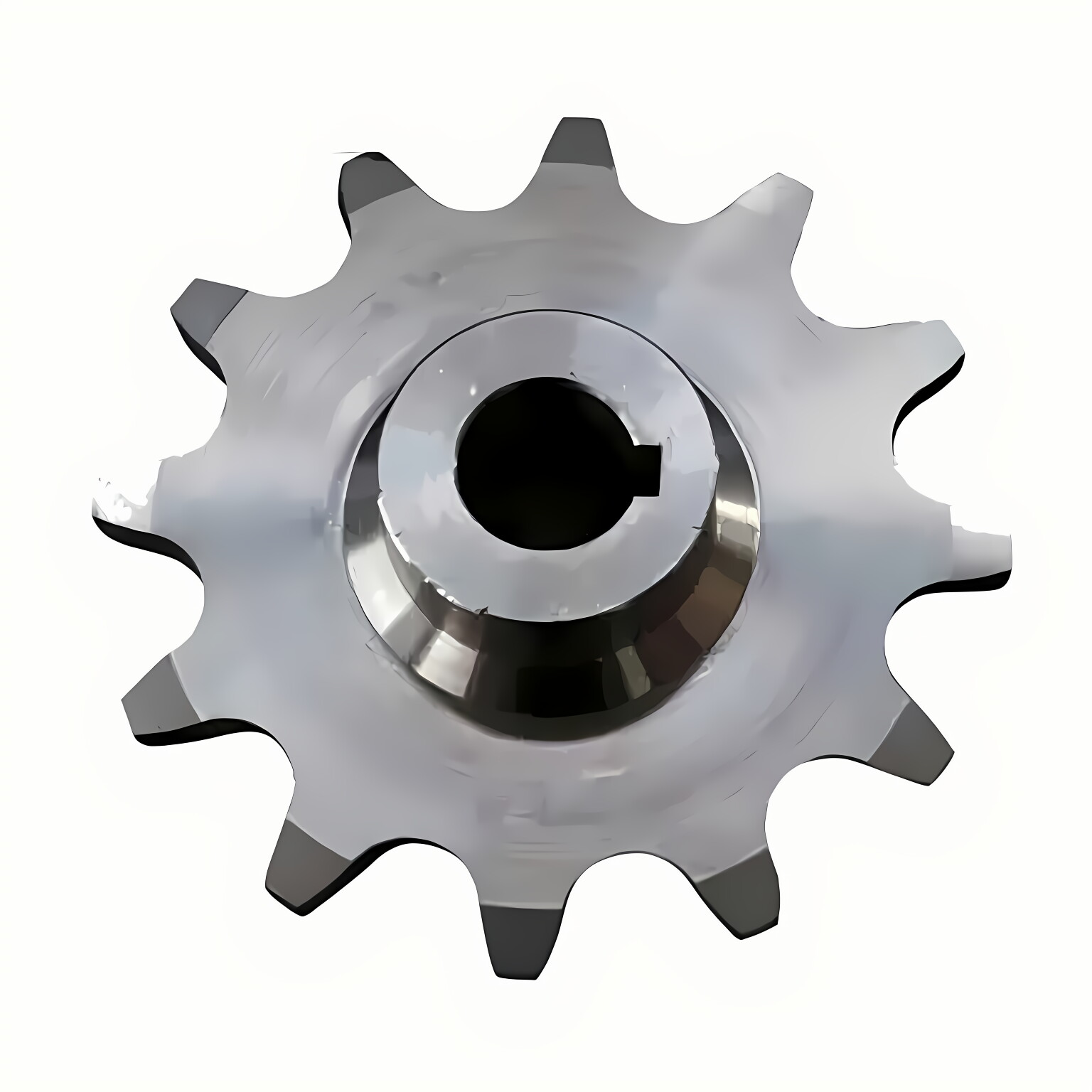
In the demanding world of power transmission and conveyance, precision, durability, and efficiency are non-negotiable. For engineers, maintenance supervisors, and procurement specialists across material handling, packaging, food processing, and heavy machinery sectors, selecting the right component is critical to operational uptime and cost-effectiveness. This is where the superior design of Double Pitch Sprockets becomes a cornerstone of reliable system performance. Manufactured to exacting standards by the Raydafon Group, our sprockets represent a fusion of advanced engineering and robust materials, engineered for applications where reduced chain wear and smooth operation over longer center distances are paramount.
Unlike standard pitch sprockets, double pitch versions are specifically designed to work with double pitch roller chains (ANSI Standard). Their key characteristic is having twice the pitch of a standard chain sprocket for a given chain size. This design offers significant advantages, including lower weight, reduced cost for the sprocket itself, and less frequent engagement with the chain, which can contribute to smoother operation and decreased wear in moderate-speed, long-center-distance conveyor systems. At Raydafon Group, we have refined this technology, offering an extensive range that ensures compatibility, longevity, and peak performance for your specific application needs.
Choosing Raydafon Group double pitch sprockets provides tangible benefits for your operation:
Our product range is meticulously categorized to meet diverse industrial requirements. Below are the key parameters that define our offering.
| Material Grade | Hardness (Surface) | Standard Finish | Corrosion Protection | Primary Application Environment |
|---|---|---|---|---|
| High Carbon Steel (C1045) | HRC 35-40 | Black Oxide / Phosphate | Good (with coating) | General industrial, dry or mildly oily conditions |
| Alloy Steel (SCM440) | HRC 45-50 (Case Hardened) | Black Oxide | Good (with coating) | High-load, high-wear applications |
| Stainless Steel AISI 304 | HB 150-200 | Passivated | Excellent | Food processing, chemical, washdown areas |
| Stainless Steel AISI 316 | HB 150-200 | Passivated | Superior (acidic/chloride environments) | Marine, pharmaceutical, extreme corrosive settings |
| Cast Iron (Ductile) | HB 180-250 | Painted or Zinc Plated | Fair to Good | Low-speed, high-torque applications, cost-sensitive projects |
| Chain Number (Corresponding Double Pitch Chain) | Sprocket Pitch (Inches) | Standard Range of Teeth (T) | Hub Styles Available | Stock Bore Range (Inches) | Max. Recommended RPM (For Reference) |
|---|---|---|---|---|---|
| C2040 / 2040 | 1.25" | 10T - 60T | Plain, Finished Bore, Hub & Flange | 0.5" - 3.0" | 650 |
| C2050 / 2050 | 1.5625" | 10T - 72T | Plain, Finished Bore, Hub & Flange | 0.75" - 4.0" | 520 |
| C2060 / 2060 | 1.875" | 12T - 72T | Plain, Finished Bore, Hub & Flange, Double Hub | 0.875" - 5.0" | 430 |
| C2080 / 2080 | 2.5" | 12T - 90T | Finished Bore, Hub & Flange, Double Hub | 1.25" - 6.0" | 320 |
| C2100 / 2100 | 3.125" | 12T - 90T | Finished Bore, Hub & Flange | 1.5" - 8.0" | 260 |
Note: Custom bores, keyways, special hub configurations, and tooth counts outside standard ranges are available upon request from Raydafon Group engineering.
Q: What is the fundamental difference between a standard pitch sprocket and a double pitch sprocket?
A: The core difference lies in the pitch measurement. A standard pitch sprocket has teeth spaced to match the pitch of a standard roller chain (e.g., ANSI #40 chain has a 0.5" pitch). A double pitch sprocket is designed for a double pitch chain, where the chain's pitch is twice that of the standard chain. For instance, a C2040 double pitch chain has a 1.25" pitch. Therefore, a double pitch sprocket for C2040 chain will have teeth spaced at 1.25" intervals, not 0.5". They are not interchangeable with standard chains.
Q: When should I specifically choose a double pitch sprocket system over a standard pitch system?
A: Double pitch systems are the preferred choice for slow to medium-speed conveyor applications with long center distances between sprockets. Key indicators for choosing them include: when the primary function is material conveyance rather than high-power transmission; when reducing the total number of chain links (and thus weight and cost) is desirable; and when smoother, less frequent engagement is beneficial for noise reduction and wear life in long, straight-line conveyors.
Q: Can I use a standard ANSI roller chain on a double pitch sprocket?
A: Absolutely not. This is a critical mismatch. A standard pitch chain will not properly seat on the teeth of a double pitch sprocket. This will cause immediate and severe skipping, excessive noise, rapid tooth and chain wear, and almost certain chain derailment or failure. Always pair double pitch sprockets with their corresponding double pitch roller chains (e.g., C2040 sprocket with C2040 chain).
Q: What are the different hub styles (Plain, Finished Bore, Hub & Flange) and how do I select the right one?
A: The hub style refers to the construction of the sprocket's center. A Plain sprocket has no hub; it's a flat plate, typically used with a separate attachment hub or in very low-torque applications. A Finished Bore sprocket has a pre-machined hole (with or without keyway) ready to mount directly onto a shaft. A Hub & Flange sprocket has an integrated cylindrical hub for added strength and a flange for lateral support, ideal for wider chains or higher loads. Selection depends on your shaft diameter, torque requirements, and assembly method. Raydafon Group catalogs provide detailed dimension drawings for each style.
Q: How does material selection impact the performance and lifespan of a double pitch sprocket?
A: Material is paramount. High-carbon steel offers a great balance of strength and affordability for most industrial uses. Heat-treated alloy steel provides superior surface hardness for resisting wear in abrasive or high-load conditions. Stainless steel grades (304 & 316) are essential for corrosion resistance, mandatory in food, chemical, or outdoor applications to prevent contamination and premature failure. Choosing the wrong material can lead to pitting, rapid tooth deformation, or corrosion-based cracking.
Q: My application requires a specific bore size and keyway not listed in your standard stock. Does Raydafon Group offer custom solutions?
A: Yes, custom manufacturing is a core competency of the Raydafon Group. We routinely produce double pitch sprockets with non-standard bore diameters, special keyway profiles (including Woodruff, square, or multiple keyways), unique hub lengths, and custom pilot diameters. We can also manufacture sprockets with special tooth profiles for specific wear patterns or attachment chains. Providing a detailed drawing or specification ensures we deliver a component that fits your machine perfectly.
Q: What maintenance practices are recommended for systems using double pitch sprockets?
A: Regular inspection is key. Check for signs of tooth hooking (wear at the tip), wear at the root, and corrosion. Ensure proper alignment between driver and driven sprockets to prevent uneven wear. Maintain appropriate chain tension—too tight increases wear, too loose can cause whip and derailment. Lubricate the chain as per the chain manufacturer's recommendation, as proper lubrication significantly extends the life of both the chain and the sprocket teeth. Periodically check and tighten all mounting hardware.
Selecting the correct double pitch sprocket involves several critical factors. Use this guide to inform your specification when ordering from Raydafon Group:
The engineering team at Raydafon Group is always available to assist with this selection process, ensuring optimal performance and value for your specific conveyor or drive system.

 Raydafon