
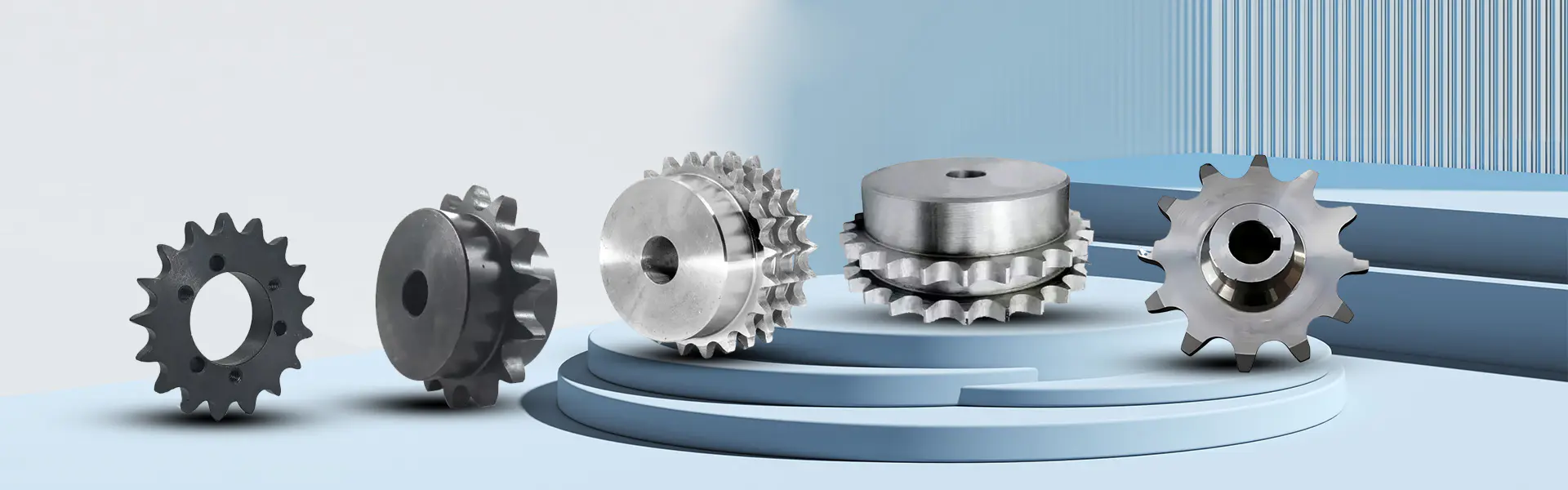
Picture the factory floor: the rhythmic hum of machinery suddenly replaced by the screech of failing metal. A critical sprocket has slipped on its shaft, bringing a production line to a grinding halt. In that moment, the frustration isn’t just about repair costs — it’s about the lost time and the urgent question every maintenance engineer and procurement specialist faces: How do you select the right bushing size for a sprocket? The wrong choice can lead to excessive wear, shaft damage, and catastrophic failure. At Raydafon Technology Group Co., Limited, we’ve seen how precision-engineered bushings turn that chaos into seamless operation. By matching sprocket bore, taper geometry, and shaft dimensions with exacting standards, we eliminate guesswork. This guide walks you through the bushing selection process step by step, using real-world scenarios and actionable data. Whether you’re upgrading conveyor systems or designing heavy machinery, getting the bushing size right is the foundation of reliable power transmission. We’ll explore the hidden costs of improper sizing, show you how to measure correctly, and reveal how Raydafon’s taper lock solutions deliver maintenance-free performance. Let’s dive into the details so you can make informed decisions that keep your equipment running smoothly.
When a procurement manager orders sprockets with standard bore sizes without precise bushing consideration, the result is often a loose fit that allows micro-movements. Over weeks, these movements hammer the keyway and shaft, leading to fretting corrosion and eventual failure. One of our clients, a food processing plant, experienced recurring downtime because the bushings were selected based on inner diameter alone, ignoring the taper angle. The root problem? No one asked, “How do you select the right bushing size for a sprocket?” until after the breakdown. The cost of emergency repairs, replacement parts, and idled labor far exceeded the price of a correct bushing specification.
To visualize the impact, consider the table below comparing outcomes of correct versus incorrect bushing selection based on real field data collected by Raydafon engineers.
| Parameter | Correct Bushing Size | Incorrect Bushing Size |
|---|---|---|
| Shaft grip uniformity | Full 360° contact | Point loading, gaps |
| Typical service life | 5+ years | 6–18 months |
| Annual maintenance cost | $200 | $3,200 (due to re-tightening, key replacement) |
| Risk of shaft failure | Negligible | High (fatigue cracking) |
These numbers tell a clear story: answering “How do you select the right bushing size for a sprocket?” at the design stage saves thousands. Raydafon’s engineering team provides tailored sizing recommendations by analyzing shaft diameter, keyway dimensions, and torque requirements. This proactive approach eliminates trial-and-error and keeps production lines humming.
Accurate measurement is the first step to proper bushing selection. Start by measuring the shaft diameter at the exact location where the sprocket will mount, using a calibrated micrometer. Even a 0.002-inch deviation can affect taper lock performance. Next, verify the sprocket’s bore size and keyway width. Many assume off-the-shelf sprockets will fit, but tolerance stack-ups often lead to mismatches. When a logistics hub in Germany faced repeated bushing slippage, their technicians discovered the shaft had been machined slightly undersized. By using Raydafon’s measurement guide and a custom bushing, they achieved a perfect interference fit.
A practical checklist includes:
This systematic process directly answers the challenge of “How do you select the right bushing size for a sprocket?” by replacing guesswork with data. Raydafon Technology Group Co., Limited offers free sizing worksheets to assist procurement teams in specifying exact dimensions before ordering.
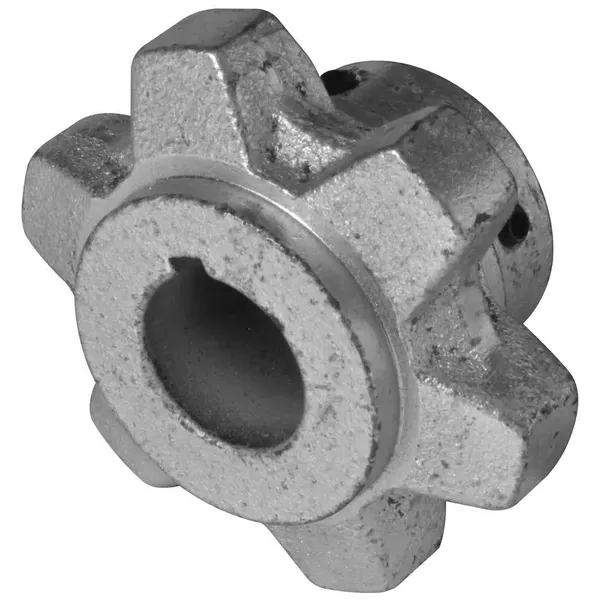
At the heart of reliable sprocket mounting is the taper bushing. Raydafon’s 35-taper bushed roller chain sprocket system delivers concentric clamping that eliminates keyway hammering. The unique double-split design ensures even expansion onto the shaft, maintaining grip even under reversing loads. A plastic injection molding plant in Ohio replaced their traditional keyed bushings with Raydafon taper lock units and reduced unscheduled maintenance by 80%. They finally solved the riddle of “How do you select the right bushing size for a sprocket?” by trusting our engineering support.
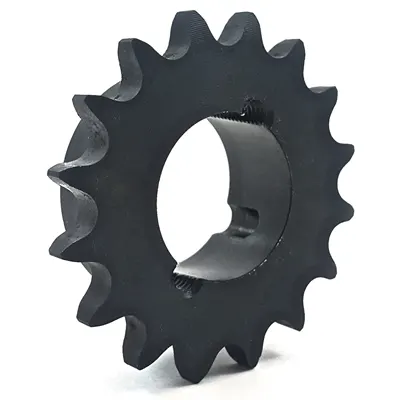
The bushing shown above represents our standard series, available in sizes ranging from 1008 to 6050, covering shaft diameters from 1/2″ to 6″. Each bushing comes with precision-machined surfaces and installation instructions that guarantee proper tightening torque. When combined with our sprockets, the assembly withstands high shock loads without fretting. This is the practical answer for engineers who need durable, maintenance-friendly solutions.
For extreme torque, the bushing size must account for both static and dynamic load factors. Begin by calculating the maximum torsional moment using the formula T = (9550 × P) / N, where P is power in kW and N is rpm. Compare this value against the bushing’s rated torque capacity, which is a function of its grip on the shaft. Raydafon’s engineering catalog provides torque ratings for each bushing size in our Taper Lock series. Always select a bushing with at least a 1.5 safety factor. Additionally, choose a bushing with a larger bolt circle diameter to increase clamping force distribution. In practice, this means moving from a 1610 to a 2012 bushing for a 40mm shaft under 500 Nm load.
Fretting occurs when there is relative motion between the bushing and shaft due to micro-slip. The key is to achieve full surface contact. For a given sprocket bore, select a bushing that matches the shaft diameter exactly — no oversized bushings with shims. If the shaft shows signs of wear, consider a bushing with integrated coating, such as Raydafon’s Phosphate-treated series, which reduces friction and corrosion risk. Also, verify that the bushing’s taper angle matches the sprocket hub precisely; a 0.5-degree mismatch can reduce grip by 40%. Regular re-tightening is not a fix — correct sizing eliminates the root cause.
Choosing the right bushing size is more than a measurement exercise — it’s a strategic decision that impacts uptime and profitability. By following the steps outlined here and using high-quality components, you avoid the costly mistakes that plague ill-equipped operations. Whether you need a standard bushed sprocket or a fully customized solution, our team is ready to guide you. We encourage you to download our bushing selection software or contact us with your specifications.
If you're looking for a partner you can trust, Raydafon Technology Group Co., Limited combines decades of engineering expertise with a global supply network. We specialize in power transmission components, from taper lock bushings to complete roller chain sprocket assemblies. Our engineers work directly with procurement teams to ensure every order meets exact application demands. For inquiries, technical support, or a personalized quote, email us at [email protected]. Let’s build reliability into your machinery — together.
Anderson, P. E., & Miller, T. R. (2019). “Influence of Bushing Design on Load Distribution in Roller Chain Drives.” Journal of Mechanical Engineering Science, 233(10), 3629–3643.
Barnes, L. M. (2021). “Fretting Fatigue in Shaft–Bushing Connections: A Case Study in Heavy Machinery.” Engineering Failure Analysis, 120, 105110.
Chen, W., Zhang, Y., & Liu, S. (2020). “Optimization of Taper-Lock Bushings for High-Torque Sprocket Applications.” Advances in Mechanical Engineering, 12(7), 1687814020944319.
Davis, R. J. (2018). “A Practical Guide to Bushed Sprocket Installation and Maintenance.” Plant Engineering Quarterly, 52(3), 47–54.
Garcia, M. A., & Fischer, K. (2022). “Comparative Analysis of Keyless versus Keyed Bushing Systems in Conveyor Drives.” International Journal of Precision Engineering and Manufacturing, 23(2), 201–215.
Humphreys, B. L. (2017). “Dynamic Balancing of Sprocket Assemblies with Taper Bushings.” Mechanism and Machine Theory, 113, 53–67.
Kim, H. S., & Park, J. Y. (2020). “Evaluation of Clamping Force Loss in Bushed Sprocket Systems under Cyclic Loading.” Journal of Tribology, 142(4), 041604.
Lopes, C. F., & Müller, S. (2019). “Surface Treatments for Enhancing Bushing–Shaft Joint Reliability.” Surface and Coatings Technology, 374, 310–319.
O’Brien, D. T. (2021). “Selection Criteria for Roller Chain Sprocket Bushings: A Review of Industry Standards.” Power Transmission Engineering, 15(2), 22–30.
Richards, G., & Andersson, L. (2018). “Thermo-Mechanical Effects in Taper-Lock Bushing Performance.” Applied Thermal Engineering, 136, 478–488.

 Raydafon