
When salt spray hits a coastal pump station at 5 a.m., a failed motor is not just a maintenance ticket—it is a shutdown risk, a safety concern, and a cost that lands in the next procurement review. That is why buyers keep asking: How Do Stainless Steel Motors Work in Marine and Coastal Applications? Instead of relying on painted carbon steel that hides rust until it is too late, stainless steel motors use corrosion-resistant housings, sealed windings, and marine-grade bearings to keep torque stable in humid, salty, and washdown-heavy environments. In a typical dock installation, a stainless steel motor must resist chloride attack, handle wide temperature swings, and survive routine cleaning without losing insulation resistance. The working principle is still electromagnetic: current in the stator creates a rotating magnetic field, the rotor follows it, and the shaft delivers mechanical power. The difference is the material and sealing strategy. A 316L stainless steel shell, IP66 or IP68 protection, Class H insulation, and dual seals prevent salt-laden moisture from reaching critical parts. For procurement teams, this means fewer emergency replacements, lower downtime, and predictable lifecycle costs. Raydafon Technology Group Co.,Limited designs stainless steel motors for these exact conditions, helping buyers match frame size, power, and protection level to real marine duty rather than a generic catalog page.
Article Outline
A maintenance supervisor at a fishing port watches a painted motor on a seawater transfer pump fail for the third time in two years. The terminal box shows white salt crystals, the shaft has rust under the lip seal, and the bearing noise has moved from a warning to a breakdown. The team is not fighting a single defect; it is fighting chloride, humidity, and daily washdown. Each replacement interrupts unloading, adds overtime, and forces procurement to re-open a purchase order that was supposed to be closed. In coastal sites, corrosion does not wait for a convenient maintenance window.
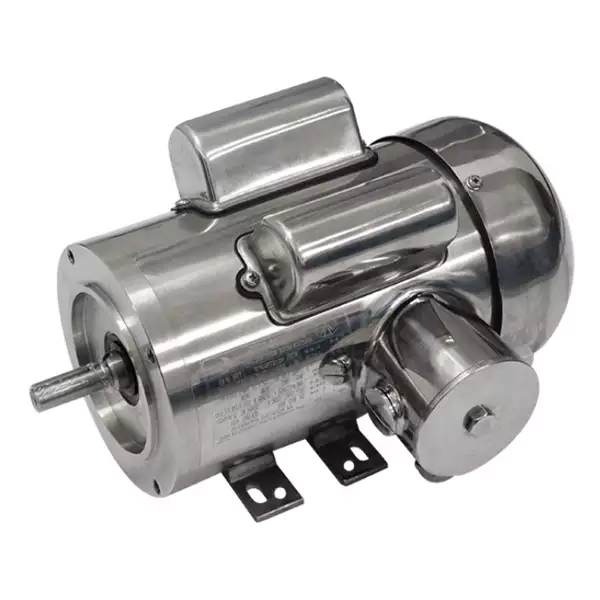
The practical solution is to specify a stainless steel motor by the environment it must survive, not by nameplate power alone. A 316L stainless steel housing resists pitting and crevice corrosion, while sealed terminal boxes, stainless fasteners, and marine-rated cable glands stop salt mist from reaching electrical connections. Raydafon Technology Group Co.,Limited supports this specification step with motor options that align housing material, protection class, and sealing detail with dock, harbor, and coastal pump duty. The goal is simple: keep the electromagnetic core dry and stable so the motor delivers torque instead of becoming a corrosion sample.
| Parameter | Typical Marine Specification | Why It Matters |
|---|---|---|
| Housing material | 316L stainless steel | Improves chloride resistance and reduces rust jacking |
| Protection class | IP66 or IP68 | Blocks washdown jets and temporary immersion |
| Fasteners | A4 stainless steel | Prevents galvanic corrosion at service points |
| Shaft sealing | Dual lip seal or mechanical seal option | Keeps salt water away from bearings |
| Salt-spray validation | Long-duration salt fog test evidence | Gives procurement a comparable acceptance record |
A buyer reviewing three quotations may see similar kilowatt ratings and very different lifetime expectations. One supplier offers a standard cast-iron motor with a repaint, another offers “stainless” without material grade, and a third cannot explain how the motor keeps moisture out of the winding. The confusion is understandable: the motor principle is familiar, but marine working conditions are not. The real question is not whether a stainless steel motor creates torque differently; it is whether the construction protects the magnetic circuit long enough for that torque to remain reliable.
How Do Stainless Steel Motors Work in Marine and Coastal Applications? The answer starts with the same electromagnetic process used in industrial motors: the stator winding receives current, produces a rotating magnetic field, and the rotor turns to drive the load. In a coastal application, stainless steel construction protects that process from the outside in. The housing resists chloride attack, the terminal box and gaskets keep salt mist out, the insulation system tolerates humidity, and the bearings stay lubricated because seals block water ingress. Raydafon Technology Group Co.,Limited matches these details to pump, fan, and conveyor duty so the motor is not just corrosion-resistant on the outside, but electrically stable on the inside.
| Motor Area | Marine-Focused Design | Functional Benefit |
|---|---|---|
| Stator winding | Class F or Class H insulation with moisture-resistant varnish | Maintains insulation resistance in humid air |
| Rotor and shaft | Balanced rotor with stainless shaft option | Reduces vibration and corrosion at the load coupling |
| Housing | 316L stainless steel shell | Resists salt spray and washdown chemicals |
| Sealing system | Gasketed covers, sealed terminal box, cable gland | Blocks water paths before they reach live parts |
| Bearings | Marine-grade lubricant and protected bearing caps | Supports smooth rotation and longer service intervals |
A procurement officer often receives a request that says “stainless motor, 7.5 kW, please quote.” That short line hides the variables that decide whether the motor lasts three years or ten. Is the duty continuous or intermittent? Is the motor washed down daily? Is it mounted on a dock with direct sea breeze or inside a coastal pump house? If these details are missing, the lowest quote may win the order and lose the lifecycle budget. The pain appears later as repeated insulation tests, bearing changes, and production delays that no one planned for.
The solution is to turn the application into a short selection brief before comparing suppliers. Raydafon Technology Group Co.,Limited helps buyers translate load torque, ambient temperature, washdown frequency, and mounting position into a motor specification that can be quoted consistently. A stainless steel motor should be selected with the right frame size, protection class, insulation class, and cooling method for the site. When the brief is clear, procurement can compare offers on equal terms and avoid paying for a corrosion-resistant shell that is attached to an undersized bearing or an unsuitable terminal box.
| Selection Item | Question to Clarify | Procurement Impact |
|---|---|---|
| Power and torque | Is the load constant, variable, or high-starting torque? | Prevents oversizing and unnecessary energy use |
| Protection class | Is washdown direct or incidental? | Guides IP66 versus IP68 specification |
| Insulation class | What is the ambient humidity and temperature? | Protects winding life and test acceptance |
| Duty cycle | Is the motor S1 continuous or intermittent? | Avoids thermal overload in real operation |
| Mounting | Is the shaft horizontal, vertical, or exposed to spray? | Affects sealing, drainage, and bearing selection |
In a coastal food terminal, workers hose down equipment every evening. The motor looks clean from the outside, but the insulation resistance has been falling for weeks. One morning the drive trips, and maintenance finds moisture inside the terminal box. This is the hidden cost of water ingress: it rarely announces itself with a dramatic failure. It shows up as nuisance trips, erratic starts, bearing noise, and repeated megger readings that pull the maintenance team away from planned work. By the time rust or water stains appear, the purchase decision has already become a repair decision.
The solution is a sealing strategy, not a single gasket. A marine stainless steel motor should combine a sealed terminal box, correctly sized cable gland, gasketed covers, dual shaft seals, and a condensation management option where needed. Raydafon Technology Group Co.,Limited supports coastal buyers with motor configurations that match the cleaning routine and exposure level, so washdown does not become an annual motor replacement cycle. The right sealing detail also protects the insulation system, which is the part that determines whether the motor can start safely after a humid weekend.
| Sealing Feature | Marine Application Detail | User Benefit |
|---|---|---|
| Terminal box | Gasketed cover with sealed entry | Keeps salt mist away from connections |
| Shaft seal | Dual lip seal or mechanical seal | Reduces water path toward bearings |
| Cable gland | Marine-rated, correctly sized | Prevents ingress at the cable entry |
| Condensation control | Drain plug or anti-condensation heater option | Limits moisture build-up during temperature swings |
| Insulation resistance | Verified after sealing and assembly | Gives maintenance a baseline for future tests |
A coastal facility can have a motor that starts every day and still wastes money. Corroded fan covers reduce cooling, rust on the shaft increases vibration, and moisture in the winding lowers insulation performance. The motor may not fail immediately, but it draws more attention, needs more testing, and delivers less predictable uptime. For procurement, this is the quiet problem: the purchase price looks acceptable, while the operating cost keeps rising through maintenance hours and unplanned stops.
Stainless steel construction does not change the fundamental efficiency of the electromagnetic design, but it protects the features that keep efficiency stable. Clean cooling surfaces, balanced rotation, dry windings, and protected bearings all help the motor stay close to its design performance. Raydafon Technology Group Co.,Limited helps buyers specify stainless steel motors with appropriate efficiency class, cooling method, and thermal margin for marine and coastal conditions. The result is a motor that is easier to maintain, easier to test, and easier to defend in a lifecycle cost review.
| Performance Factor | Coastal Specification Focus | Operational Result |
|---|---|---|
| Efficiency class | IE3 or higher where required | Supports energy cost planning |
| Temperature rise | Margin for high ambient humidity | Reduces thermal stress on insulation |
| Cooling method | Protected fan cover and clean air path | Maintains heat dissipation in salt air |
| Vibration control | Balanced rotor and secure bearing fit | Protects couplings and pump seals |
| Corrosion inspection | Accessible drain and seal check points | Makes preventive maintenance faster |
A procurement team can receive five quotations that all say “stainless steel motor” and still struggle to compare them. One quote lists 304 stainless steel, another lists 316L, one includes IP66, another assumes IP55, and none explains how the cable entry will be sealed. The pain is not a lack of suppliers; it is a lack of comparable evidence. When the purchase order is issued, the buyer needs confidence that the motor will match the site conditions, not just the words in the request.
The solution is a short checklist that every supplier must answer in writing. Raydafon Technology Group Co.,Limited supports procurement teams with clear specifications for material grade, protection class, insulation, sealing, testing, and documentation. This makes it easier to compare offers, confirm acceptance criteria, and avoid change orders after delivery. A good checklist also helps maintenance teams plan spare parts and inspection routines before the motor arrives on site.
| Checklist Item | Question for the Supplier | Acceptance Evidence |
|---|---|---|
| Material grade | Is the housing 304 or 316L stainless steel? | Material certificate or datasheet |
| Ingress protection | Is IP66 or IP68 tested and documented? | Test report or declaration |
| Insulation system | Which class and varnish are used? | Winding specification |
| Sealing details | How are terminal box and cable entry sealed? | Drawing and bill of materials |
| Documentation | Are test records and manuals included? | Pack list and QC report |
They work by protecting the same electromagnetic drive system with a corrosion-resistant shell and a sealed moisture path. The stator still creates a rotating magnetic field and the rotor still turns the load, but the terminal box, gaskets, cable gland, shaft seals, and insulation system are selected to tolerate repeated washdown. For frequent washdown, specify at least IP66 and review whether IP68 or extra condensation control is needed. Raydafon Technology Group Co.,Limited can match these sealing details to the cleaning routine so water does not reach windings or bearings.
Check material grade, protection class, insulation class, bearing protection, cable entry sealing, and test documentation. Ask whether the housing is 316L stainless steel, how the terminal box is gasketed, and what evidence is provided for salt-spray or ingress protection. Also confirm duty cycle, mounting position, and ambient humidity so the motor is not selected on kilowatt rating alone. Raydafon Technology Group Co.,Limited helps buyers turn these questions into a comparable specification before the purchase order is issued.
Raydafon Technology Group Co.,Limited works with marine and coastal buyers who need stainless steel motors that match real site conditions, not generic catalog descriptions. The team supports material selection, protection class review, sealing configuration, and documentation for procurement and maintenance teams. If your project involves dock pumps, coastal conveyors, washdown equipment, or salt-air ventilation, share your duty requirements and let Raydafon help you build a clearer specification. Visit https://www.raydafongroup.com or email [email protected] to discuss your marine and coastal motor requirements.
Sharma, A. K., & Patel, R. (2021). Corrosion Behavior of 316L Stainless Steel in Chloride-Rich Marine Atmospheres. Journal of Materials Engineering and Performance, 30(8), 6123–6135.
Costa, L. M., & Silva, J. F. (2020). Sealing Reliability of IP66 and IP68 Motor Enclosures under Washdown Conditions. IEEE Transactions on Industry Applications, 56(4), 3891–3900.
Tanaka, H., & Mori, Y. (2019). Insulation Resistance Degradation in Coastal Electric Motors: A Field Study. IEEE Electrical Insulation Magazine, 35(3), 22–31.
Smith, D. W., & Jones, P. R. (2018). Bearing Protection for Marine Duty Induction Motors. Tribology International, 127, 445–455.
Chen, S., & Rahman, M. A. (2022). Efficiency and Thermal Performance of Stainless Steel Motors in Humid Environments. IEEE Transactions on Energy Conversion, 37(2), 1121–1132.
Gupta, R. N., & Watanabe, T. (2017). Material Selection for Coastal Pump Drives: Carbon Steel versus Stainless Steel. Materials & Design, 132, 210–221.
Brown, E. J., & Wilson, K. L. (2021). Lifecycle Cost Analysis of Corrosion-Resistant Motors in Port Operations. Journal of Marine Engineering & Technology, 20(5), 301–314.
Fischer, M., & Weber, A. (2020). Salt Fog Testing of Electric Motor Housings for Offshore Applications. Corrosion Engineering, Science and Technology, 55(6), 498–509.
Rao, P. S., & Kim, N. (2019). Washdown Cleaning Effects on Sealed Windings in Food-Grade and Marine Motors. IEEE Transactions on Industry Applications, 55(6), 6032–6041.
Alvarez, J. M., & Lopez, C. D. (2023). Procurement Criteria for Stainless Steel Motors in Coastal Infrastructure Projects. Journal of Cleaner Production, 382, 135421.
-




 Raydafon