
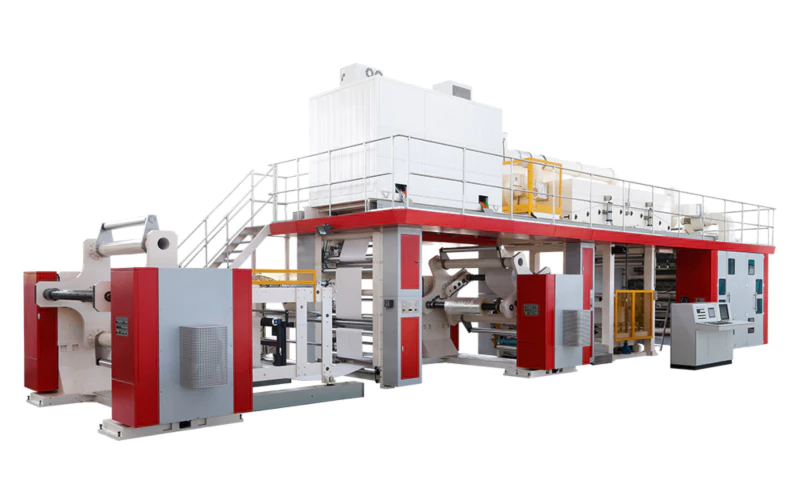
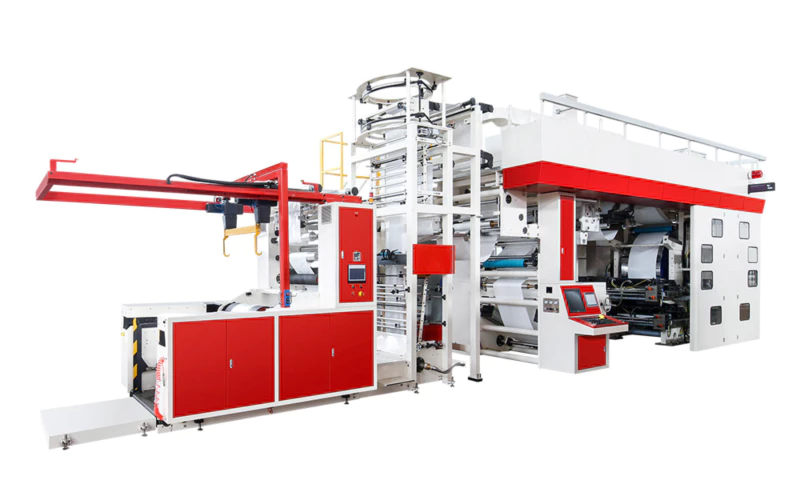
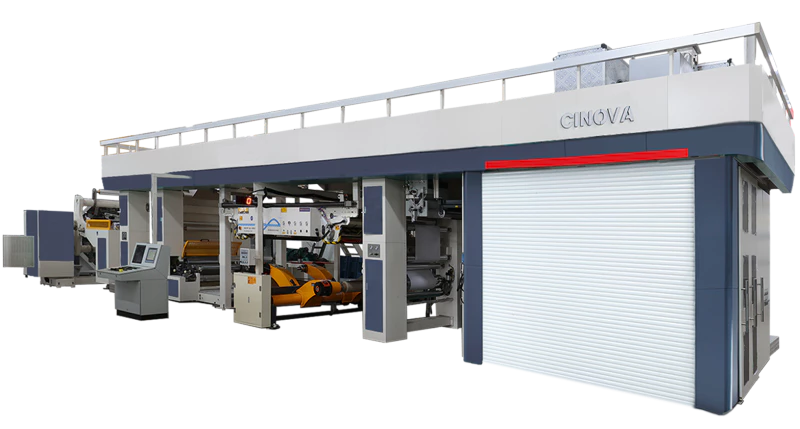
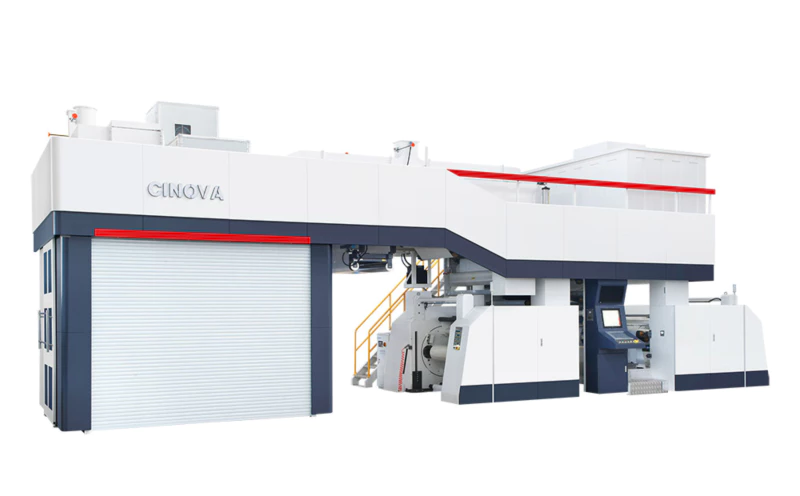
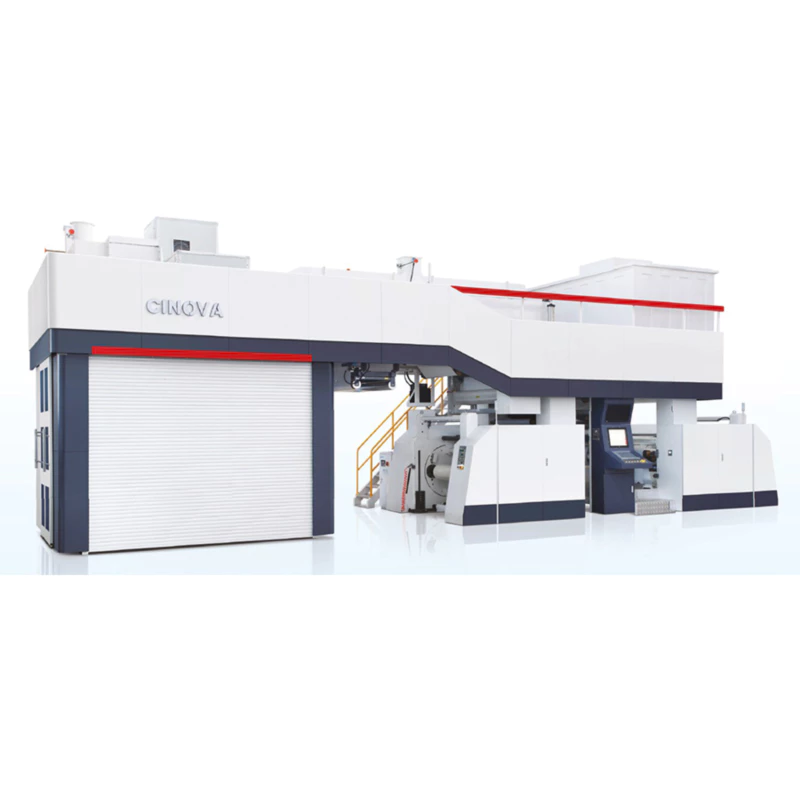
In the high-speed, high-stakes world of industrial printing, precision, reliability, and consistent quality are non-negotiable. For converters demanding superior results on a wide array of substrates, the Central Impression CI Flexo Press stands as the undisputed workhorse. At Raydafon Group, we have engineered our line of CI Flexo Presses to embody the pinnacle of this technology, blending decades of manufacturing expertise with innovative features to drive your productivity and profitability to new heights. A CI Flexo Press is characterized by a large, central impression cylinder around which multiple print stations are arranged. This unique configuration is key to its exceptional performance in register control and print quality, especially on extensible films, making it the preferred choice for flexible packaging, labels, and specialty applications.
Choosing a Raydafon Group CI Flexo Press means investing in a system designed for operational excellence.
Our presses are available in various configurations to meet specific market needs. Below are the detailed parameters for our flagship RDF-CI Series.
| Parameter | Specification |
|---|---|
| Model Range | RDF-CI 850, RDF-CI 1050, RDF-CI 1300, RDF-CI 1650 |
| Max Web Width | 850mm, 1050mm, 1300mm, 1650mm |
| Repeat Length Range | 330mm - 850mm (adjustable gearless) |
| Max Mechanical Speed | 550 meters per minute |
| Standard Number of Colors | 8 Stations (6 print, 1 reverse, 1 varnish). Configurable up to 10+. |
| Printing Method | CI Flexographic (Stack-type optional) |
| Drive System | Fully digital servo drive, independent per axis |
| Register Control | Fully automatic, CCD camera-based with closed-loop feedback |
| Inking System | Chambered doctor blade system with ceramic anilox rolls |
| Plate Cylinder | Sleeve or integral shaft type, quick-change system |
| Substrate Thickness | 12 - 250 microns |
| Central Impression Cylinder | Double-walled, thermally ground steel with Hard Chrome plating |
| Drying System | High-velocity hot air, individually controlled per station |
| Control System | Industrial PC with 15" HMI touchscreen, data logging & Ethernet connectivity |
What are the primary applications for a CI Flexo Press?
CI Flexo Presses are predominantly used in the flexible packaging industry. This includes printing on films for food packaging (snacks, frozen foods, confectionery), stand-up pouches, pet food bags, shrink sleeves, pressure-sensitive labels, and hygiene product packaging. Their ability to handle thin, extensible films at high speed makes them ideal for these high-volume markets.
How does a CI Flexo Press differ from a Stack-type or Inline Flexo Press?
The key difference is the mechanical structure. A CI press has all print units arranged around one large central impression drum, which provides superior web stability and register control. A stack-type press has print units stacked vertically on both sides of the web, which can be more susceptible to tension variations. Inline presses have units in a straight line, often used for corrugated or less tension-sensitive materials. The CI design is optimal for precise, high-speed printing on flexible films.
Why is register control superior on a CI design?
Because the web is supported by the massive central cylinder through every print station, there is almost no free web span between colors. This drastically reduces the chance of tension fluctuations, stretching, or wandering that can cause misregister. The web path is shorter and more controlled, allowing for exceptional accuracy even on difficult materials.
What is the typical make-ready time on a modern CI press like Raydafon's?
With features like automatic plate cylinder positioning, preset job memory, and servo-driven register control, make-ready times have been dramatically reduced. On a Raydafon Group RDF-CI press, a standard job changeover can often be completed in 30-45 minutes, depending on complexity. This includes plate/sleeve changes, ink wash-up, and running to register.
Can a CI Flexo Press handle water-based, solvent-based, and UV inks?
Yes, modern CI presses from Raydafon Group are designed to be versatile. They are typically equipped with high-efficiency drying systems (hot air for water/solvent, and UV curing modules as an option) that can handle different ink chemistries. The chambered doctor blade system is compatible with all these ink types, though specific configurations (like exhaust or curing lamps) may be selected based on the primary ink to be used.
What kind of maintenance does a CI press require?
Regular preventive maintenance is crucial for longevity and performance. This includes daily cleaning of ink systems and print units, weekly lubrication checks, and periodic inspection of critical components like bearings, gears, and dryer filters. Raydafon Group provides comprehensive maintenance schedules and training. With proper care, a well-built CI press can operate reliably for decades.
How does Raydafon Group support its CI press customers?
Raydafon Group offers end-to-end support. This begins with application engineering to configure the right press, includes extensive installation and operator training at your facility, and is backed by a global network of service technicians and a readily available inventory of spare parts. We also offer remote support services and periodic health checks to ensure optimal press performance throughout its lifecycle.
Is investing in a CI Flexo Press cost-effective for medium-sized converters?
While the initial investment is significant, the ROI can be compelling, even for medium-sized businesses targeting growth in flexible packaging. The high speed, low waste, and consistent quality lead to a lower cost per thousand prints on long runs. Furthermore, the versatility to handle a wide range of jobs can open new market opportunities. A detailed production analysis with a Raydafon Group expert can help determine the specific payback period.
The performance of a CI Flexo Press hinges on its core subsystems. Raydafon integrates top-tier technology into each one.
Our fully digital, servo-electric drive system eliminates mechanical gear wear and provides flawless synchronization. Each axis—unwind, print cylinders, rewind—is independently controlled, allowing for micro-adjustments. The automatic register system uses high-resolution CCD cameras to scan pre-printed marks, sending correction data back to the servo drives in real-time for perfect registration.
A consistent ink film is vital. Our chambered doctor blade system, paired with precision-engineered ceramic anilox rolls, delivers a uniform and controllable ink transfer. The closed-chamber design minimizes solvent evaporation and ink skinning. Each print station is coupled with a high-velocity hot air dryer, ensuring inks are thoroughly dried before the web contacts the next printing station, preventing set-off.
The press is managed via an intuitive, industrial-grade Human-Machine Interface (HMI). Operators can control all parameters, store job recipes, monitor production data, and diagnose issues from one central panel. Ethernet connectivity allows for integration into factory networks for production reporting and potential integration with MIS (Management Information Systems).

 Raydafon