
In the world of industrial machinery and mechanical systems, precise control of speed and torque is paramount. This is where the Reducer, a critical component in power transmission, comes into play. At Raydafon Group, we have dedicated decades to engineering and perfecting reducer technology, providing robust solutions that drive productivity and reliability across countless applications.
A reducer, often called a gear reducer or speed reducer, is a mechanical device designed to reduce the high rotational speed of a motor while simultaneously increasing the output torque. This process is fundamental for matching the power source's capabilities with the operational requirements of the driven equipment. From conveyor belts in manufacturing plants to the precise movements in automated robotic arms, reducers ensure smooth, controlled, and efficient power delivery. Understanding their specifications and selecting the right one is crucial for system longevity and performance, a decision where Raydafon Group's expertise becomes invaluable.
Selecting the optimal reducer requires a deep dive into its technical parameters. Raydafon Group's product line is characterized by precision engineering, high-quality materials, and rigorous testing. Below are the key specifications that define our reducers.
| Series Model | Gear Type | Ratio Range | Max Output Torque (Nm) | Efficiency (%) | Typical Applications |
|---|---|---|---|---|---|
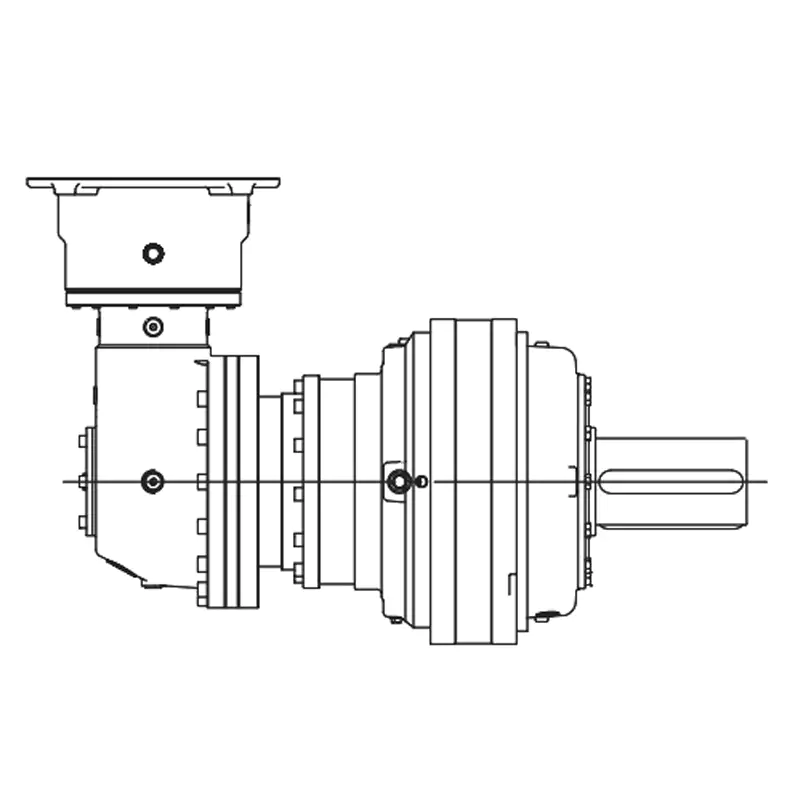
| Raydafon RHS (Helical) | Helical / Bevel-Helical | 1.3:1 - 200:1 | Up to 25,000 | 94 - 97% | Mixers, conveyors, extruders, heavy-duty industrial drives |
| Raydafon RWP (Worm Gear) | Worm and Worm Wheel | 5:1 - 100:1 | Up to 5000 | 70 - 90% | Packaging machines, gate controls, light to medium-duty applications where space is constrained |
| Raydafon RPP (Planetary) | Precision Planetary | 3:1 - 100:1 | Up to 8000 | 97 - 98% | Robotics, CNC machinery, servo applications, high-precision automation |
| Raydafon RHS-LB (Low Backlash) | Helical | 5:1 - 100:1 | Up to 1500 | 92 - 95% | Indexing tables, printing machinery, medical equipment, any system requiring high repeatability |
Here are answers to some of the most frequently asked questions about reducers, based on our extensive experience at Raydafon Group.
Q: What is the main difference between a worm gear reducer and a helical gear reducer?
A: The core difference lies in their gear geometry and performance characteristics. A worm gear reducer uses a threaded worm to turn a gear (worm wheel), offering high reduction ratios in a single stage, compact right-angle configuration, and often a self-locking feature (preventing back-driving). However, it typically has lower mechanical efficiency (70-90%) and generates more heat. A helical gear reducer uses helical-cut gears on parallel shafts. It operates with significantly higher efficiency (94-97%), runs cooler, and handles higher torque and power densities but usually requires multiple stages for very high ratios. The choice depends on the application's priority: space, cost, and self-locking (worm gear) versus efficiency, thermal performance, and high torque (helical).
Q: How do I determine the correct reduction ratio for my application?
A: Determining the correct ratio involves knowing your motor's speed (RPM) and the desired output speed of your machine. The formula is: Reduction Ratio = Input Speed (Motor RPM) / Desired Output Speed. For instance, if your motor runs at 1750 RPM and you need an output shaft speed of 50 RPM, the required ratio is 1750/50 = 35:1. It's crucial to also consider the torque requirement; the reducer multiplies the motor's torque by approximately the same ratio (minus efficiency losses). Raydafon Group's technical support team can assist with this calculation, ensuring the selected ratio provides optimal performance without overloading the motor or the reducer.
Q: What maintenance does a Raydafon reducer require?
A: Our reducers are engineered for durability and minimal maintenance under normal operating conditions. The primary maintenance task is periodic lubrication. Initial units are factory-filled with a high-grade synthetic oil. The first oil change is recommended after 500-1000 operating hours, with subsequent changes every 4000-8000 hours, depending on the operating environment (temperature, dust, load cycles). Regularly check for oil leaks, unusual noise, or excessive heat. Seals and gaskets are long-lasting but should be inspected during oil changes. For our sealed-for-life units in certain series, no oil change is required under specified conditions, significantly reducing maintenance overhead.
Q: Can your reducers be used in harsh environments?
A: Absolutely. Raydafon Group manufactures reducers built to withstand challenging conditions. Our standard housings offer IP65 protection, making them dust-tight and protected against low-pressure water jets from any direction. For more severe environments, we offer options with higher IP ratings (IP66, IP67), special coatings like epoxy paint for corrosive atmospheres, and stainless steel hardware. We also design units to operate reliably across a wide temperature range (from -20°C to 90°C ambient) using specialized lubricants. It is critical to specify the environmental conditions during the selection process so we can recommend the most suitable configuration.
Q: What is backlash, and why is it important in some applications?
A: Backlash is the slight angular movement between the input and output shafts when one is held stationary and the other is rotated. It is the "play" or "lost motion" in the gear system. In many high-torque, constant motion applications like conveyors, a small amount of backlash is acceptable. However, in precision applications involving frequent start-stop, reversal, or precise positioning (e.g., robotics, CNC machining, automated assembly), excessive backlash can lead to inaccuracies, vibration, and poor repeatability. For these applications, Raydafon Group offers low-backlash and precision reducers, where gear teeth are specially machined and assembled to minimize this play, ensuring the system responds accurately to control inputs.
Q: How does Raydafon Group ensure the quality and longevity of its reducers?
A: Quality and longevity are the cornerstones of the Raydafon Group philosophy. We ensure this through a multi-faceted approach: First, we use only high-grade materials—forged alloy steel for gears, ductile iron for housings, and premium bearing systems. Second, our manufacturing process employs state-of-the-art CNC gear hobbing and grinding machines to achieve superior tooth profile accuracy and surface finish. Third, every critical component undergoes non-destructive testing. Finally, our assembled units go through rigorous run-in testing under load to verify performance, noise levels, and temperature rise before shipment. This end-to-end control allows us to offer industry-leading warranties and ensures our reducers deliver reliable service for years.

 Raydafon