
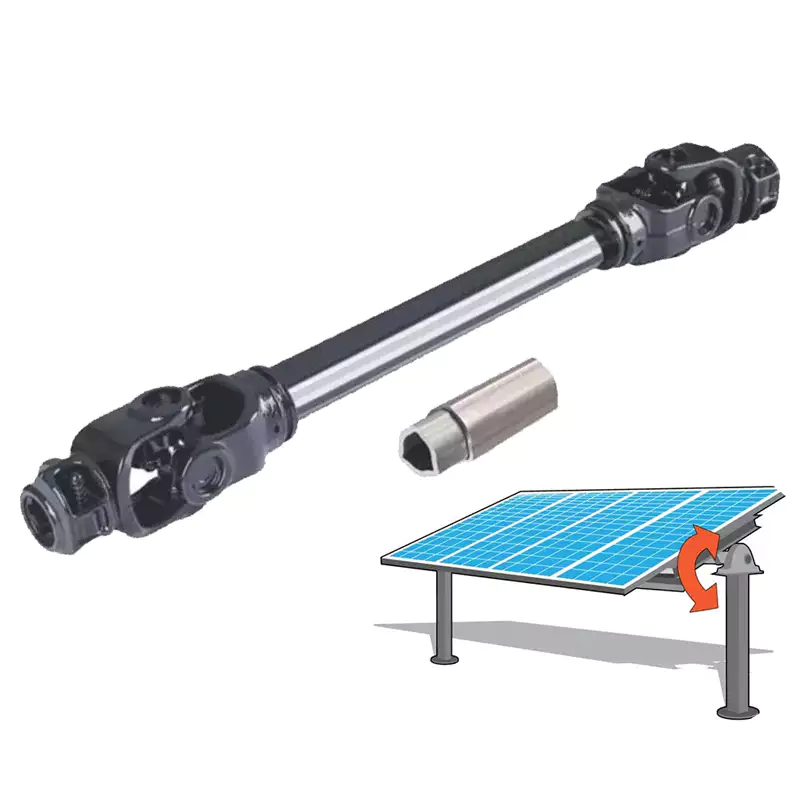
In the dynamic landscape of utility-scale solar energy, the relentless pursuit of higher energy yield and operational reliability is paramount. At the heart of a high-performance single-axis tracking system lies a critical yet often understated component: the Solar Panel Tracker Shaft. This central structural and mechanical backbone is responsible for the precise, synchronized rotation of entire solar panel arrays, directly influencing a plant's capacity factor and long-term profitability. Raydafon Group, a leader in precision-engineered solutions for renewable energy infrastructure, brings decades of metallurgical and manufacturing expertise to this pivotal component. We don't just produce shafts; we deliver engineered reliability for the sun's daily journey.
A substandard tracker shaft can become the weakest link, leading to system downtime, costly maintenance, and significant energy losses. Raydafon Group's Solar Panel Tracker Shafts are designed from the ground up to eliminate these risks. Our philosophy integrates optimal material science, rigorous finite element analysis (FEA), and precision manufacturing to create a product that stands up to decades of cyclic loading, environmental extremes, and the demanding economics of solar power generation.
Raydafon Group's tracker shafts are defined by a suite of advanced specifications that set the industry benchmark. Below is a detailed breakdown of our standard and high-performance offerings.
Precision is non-negotiable for seamless integration and smooth operation. Our manufacturing process guarantees the following tolerances:
| Model Series | Standard Outer Diameter (mm / inches) | Wall Thickness (mm) | Standard Lengths (meters) | Max Recommended Torque (kNm) | Typical Array Capacity (kWp per shaft)* |
|---|---|---|---|---|---|
| RDF-STD Series | 139.7 / 5.5" | 6.0 | 6.0, 6.5, 12.0 | 22 | 90 - 120 |
| RDF-HD Series | 168.3 / 6.625" | 8.0 | 6.5, 12.0, 14.0 | 38 | 150 - 220 |
| RDF-XHD Series | 219.1 / 8.625" | 10.0 | 12.0, 14.0 | 65 | 280 - 350 |
*Capacity varies based on module technology, row spacing, and wind region.
Q: What is the expected service life of a Raydafon Group solar panel tracker shaft?
A: Raydafon Group designs and manufactures tracker shafts with a target service life exceeding 30 years, aligning with the financial lifespan of modern solar power plants. This is achieved through the combination of HSLA steel (resistant to fatigue), heavy-duty hot-dip galvanization (for corrosion protection), and conservative engineering design factors that keep operational stresses well below the material's yield point. Regular visual inspections are recommended as part of a plant's O&M regimen, but the shaft itself is designed as a "fit-and-forget" component.
Q: How does the shaft's straightness impact tracker performance?
A: Straightness is critical for three main reasons. First, it ensures low and consistent rotational friction across all bearings, reducing parasitic power consumption from the drive motor. Second, it guarantees that all connected torque tubes and panels rotate in a perfectly synchronized plane, maximizing collective energy capture. A bent shaft can cause misalignment, leading to uneven stress on components, increased wear, and potentially causing the tracker to stall or fault. Raydafon Group's stringent straightness tolerance (<1.5mm/m) is a key factor in ensuring smooth, reliable daily operation.
Q: Can you provide custom diameters, lengths, or end fittings?
A: Absolutely. While our standard series covers the majority of market needs, Raydafon Group specializes in custom-engineered solutions. We can produce shafts with non-standard diameters, wall thicknesses, and lengths to meet specific project requirements or to interface with existing tracker hardware. Our engineering team will work with your designers to specify the correct end fittings—whether custom bolt circles, splined profiles, or welded clevis ends—ensuring a perfect fit and optimal force transfer.
Q: What quality control and certification processes do you have?
A: Quality is embedded in every step. Our process begins with certified mill test reports for all raw steel. During fabrication, we perform in-process checks on dimensions, straightness, and weld quality. Every finished solar panel tracker shaft undergoes a final inspection that includes dimensional verification, visual inspection of coating integrity, and straightness measurement via laser alignment systems. We provide comprehensive documentation packs, including material certifications, inspection reports, and galvanizing certificates. Our facilities and processes can be audited to meet major international standards.
Q: How does the galvanized coating hold up in harsh environments?
A: Our standard hot-dip galvanized coating (minimum 85µm) provides robust protection in most environments, including desert (UV, abrasion) and moderate coastal areas. The zinc coating sacrificially protects the underlying steel, even if scratched. For severely corrosive environments—such as offshore sites, heavy industrial zones, or tropical coastlines—we strongly recommend our optional duplex coating system. This involves applying a specially formulated epoxy or PVDF paint layer over the galvanized surface, creating a synergistic barrier that can extend the maintenance-free life of the shaft by decades in C5-M corrosion categories.
Q: What is the lead time for a typical utility-scale project order?
A: Lead times vary based on project scope, customization, and current production capacity. For standard specification orders, typical lead times range from 8 to 12 weeks from receipt of order to shipment. For large, customized projects, our project management team will establish a detailed manufacturing and delivery schedule during the contract phase. Raydafon Group maintains strategic raw material inventory and employs advanced production planning to ensure reliable and predictable delivery timelines for our clients worldwide.

 Raydafon