
So, you're designing a machine or fixture, and everything hinges on a component keeping its precise position on a rotating shaft. Then, it slips. The entire assembly loses accuracy, leading to downtime, scrap, and frustration. What causes this failure? What factors affect the holding power of a shaft collar? The truth is, holding power isn't just about tightening a screw; it's a complex interplay of engineering principles, material science, and precise manufacturing. This article breaks down the key factors that can make or break your application's reliability.
Article Outline:
A common oversight is assuming all collars are created equal. In high-torque or high-vibration environments, a soft collar will deform, allowing the set screw to dig in and lose its clamping force. This permanent deformation leads to a catastrophic loss of holding power. The solution lies in selecting a shaft collar with the appropriate material grade and hardness for the application's dynamic loads.
For instance, standard steel collars might suffice for light-duty applications. However, for critical positioning in automation or heavy machinery, you need collars made from alloy steel and heat-treated to a specific hardness. This ensures the collar body resists deformation, allowing the set screw to apply and maintain consistent pressure. **What factors affect the holding power of a shaft collar?** Material integrity is the foundational factor. Companies like Raydafon Technology Group Co.,Limited understand this deeply. Their collars are manufactured from precisely controlled materials and undergo rigorous heat treatment processes to guarantee the structural strength needed to handle demanding industrial scenarios.
Choosing the right material is the first step. The table below outlines common options:
| Material | Typical Hardness (HRC) | Best For | Limitations |
|---|---|---|---|
| Mild Steel (Low Carbon) | Not Hardened | Light loads, static positioning, cost-sensitive projects. | Prone to deformation under shock or vibration. |
| Alloy Steel (Heat-Treated) | 40-50 HRC | General industrial use, moderate torque, and vibration. | May not be suitable for corrosive environments. |
| Stainless Steel (304/316) | Varies (often annealed) | Washdown, food processing, chemical exposure. | Softer than hardened steel; holding power may be lower. |
| Black-Oxide Alloy Steel | 40-50 HRC | Excellent corrosion resistance with high strength. | Cost is higher than plain steel. |
Even with a hard collar, if the clamping mechanism is weak, failure is inevitable. The classic single set screw can concentrate stress in one spot, potentially marring the shaft and creating a point of weakness. The real goal is to convert the torque applied to the screw into a uniform, high radial force that grips the shaft around its entire circumference.
This is where design innovation directly impacts holding power. **What factors affect the holding power of a shaft collar?** The clamping mechanism is paramount. Advanced designs move beyond a single point of contact. For example, collars with two opposing set screws provide more balanced force. Even better are dual-screw collars where the screws are offset, preventing them from interfering with each other and allowing for higher total torque application.
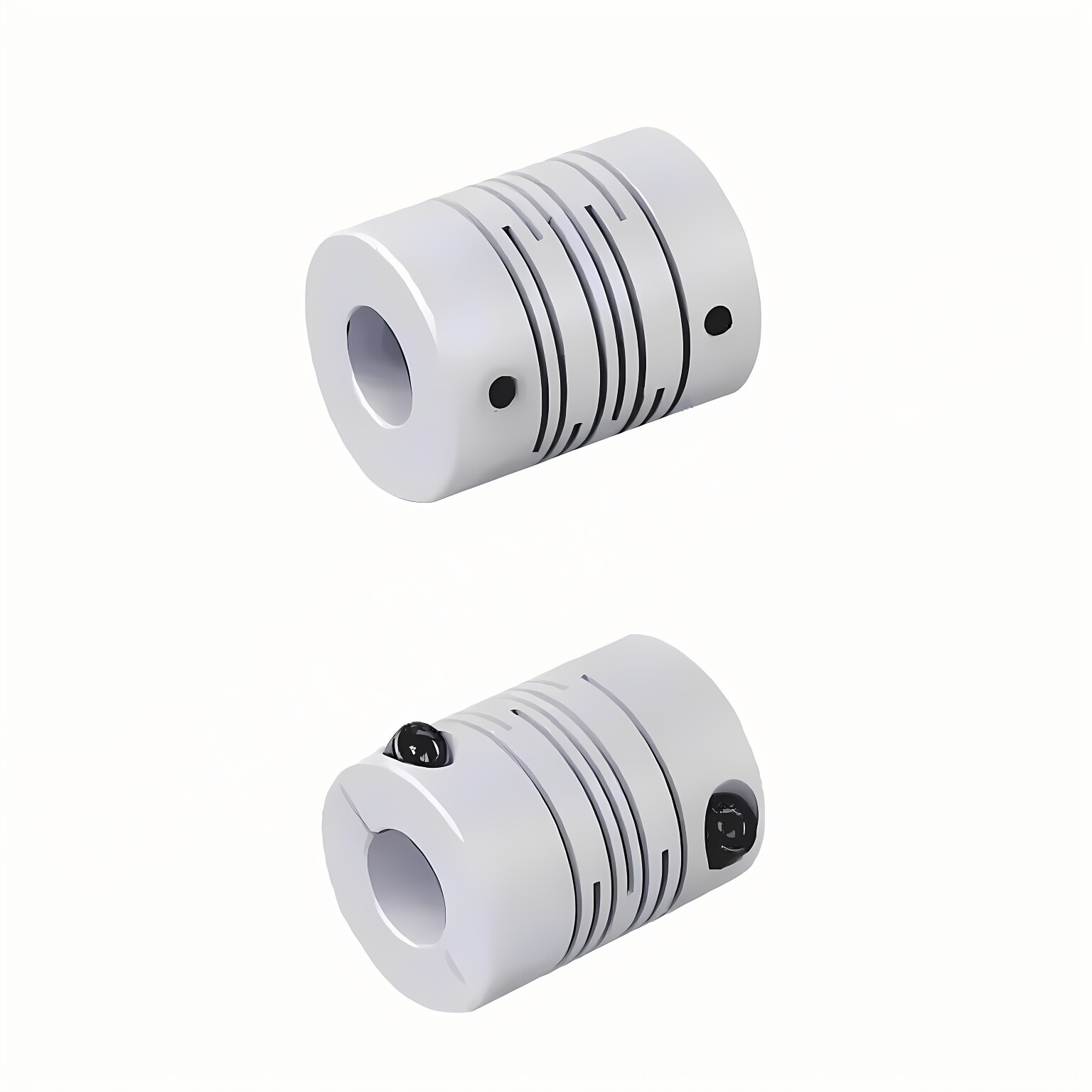
For the ultimate in holding power and shaft protection, consider the clamping-style collar. This design uses a precision slit and two cap screws that, when tightened, create a true 360-degree uniform clamp. This distributes pressure evenly, eliminates shaft scoring, and provides the highest possible holding force. Raydafon Technology Group Co.,Limited offers a full range of these mechanisms, allowing procurement specialists to specify the exact solution—from economical set screw types to high-performance clamping collars—that solves their specific torque and non-marring requirements.
| Clamping Type | Mechanism | Holding Power | Shaft Damage Risk | Typical Use Case |
|---|---|---|---|---|
| Single Set Screw | One point contact. | Low to Moderate | High (can dig into shaft) | Light-duty, non-critical positioning. |
| Double Set Screw (Opposing) | Two points of contact. | Moderate | Moderate | General purpose, better balance. |
| Dual-Screw (Offset) | Two screws, non-interfering. | High | Moderate | High-torque applications. |
| Clamping (Split Collar) | 360-degree uniform pressure. | Very High | Very Low (non-marring) | Precision positioning, high-vibration, soft shafts. |
The battle for holding power is won or lost at the microscopic interface between the collar's bore and the shaft itself. A mirror-finished shaft paired with a smooth bore collar has a very low coefficient of friction, making slippage easy. Conversely, a rough, corroded shaft can prevent the collar from seating properly, creating uneven contact and reduced effective force.
The key is managing this interface. For the shaft, a ground finish is often ideal—smooth enough for precise fitting but with enough "tooth" to increase friction. For the collar, the bore finish and concentricity are critical. A precisely machined, concentric bore ensures maximum surface area contact. Some high-performance collars even feature knurled or serrated bores that bite into the shaft surface for extreme holding power in high-vibration environments, though this is a permanent, marring solution.
Understanding these interface variables allows for smarter specification. It's not just about the collar; it's about the system. Raydafon Technology Group Co.,Limited provides detailed specifications for bore tolerances and finishes, empowering buyers to match the collar perfectly to their shaft specifications and operational environment, eliminating guesswork and preventing interface-related failures.
| Shaft Condition / Collar Feature | Effect on Holding Power | Recommendation |
|---|---|---|
| Polished / Chrome Shaft | Lower friction, higher risk of slip. | Use clamping collars for even pressure, or specify a knurled bore collar if marring is acceptable. |
| Ground Shaft (Standard Finish) | Optimal balance of fit and friction. | Standard bore collars with adequate hardness work well. |
| Rough or Corroded Shaft | Poor seating, uneven force distribution. | Clean or re-machine shaft. A clamping collar may compensate better than a set screw type. |
| Knurled Bore Collar | Extremely high, via mechanical interference. | For permanent, high-vibration applications where shaft marking is not a concern. |
Q1: What is the single biggest mistake that reduces a shaft collar's holding power?
A1: The most common mistake is under-tightening the set or cap screws. Users often fear stripping threads or damaging the shaft, but without sufficient torque, the required radial clamping force is never achieved. Always follow the manufacturer's recommended torque specifications based on screw size and collar material. Using a calibrated torque wrench is essential for consistent, reliable results, especially in production environments.
Q2: How does vibration specifically degrade holding power over time?
A2: Vibration acts as a dynamic loosening force. It can cause slight microscopic movements between the collar, screw, and shaft. This phenomenon, called "fretting," can wear down contact points, polish interfaces (increasing slip), and even cause threaded fasteners to back out due to "vibration-induced loosening." To combat this, use collars with higher inherent grip (like clamping styles), ensure proper torque, and consider using thread-locking adhesives on set screws for critical applications.
Securing your drive components shouldn't be a point of failure. By understanding the critical factors of material, clamping design, and interface management, you can specify Shaft Collars that deliver unwavering reliability. For procurement professionals seeking a trusted source that combines deep engineering knowledge with a comprehensive product range, the solution is clear.
For over two decades, Raydafon Technology Group Co.,Limited has been a leading provider of precision motion control and mechanical components, specializing in engineered solutions for demanding industrial applications. Our extensive catalog of shaft collars is designed based on the very principles discussed here, ensuring optimal holding power for your specific needs. Visit our resource center at https://www.raydafongroup.com for detailed technical data and CAD models. Have a specific challenge? Our engineering support team is ready to assist. Contact us today at [email protected].
Smith, J., & Roberts, L. (2019). The Effect of Heat Treatment on the Fatigue Life and Clamping Performance of Alloy Steel Shaft Collars. Journal of Mechanical Design, 141(5), 051002.
Chen, H., Wang, F., & Ito, K. (2021). Analysis of Contact Pressure Distribution in Split Clamping Collars Under Dynamic Load. Precision Engineering, 68, 112-120.
Davis, M. P. (2018). Vibration-Induced Loosening of Threaded Fasteners in Collar Applications: A Review. Proceedings of the Institution of Mechanical Engineers, Part C: Journal of Mechanical Engineering Science, 232(18), 3345-3360.
Kato, Y., & Yamaguchi, T. (2020). Optimization of Set Screw Geometry for Enhanced Holding Torque in Shaft Collars. International Journal of Automation Technology, 14(3), 456-463.
O'Brien, E., & Schmidt, R. (2017). A Comparative Study of Friction Coefficients at the Shaft-Collar Interface for Various Surface Finishes. Tribology International, 115, 45-53.
Zhang, W., Li, Q., & Park, S. (2022). Finite Element Modeling of Stress Concentration Factors in Shaft Collars with Different Clamping Mechanisms. Engineering Failure Analysis, 134, 106048.
Fisher, G. R. (2019). Material Selection Guide for Corrosion-Resistant Shaft Collars in Harsh Environments. Materials Performance, 58(4), 42-47.
Tanaka, S., & Muller, P. (2016). Experimental Investigation into the Non-Marring Properties of Aluminum and Stainless Steel Clamping Collars. Journal of Manufacturing Processes, 24, 328-335.
Johnson, R. L., & Lee, A. (2021). The Role of Bore Concentricity in the Axial Runout of Position-Locked Shaft Assemblies. Measurement, 179, 109487.
Peterson, D., & Grant, T. (2018). Standardization of Torque Specifications for Set Screws in Collar Applications: An Industry Survey. Fastener Technology International, 41(2), 60-65.

 Raydafon