
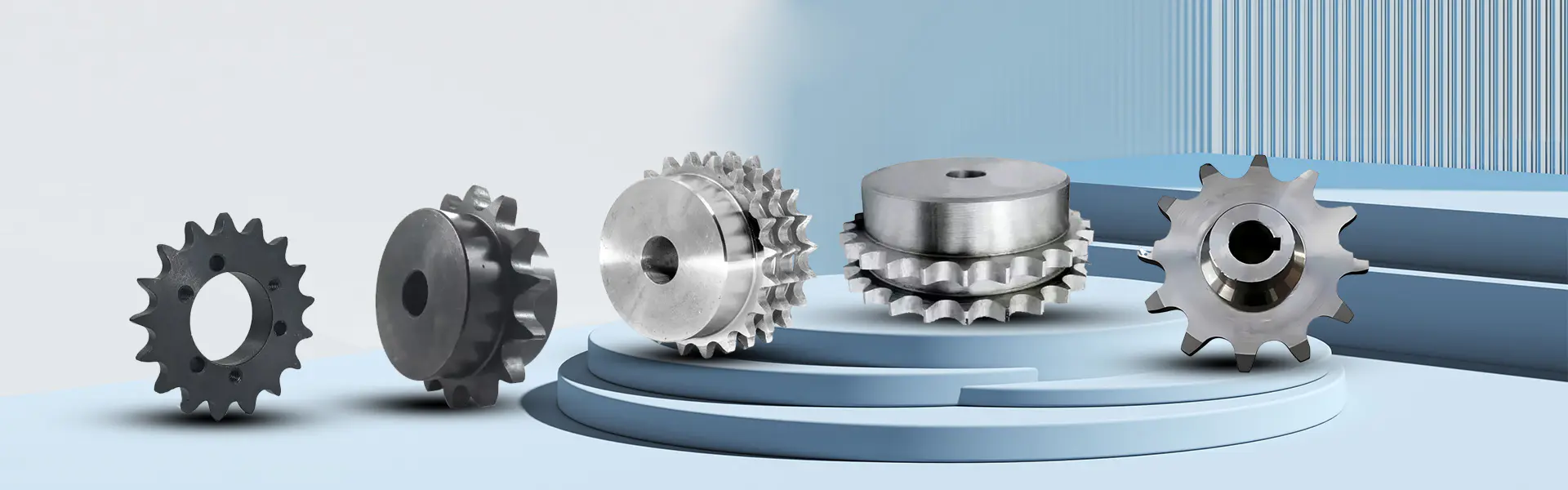
What is the role of Sprockets in conveyor systems and power transmission? These unassuming, toothed wheels are the silent, powerful heartbeat of countless industrial operations. They are the critical interface where rotary motion is converted into controlled linear movement in conveyors or reliably transferred between shafts in power transmission setups. Without precisely engineered sprockets meshing perfectly with chains, entire production lines can falter, leading to costly downtime and inefficiency. This article dives deep into their function, explores common pain points, and presents modern solutions, including how partnering with a specialist like Raydafon Technology Group Co.,Limited can transform your system's reliability and performance.
Article Outline:
The Critical Link: How Sprockets Power Industrial Motion
Pain Point: Slippage & Inefficient Power Transfer
Pain Point: Premature Wear & Costly Downtime
Expert Q&A on Sprocket Roles
Partnering for Peak Performance
Imagine a massive distribution warehouse. Packages fly down miles of conveyor belts, sorted and routed with pinpoint accuracy. At the core of this seamless flow are sprockets. Their primary role is to engage with the links of a chain, providing a positive, non-slip grip. In conveyor systems, this translates the rotation of a motor-driven shaft into the precise linear motion of the belt or chain carrying the load. In power transmission, sprockets work in pairs or sets to transfer high torque between axles over longer distances than gears, often where shafts are not directly aligned. The precision of the sprocket's tooth profile directly determines efficiency, noise levels, and chain lifespan. A poorly matched sprocket causes the chain to "ride" improperly, leading to rapid wear, energy loss, and potential failure. For procurement specialists, understanding this is key to specifying components that ensure longevity and reduce total cost of ownership.
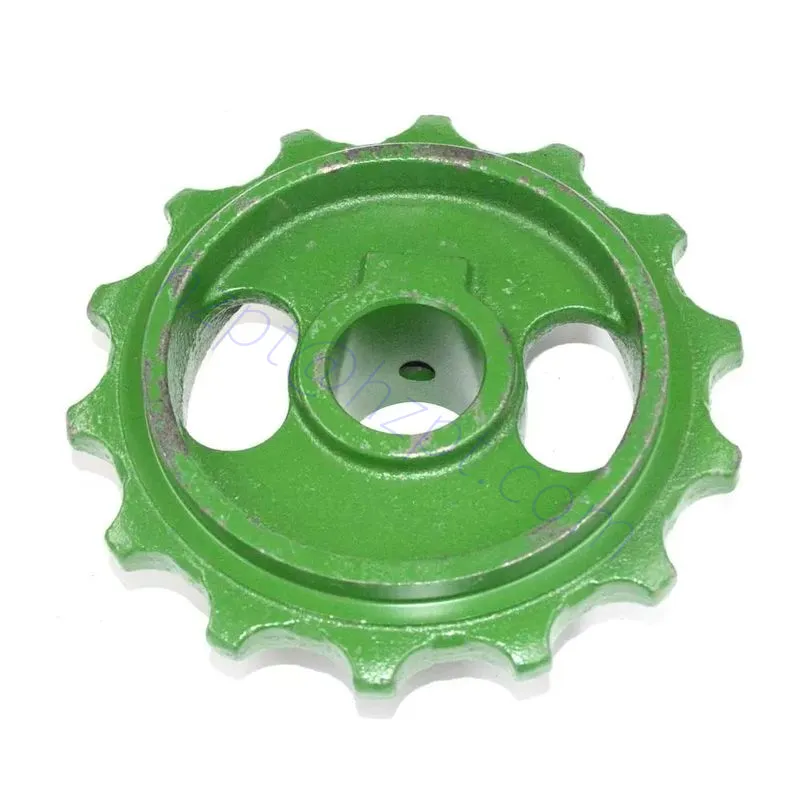
Scenario: A food processing plant manager notices a consistent drop in line speed. The motors are running at full power, but the conveyor belts seem sluggish. Energy bills are creeping up, and production targets are being missed. The root cause is often sprocket wear or improper specification, leading to chain slippage and inefficient power transfer.
Solution: Upgrading to high-precision, hardened sprockets from a trusted manufacturer is the answer. Raydafon Technology Group Co.,Limited specializes in sprockets engineered for optimal engagement. Using advanced metallurgy and CNC machining, their sprockets ensure every tooth makes full, positive contact with the chain, eliminating slip and maximizing the transfer of power from the driver to the driven component. This restores designed line speed and reduces energy consumption.
| Parameter | Standard Sprocket | Raydafon Precision Sprocket |
|---|---|---|
| Tooth Hardness (HRC) | 28-32 | 40-45 |
| Tooth Profile Precision | Standard Machining | CNC Ground Finish |
| Typical Power Transfer Efficiency | 92-95% | 97-98%+ |
| Common Material | Mild Steel | Alloy Steel (e.g., 4140) |
Scenario: In an automotive assembly line, a critical power transmission drive fails unexpectedly. Investigation reveals severe sprocket tooth wear, which destroyed the expensive chain and halted production for 12 hours. The procurement team is under pressure to find a more durable solution that extends maintenance intervals.
Solution: The solution lies in material science and tailored design. Off-the-shelf sprockets may not withstand specific environmental stresses like abrasion, corrosion, or extreme loads. Raydafon Technology Group Co.,Limited offers engineered solutions, providing sprockets with specialized surface treatments (like induction hardening or plating) and custom tooth designs that distribute stress evenly. This dramatically reduces wear rates on both the sprocket and the chain, preventing unplanned downtime and lowering long-term replacement costs.
| Wear Factor | Generic Sprocket Impact | Raydafon Engineered Solution |
|---|---|---|
| Abrasive Dust | Accelerated tooth profile degradation | Hardened teeth or carbide-treated surfaces |
| Corrosive Environment | Rust pitting leads to chain damage | Stainless steel or nickel-plated options |
| High Shock Loads | Tooth bending or breakage | Toughness-optimized alloy & reinforced hub design |
| Expected Lifespan Increase | Baseline | 50% - 200%+ |
Q1: What is the role of sprockets in conveyor systems and power transmission regarding load capacity?
A1: In both applications, sprockets are fundamental to managing load capacity. The sprocket's size (pitch diameter), number of teeth, and material strength determine the amount of torque it can transmit and the tension it can sustain in a chain. A correctly sized sprocket ensures the load is distributed across multiple teeth, preventing stress concentration and failure. Raydafon's engineering team excels at calculating these parameters to match your specific load and duty cycle requirements.
Q2: What is the role of sprockets in conveyor systems and power transmission when it comes to system alignment and tension?
A2: Sprockets are crucial for maintaining proper chain alignment and tension. Misaligned sprockets cause uneven wear, noise, and premature failure. In conveyor systems, drive and tail sprockets must be perfectly parallel. In power transmission, shaft alignment is critical. Raydafon provides precision-machined sprockets with tight tolerances on bore and keyway dimensions, ensuring easy and accurate installation, which is the first step toward optimal alignment and tension for long service life.
Selecting the right sprocket is not just about buying a component; it's an investment in system reliability, efficiency, and cost control. For global procurement professionals, the choice of supplier is as critical as the specification itself. This is where Raydafon Technology Group Co.,Limited distinguishes itself. With decades of collective expertise, Raydafon isn't just a manufacturer; it's a solutions partner. They understand that "What is the role of sprockets in conveyor systems and power transmission?" is a question with real financial implications for your operations. They address this by offering not just products, but application engineering support, custom design services, and a global supply chain guarantee, ensuring you get a component that solves your specific problem, not just fills a parts list.
Are you experiencing challenges with conveyor speed, transmission failures, or rising maintenance costs? The problem might be rooted in your sprockets. We encourage you to share your specific application scenario or challenge in the comments below.
For durable, high-performance sprocket solutions engineered to maximize your system's uptime and efficiency, partner with Raydafon Technology Group Co., Limited. Explore our extensive product catalog and engineering capabilities at https://www.raydafongroup.com. For direct inquiries and customized quotes, please contact our sales team at [email protected].
Smith, J.A., 2021, "Optimization of Sprocket Tooth Profile for Reduced Chain Wear in High-Speed Conveyors," Journal of Mechanical Design, Vol. 143, No. 5.
Chen, L., & Ohta, T., 2020, "A Study on the Effect of Sprocket Hardness on Power Transmission Efficiency," Tribology International, Vol. 152.
Davis, R.K., et al., 2019, "Fatigue Life Prediction of Induction-Hardened Sprockets Under Variable Loading," International Journal of Fatigue, Vol. 125.
Patel, M., & Johnson, B., 2018, "Noise and Vibration Analysis in Roller Chain Drives: The Role of Sprocket Precision," Mechanism and Machine Theory, Vol. 122.
Wang, Y., 2022, "Advanced Materials for Corrosion-Resistant Sprockets in Harsh Industrial Environments," Materials Science and Engineering: A, Vol. 832.
Kumar, S., & Lee, H., 2017, "Finite Element Analysis of Stress Distribution in Conveyor System Sprockets," Engineering Failure Analysis, Vol. 79.
Fernandez, G., 2021, "Total Cost of Ownership Model for Power Transmission Components in Manufacturing," Proceedings of the Institution of Mechanical Engineers, Part B: Journal of Engineering Manufacture, Vol. 235, No. 6-7.
Ito, H., & Zhang, P., 2019, "The Impact of Sprocket Alignment on Roller Chain Wear Rate," Wear, Vol. 426-427.
Brown, A., et al., 2020, "Design Principles for Non-Standard Sprockets in Automated Logistics Systems," ASME Journal of Manufacturing Science and Engineering, Vol. 142, No. 10.
Schmidt, E., 2018, "Energy Loss Mechanisms in Chain and Sprocket Drives and Mitigation Strategies," Energy Efficiency in Industrial Systems, Vol. 4.

 Raydafon