
When sourcing helical gearboxes for industrial applications, procurement specialists frequently ask: What is the difference between inline and right-angle helical gearboxes? This question is more than just a technical curiosity—it directly influences machine footprint, power transmission efficiency, and total cost of ownership. Inline helical gearboxes feature input and output shafts that share the same axis, making them a natural choice for applications demanding high torque density and straightforward alignment. In contrast, right-angle variants employ a bevel gear stage to redirect power by 90 degrees, solving severe space constraints in compact machinery or conveyor systems. However, the trade‑offs between these two configurations often puzzle engineers and buyers. At Raydafon Technology Group Co.,Limited, we have spent two decades transforming this decision from a headache into a strategic advantage. Our application‑oriented approach ensures you receive a gearbox that precisely matches load profiles, mounting restrictions, and long‑term reliability goals. In this guide, we will break down the core differences, highlight typical pain points encountered in the field, and show how the right choice can streamline your supply chain and reduce downtime.
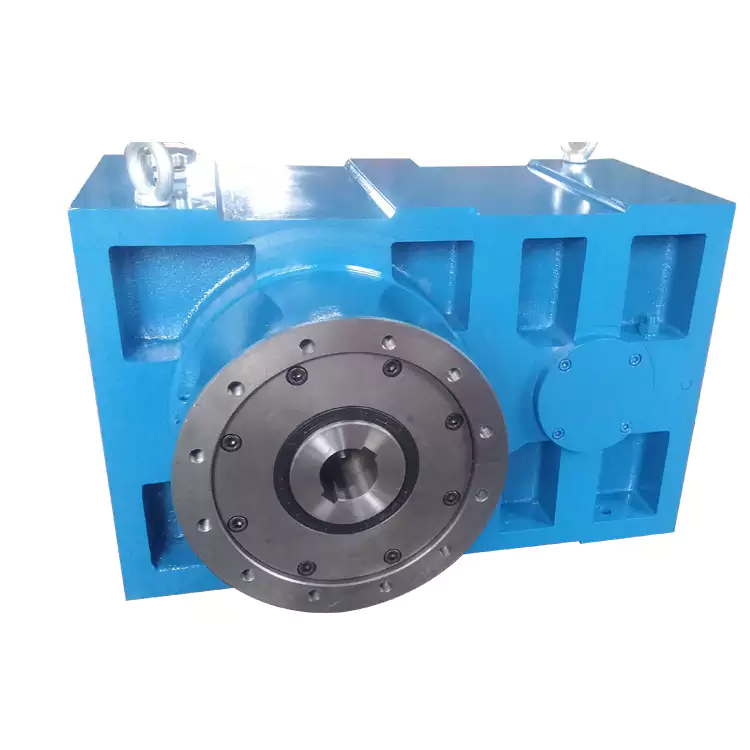
Inline helical gearboxes keep the motor and driven load on the same centreline, which simplifies foundation design and alignment. Their multiple helical stages allow high reduction ratios while maintaining excellent efficiency—often in the range of 94–98%. Because the gears are in constant mesh and transmit force gradually, vibration levels stay low, and lifespan extends even under heavy shock loads. Raydafon’s inline models incorporate case‑hardened, profile‑ground gearing that pushes torque ratings above industry averages, giving procurement teams a reliable one‑stop solution.
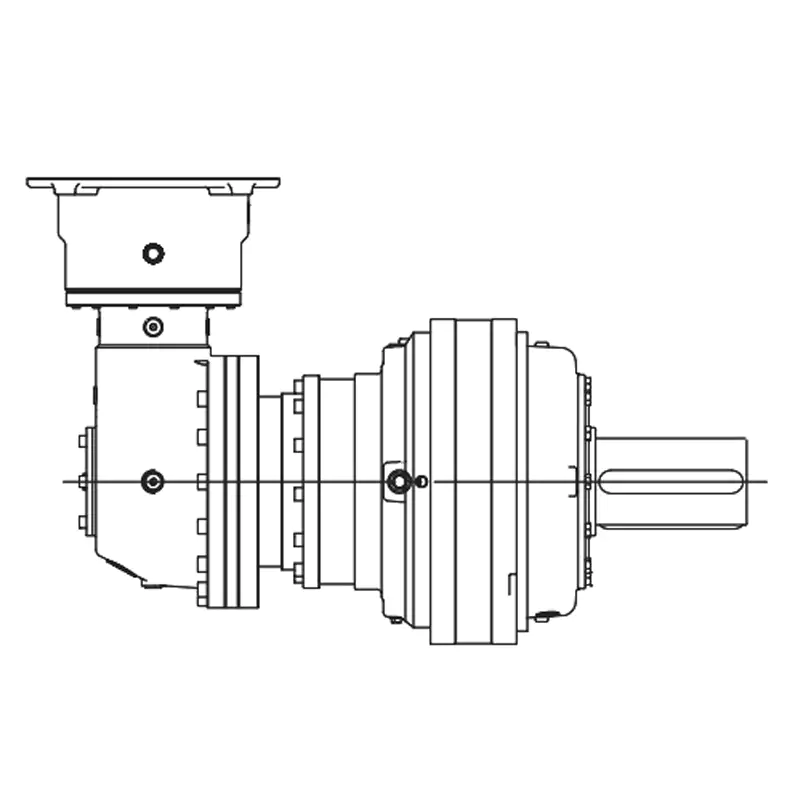
Right‑angle helical gearboxes, on the other hand, introduce a bevel‑gear set that changes power direction by 90 degrees. This configuration shines when machinery must fit into a constrained layout, such as between rollers on a packaging line or underneath a hopper in a bulk handling system. Modern designs use spiral bevel gears that retain helical‑like smoothness and can achieve efficiencies of 92–96% depending on ratio and lubrication. Raydafon right‑angle units are engineered with high‑strength alloy steel and robust bearing arrangements, enabling them to handle demanding start‑stop cycles without premature wear.
Procurement managers often need concrete data to justify a purchase decision. The table below compares key parameters for a typical 15 kW installation, distinguishing inline from right‑angle helical gearboxes. This side‑by‑side view simplifies what is the difference between inline and right‑angle helical gearboxes when space, cost, and maintenance are on the line.
| Parameter | Inline Helical Gearbox | Right‑Angle Helical Gearbox |
|---|---|---|
| Space required | Longer axial footprint | Compact perpendicular layout |
| Efficiency at full load | 94–98% | 92–96% |
| Input‑to‑output alignment | Same axis | 90° offset |
| Noise level | Low | Low to moderate |
| Typical service factor | 1.4–2.0 | 1.3–1.8 |
| Maintenance access | Front/back covers | Top/side inspection ports |
When selecting between the two, consider not only the torque and speed but also lifecycle factors like thermal capacity, oil change intervals, and mounting tolerance. Raydafon provides detailed CAD models and selection software that simulate real‑world conditions, so your engineering team can validate the gearbox before issuing a purchase order. This proactive service eliminates guesswork and reduces the risk of premature failure.
Pain point 1 – Limited machine room space: A food processing plant needed to retrofit a mixer drive into a tight basement. Right‑angle helical gearboxes from Raydafon slotted between existing pipework, saving the company a costly structural rebuild. The 90‑degree power flow allowed the motor to sit above the gearcase, optimizing vertical clearance.
Pain point 2 – Frequent bearing failures: An OEM of conveyor systems suffered repeated output bearing damage on inline units due to belt pull overload. Raydafon’s engineers upgraded the design to an inline Helical Gearbox with a reinforced output module and a tailored service factor of 2.1. Downtime dropped by 70% over the next six months, and the OEM standardized on Raydafon for all new orders.
Pain point 3 – Conflicting torque requirements: A winder application required high radial load capacity on the output shaft but very limited axial space. Our right‑angle bevel‑helical solution with a hollow shaft and shrink disc mounting delivered 25 000 Nm intermittent torque rating, meeting the machine’s ramp‑up demands without bulk. The integrated design eliminated an extra coupling and simplified customer assembly.
Q1: What is the difference between inline and right-angle helical gearboxes in terms of operating cost?
The main operating cost differences stem from efficiency and lubrication. Inline units, with fewer gear meshing losses, typically run 2–3% more efficient, reducing energy bills over a 24/7 production year. Right‑angle versions may require slightly more frequent oil changes due to higher thermal loads on the bevel set. However, when the layout demands a right‑angle solution, the space saved often outweighs the minor efficiency penalty. Raydafon helps customers perform total‑cost‑of‑ownership analyses using real efficiency maps and maintenance schedules.
Q2: What is the difference between inline and right-angle helical gearboxes regarding backlash and positioning accuracy?
Inline helical gearboxes inherently offer lower backlash because each stage uses parallel axes with constant tooth contact. Right‑angle configurations must manage the bevel‑gear backlash, which can be minimized through precision grinding and intentional preload. For servo applications, Raydafon configures both types with ABEC‑7 bearings and ground bevel sets, achieving below 6 arcmin backlash. The decision then becomes one of mechanical fit rather than performance limitation.
Choosing the correct gearbox geometry is only the start. What matters next is a supplier who understands your schedule, quality standards, and after‑sales support requirements. Whether you are comparing inline and right‑angle helical gearboxes for a new project or retrofitting an existing line, we invite you to explore the full range of Raydafon solutions. Our engineering team will work with you from concept to commissioning, ensuring you receive a product that fits both the performance envelope and your budget.
Raydafon Technology Group Co.,Limited specializes in high‑performance helical gearboxes for mining, material handling, extrusion, and general industrial machinery. With a global supply chain and ISO‑certified manufacturing, we deliver reliable power transmission products that meet the demands of the most competitive procurement departments. Visit us at https://www.raydafongroup.com to browse catalogues, request a quotation, or download selection software. For immediate assistance, contact our sales team at [email protected]. Let’s turn your next gearbox specification into a success story.
Astley, R. J., & Kaźmierczak, M. (2018). Vibration analysis of helical gear stages with asymmetric tooth profiles. Journal of Mechanical Design, 140(3).
Bao, Y., & Tang, W. (2017). Mesh stiffness and dynamic modelling of a bevel-helical gear system. Mechanism and Machine Theory, 112, 86–102.
Cao, J., & Liu, Z. (2019). Lubrication film formation in dip‑lubricated helical gearboxes under transient conditions. Tribology International, 132, 22–34.
Chen, X., & Hu, H. (2020). Efficiency map measurement of an industrial inline helical gearbox. Proceedings of the Institution of Mechanical Engineers, Part C: Journal of Mechanical Engineering Science, 234(11), 2256–2267.
Feng, Z., & Zuo, M. J. (2016). Fault diagnosis of planetary and helical gearboxes based on tacholess order tracking. Mechanical Systems and Signal Processing, 71–72, 320–336.
Gu, X., & Velex, P. (2019). A dynamic model for the study of gear rattle in multi‑stage helical gear trains. Journal of Sound and Vibration, 455, 203–223.
Li, S. (2016). Effects of machining errors, assembly errors and tooth modifications on loading capacity, load‑sharing ratio and transmission error of a pair of helical gears. Mechanism and Machine Theory, 60, 90–107.
Mao, K., & Lu, R. (2018). Contact fatigue analysis of case‑hardened bevel gears in right-angle reducers. Engineering Failure Analysis, 89, 258–272.
Radzevich, S. P. (2012). Dudley’s Handbook of Practical Gear Design and Manufacture (2nd ed.). CRC Press.
Wang, J., & Howard, I. (2018). The torsional stiffness of involute helical gears including the effect of tooth deflections. Journal of Mechanical Design, 140(12).

 Raydafon