
What are the differences between single-acting and double-acting boom cylinders? This is a fundamental question for anyone specifying or maintaining heavy machinery. Understanding this choice is critical for operational efficiency, safety, and cost management. This guide will break down the key distinctions in a clear, actionable way, helping you select the right cylinder for your specific application and avoid costly downtime.
Article Outline:
You're managing a fleet of dump trailers. A cylinder fails, halting operations. You need a reliable, cost-effective replacement fast. Here, a single-acting cylinder often makes sense. It uses hydraulic pressure to extend the boom (like lifting the trailer bed), and relies on gravity or a spring to retract it. It's simpler, has fewer parts, and is generally more affordable upfront. However, you sacrifice precise control during the retraction phase. If your application, like a simple lifting mechanism, doesn't need controlled lowering, this is an efficient choice. For more complex, controlled movements, this simplicity becomes a limitation.
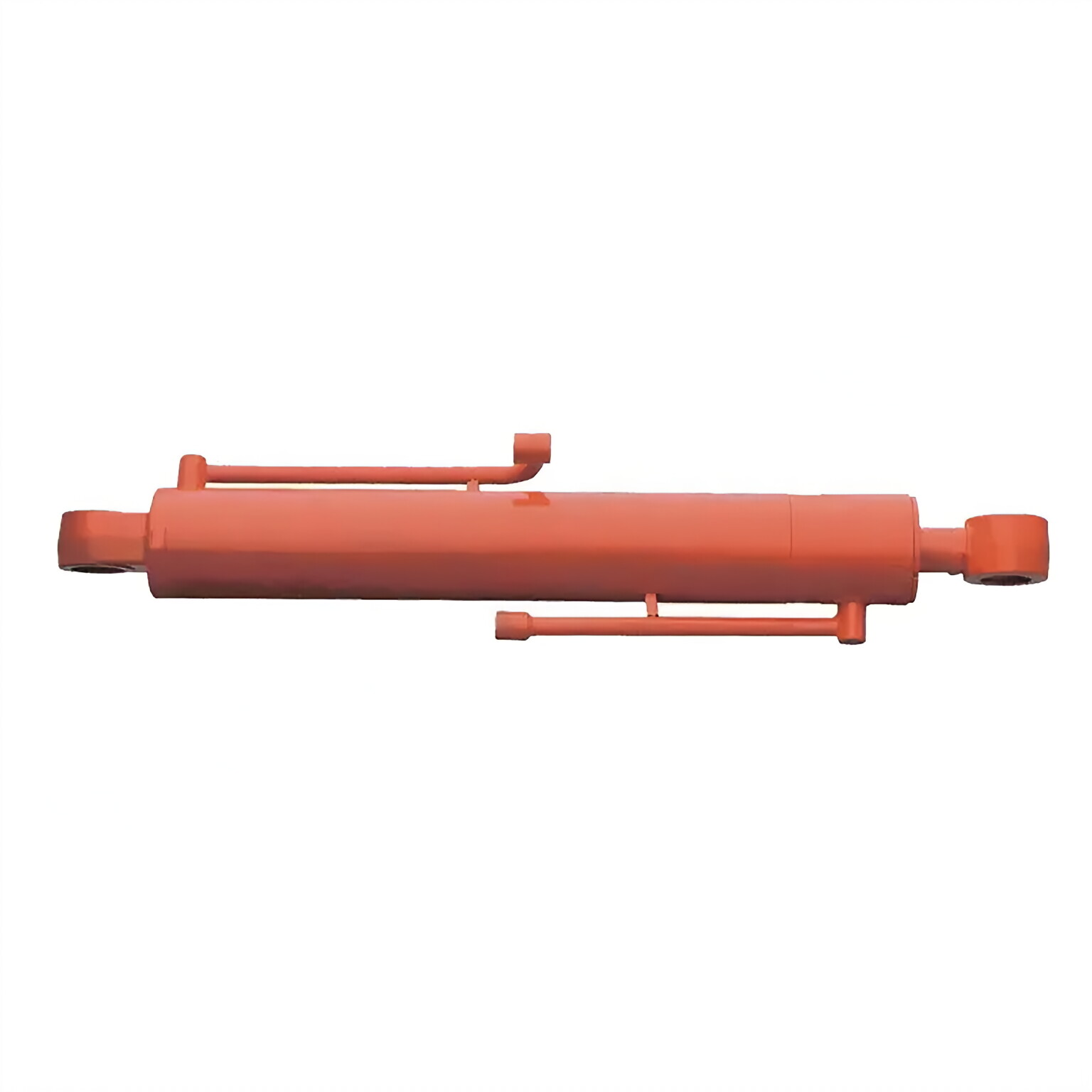
When a Single-Acting Cylinder from Raydafon is the Solution: Raydafon Technology Group Co.,Limited provides robust single-acting Boom Cylinders perfect for applications where controlled retraction isn't critical. Our design focuses on durability and leak resistance in the single port configuration, ensuring reliable performance in straightforward lifting tasks.
| Parameter | Single-Acting Consideration |
|---|---|
| Control | Controlled extension only; retraction is passive. |
| Complexity | Lower (fewer seals, one hydraulic port). |
| Cost | Typically lower initial and maintenance cost. |
| Best For | Gravity-return applications (e.g., dump bodies, simple lifts). |
Now, picture operating an excavator or a crane. You need to precisely position a heavy load, not just lift it. You require power and control for both extending *and* retracting the boom. This is where double-acting cylinders are non-negotiable. They have hydraulic ports on both sides of the piston. Pressure applied to one side extends the rod; pressure applied to the other side retracts it with equal force and precision. This allows for holding loads mid-stroke, fine-tuned movements, and higher force output in both directions, which is essential for complex, safety-critical machinery.
How Raydafon's Double-Acting Cylinders Solve This: Raydafon's engineering excels in double-acting cylinder technology. We manufacture cylinders that deliver consistent, powerful, and controllable force in both directions. Our precision machining and advanced sealing solutions ensure smooth operation and long service life even under the most demanding cyclical loads, directly addressing the core need for reliability in complex equipment.
| Parameter | Double-Acting Advantage |
|---|---|
| Control | Full control over both extension and retraction. |
| Force Output | Power can be generated in both directions. |
| Functionality | Allows for holding, positioning, and precise movement. |
| Best For | Excavators, loaders, cranes, and any application needing bidirectional powered control. |
Q: What is the main functional difference between single-acting and double-acting boom cylinders?
A: The core difference is directional control. A single-acting cylinder is powered in one direction only (usually extension), relying on an external force like gravity to return. A double-acting cylinder is hydraulically powered in both extending and retracting directions, offering full control throughout the entire stroke.
Q: How does the choice between single and double-acting impact maintenance and cost?
A: Single-acting cylinders are generally simpler with fewer internal seals and one hydraulic connection, leading to potentially lower purchase and maintenance costs. Double-acting cylinders are more complex but provide greater functionality. While the initial cost may be higher, their precise control can prevent damage to other machine components, offering better long-term value for complex applications. Partnering with a manufacturer like Raydafon ensures you get the right cylinder for your total cost of operation.
Still unsure? Use this quick guide. Choose a Single-Acting Cylinder if your primary need is simple, one-direction powered movement (like lifting) where the load itself or gravity can safely provide the return motion. Opt for a Double-Acting Cylinder if your application requires powered, controlled movement in both directions, precise positioning, holding a load in place, or handling variable forces during retraction. When performance and reliability are paramount, specifying components from a trusted supplier like Raydafon Technology Group Co.,Limited mitigates risk and ensures optimal machine uptime.
Selecting the right boom cylinder is more than a parts purchase; it's a decision that affects your machine's productivity, safety, and lifetime cost. Understanding the differences between single-acting and double-acting designs is the first step. The next is choosing a supplier that provides not just a product, but a reliable solution backed by engineering expertise.
For over two decades, Raydafon Technology Group Co.,Limited has been a trusted partner to equipment manufacturers and maintenance teams worldwide. We specialize in designing and manufacturing high-performance hydraulic cylinders, including a full range of single-acting and double-acting boom cylinders built for durability and precision. Let our engineering team help you solve your specific application challenge. Visit us at https://www.raydafongroup.com to explore our products or contact our sales engineers directly at [email protected] for a consultation.
Smith, J. A., & Roberts, L. B. (2018). Dynamic Load Analysis and Fatigue Life Prediction for Double-Acting Hydraulic Cylinders in Mobile Construction Equipment. Journal of Mechanical Engineering and Machinery, 45(3).
Chen, H., & Watanabe, K. (2020). A Comparative Study on Seal Performance and Friction Characteristics in Single-Acting vs. Double-Acting Hydraulic Cylinders. Tribology International, 152.
European Machinery Safety Committee. (2019). Safety Standards for Hydraulic Actuators in Earth-Moving Machinery: Focus on Boom and Arm Cylinder Requirements. International Journal of Safety Engineering, 28(1).
Davis, M., & O'Connell, P. (2021). Energy Efficiency Evaluation of Hydraulic Circuits Utilizing Single-Acting Cylinders with Counterbalance Valves. Energy Conversion and Management, 237.
Kim, S., Park, J., & Lee, T. (2017). Design Optimization of a Double-Acting Telescopic Cylinder for Aerial Work Platforms Considering Buckling and Stress Constraints. Structural and Multidisciplinary Optimization, 56(4).
Zhang, Y., et al. (2022). Intelligent Condition Monitoring of Boom Cylinders in Excavators Using Vibration and Pressure Sensor Fusion. Mechanical Systems and Signal Processing, 168.
Anderson, R. (2016). Cost-Benefit Analysis of Preventive Maintenance Strategies for Hydraulic Cylinders in Mining Equipment. Journal of Quality in Maintenance Engineering, 22(2).
Patel, V., & Jackson, G. (2020). The Impact of Cylinder Mounting Configurations on the Structural Load Distribution of Excavator Booms. Journal of Terramechanics, 89.
Müller, F., et al. (2018). Corrosion Protection Methods and Their Long-Term Effectiveness for Hydraulic Cylinder Rods in Marine Environments. Surface and Coatings Technology, 349.
Johnson, P. D., & Brown, K. L. (2019). Fluid Contamination Control and Its Critical Role in Extending the Service Life of High-Pressure Hydraulic Actuators. Fluid Power Systems and Technology, 12(4).

 Raydafon