
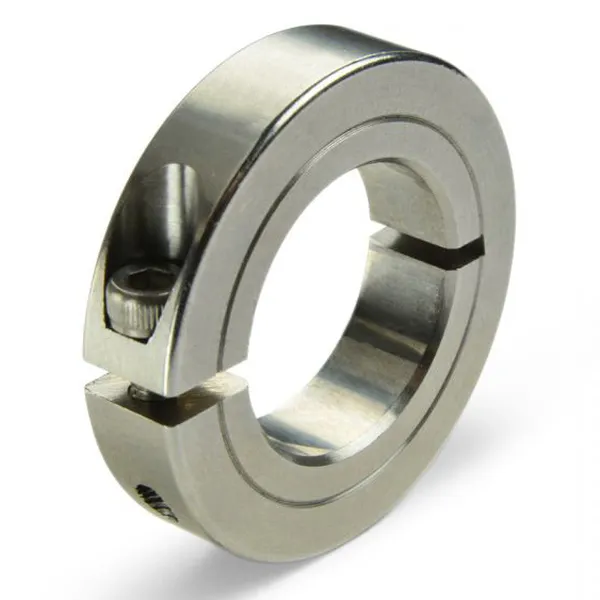
In the intricate world of mechanical power transmission and motion control, precision, reliability, and space efficiency are paramount. Among the unsung heroes ensuring these standards are thin line shaft collars. These components, though small in stature, play an outsized role in securing components to shafts. For engineers, maintenance teams, and procurement specialists, selecting the right collar is not a trivial matter—it directly impacts system performance, safety, and longevity.
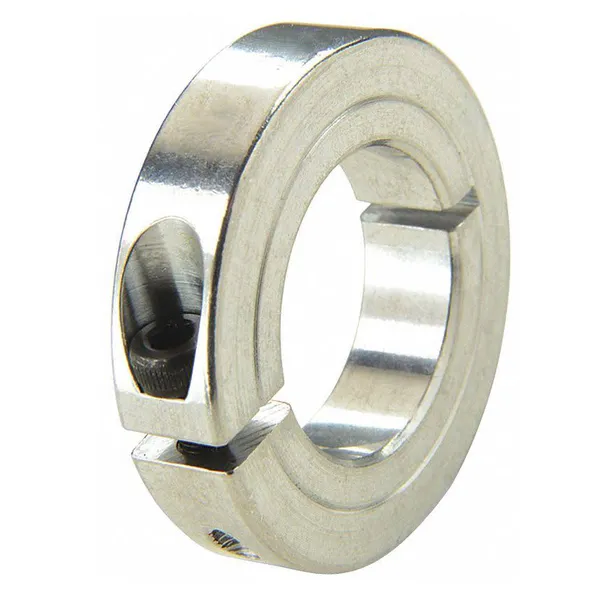
Unlike their standard-thickness counterparts, thin line shaft collars are engineered for applications where space is at an absolute premium. They provide robust axial positioning without adding unnecessary bulk, making them ideal for compact assemblies, tight-tolerance designs, and equipment where every millimeter counts. As a leader in precision component manufacturing, Raydafon Group has dedicated considerable expertise to perfecting the design, material science, and manufacturing processes behind our high-performance thin line collars. This guide delves into the specifics of what makes these components essential and how Raydafon Group's offerings stand apart.
Raydafon Group's thin line shaft collars are manufactured to exacting standards, ensuring consistent quality and performance. Below is a comprehensive breakdown of our key product parameters, presented in both list and table formats for clarity.
| Parameter Category | Specification Details | Raydafon Group Standard / Notes |
|---|---|---|
| Material & Properties | 316 Stainless Steel | Excellent corrosion resistance, good strength, non-magnetic. Standard offering. |
| 1018 Carbon Steel | Black oxide finish for mild corrosion protection. High strength-to-cost ratio. | |
| 6061-T6 Aluminum | Lightweight, good corrosion resistance, ideal for weight-sensitive applications. | |
| Bore Size Range | Imperial | 1/8" to 4" in fractional and decimal increments. |
| Metric | 3mm to 101.6mm in standard metric increments. | |
| Width (Thickness) | Imperial | 1/16", 3/32", 1/8", 3/16", 1/4" (varies by bore size). |
| Metric | 1.6mm, 2.4mm, 3.2mm, 4.8mm, 6.4mm. | |
| Outside Diameter (OD) | Varies by Bore | Precisely calculated for optimal strength-to-size ratio. Consult engineering drawings for specific ODs. |
| Fastener Type | Screw Specification | Socket Head Cap Screws (SHCS), grade-specific to material (e.g., 18-8 SS for stainless collars). |
| Torque Specification | Recommended Torque | Provided per collar size and material. Critical to prevent shaft damage and ensure holding power. (e.g., 1/2" bore stainless collar: ~20 in-lbs). |
| Operating Temperature | Range | Material dependent. 316 SS: up to 1500°F (816°C) intermittent; Aluminum: up to 400°F (204°C). |
| Surface Treatment | Options | Passivation (SS), Black Oxide (CS), Anodizing (Al), Electroless Nickel Plating (special request). |
| Quality Assurance | Inspection | 100% inspection for critical dimensions. Statistical Process Control (SPC) in manufacturing. |
The low-profile design and reliable clamping force of Raydafon Group thin line shaft collars make them versatile across numerous sectors. Key applications include:
Q: What is the primary advantage of using a thin line shaft collar over a standard-width collar?
A: The primary advantage is space savings. Thin line collars are designed to perform the same axial holding function while occupying significantly less space along the shaft's length. This is crucial in compact assemblies, stacked components, or designs where the distance between two mounted parts is minimal. They provide maximum functionality with a minimal footprint.
Q: How do I select the correct material for my application?
A: Material selection depends on your operating environment and performance requirements. For general use with corrosion concerns, 316 Stainless Steel is the best all-around choice. For high-strength needs in dry or lubricated environments, black oxide carbon steel offers great value. When weight reduction is a priority, such as in aerospace or portable equipment, aluminum is ideal. Consider factors like exposure to chemicals, moisture, temperature extremes, and required magnetic properties when choosing.
Q: Can thin line shaft collars handle high thrust loads?
A: While thin line collars provide substantial holding power relative to their size, their thrust capacity is inherently lower than a wider, standard collar due to the reduced surface area in contact with the shaft. They are excellent for precise positioning and retaining components against moderate loads. For applications with exceptionally high axial thrust loads, a wider collar or a different retention method (like a shoulder on the shaft itself) should be considered. Always consult Raydafon Group's engineering specifications for load ratings.
Q: What is the proper installation procedure to avoid damaging the shaft or collar?
A: Correct installation is critical. First, ensure the shaft is clean, smooth, and free of burrs at the installation point. Slide the collar onto the shaft and position it accurately. Using the correct size, high-quality hex key, tighten the set screws gradually and evenly in a crisscross pattern (if two screws) to the recommended torque value. Never exceed the specified torque, as this can strip the threads, warp the collar, or permanently dent the shaft, creating a stress riser. A drop of thread-locking compound can be used on the screw threads for vibrating applications.
Q: Are there options for shafts that cannot be scored or marked by set screws?
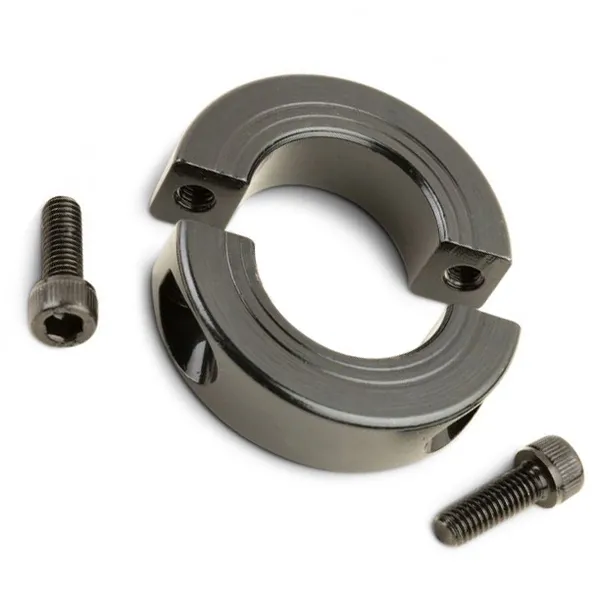
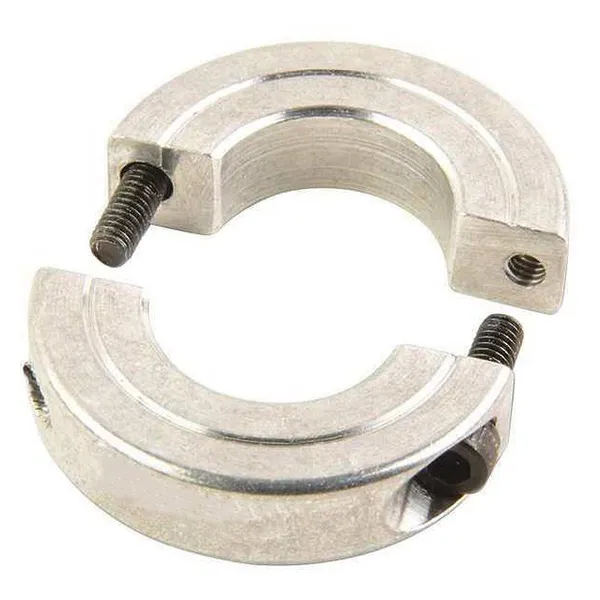
A: Yes. For shafts that must remain pristine (e.g., polished rods, hardened shafts), Raydafon Group offers collars with alternative clamping designs. These include single-slip or double-slip collars that use a uniform clamping force around the entire bore without a pointed set screw, or collars with soft-tip set screws (e.g., nylon or brass tips) that grip without marring the shaft surface. Specify your requirement for a non-marring solution when ordering.
Q: Does Raydafon Group offer custom thin line shaft collars?
A: Absolutely. While our standard catalog covers a vast range of sizes and materials, Raydafon Group specializes in custom-engineered solutions. We can manufacture collars with special bore sizes, unique outside diameters, custom widths, specific hole patterns, proprietary coatings, or engraved markings. Our engineering team works directly with clients to develop collars that meet exact application challenges.
Q: How does Raydafon Group ensure the quality and consistency of its shaft collars?
A: Quality is foundational at Raydafon Group. We employ state-of-the-art CNC machining centers for precision manufacturing. Our process includes rigorous in-process inspections and 100% final inspection of critical dimensions like bore ID, OD, width, and concentricity. We utilize Statistical Process Control (SPC) to monitor production and maintain tight tolerances. Furthermore, we source only certified raw materials and subject finished products to quality checks that often exceed industry standards, ensuring every collar delivers reliable performance.

 Raydafon