
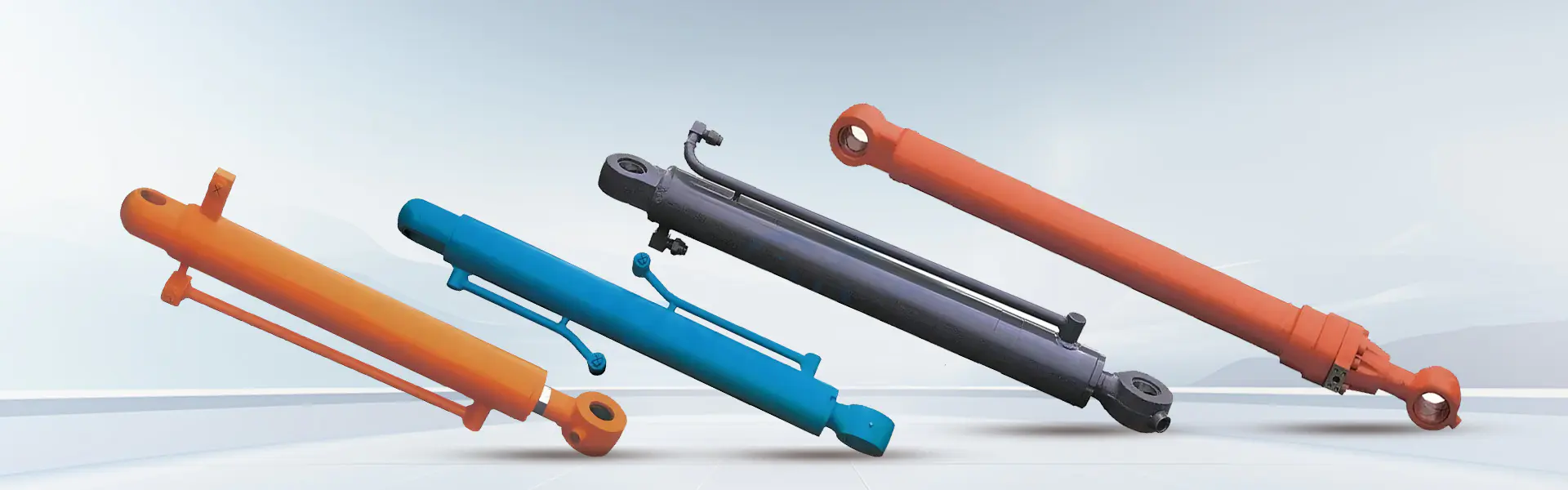
For engineers and procurement specialists seeking reliable, space-saving linear force solutions, the Inverted Telescopic Cylinder design offers a distinct advantage. As a leader in precision fluid power components, Raydafon Group has refined this technology to deliver unmatched durability and performance in compact envelopes. Unlike standard telescopic cylinders, our inverted design features a unique construction where the largest stage is the rod, and subsequent stages telescope inside it. This fundamental difference provides superior stability, increased load-bearing capacity, and enhanced suitability for applications where the cylinder is subjected to significant side loads or requires a fully retracted position with maximum extension.
Raydafon Group's inverted telescopic cylinders are engineered for the most challenging environments, from heavy-duty construction and mining equipment to specialized material handling and industrial automation systems. Our commitment to precision manufacturing, rigorous testing, and material science ensures every cylinder delivers consistent force, smooth operation, and a long service life, reducing total cost of ownership and downtime for our clients worldwide.
Raydafon Group's inverted telescopic cylinders incorporate several proprietary design features that set them apart from conventional offerings.
The following tables detail the standard specifications and performance parameters for Raydafon Group's inverted telescopic cylinder series. Custom designs beyond these ranges are available upon consultation with our engineering team.
| Model Series | Bore Diameter Range (Largest Stage) | Number of Stages | Standard Stroke per Stage | Maximum Operating Pressure | Approx. Retracted Length (Min) |
|---|---|---|---|---|---|
| IT-Series (Standard Duty) | 40mm - 150mm | 2 to 5 | Up to 600mm | 210 bar | 1.2 x Total Stroke |
| ITHD-Series (Heavy Duty) | 100mm - 250mm | 2 to 4 | Up to 1000mm | 280 bar | 1.3 x Total Stroke |
| ITX-Series (Extra Heavy Duty) | 180mm - 400mm | 2 to 3 | Up to 1200mm | 320 bar | 1.4 x Total Stroke |
| Component | Standard Material | Alternative / Upgrade Options | Surface Treatment |
|---|---|---|---|
| Cylinder Tubes (All Stages) | Precision Cold Drawn, Honed Steel (ST52) | Stainless Steel (304/316), Chrome-plated Steel | Phosphate Coating, Internal Honing (Ra ≤ 0.4 µm) |
| Piston Rod (Outer Stage) | High-Tensile Steel (42CrMo4) | Hard-Chrome Plated Steel, Stainless Steel | Hard Chrome Plating (40-45 µm), Polished |
| Pistons | Grade 355 Steel | Bronze, Ductile Iron | Zinc-Nickel Plating, Powder Coating |
| Seals & Wiper Kits | Temperature-Resistant Polyurethane (NBR) | Fluorocarbon (FKM/Viton), Polyamide | N/A |
| Mounting Hardware | High-Strength Carbon Steel | Alloy Steel, Stainless Steel | Zinc Plating, Hot-Dip Galvanizing |
What is the primary mechanical advantage of an inverted telescopic cylinder over a standard telescopic design?
The core advantage lies in structural strength and stability. In an inverted design from Raydafon Group, the largest diameter stage is the rod itself. This places the strongest and stiffest material at the greatest distance from the neutral axis when extended, dramatically increasing the cylinder's resistance to buckling under high axial loads and its ability to handle moment loads. This results in a more robust cylinder for a given collapsed length and extended reach.
In which applications are Raydafon Group's inverted telescopic cylinders most commonly specified?
They are ideal for applications requiring a long stroke from a very short retracted length, combined with significant force and stability demands. Common uses include dump truck lifting mechanisms (providing high initial lift force), compact material handling lifts, specialized industrial presses, and mobile equipment where the cylinder is mounted in a position susceptible to high side loading during operation.
How does the sealing system differ in an inverted telescopic cylinder, and what are the maintenance implications?
The sealing challenge is greater as inner stages must seal against the outer rod's internal bore. Raydafon Group employs multi-lip, pressure-energized seals on each stage, often with dedicated wiper rings to prevent contamination ingress. While highly durable, periodic inspection of seal kits is recommended as part of preventive maintenance. The modular stage design often allows for individual stage repair or resealing without replacing the entire assembly, potentially lowering long-term maintenance costs.
Can these cylinders be customized for specific stroke sequences or synchronous movement?
Yes, Raydafon Group offers advanced customization. Standard cylinders typically extend stages sequentially from the largest to the smallest. However, we can engineer units with specific sequencing valves or porting to control the order of stage extension/retraction based on pressure or flow. For applications requiring multiple cylinders to move in sync, we integrate precision flow control valves or design systems with mechanical synchronization linkages.
What are the key factors to consider when specifying an inverted telescopic cylinder for a project?
Critical specification factors include: 1) Total Force Requirement: Calculate based on operating pressure and the effective area of each stage. 2) Collapsed Length vs. Required Stroke: Define the strict spatial envelope. 3) Load Conditions: Determine if loads are purely axial or include side forces or moments, as this affects mounting and rod sizing. 4) Duty Cycle: Consider frequency of operation, speed, and environmental conditions (temperature, contaminants) to select appropriate materials and seals. 5) Mounting Style: Choose a mounting configuration that properly supports the load and reaction forces.
Does Raydafon Group provide support for system integration and troubleshooting?
Absolutely. Raydafon Group's technical support extends beyond the sale. Our engineering team provides integration guidance, including port sizing, recommended hose/pipe routing, and cushion adjustment procedures. We offer comprehensive documentation, CAD models, and installation guides. For troubleshooting, our specialists can assist in diagnosing issues related to sequencing, speed, or seal performance, helping to minimize operational downtime.
Selecting the correct inverted telescopic cylinder requires a systematic approach. Follow this guide to ensure all necessary parameters are defined for an accurate quote from Raydafon Group.
To initiate a design consultation or request a formal quotation, please contact the Raydafon Group engineering sales department with the above information. Our team is prepared to deliver a solution tailored to your precise technical and commercial requirements.

 Raydafon