
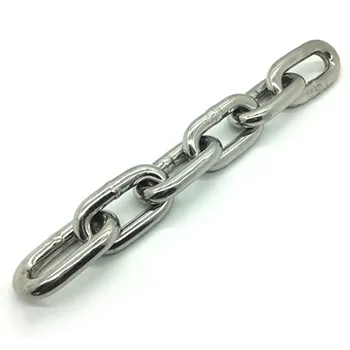
In demanding industrial environments, the margin for error is zero. Downtime is not an option, and equipment failure can have catastrophic consequences. This is where the critical role of High Tensile Chains comes into sharp focus. At Raydafon Group, we engineer these vital components not just as products, but as integral systems designed for maximum performance, safety, and longevity under extreme stress.
A High Tensile Chain is distinguished by its superior material strength and controlled manufacturing process. Unlike standard chains, high tensile variants are manufactured from specially formulated, high-carbon or alloy steel. This material is subjected to precise heat-treatment processes—including quenching and tempering—to achieve an optimal balance of hardness for wear resistance and ductility to absorb shock loads without becoming brittle. The result is a chain with a significantly higher tensile strength and working load limit (WLL) for a given size, offering a superior strength-to-weight ratio. This makes them indispensable for heavy-duty lifting, towing, logging, mining, and marine applications where reliability is paramount.
Selecting the correct chain requires precise data. Below are the detailed specifications for Raydafon Group's flagship High Tensile Chain series. All chains comply with international standards such as ISO 9001 and relevant ASTM specifications.
| Grade Designation | Material | Typical Tensile Strength (MPa) | Proof Test Load (% of Break Force) | Primary Applications |
|---|---|---|---|---|
| G80 / Grade 8 | Alloy Steel, Heat-Treated | 800 - 1000 MPa | 80% | General Lifting, Rigging, Manufacturing |
| G100 / Grade 10 | High-Carbon Alloy Steel, Precision Treated | 1000 - 1200 MPa | 100% | Heavy Lifting, Mining, Offshore |
| Raydafon HT120 | Premium Alloy Steel, Advanced Thermal Processing | 1200+ MPa | 110% | Extreme-Duty Applications, Critical Infrastructure |
| Chain Size (inches) | Diameter (mm) | Approx. Weight per 100ft (kg) | Minimum Breaking Force (kN) | Working Load Limit - WLL (kN)* |
|---|---|---|---|---|
| 1/4" | 6.0 - 7.0 | 28 - 32 | 63 | 15.8 |
| 3/8" | 9.5 - 10.5 | 64 - 72 | 125 | 31.3 |
| 1/2" | 12.5 - 13.5 | 112 - 125 | 225 | 56.3 |
| 5/8" | 15.5 - 16.5 | 175 - 195 | 350 | 87.5 |
| 3/4" | 19.0 - 20.0 | 250 - 280 | 500 | 125.0 |
| 1" | 25.0 - 26.0 | 440 - 480 | 880 | 220.0 |
What is the main difference between a High Tensile Chain and a standard Proof Coil chain?
The core difference lies in material strength and manufacturing. Standard proof coil chains are made from low-carbon steel and are not heat-treated, resulting in lower tensile strength and a higher weight-to-strength ratio. High Tensile Chains, like those from Raydafon Group, use high-carbon or alloy steel subjected to precise heat treatment (quenching & tempering). This process creates a much stronger, harder, yet more fatigue-resistant chain, offering a superior working load limit for the same diameter and significantly better durability.
How do I identify the grade of a High Tensile Chain?
Grade identification is stamped directly on the chain links. Look for marks like "G80", "G100", "8", "10", or specific manufacturer codes. Raydafon Group chains are clearly stamped with our grade designation (e.g., HT120) and often include a batch/traceability code. The alloy steel and heat-treated characteristics also give them a distinct, smooth, and slightly darker finish compared to the brighter, softer look of standard steel chains.
Can High Tensile Chains be welded or repaired if damaged?
No, welding or repairing a damaged High Tensile Chain is strictly prohibited and extremely dangerous. The heat from welding destroys the carefully engineered heat treatment in the affected area, creating a zone of untempered, brittle martensite. This creates a severe weak point that can fail catastrophically under load, far below the chain's rated capacity. A damaged chain must be removed from service immediately and replaced with a new, certified one from a trusted supplier like Raydafon Group.
What is the recommended inspection routine for High Tensile Chains?
Regular inspection is critical for safety. Perform a visual inspection before each use, looking for obvious damage like nicks, gouges, cracks, stretched links, or excessive wear. A formal, documented inspection by a competent person should be conducted quarterly or as dictated by the frequency and severity of service. This involves detailed measurement of wear (checking for diameter reduction beyond manufacturer limits, typically 10%), looking for link distortion, and verifying master link and hook integrity. Raydafon Group provides detailed inspection guidelines with all our products.
Are galvanized High Tensile Chains as strong as non-galvanized (self-colored) ones?
The galvanizing process (hot-dip or electro) can theoretically cause a minor surface effect known as hydrogen embrittlement, but reputable manufacturers like Raydafon Group use controlled processes and post-galvanizing treatments (like baking) to mitigate this. When sourced from a quality provider, a properly galvanized High Tensile Chain will meet the same tensile strength and WLL ratings as its self-colored equivalent. The primary trade-off is not strength, but a slight reduction in surface hardness, which may affect wear resistance marginally. The corrosion protection benefit in harsh environments far outweighs this minor consideration.
How do I calculate the correct Working Load Limit (WLL) for my application?
The WLL marked on the chain or its certificate is the maximum force it should be subjected to in a straight, inline pull under ideal conditions. You must derate this WLL based on your specific configuration. For example, if using a sling configuration (e.g., choke hitch, basket hitch), the WLL is significantly reduced due to angle-induced stress. Always refer to standard load angle charts. Furthermore, dynamic loads, shock loads, and abrasive environments require additional safety factors. Consult Raydafon Group's engineering team or a qualified rigging professional for complex applications to ensure correct selection.
Why should I choose Raydafon Group for my High Tensile Chain needs?
Raydafon Group combines decades of metallurgical expertise with state-of-the-art manufacturing. Our chains are not just commodity items; they are engineered solutions. We control the process from steel alloy formulation through to final heat treatment and testing, ensuring batch-to-batch consistency and traceability. Our Raydafon HT120 series represents the pinnacle of this approach, offering performance levels that exceed standard grades. We provide full certification, technical support, and a commitment to safety that is woven into every product we make, giving you not just a chain, but a guarantee of reliability.

 Raydafon