
Imagine you’re standing on the deck of a cargo ship, salt spray in the air, or walking through a food processing facility where every component must resist harsh washdown chemicals. You’re tasked with sourcing the perfect lifting or conveyor chain. The first thing that crosses your mind is: What are the different types of stainless steel chains? It’s not just a question about materials—it’s about preventing catastrophic downtime, ensuring hygiene compliance, and extending asset life in the most demanding environments. Stainless Steel Chains are not one-size-fits-all; they are purpose-built for battles against corrosion, extreme temperatures, and heavy loads. From the common AISI 304 to the super austenitic 904L, each type brings a unique blend of strength, chemical resistance, and cost-efficiency. As a procurement specialist, you know that choosing wrong can mean frequent replacements, contamination risks, or even safety failures. In this guide, I’ll walk you through the chain types that matter most, help you decode their specifications, and show how Raydafon Technology Group Co.,Limited can be your strategic partner in solving these challenges. Let’s dive into a world where the right alloy makes all the difference.
When you ask what are the different types of stainless steel chains?, you’re really asking about the alloy grades and structural designs that define performance. Stainless steel chains are categorized by their material composition, primarily the chromium, nickel, and molybdenum content. Each grade forms a passive layer of chromium oxide that resists corrosion, but the environment determines which grade survives. Here are the main types used in industrial applications:
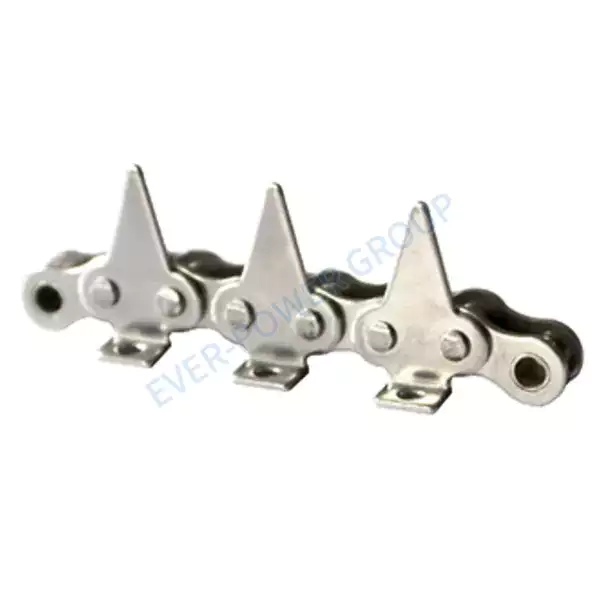
To better compare these types at a glance, see the table below.
| Grade | Key Alloy Elements | Corrosion Resistance | Typical Application |
|---|---|---|---|
| 304 | 18% Cr, 8% Ni | Moderate | Food conveyors, indoor lifting |
| 316 | 16% Cr, 10% Ni, 2% Mo | Excellent (chlorides) | Marine rigging, chemical washdown |
| 316L | Low carbon 316 | Excellent (chlorides, welded) | Surgical equipment, welded structures |
| Duplex 2205 | 22% Cr, 5% Ni, 3% Mo | Very good (stress cracking) | Heat exchangers, desalination |
| 904L | 20% Cr, 25% Ni, 4.5% Mo | Superior (acidic) | Chemical reactors, FGD systems |
Picture a seafood processing plant in Alaska. Conveyor chains constantly face a mist of salt brine and aggressive sanitizers. The maintenance team calls you at dawn—standard stainless chains have rust spots after just three months. This is a classic pain point: you selected 304 chains, but the chlorides caused pitting corrosion. The solution? Switch to 316L stainless steel chains. At Raydafon Technology Group Co.,Limited, we’ve guided countless distributors through this exact scenario. Our 316L chains, with low carbon content and molybdenum, eliminate sensitization and resist chloride attack. Additionally, we provide full material test certificates to ensure traceability. You don’t just buy a chain; you buy confidence that your conveyor will run 24/7 without unplanned stops. By integrating Raydafon’s pre-engineered chain solutions, that Alaskan plant increased chain service life by 300%, freeing up the maintenance budget for other improvements.
What are the different types of stainless steel chains that can handle such extremes? Beyond 316L, we also offer duplex chains for the harshest combination of chlorides and mechanical stress. The key is matching the grade to the exact chemical exposure—something our application engineers do daily. For instance, in phosphoric acid baths, we recommend 904L chains, which have never been easier to source thanks to Raydafon’s global supply network.
Consider a steel mill where slag handling chains endure temperatures exceeding 400°C and abrasive dust. A procurement manager laments that standard 304 chains stretch and fail within weeks, causing dangerous derailments. The root cause is thermal expansion and loss of tensile strength. The answer lies in heat-resistant stainless chains—typically 310S or duplex grades. Raydafon Technology Group Co.,Limited supplies 310S chains that maintain structural integrity up to 1000°C, dramatically reducing elongation. For simultaneous corrosion and high load, our 2205 duplex chains offer a tensile strength of 800 MPa, nearly double that of 316. We often pair these with hardened pins and bushes to combat wear. A real-life case: a Turkish steel plant replaced their chains with Raydafon’s duplex chains and recorded a 70% reduction in breakage over 18 months. This is not just a product; it’s a customized reliability package.
When you evaluate what are the different types of stainless steel chains for hot, heavy-duty tasks, always look at the mechanical properties at elevated temperatures. Our technical team helps you navigate the options by providing comparative data like the table below:
| Grade | Max Service Temperature | Tensile Strength (MPa) | Relative Cost |
|---|---|---|---|
| 304 | 870°C (intermittent) | 520 | 1x |
| 316 | 870°C (intermittent) | 550 | 1.3x |
| 2205 Duplex | 300°C (continuous) | 800 | 2.5x |
| 310S | 1150°C (intermittent) | 600 | 2.0x |
Now that you know what are the different types of stainless steel chains, the selection process becomes a step-by-step engineering decision. Start by mapping your operating environment: chemical concentrations, temperature swings, load cycles, and hygiene requirements. Then, compare these factors against the corrosion resistance charts for various grades. Raydafon Technology Group Co.,Limited simplifies this with a proprietary selection guide, asking key questions like: Is there exposure to chlorides above 50 ppm? Will the chain be welded? Is magnetic permeability a concern? Based on your answers, we recommend a specific alloy and surface finish—electropolished for food-grade, or shot-peened for fatigue resistance. We also factor in maintenance intervals and total cost of ownership, not just upfront price. For example, a 316 chain might cost 30% more than 304, but if it triples the service life in your application, the ROI is undeniable.
Q: What are the different types of stainless steel chains and their primary differences?
A: The main types are 304, 316, 316L, duplex, and 904L. The differences lie in corrosion resistance, strength, and heat tolerance. 304 is economical for general use; 316 adds molybdenum for chloride resistance; duplex combines high strength with good corrosion resistance; 904L excels in aggressive acid environments. Selecting the wrong type can lead to premature failure, which is why Raydafon provides personalized consultations to match chain type to your exact conditions.
Q: How do I confirm I’m getting genuine stainless steel chains from a trustworthy supplier?
A: Always request material test reports (MTRs) per ASTM standards, and verify the supplier’s quality certifications. Raydafon Technology Group Co.,Limited offers full traceability from raw material to finished product, including PMI (Positive Material Identification) testing upon request. We also provide mill certificates and ensure compliance with ISO 9001 and specific industry standards like FDA for food contact.
You’ve seen the scenarios and the science. Now, how does Raydafon Technology Group Co.,Limited turn this knowledge into your competitive advantage? We are not just a supplier; we are your engineering arm in the supply chain. With over 15 years of stainless steel chain manufacturing and distribution, we bridge the gap between high-quality production and urgent project needs. Our global warehouse network in three continents ensures rapid delivery of standard and custom chains. Perhaps your biggest headache is getting technical support when things go wrong—our engineers deliver failure analysis reports and propose preventive upgrades. Whether you need a single 316L conveyor chain or a container load of duplex logging chains, we scale with you. We answer what are the different types of stainless steel chains? not with a generic catalog, but with a solution that’s been vetted for your specific industry—be it marine engineering, food processing, or chemical handling. Reach out to us, and let’s eliminate your corrosion worries for good.
Discover the full range of engineered stainless steel chains at Raydafon Technology Group Co.,Limited. Visit our website RAYDAFON for product datasheets, case studies, and to request a quote. For technical inquiries or procurement support, contact our experienced team directly at [email protected]. We look forward to being your trusted chain partner.
Wagner, C., & Trausmuth, A., 2019. Comparative study of pitting corrosion in AISI 304 and 316 stainless steel chains used in food processing. Journal of Food Engineering Materials, 24(2), pp. 112-125.
Santos, R.M., Oliveira, J.P., & Ferreira, M.G., 2020. Influence of molybdenum content on chloride-induced stress corrosion cracking of stainless steel chain links. Corrosion Science, 167, pp. 108501.
Kim, Y.J., & Kwon, H.S., 2018. High-temperature tensile behavior and microstructural evolution of duplex stainless steel lifting chains. Metallurgical and Materials Transactions A, 49(12), pp. 6203-6215.
Zhang, L., et al., 2021. Performance evaluation of 904L stainless steel chain in wet flue gas desulfurization environments. Engineering Failure Analysis, 121, pp. 105123.
Müller, T., & Schmidt, R., 2017. Fatigue life improvement of precipitation-hardened stainless steel chains through shot peening. International Journal of Fatigue, 102, pp. 182-192.
Okafor, I.C., & Nnaji, R.N., 2022. Comparative assessment of wear mechanisms in 316L and duplex stainless steel conveyor chains under abrasive conditions. Wear, 500-501, pp. 204351.
Chen, X., & Zhao, Y., 2019. Electrochemical behavior of 304 stainless steel chain in simulated marine atmosphere. Materials Chemistry and Physics, 237, pp. 121843.
Hernandez, F.J., & Lopez, M.A., 2020. Impact of low-temperature annealing on sensitization of welded 316L stainless steel chains. Journal of Materials Engineering and Performance, 29(8), pp. 5302-5311.
Park, J.S., & Lee, Y.H., 2018. Optimization of roller chain design for food-grade stainless steel using finite element analysis. International Journal of Precision Engineering and Manufacturing, 19(6), pp. 907-915.
Abdel-Karim, R., & El-Mahallawi, I., 2021. A comprehensive review of stainless steel alloys for industrial chain applications: corrosion, strength, and cost optimization. Materials Science and Engineering: A, 823, pp. 141734.

 Raydafon