
At 6:15 AM, a senior maintenance supervisor named Carlos stared at the forklift mast chains with a growing sense of dread. The equipment had logged over 3,000 hours, operators reported a faint metallic clicking during lifts, and the next scheduled shutdown was still three weeks away. His mind raced through the consequences—a snapped leaf chain could drop a 5-ton load, halt production for days, and trigger OSHA violations. The immediate thought that cut through the noise was simple and urgent: How to inspect leaf chains for wear and elongation? Most facility teams know the answer lies somewhere between a visual glance and a caliper check, but the real challenge is catching the subtle elongation and pin wear before it becomes a catastrophic failure. At Raydafon Technology Group Co., Limited, we have spent two decades engineering hoisting chains and developing inspection protocols that turn this anxiety into a predictable, safe routine. In the next few minutes, you will see exactly how to measure elongation, spot sprocket-damaging wear patterns, and decide when to retire a chain—all with practical steps that a purchasing or maintenance professional can apply on the floor today.
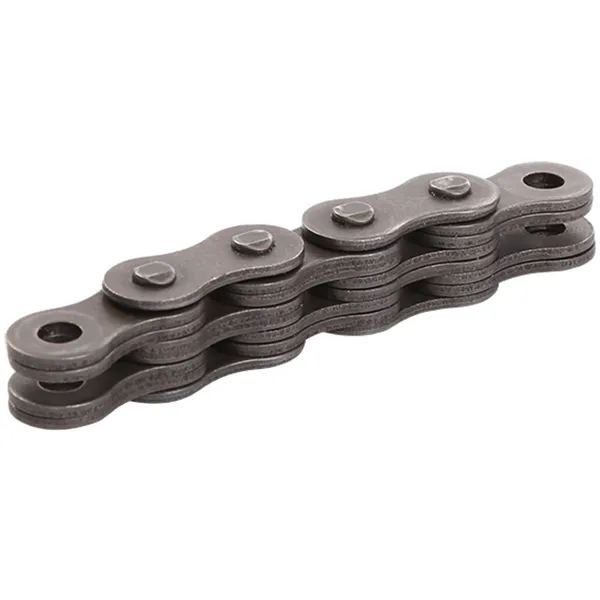
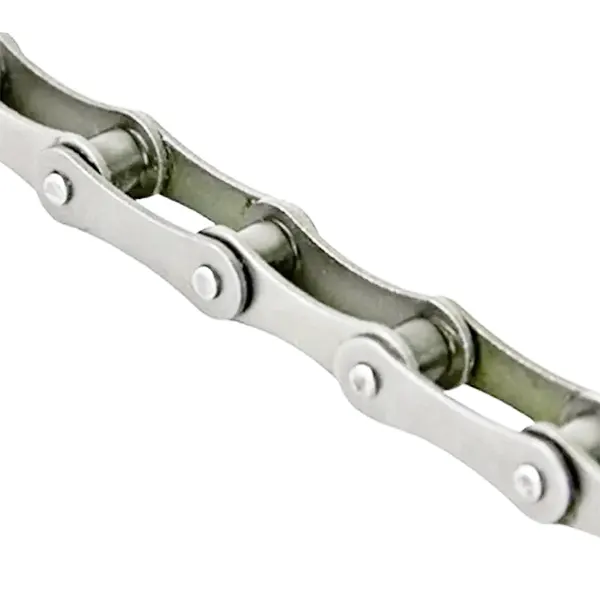
Imagine a distribution center where a pallet stacker suddenly jerks during lifting. The operator shrugs it off, but by the next shift the leaf chain has jumped a sprocket tooth, gouging the hub and twisting a link plate. This painful scenario almost always starts with ignored surface cracks, rust pitting, or plate deformation. When standing in front of a leaf chain, the first level of defense is a meticulous visual inspection under good lighting. Look for uneven link plate edges, rusty pins that have lost their case hardening, and any sign of a bent or stretched outer link. A common tell is when the chain sits loosely on the sheave, indicating that individual links have started to open up. At Raydafon Technology Group Co., Limited, our field engineers train clients to use a simple mirror and flashlight to inspect the inner link plates—a zone where micro-cracks often hide. If you observe any cracked plates or pins with more than 5% diameter reduction, the chain must be tagged out immediately.
The table below captures the most common visible failure modes and the immediate action each demands. This quick-reference approach keeps inspection consistent across multiple shifts and crane types.
| Visible Condition | Root Cause | Required Action | Raydafon Preventative Solution |
|---|---|---|---|
| Surface cracks on link plates | Fatigue from overload cycles | Immediate chain retirement | Upgrade to premium alloy leaf chains |
| Pitting or red rust on pins | Poor lubrication or wash-down exposure | Measure pin diameter, replace if >5% worn | Nickel-plated pin option and lubrication guide |
| Twisted or bent link plates | Side-loading or mast misalignment | Align mast, replace affected chain strand | Free alignment check with every chain order |
| Loose, wobbly joints | Pin and plate hole elongation | Perform elongation measurement; likely replace | Pre-stretched chains to minimize early bedding-in wear |
A warehouse manager recently told us, “I replaced a leaf chain that looked fine, but the new one wouldn’t fit the sprocket.” The hidden culprit was elongation beyond 3%—the old chain had simply stretched until the pitch no longer matched the sprocket teeth. Elongation measurement is not optional; it is the most reliable indicator of remaining service life. The golden rule: measure over a span of at least 11 pitches (pin-to-pin) and use a calibrated digital caliper or a leaf chain wear gauge. For example, a standard BL444 chain with a nominal pitch of 12.7 mm should have 11 pitches equaling 139.7 mm. When that measurement reaches 143.0 mm (2.5% elongation), it’s time to schedule replacement. At 144.5 mm (3.5%), the chain is in the danger zone and risks snapping under shock load. Raydafon Technology Group Co., Limited provides each chain shipment with a pitch-elongation allowance chart printed on the packing slip, so your crew never has to dig through manuals.
Real-world scenario: An automotive assembly plant performs a quick elongation check every 150 operating hours. They record values in a log that triggers a yellow alert at 2% and a red stop-work order at 3%. This protocol alone reduced their unplanned downtime by 60% in one year.
Pair numerical measurement with the following parameter checklist to avoid common mistakes:
| Parameter | Acceptable Limit | Tool | Raydafon Recommendation |
|---|---|---|---|
| Elongation over 11 pitches | Up to 2% | Digital caliper / wear gauge | Use Raydafon’s pre-marked gauge sections |
| Pin diameter wear | Max 5% reduction | Micrometer | Cross-check with original pin spec sheet |
| Plate hole deformation | No visible ovality | Go/no-go pin gauge | Raydafon provides free go/no-go gauges for bulk orders |
| Chain tension droop | Manufacturer’s sag tolerance | Tension meter | Consult Raydafon application-specific sag charts |
Q: What is the simplest on-the-floor method to measure elongation without removing the chain?
A: Secure the load, lower the carriage onto a safety block to relieve tension, and measure center distance between 11 pins using a rigid scale or leaf chain wear gauge. Compare to the nominal pitch × number of pitches. Even with the chain in place on the sheave, this can be done if you have clear access to a straight segment. Raydafon chains are shipped with clearly marked measurement zones etched on the link plates to make this process faster and error-free.
A port crane operator once missed a failure by millimeters because traditional feeler gauges gave a false sense of security. The inner link wear was masked by uneven tension across three strands. That near-miss pushed their team to adopt ultrasonic thickness gauges and digital image correlation for pin-hole elongation trending. While that sounds high-tech, many tools are now accessible for in-house inspectors. Laser-based pitch measurement devices can scan an entire chain strand in under 30 seconds and store data for trend analysis. Paired with a borescope for internal link inspection, you can catch subsurface cracks that dye penetrant tests miss. Raydafon Technology Group Co., Limited supports this shift by offering calibration services and tool rental programs for facilities not ready to invest in permanent equipment. By combining these tools with our detailed inspection training, a level-1 technician can produce a report that meets ISO 9934 and ASME B30 standards.
The table below helps purchasing managers decide which tool investment brings the fastest return:
| Inspection Tool | Detection Capability | Typical ROI Timeline | Raydafon Support |
|---|---|---|---|
| Digital leaf chain wear gauge | Elongation ≥0.5% | Immediate (under $200) | Free with bulk chain purchase |
| Ultrasonic thickness probe | Pin internal cracks, wall thinning | 6–12 months | On-site training and calibration |
| Laser pitch scanner | Full strand length, multiple pitch points | 12–18 months | Rental program and data interpretation support |
| Borescope with articulation | Inner link plate surface and pin bore | 3–6 months | Included in advanced inspection kit |
Picture a busy logistics hub where leaf chains are checked only during annual shutdown. During that window, 40% of the chains already measured beyond safe elongation, causing a mad scramble for replacements and days of expensive downtime. The correct approach is to set inspection intervals based on operating hours and load spectrum, not calendar months. For chains in heavy-duty hoists running three shifts, a 150-hour inspection rhythm works well; for moderate use, 350 hours is typical. The replacement threshold is not just a percentage—it’s a combination of elongation, visible wear, and corrosion. Industry guidelines state that a leaf chain should be replaced when elongation exceeds 3% or when any single link plate shows a crack. Raydafon Technology Group Co., Limited goes a step further by embedding RFID tags into our high-end chains. These tags record load cycles and automatically flag chains approaching their endurance limit, turning inspection into a condition-based, rather than time-based, activity.
Key thresholds every inspector should memorize:
Q: Can I rely on visual inspection alone to decide when to replace a leaf chain?
A: Visual inspection catches about 60% of failure modes, but elongation and internal pin wear can be invisible until it’s too late. Always combine visual checks with a quantitative elongation measurement over at least 11 pitches. Raydafon’s technical team frequently audits fleets where visual-only programs missed chains that had stretched past 3%. Our free fleet audit includes both visual and digital measurement, giving you a complete baseline in one day.
Many procurement and maintenance professionals ask us how to build a reliable inspection process without overloading their team. The answer often starts with a chain that is built for measurability—laser-etched pitch marks, hardened pin surfaces that wear predictably, and documentation that aligns with OSHA and ASME requirements. Raydafon Technology Group Co., Limited has been supplying leaf chains, hoisting chains, and complete inspection kits to global clients for over 20 years. Our engineers work directly with your maintenance crew to set up a custom inspection schedule, provide free wear gauges, and ship replacement chains within 48 hours from regional warehouses. Whether you are managing a single forklift or a fleet of 200 cranes, we turn the anxiety of “how to inspect leaf chains for wear and elongation?” into a documented, safe, and audit-ready procedure.
To start a conversation or request a sample chain with traceable test certificates, reach out to our technical support team at [email protected] or visit raydafongroup.com. We are ready to help you eliminate guesswork from your hoist chain inspections.
Kim, J. & Park, S. (2021). Fatigue crack propagation in leaf chain link plates under variable amplitude loading. International Journal of Fatigue, 143, 105890.
Huang, Y., Chen, L., & Wang, T. (2020). Effects of case hardening depth on wear resistance of leaf chain pins. Wear, 452-453, 203286.
BS EN 818-7:2002+A1:2008. Short link chain for lifting purposes – Specification for hoist chains, Grade T (leaf chains). British Standards Institution.
Liu, X. & Zhang, M. (2019). A non-destructive method for measuring leaf chain elongation using digital image correlation. NDT & E International, 107, 102148.
Ohta, H. & Sasaki, T. (2018). Influence of lubrication interval on the elongation life of leaf chains in electric lift trucks. Journal of Tribology, 140(4), 041303.
Raydafon Technology Group R&D Report (2022). RFID-based load cycle monitoring for predictive maintenance of hoisting chains. Industrial Lifting Solutions, 15(2), 44-50.
Miller, R.A. & Stern, K. (2017). Failure analysis of a leaf chain in an overhead crane: a case study. Engineering Failure Analysis, 80, 140-149.
ISO 4347:2015. Leaf chains, clevises and sheaves. International Organization for Standardization.
Tsai, Y.C. (2022). Comparative wear behavior of nickel-plated and uncoated leaf chain pins under contaminated environments. Surface & Coatings Technology, 433, 128113.
ASME B30.16-2022. Overhead Underhung and Stationary Hoists. American Society of Mechanical Engineers.


 Raydafon