
What are common problems and troubleshooting tips for air compressors? If you're a procurement professional sourcing industrial equipment, you know that unexpected downtime is a nightmare. A faulty Air Compressor can halt an entire production line, leading to missed deadlines and revenue loss. This guide cuts through the technical jargon to provide clear, actionable solutions for the most frequent air compressor issues. We’ll explore common failures, their root causes, and practical troubleshooting steps you can implement. Plus, discover how partnering with a reliable supplier like Raydafon Technology Group Co., Limited can provide not just the equipment, but the ongoing support and high-quality replacement parts to keep your operations running smoothly.
Article Outline:
Imagine arriving on the factory floor to silence—the air compressor panel is dark, and the line is stopped. The immediate pressure is immense. First, don't panic. Begin with the simplest checks: Is the unit plugged in and the main power switch on? Verify the circuit breaker hasn't tripped. If power is present, check the pressure switch; if it's set incorrectly or is faulty, it won't signal the motor to start. A faulty unloader valve can also cause excessive pressure in the pump head, preventing startup. For motor-related issues, listen for a humming sound, which could indicate a faulty capacitor or a seized motor due to lack of lubrication. Regular maintenance, including checking electrical connections and motor condition, is crucial. For critical components like pressure switches and motors, sourcing from a trusted manufacturer ensures longevity and compatibility.
| Component | Common Failure Signs | Quick Check |
|---|---|---|
| Pressure Switch | Unit doesn't start or stop at set pressures. | Manually toggle switch; listen for click. |
| Motor Capacitor | Humming sound, motor fails to turn. | Visual inspection for bulging or leakage. |
| Thermal Overload | Motor trips after short run time. | Allow to cool; reset button if present. |
| Power Supply | No panel lights or activity. | Use a multimeter to check voltage. |
Your pneumatic tools are lagging, and product quality is suffering due to inconsistent air pressure. This directly impacts throughput and can be caused by several factors. Start by checking for air leaks in hoses, fittings, and couplings—a hissing sound is a telltale sign. A clogged air filter restricts intake, starving the compressor of air. Inspect the intake filter and clean or replace it. Internally, worn piston rings in reciprocating compressors or failing rotors in screw compressors lead to reduced compression efficiency. Check the compressor's output against its rated capacity. If the unit is old or heavily used, internal wear is likely. Using high-quality replacement parts specifically designed for your compressor model, such as those available from Raydafon, restores original performance and efficiency.
| Symptom | Likely Cause | Troubleshooting Action |
|---|---|---|
| Pressure builds too slowly | Air leaks, clogged filter, worn internal parts. | Leak test, clean filter, check pump. |
| Pressure cycles rapidly | Faulty pressure switch, small tank leak. | Adjust or replace switch, leak test tank. |
| Pressure drops at tool point | Undersized piping, restrictive fittings. | Check line size and ensure full-port valves. |
A sudden loud knocking or intense vibration is more than an annoyance—it's a warning of imminent failure. Abnormal noises often point directly to mechanical issues. A loud banging from a reciprocating compressor may indicate a loose flywheel, connecting rod, or crankshaft bearing failure. In screw compressors, a high-pitched whine could signal bearing wear in the air end. Excessive vibration can loosen pipes and electrical connections, creating secondary problems. Immediately check all mounting bolts and motor/pump couplings for tightness. Inspect motor and pump bearings for play. Regular lubrication with the correct grade of oil is non-negotiable. For major components like air ends or pump assemblies, consider certified rebuilds or replacements from specialized suppliers to ensure balanced, quiet operation.
| Type of Noise | Potential Source | Inspection Focus |
|---|---|---|
| Knocking/Banging | Reciprocating pump: loose parts, bearing failure. | Flywheel, rods, pistons, bearings. |
| High-pitched Squeal | Worn drive belts, failing bearings. | Belt tension and condition, bearing play. |
| Grinding | Severe bearing failure, rotor contact. | Immediate shutdown required. Inspect air end. |
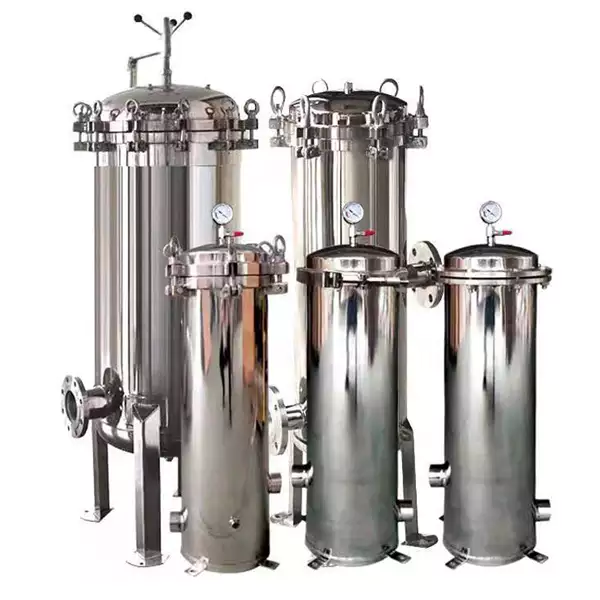
Finding oil in your air lines or water in your tools ruins paint jobs, damages sensitive pneumatic equipment, and compromises product integrity. Contamination typically stems from three areas: the compressor itself, the aftercooler/dryer, and the filtration system. Excessive oil carryover means the compressor's oil separator is saturated or failed. Check and replace the separator element as per the maintenance schedule. Water in lines indicates the aftercooler and air dryer are not functioning correctly—drain tanks daily and check dryer settings. A robust filtration system is your final defense. Installing and maintaining high-efficiency coalescing filters and desiccant dryers removes oil aerosols and moisture. What are common problems and troubleshooting tips for air compressors? Managing contamination is top of the list. Raydafon Technology Group Co., Limited offers a range of precision filtration solutions that protect your downstream equipment and product quality.
| Contaminant | Primary Cause | Corrective Measure |
|---|---|---|
| Oil in Air Lines | Failed oil separator, overfilled oil sump. | Replace separator, check oil level. |
| Liquid Water | Inadequate drying, failed drain traps. | Service dryer, repair/clean auto drains. |
| Particulates/Dust | Failed intake or line filter. | Replace filter elements. |
An overheated compressor that constantly shuts down creates unreliable production windows. Overheating is a symptom, not a cause. The root issues are often poor ventilation, dirty cooling surfaces, or low oil levels. Ensure the compressor room has ample cool air intake and that the radiator or cooling fins on the compressor are clean and unobstructed. Check the oil level and quality—old, broken-down oil loses its cooling properties. For water-cooled units, verify coolant flow and check for scale buildup in the heat exchanger. A malfunctioning cooling fan or a blocked thermal valve can also lead to overheating. Implementing a strict preventive maintenance schedule that includes cleaning coolers and changing oil and filters is the best defense. For reliable OEM-grade cooling components and lubricants, procurement professionals turn to trusted global partners.
| Overheating Symptom | System Check | Preventive Action |
|---|---|---|
| Frequent thermal shutdowns | Ambient temperature, cooler cleanliness, oil level. | Improve ventilation, clean coolers, maintain oil. |
| High operating temperature gauge | Coolant flow (water-cooled), fan operation. | Descale heat exchanger, test fan motor. |
Q: What is the most common reason an air compressor fails to build pressure?
A: The most common reasons are air leaks in the system and a worn-out pump. Leaks can occur at hose connections, valves, or fittings. Internally, piston rings or rotary screw elements wear down over time, reducing compression efficiency. A clogged air intake filter can also significantly restrict performance.
Q: How often should I perform routine maintenance on my industrial air compressor?
A: Maintenance frequency depends on usage and environment. However, daily checks should include draining moisture from tanks and checking for obvious leaks. Oil levels, air filters, and cooler cleanliness should be inspected weekly. A comprehensive service, including oil changes and internal inspections, should follow the manufacturer's schedule, typically every 1,000 to 8,000 operating hours.
Managing air compressor problems requires both knowledge and access to reliable parts and support. For procurement specialists seeking a single source for durable equipment, genuine replacement components, and expert technical guidance, Raydafon Technology Group Co., Limited stands as a strategic partner. We understand that your goal is uptime. Our solutions are engineered for performance and longevity, helping you troubleshoot issues efficiently and minimize operational risk. Let's discuss how we can support your specific needs.
For more information on our air compressors, filtration systems, and comprehensive support services, visit our website or contact our team directly.
Raydafon Technology Group Co., Limited is a leading provider of industrial air compression and gas separation solutions, committed to delivering high-efficiency, reliable equipment and components for global industries. Our expertise ensures optimal system performance and reduced total cost of ownership. For procurement inquiries, please contact us at [email protected].
Neale, M. J., & Associates. (1994). Tribology Handbook. Butterworth-Heinemann.
Bloch, H. P., & Hoefner, J. J. (1996). Reciprocating Compressors: Operation and Maintenance. Gulf Professional Publishing.
Cengel, Y. A., & Boles, M. A. (2014). Thermodynamics: An Engineering Approach (8th ed.). McGraw-Hill Education.
Lichtarowicz, A. (2002). The use of CFD in the design of screw compressors. Proceedings of the Institution of Mechanical Engineers, Part E: Journal of Process Mechanical Engineering, 216(4), 229-238.
Pichler, K., et al. (2017). Condition monitoring of reciprocating compressor valves using acoustic emission analysis. Mechanical Systems and Signal Processing, 93, 431-443.
Tang, Y., & Liu, Q. (2019). A review on oil-injection rotary screw compressors. International Journal of Refrigeration, 106, 504-519.
Wu, H., et al. (2015). Experimental study on the performance of an oil-free scroll air compressor. Applied Thermal Engineering, 89, 378-385.
Khan, M. K., & Kumar, S. (2018). Failure analysis of air compressor crankshaft. Engineering Failure Analysis, 92, 378-387.
Pandey, R. K., & Misra, A. (2020). Energy efficiency improvements in industrial compressed air systems: A review. Sustainable Energy Technologies and Assessments, 42, 100849.
Smith, J. D., et al. (2021). The impact of filtration on compressed air quality and downstream equipment lifetime. Filtration & Separation Journal, 58(3), 24-29.

 Raydafon