
What is a Gear Reducer and how does it work? This fundamental question is the starting point for countless engineers and procurement specialists seeking reliable power transmission solutions. At its core, a gear reducer, also known as a gearbox or speed reducer, is a mechanical device designed to reduce the high speed of an input power source (like an electric motor) to a lower, more usable output speed while simultaneously increasing the output torque. It works on the basic principle of gear ratios; by using a series of interlocking gears with different numbers of teeth, it trades rotational speed for rotational force. This elegant transformation is critical in applications ranging from conveyor belts and packaging machines to heavy-duty industrial mixers and automated guided vehicles (AGVs), where precise control of speed and power is non-negotiable for operational efficiency and safety. Understanding its function is the first step in specifying the right component for your application, a process where expertise from manufacturers like Raydafon Technology Group Co.,Limited proves invaluable.
Imagine you're responsible for procuring components for a new bottling line. The motors spin incredibly fast, but the filling and capping stations require slow, powerful, and precise movement. A standard motor alone would be useless—it's too fast and lacks the necessary force. This is the universal pain point: mismatched speed and torque. The gear reducer is the definitive solution. It acts as an intermediary, taking the motor's high RPM input and, through a configured set of gears, delivering a high-torque, low-RPM output perfectly suited for the task. The heart of its operation lies in the gear ratio. If a small drive gear with 10 teeth meshes with a larger driven gear with 50 teeth, the ratio is 5:1. This means the output shaft rotates once for every five rotations of the input shaft, resulting in the output speed being reduced to one-fifth, while the output torque is multiplied approximately five times.
This torque multiplication is what enables heavy loads to be moved. For a procurement officer, understanding this basic principle is crucial for evaluating supplier specifications and ensuring the selected reducer matches the application's dynamic requirements, preventing costly underperformance or over-specification.
| Parameter | Description | Typical Unit |
|---|---|---|
| Reduction Ratio (i) | Input Speed / Output Speed. Defines the speed reduction and torque increase. | Ratio (e.g., 5:1, 10:1) |
| Input Speed (n1) | Rotational speed of the motor or prime mover shaft connected to the reducer input. | RPM (Revolutions Per Minute) |
| Output Torque (T2) | Rotational force available at the output shaft after reduction. Critical for load movement. | Nm (Newton-meter) or lb-ft |
| Rated Power | The mechanical power the reducer is designed to transmit continuously without failure. | kW (Kilowatts) or HP (Horsepower) |
| Mechanical Efficiency | Percentage of input power successfully delivered as output power (losses occur as heat). | % |
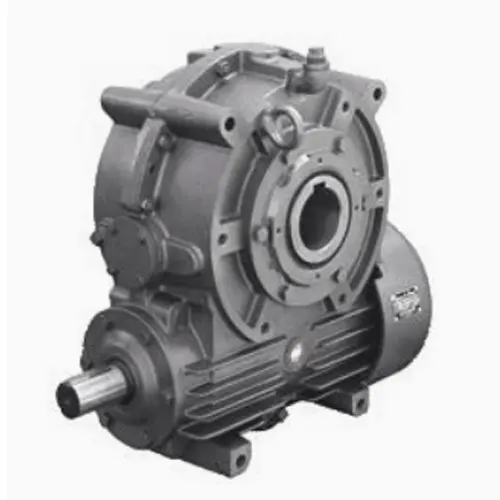
A procurement manager sourcing for an outdoor mining conveyor faces a different set of challenges than one buying for a cleanroom robotic arm. The wrong reducer type leads to premature failure, downtime, and safety risks. The solution lies in selecting the appropriate gear geometry. Helical gear reducers, with their angled teeth, offer smooth, quiet operation and high efficiency, making them ideal for high-speed applications like pumps and fans. Worm gear reducers, featuring a screw-like worm meshing with a gear wheel, provide very high reduction ratios in a compact space and have a natural self-locking feature, perfect for conveyor systems and lifts where holding position is vital. For applications requiring high torque and rigidity in a right-angle configuration, such as in steel rolling mills or agitators, a bevel gear reducer is the go-to choice.
Raydafon Technology Group Co.,Limited offers a comprehensive portfolio across these types, enabling buyers to find a precise match for their specific environmental, spatial, and performance constraints, thereby solving the core problem of application-fit.
| Reducer Type | Key Characteristics | Typical Applications | Advantages |
|---|---|---|---|
| Helical Gear | Parallel shafts, angled teeth, high efficiency (up to 98%). | Pumps, conveyors, mixers, general industrial machinery. | Smooth operation, high load capacity, durable. |
| Worm Gear | Right-angle shafts, high reduction ratios, self-locking possible. | Packaging machines, gates, lifts, conveyor drives. | Compact, high reduction in single stage, cost-effective. |
| Bevel Gear | Right-angle shafts, straight or spiral teeth. | Agitators, rolling mills, vehicular differentials, printing presses. | Efficient power transmission at 90 degrees, robust. |
| Planetary Gear | Coaxial shafts, multiple gears sharing load, very compact. | Robotics, servo applications, wind turbines, high-precision machinery. | High torque density, excellent stiffness, high efficiency. |
A: The primary purpose is twofold: to reduce the high rotational speed from a prime mover (like an electric motor or engine) to a lower, more practical output speed, and to correspondingly increase the available output torque. This allows small, fast-spinning motors to drive heavy, slow-moving loads efficiently and reliably.
A: Their working principles are distinct. A helical reducer uses two parallel shafts with meshing helical gears, transmitting power through rolling contact with high efficiency. A worm reducer uses a screw-like worm on a horizontal shaft meshing with a worm gear on a vertical shaft, creating a sliding contact. This allows for much higher single-stage reduction ratios and can provide a self-locking feature, where the gear cannot drive the worm backward, a crucial safety feature in many applications.
Selecting a gear reducer involves more than just matching horsepower and ratio. A common procurement headache is a reducer that fails prematurely due to unaccounted-for shock loads or environmental factors. The solution requires a holistic view. First, analyze the service factor—a multiplier that accounts for the severity of the application (shock loads, intermittent vs. continuous duty). An elevator system has a much higher service factor requirement than a slow-turning fan. Second, consider the mounting configuration (foot-mounted, flange-mounted, shaft-mounted) and the required backlash (the slight play between meshing gears), which is critical for precision positioning in robotics. Third, evaluate the sealing and lubrication for the operating environment—will it be exposed to dust, moisture, or extreme temperatures?
Suppliers like Raydafon Technology Group Co.,Limited provide expert technical support to guide buyers through these nuanced criteria, ensuring the selected reducer not only fits the basic specs but is robust enough for the real-world operating conditions, effectively solving the problem of unexpected field failures.
Even the best gear reducer from a top manufacturer will fail without proper care. The pain point is unplanned downtime and costly replacements. The solution is a simple, proactive maintenance regimen. Regularly check for unusual noise or vibration, which are early indicators of misalignment, wear, or lubrication issues. Most critically, adhere to the oil change intervals specified by the manufacturer, as old or contaminated oil is the leading cause of gear and bearing wear. Monitor the temperature of the reducer housing; consistent operation above the recommended range signals overloading or lubrication problems. Also, ensure breathers and seals are intact to prevent contaminant ingress.
By partnering with a supplier that offers clear maintenance documentation and readily available spare parts, such as Raydafon, procurement teams can empower their maintenance departments to extend equipment life significantly, solving the chronic problem of reactive repairs and maximizing return on investment.
We hope this guide has demystified the critical question, "What is a gear reducer and how does it work?" and provided actionable insights for your next procurement decision. For further discussion on your specific application needs or to request detailed catalogs, please feel free to reach out.
When sourcing critical components like gear reducers, partnering with an experienced and reliable manufacturer is paramount. Raydafon Technology Group Co.,Limited specializes in designing and manufacturing a wide range of high-performance power transmission solutions. With a focus on quality, durability, and providing tailored technical support, Raydafon helps engineers and procurement professionals solve complex drive system challenges. For pricing, custom specifications, or technical consultations, please contact their sales team at [email protected].
K. Uehara, M. Hoshino, 2022, "Analysis of Load Distribution and Efficiency in High-Ratio Planetary Gear Reducers", Journal of Mechanical Design, Vol. 144, No. 7.
T. L. Nguyen, P. Zhang, 2021, "A Study on Thermal Characteristics and Lubrication Optimization for Industrial Worm Gear Reducers", Tribology International, Vol. 163.
R. S. Singh, A. Kumar, 2020, "Vibration-Based Condition Monitoring of Helical Gear Reducers in Mining Applications", Mechanical Systems and Signal Processing, Vol. 145.
H. J. Park, S. W. Lee, 2019, "Design and Fatigue Life Evaluation of a Compact Bevel Gear Reducer for Agitator Drives", International Journal of Precision Engineering and Manufacturing, Vol. 20, Issue 5.
M. Bianchi, F. C. Gherardini, 2018, "Efficiency Mapping and Performance Comparison of Different Gear Reducer Types for Electromechanical Actuators", Energies, Vol. 11, No. 12.
G. D. Kulkarni, V. V. Patil, 2017, "Noise Reduction in Gear Reducers Through Tooth Profile Modification: An Experimental Investigation", Applied Acoustics, Vol. 127.
J. Wang, Y. Li, 2016, "Dynamic Modeling and Fault Diagnosis of a Multi-stage Gear Reducer with Localized Pitting", Journal of Sound and Vibration, Vol. 383.
C. M. C. G. Fernandes, P. M. T. Marques, 2015, "Influence of Lubricant Viscosity on the Scuffing Performance of Gear Reducers", Tribology Letters, Vol. 60, No. 2.
L. Chang, 2014, "System-Level Design Optimization of a Planetary Gear Reducer for Robotic Applications Considering Mass and Efficiency", Robotics and Computer-Integrated Manufacturing, Vol. 30, Issue 6.
F. L. Litvin, A. Fuentes, 2013, "Computerized Design, Simulation of Meshing, and Contact Analysis of Face-Gear Drives for High-Torque Reducers", Mechanism and Machine Theory, Vol. 70.

 Raydafon