
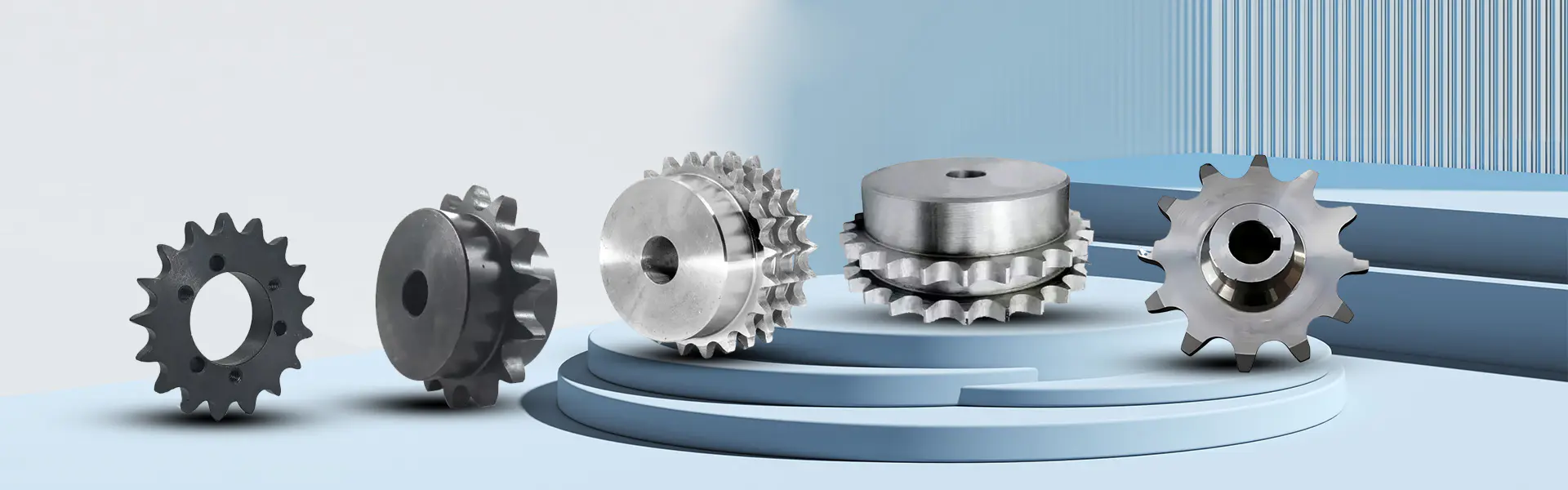
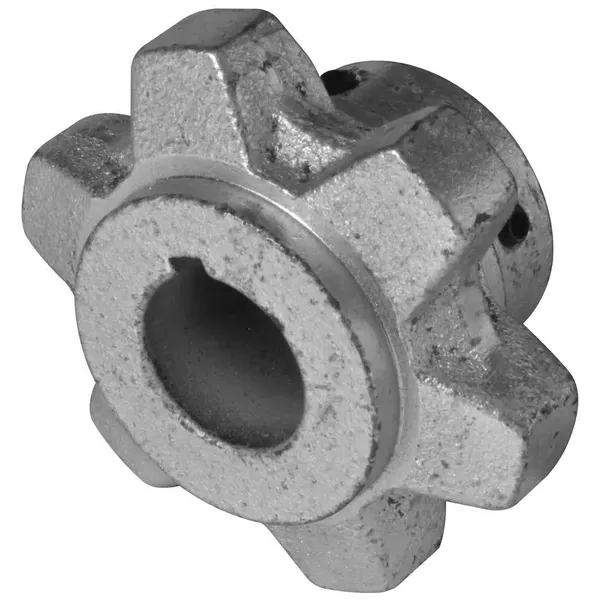
Picture this: your production line is humming along, and suddenly, an unexpected chain skip forces an unplanned shutdown. You trace the fault to a worn-out finished bore sprocket. What are the signs of wear on a finished bore sprocket? For procurement professionals and maintenance engineers alike, catching sprocket degradation early is the difference between a routine replacement and expensive equipment failure. A finished bore sprocket — machined with a precise bore, keyway, and often set screws — plays a critical role in transmitting torque smoothly from the shaft to the roller chain. Over time, however, friction, shock loads, and environmental factors gradually erode its tooth profile, leading to performance drift and, eventually, catastrophic breakdown. Understanding the visible and measurable symptoms of wear lets you plan inventory and schedule downtime on your terms, not your machine’s. In this guide, we’ll walk through the most common red flags, how to measure wear accurately, and when it’s time to source a high-quality replacement from a trusted manufacturer like Raydafon Technology Group Co.,Limited, whose engineering-grade sprockets are designed to drastically extend service life and reduce total cost of ownership.
Walk the plant floor and you'll often spot trouble before any instrument does. Begin by examining the tooth flank — the working surface that contacts the chain roller. Early wear typically manifests as a polished, shiny surface where the material has begun to deform microscopically. As cycles accumulate, you’ll notice the tooth shape becoming hooked or “hooked tooth” profile where the tip leans forward, a dead giveaway that the sprocket has surpassed its service limit. Another visual cue is the appearance of “valleys” or grooves worn into the tooth flank, often caused by chain elongation that shifts load distribution.
Here’s where material choice comes into play. Sprockets from Raydafon Technology Group Co.,Limited employ induction-hardened teeth as standard on many models, dramatically slowing this initial polishing stage and keeping tooth geometry intact far longer than non-hardened alternatives.
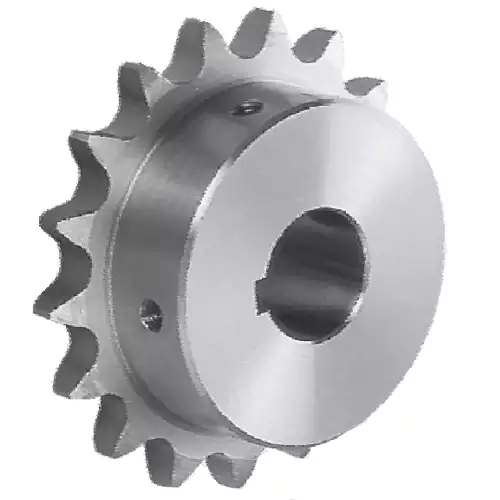
Check for corrosion or pitting, especially in washdown or humid environments. Surface pitting can accelerate abrasive wear and lead to stress risers that trigger fatigue cracks. Look also at the keyway and bore: any signs of fretting, rust, or wallowing indicate a loose fit that will soon damage the shaft as well.
Pain Point: You suspect wear but can’t justify replacement without hard data. Relying solely on eyesight can be costly — a sprocket that looks “okay” may already be elongating the chain and eating into your system’s efficiency.
Solution: Use a caliper or sprocket wear gauge to measure the dimension over pins, tooth thickness, and root diameter. Compare against the manufacturer’s original specifications. A change of 3–5% in tooth thickness is generally the threshold where a sprocket should be replaced to prevent accelerated chain wear. Finished Bore Sprockets from Raydafon Technology Group Co.,Limited come with precise dimensional datasheets, making it easy to benchmark current condition against the as-built tolerance band.
| Measurement Parameter | Typical Wear Limit | Result of Exceeding Limit |
|---|---|---|
| Tooth thickness reduction | > 3% of original | Chain skipping, shock loads |
| Root diameter change | > 0.5 mm on smaller sprockets | Incorrect chain seating |
| Bore diameter increase | Beyond H7 tolerance | Shaft fretting, misalignment |
| Tooth hook (forward tip lean) | Visible to naked eye | Chain snatch, noise |
Sprocket wear isn’t always visual — sometimes you hear it or feel it first. A worn finished bore sprocket often announces itself through increased chain noise — a rhythmic “clunk” or “rattle” that grows louder under load. This noise stems from the chain rollers failing to mesh smoothly with the altered tooth profile. Another telltale sign is vibration: a once-steady drive starts to shake because the effective pitch diameter has changed, creating a sinusoidal speed variation every revolution.
You might also observe irregular chain tension. As some teeth wear more than others, the chain goes through tight and loose spots each cycle, leading to premature fatigue in chain links and bearings. If your tensioner is oscillating more than usual, inspect the sprocket immediately.
Combine visual, dimensional, and operational data to make a confident call. If you find two or more of the following, it’s time to source a new finished bore sprocket: hooked teeth, measurable tooth thinning >3%, new vibration or noise, and chain stretch exceeding 3%. Never replace a sprocket without installing a new chain, or vice versa — mixing old and new accelerates wear dramatically. Raydafon Technology Group Co.,Limited recommends pairing their sprockets with a compatible premium chain to maximize the system’s lifespan. Their ready-to-ship inventory ensures minimal downtime for urgent replacements.
Pain Point: You're changing sprockets every few months because the teeth wear out quickly under your specific load and environment. Generic carbon steel sprockets without surface hardening simply can’t cope.
Solution: Select sprockets with the right material and heat treatment for your application. Raydafon Technology Group Co.,Limited offers a range of materials including C45 steel with induction-hardened teeth (HRC 45–52), 40Cr alloy steel for higher strength, and even 304 stainless for corrosive environments. Hardened teeth maintain their profile up to 3 times longer than untreated sprockets, slashing your procurement frequency and carrying cost.
| Material & Treatment | Hardness | Best Application | Wear Life vs. Non-hardened |
|---|---|---|---|
| C45 carbon steel, tooth-hardened | HRC 45–52 | General power transmission | 2–3x longer |
| 40Cr alloy steel, hardened | HRC 50–58 | High-load, moderate shock | 3–4x longer |
| 304 stainless steel | HB 150–180 | Food, chemical, washdown | Corrosion immunity, moderate wear |
| Non-hardened carbon steel | HRC 20–25 | Light, intermittent duty | Baseline |
Q: What are the signs of wear on a finished bore sprocket that might be missed during a quick visual check?
A: Subtle indicators include micro-pitting on the tooth flank, which appears as a frosted or orange-peel texture under magnification. You might also spot a fine line of red rust powder inside the keyway — a sign of fretting due to a loose fit. Using a profilometer or even a simple fingernail test can reveal grooves too shallow to see but deep enough to disrupt chain engagement.
Q: What are the signs of wear on a finished bore sprocket that indicate an alignment problem rather than normal aging?
A: Uneven wear across the tooth face is a strong hint — one side of the sprocket teeth may be shiny and hooked while the other side looks nearly new. This pattern points to shaft misalignment. Also check for distinct wear lips at the edge of the bore where the sprocket has been rocking on the shaft, another clue that alignment has been off. Fix the root cause before installing the replacement, or the new sprocket will repeat the same failure quickly.
Investing a few extra minutes in detailed inspection can save thousands in emergency repairs. When you need a reliable replacement that fits right the first time, Raydafon Technology Group Co.,Limited has the technical expertise to guide you to the exact finished bore sprocket your system demands.
Recognizing early wear patterns means you control the maintenance schedule, not the other way around. Have a wear pattern that puzzles you? Share a photo with our engineering team and we’ll help you diagnose it. If you’re seeing recurring wear on the same sprocket position, we might suggest a material upgrade or a design tweak to break the cycle.
Raydafon Technology Group Co.,Limited is a leading manufacturer and global supplier of precision power transmission components, headquartered in China with distribution partners on every continent. With decades of cumulative engineering know-how, in-house induction hardening lines, and a fully traceable quality system, we solve the wear problems that generic suppliers can’t. Visit us at https://www.raydafongroup.com to browse our finished bore sprocket catalog and request a quotation. For direct inquiries, reach our sales team at [email protected].
Liu, Y., 2021, “Wear mechanisms in roller chain drives: an experimental study,” Tribology International, vol. 156.
Wang, Z. et al., 2020, “Influence of tooth hardening on sprocket fatigue life,” Engineering Failure Analysis, vol. 114.
Johnson, R.T., 2019, “Predicting sprocket wear using Archard’s model in agricultural machinery,” Journal of Agricultural Engineering Research, vol. 72(4).
Park, S., 2022, “Effect of misalignment on premature sprocket tooth wear,” Mechanical Systems and Signal Processing, vol. 166.
Chen, X. and Li, M., 2018, “Dynamic load distribution in roller chain drives with worn sprockets,” Mechanism and Machine Theory, vol. 127.
Davis, L.K., 2017, “Material selection for extended sprocket service life in corrosive environments,” Materials & Design, vol. 118.
Hwang, J., 2023, “Condition monitoring of industrial chain drives through vibration analysis,” IEEE Transactions on Industry Applications, vol. 59(1).
Zhang, H., 2020, “Comparative study of induction-hardened and carburized sprocket teeth,” Journal of Materials Processing Technology, vol. 276.
Robinson, E., 2019, “The role of lubrication in reducing sprocket wear under high-speed conditions,” Lubrication Science, vol. 31(3).
Tanaka, Y., 2024, “A digital twin approach for predicting remaining useful life of conveyor sprockets,” Procedia CIRP, vol. 120.

 Raydafon