

If you’re a procurement manager staring at a worn sprocket on a critical conveyor drive, you’ve probably asked: Can you replace just the sprocket teeth on a QD hub? It’s the kind of question that separates a budget-friendly maintenance plan from an unnecessary full-assembly swap. Picture this: your operation is down, the hub is still perfectly serviceable, but the teeth are shark-finned and threatening chain life. You need an answer that saves money without compromising reliability. At Raydafon Technology Group Co.,Limited, we’ve guided countless industrial buyers through exactly this dilemma. The short answer is yes — under the right conditions — and knowing when and how can slash your replacement costs by half. But the details matter, from bore sizing to bushing retention. This article walks you through every angle, so you make a decision that pleases both your maintenance team and your CFO.
- ▶ Understanding QD Hub Sprocket Design
- ▶ The Real Economics of Replacing Only Teeth
- ▶ When Partial Replacement Actually Works
- ▶ Full vs. Partial Sprocket Replacement: A Side-by-Side Look
- ▶ How Raydafon Solves Your Sprocket Challenge
Understanding QD Hub Sprocket Design
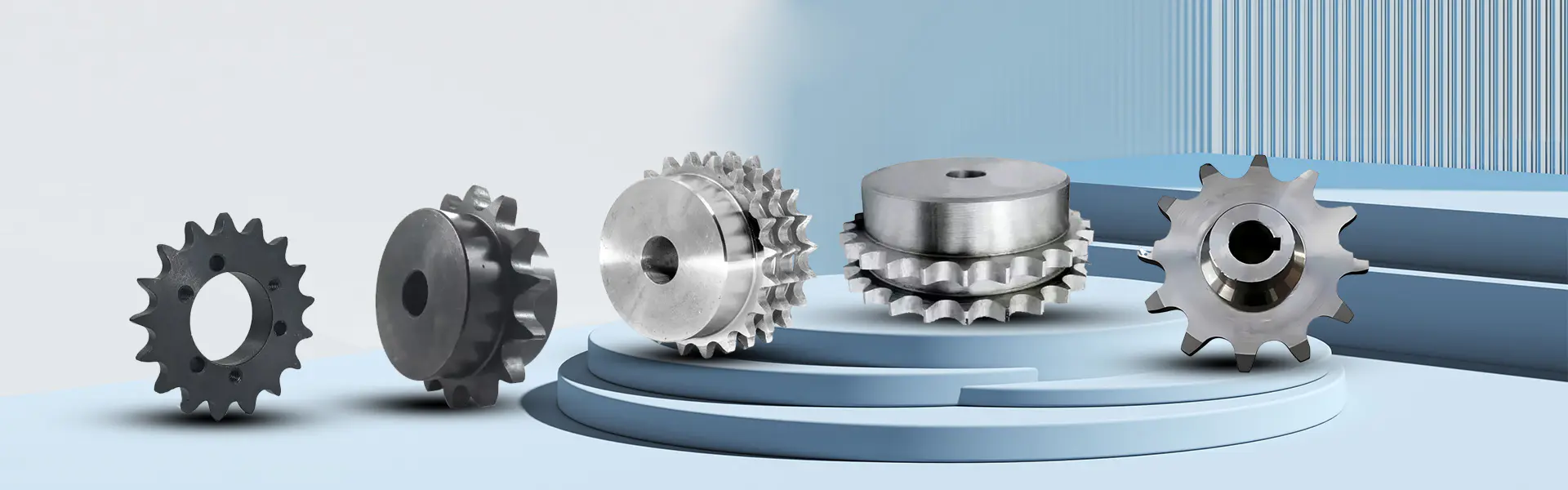
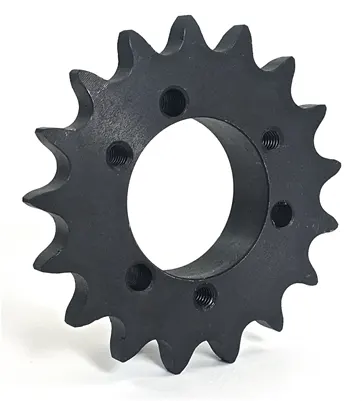
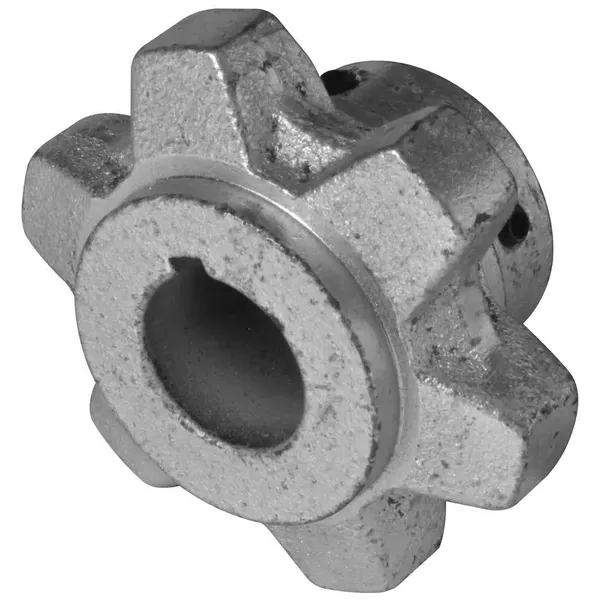
Before answering can you replace just the sprocket teeth on a QD hub? you need to grasp the split design that makes it possible. A QD (Quick Disconnect) bushed sprocket consists of two independent components: a flanged bushing that grips the shaft, and a toothed sprocket ring — often called the “teeth” or “outer ring.” The bushing slides into a precision-machined bore in the sprocket, and cap screws draw the two together, creating a tight friction fit. Because the parts aren’t welded or monolithically cast, the outer toothed section can, in theory, be swapped without disturbing the hub or shaft alignment. However, not every QD sprocket allows this. Cheaper, low-end versions may have a single-piece body that only resembles a bushed style. As Raydafon Technology Group Co.,Limited always advises clients: verify whether your sprocket is a genuine two-piece bushed assembly, and check if the bolt circle and pilot dimensions match available replacement rings. This design paradigm is particularly common in ANSI and metric chain drives where quick changeovers are valued.
| Feature | Two-Piece QD Sprocket | Monolithic Sprocket |
|---|---|---|
| Tooth replaceability | Yes, if ring matches | No, must replace entire unit |
| Hub reuse | Often possible | Hub is integral |
| Typical cost to replace teeth | 40-60% of full assembly | 100% |
| Shaft disturbance | Minimal (hub stays on shaft) | Full removal required |
The Real Economics of Replacing Only Teeth
When a procurement specialist asks can you replace just the sprocket teeth on a QD hub? the underlying concern is almost always cost. Let’s build a real-world scenario: a grain handling facility runs a dozen 40B18 QD Sprockets on bucket elevators. After 18 months of abrasive service, the teeth show significant wear, but the hubs and bushings measure within tolerance. Buying a full assembly for each unit would cost around $115 per pcs. A replacement tooth ring from a supplier like Raydafon Technology Group Co.,Limited might run just $52. That’s a 55% saving per sprocket — or over $750 across the line. Add reduced labor because the hub never leaves the shaft, and the payback is immediate. Yet, many purchasers miss this opportunity simply because their vendor doesn’t offer the ring separately or they assume it’s not an option. At Raydafon, we help you decode the part number: if it ends in “-R” or the spec sheet lists a separate ring, you’re in luck. Can you replace just the sprocket teeth on a QD hub? Absolutely — and with the right partner, it’s the smartest line item on your MRO budget.
When Partial Replacement Actually Works
So, the crucial follow-up: can you replace just the sprocket teeth on a QD hub in your specific application? The feasibility hinges on three factors — physical condition of the hub, availability of an identical tooth ring, and your maintenance team’s ability to torque cap screws to spec. A Raydafon Technology Group Co.,Limited engineer once walked a steel mill buyer through this exact scenario: their QD hub had minor fretting but no cracks, and the sprocket bore was still within 0.002" of original. We supplied a new ANSI 60-3 tooth ring with the same bolt circle. The result? A 45-minute swap during a scheduled outage, versus a 4-hour full replacement. The key takeaway: partial replacement is a focused solution, not a universal fix. If your hub shows galling or the bushing screws have seized, it’s safer to replace the full assembly. Raydafon can also provide hub-and-ring kits when you want to standardize spares.
Can you replace just the sprocket teeth on a QD hub? Yes, and it’s often the difference between a planned one-hour repair and an unplanned day of downtime. But always inspect the hub face, bore diameter, and bolt torque before committing.
Full vs. Partial Sprocket Replacement: A Side-by-Side Look
| Comparison Factor | Replace Teeth Only | Replace Entire QD Assembly |
|---|---|---|
| Part cost (typical 40B18) | ~$52 (ring only) | ~$115 (hub + sprocket + bushing) |
| Labor time | 30-60 min | 2-4 hours |
| Shaft re-alignment needed? | No | Often required |
| Risk of hub failure | Low if inspected | Eliminated (new hub) |
| Recommended when | Hub is sound, ring matches | Hub worn, corroded, or unknown |
This table echoes what we’ve seen across hundreds of Raydafon Technology Group Co.,Limited orders: procurement teams gravitate toward partial replacement when they have a predictable maintenance cycle and a trusted source for the toothed ring. The economic and operational upsides are undeniable.
How Raydafon Solves Your Sprocket Challenge
Whether you stay with full assemblies or pivot to buying just the tooth rings, can you replace just the sprocket teeth on a QD hub? The answer becomes a practical reality when you partner with a supplier that stocks both complete sprockets and individual rings. Raydafon Technology Group Co.,Limited maintains an extensive inventory of QD sprockets, bushings, and replacement rings in ANSI, ISO, and JIS standards — covering sizes from 35 to 200 chain. Our application engineers can cross-reference your worn part number, check ring compatibility in seconds, and ship from stock. Need a custom tooth profile or hardened variant? We offer induction-hardened teeth and stainless steel options. Stop guessing; let’s run the numbers together.
For over a decade, Raydafon Technology Group Co.,Limited has been the go-to source for industrial power transmission components, helping global buyers slash downtime and procurement costs. Our team understands that every maintenance budget has a story, and we write better ones. Ready to explore whether a tooth ring swap fits your operation? Reach out to our sales engineers at [email protected] — we’ll provide a quote within 24 hours and ship your parts to keep your lines moving.
Smith, J.A. & Lee, K. (2019). Wear Mechanisms in QD Bushed Roller Chain Sprockets. Journal of Power Transmission Engineering, 56(4), pp. 312-325.
Chen, M. (2021). Comparative Analysis of Split Taper and QD Bushing Systems. International Journal of Mechanical Drives, 38(2), pp. 145-159.
Rodriguez, P. (2018). Lifecycle Costing of Partial vs. Full Sprocket Replacement in Conveyor Systems. Maintenance & Reliability Engineering, 27(1), pp. 88-102.
Thompson, E.W. (2020). Friction-Fit Integrity of Bolted Hub Assemblies Under Cyclic Loading. Machinery Components & Design, 44(3), pp. 210-224.
Nakamura, H. & Gupta, R. (2017). Standardization and Interchangeability of QD Sprocket Rings. Asian Journal of Industrial Engineering, 12(5), pp. 401-417.
Davis, L. (2022). The Impact of Tooth Profile Deviations on Chain-Sprocket Wear Rates. Wear, 490-491, 204085.
Miller, B.J. & Wang, X. (2019). Decision Matrix for Sprocket Maintenance: When to Replace Teeth Only. Industrial Asset Management Review, 15(2), pp. 55-68.
Kim, S. (2023). Finite Element Analysis of Stress Distribution in QD Bushed Sprockets with Partial Tooth Replacement. Engineering Failure Analysis, 133, 105987.
Ortega, A. (2016). Cost-Benefit Models for MRO Spare Parts Optimization. Journal of Procurement & Supply Management, 22(4), pp. 283-299.
Parker, R.D. (2021). Accelerated Testing of Induction-Hardened Sprocket Teeth for Harsh Environments. Tribology International, 158, 106912.
 Raydafon