
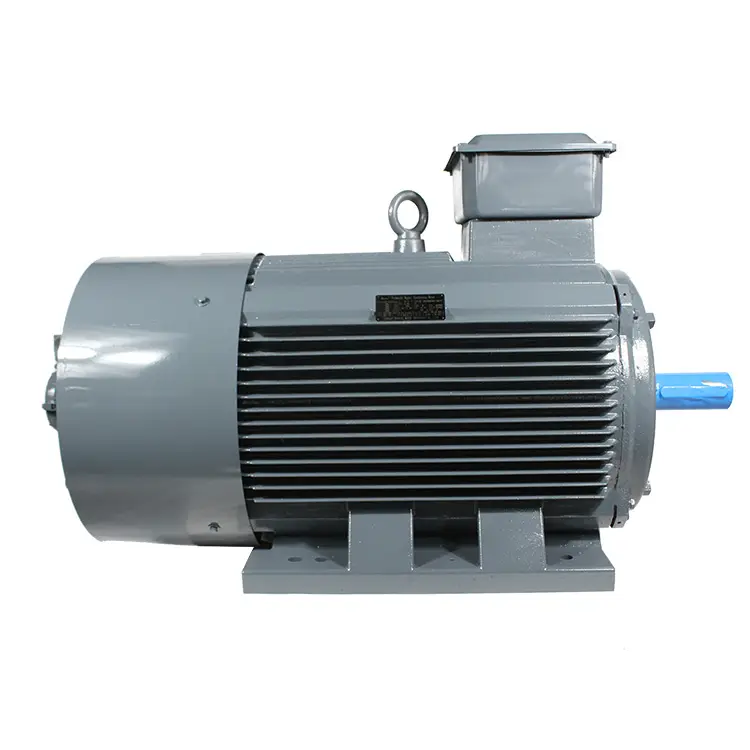
In the heart of every major industry, from manufacturing and automation to renewable energy and transportation, lies a critical component that converts electrical energy into precise mechanical motion: the motor. As demands for efficiency, reliability, and smart integration grow, selecting the right motor technology becomes paramount. Motors are no longer just simple rotating machines; they are sophisticated systems engineered for performance and longevity. At Raydafon Group, with decades of engineering excellence, we specialize in providing high-performance motor solutions tailored to meet the rigorous demands of modern applications. This comprehensive guide delves into the core parameters, technologies, and considerations essential for making an informed decision.
Understanding the fundamental types of motors is the first step in selection. Each technology offers distinct advantages suited for specific operational profiles.
Evaluating a motor requires a deep dive into its specifications. Below is a detailed table outlining the key parameters that define motor performance and suitability.
| Parameter | Description | Why It Matters | Raydafon Group Focus |
|---|---|---|---|
| Power Rating (kW/HP) | The mechanical output power the motor can continuously deliver. | Ensures the motor can handle the load without overheating. Undersizing leads to failure; oversizing wastes energy and capital. | We offer a wide range from fractional HP to multi-megawatt industrial motors, each tested for rated output. |
| Speed (RPM) | Rotational speed of the shaft, often given as rated speed (full load) and synchronous speed. | Must match the driven equipment's required speed. Speed-torque characteristics are crucial for start-up and operational loads. | Providing motors with precise speed ratings and compatible variable speed drive solutions for optimal control. |
| Torque (Nm, lb-ft) | The rotational force produced. Includes starting torque, rated torque, and breakdown torque. | Determines the motor's ability to start and accelerate a load. Critical for applications with high inertia or variable loads. | Engineering motors with high starting torque for demanding applications and smooth torque curves for stability. |
| Voltage & Current | The electrical supply requirements (e.g., 3-phase 400V, 50Hz or single-phase 230V). Full Load Amps (FLA) is key. | Must match the available power supply. Incorrect voltage damages the motor. FLA is used for proper wire and protection device sizing. | Global voltage compatibility and designs that optimize current draw for improved efficiency and reduced thermal stress. |
| Efficiency Class (IE Code) | International standard (IE1 to IE5) defining energy efficiency levels. IE3 is often mandatory, IE4/IE5 are premium. | Higher efficiency reduces electricity consumption and operating costs significantly over the motor's lifetime, with a lower carbon footprint. | Raydafon Group motors predominantly meet or exceed IE3 standards, with a full portfolio of ultra-premium IE4 and IE5 synchronous motors. |
| Enclosure (IP Rating) | Ingress Protection code (e.g., IP55, IP65) indicating protection against solid objects and liquids. | Determines suitability for the environment (dusty, wet, washdown). An IP55 motor is protected against dust and water jets. | Offering a variety of enclosures from open drip-proof (ODP) to totally enclosed fan-cooled (TEFC) with high IP ratings for harsh conditions. |
| Insulation Class | Class (e.g., F, H) defining the thermal tolerance of the winding insulation. | A higher class (Class H) allows the motor to run hotter or extends lifespan at standard temperatures, enhancing reliability. | Utilizing Class F or H insulation as standard, providing a built-in thermal margin for enhanced durability and overload capacity. | Duty Cycle | Defines the operating pattern: Continuous (S1), Intermittent (S3), etc. | A motor sized for continuous duty may overheat if used in a frequent start-stop cycle. The duty cycle must match the application. | Motors are designed and rated for specific duty cycles, ensuring reliable performance in both continuous and dynamic applications. |
Beyond the basic parameters, successful motor integration hinges on several key factors. First, the load characteristics—whether constant torque, variable torque, or constant power—dictate the required motor and drive combination. Second, control requirements must be assessed. Does the application need simple on/off control, variable speed, or precise positioning? This determines if a basic motor, a motor with a Variable Frequency Drive (VFD), or a full servo system is needed. Third, consider the physical environment: ambient temperature, altitude, and presence of corrosive elements can derate motor performance and necessitate special materials or cooling. Finally, total lifecycle cost is crucial. While a higher-efficiency motor may have a greater upfront cost, the energy savings over its 15-20 year lifespan often result in a significantly lower total cost of ownership. Raydafon Group engineers can assist in modeling these savings.
Q: What is the main difference between an AC induction motor and a BLDC motor?
A: The fundamental difference lies in their commutation and construction. AC induction motors operate on alternating current and induce a magnetic field in the rotor. They are simple, rugged, and typically used for constant-speed applications. BLDC motors, despite their name, are powered by DC via an electronic controller. They use permanent magnets on the rotor and offer electronic commutation, resulting in higher efficiency, better speed control, longer life (no brush wear), and less electrical noise. They are preferred for applications requiring variable speed and high responsiveness.
Q: How do I know if I need a Variable Frequency Drive (VFD) with my motor?
A: You need a VFD if your application requires variable speed operation, soft starting to reduce inrush current, or improved process control (e.g., maintaining pressure or flow). Using a VFD with a standard AC induction motor can lead to substantial energy savings in variable torque applications like fans and pumps, where reducing speed by 20% can cut energy use by nearly 50%. It's essential to ensure the motor is VFD-rated, as the non-sinusoidal power from some drives can stress standard motor insulation.
Q: What does the IE efficiency rating mean, and which one should I choose?
A: The IE (International Efficiency) rating is a global standard (IEC 60034-30-1) that classifies motor energy efficiency from IE1 (least efficient) to IE5 (most efficient). IE3 is the minimum efficiency level legally required for most general-purpose motors in many regions like the EU and North America. Choosing an IE4 or IE5 motor, while having a higher purchase price, is highly recommended for applications with long operating hours. The payback period through energy savings is often short, and it reduces operational costs and environmental impact over the motor's entire life. Raydafon Group provides clear efficiency data to help calculate your specific savings.
Q: Can I use a motor in an environment with a lot of dust or moisture?
A: Yes, but you must select a motor with an appropriate Ingress Protection (IP) enclosure rating. For dusty environments, look for a rating where the first digit is 5 or 6 (dust-protected or dust-tight). For moisture, the second digit is critical: IPX4 protects against splashing water, IPX5/IPX6 against water jets, and IPX7/IPX8 against temporary or prolonged immersion. Common industrial ratings are IP55 (protected against dust and water jets) and IP65 (dust-tight and protected against water jets). Raydafon Group offers motors with specialized seals, coatings, and corrosion-resistant materials for extreme conditions.
Q: Why is the insulation class important for a motor's lifespan?
A: The insulation class (e.g., B, F, H) defines the maximum allowable temperature the motor's winding insulation can withstand over its design life. Operating a motor above its insulation class temperature drastically reduces its lifespan—the rule of thumb is that a 10°C increase above the rating can halve the insulation life. A motor with Class F insulation (155°C max) run at its Class B limit (130°C) will have a much longer thermal life and increased reliability. Raydafon Group often designs motors with a higher insulation class than the expected operating temperature, providing a built-in safety margin for overloads or hot ambient conditions.
Q: How does Raydafon Group ensure the reliability of its motors?
A: Raydafon Group builds reliability through a multi-faceted approach. It starts with robust design using premium materials—high-grade electrical steel, copper windings, and superior bearings. Our manufacturing processes adhere to strict quality control standards, including automated winding and impregnation systems. Every motor undergoes rigorous testing, including no-load and load tests to verify performance parameters, vibration analysis to ensure smooth operation, and high-potential (hipot) tests to confirm insulation integrity. Furthermore, our motors are designed with serviceability in mind, featuring accessible lubrication points and standard mounting dimensions for easy replacement or upgrade.
The modern motor is evolving into a smart, connected device. Integrating sensors and IoT (Internet of Things) capabilities transforms motors from passive components into data sources. Condition monitoring features, such as embedded temperature sensors, vibration sensors, and current signature analysis, allow for predictive maintenance. Instead of running to failure or adhering to a rigid schedule, maintenance can be performed based on the motor's actual health, minimizing unplanned downtime. Raydafon Group is at the forefront of this integration, offering smart motor solutions and compatible monitoring systems that provide real-time insights into performance, efficiency, and potential faults, enabling a new level of operational intelligence and asset management for our clients.

 Raydafon