
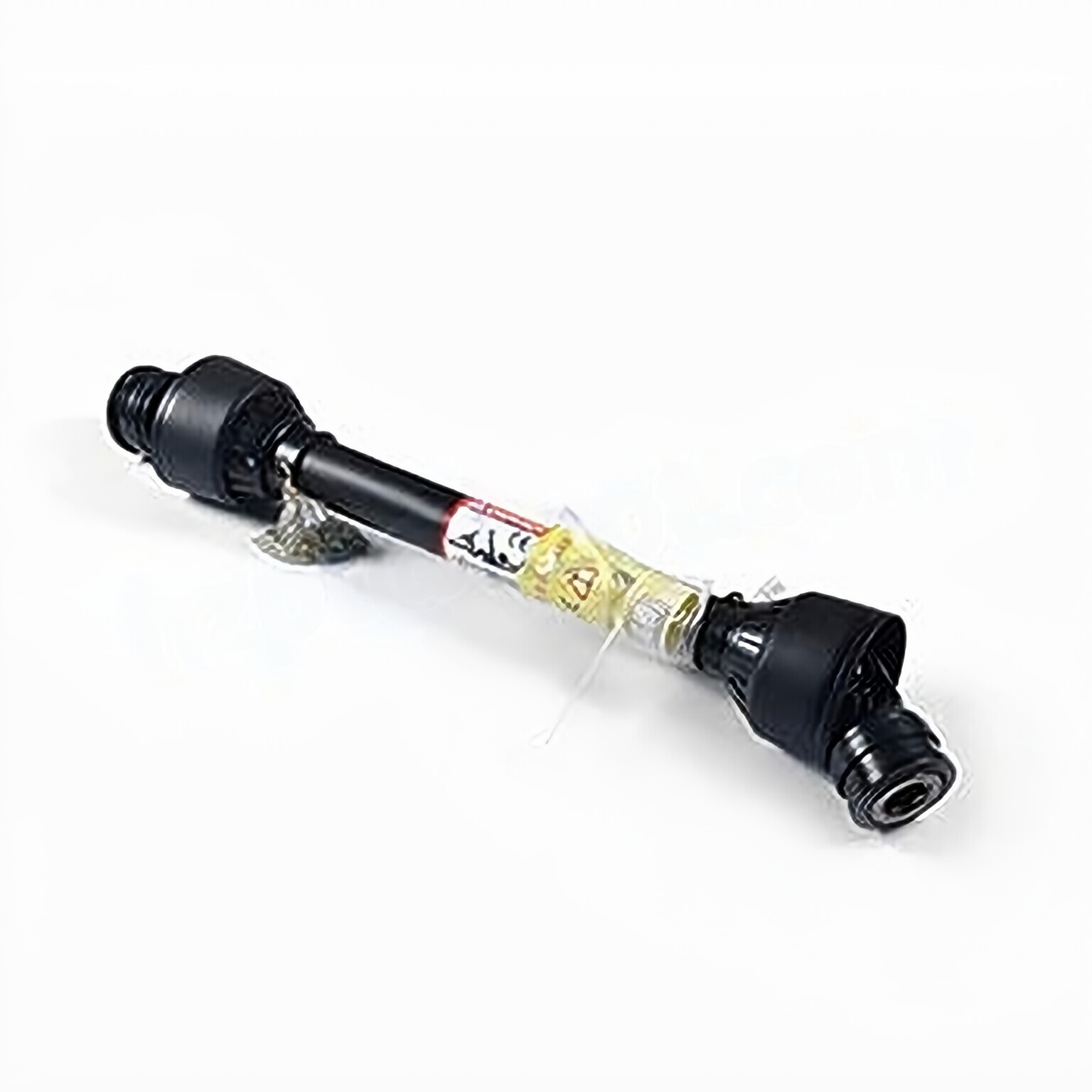
In the demanding world of modern agriculture, efficiency, reliability, and safety are paramount. The power take-off (PTO) system is the critical lifeline that transfers engine power from a tractor to an array of implements, from mowers and balers to tillers and pumps. At the heart of this system lies a component that must withstand immense torque, constant vibration, and harsh environmental conditions: the Agricultural PTO Shaft. Selecting the correct PTO shaft is not just a matter of compatibility; it's a fundamental decision impacting operational productivity, equipment longevity, and operator safety.
Raydafon Group, with decades of engineering excellence in power transmission solutions, designs and manufactures premium-grade Agricultural PTO Shafts that meet and exceed the rigorous demands of global farming operations. Our commitment is to deliver not just a component, but a robust, dependable link in your power chain.
A PTO shaft is far more than a simple steel tube. It is a precision-engineered assembly designed for efficient and safe power transfer. The primary components include:
Our product line is engineered for durability, performance, and ease of use. Below are the detailed parameters and features that define our standard and heavy-duty series.
| Series (ISO Standard) | Max. Recommended Power (HP/kW) | Max. RPM | Nominal Torque (Nm) | Common Spline Sizes (Tractor End) | Key Applications |
|---|---|---|---|---|---|
| Series 3 | 80 HP / 60 kW | 1000 | 540 | 1-3/8" 6-spline | Small rotary mowers, sprayers, light manure spreaders |
| Series 4 | 130 HP / 97 kW | 1000 | 950 | 1-3/8" 6-spline, 1-3/8" 21-spline | Medium mowers, hay rakes, medium-duty tillers |
| Series 5 | 180 HP / 134 kW | 1000 | 1300 | 1-3/8" 21-spline, 1-3/4" 20-spline | Round balers, larger rotary cutters, fertilizer spreaders |
| Series 6 | 250 HP / 186 kW | 1000 | 1800 | 1-3/4" 20-spline | Large square balers, heavy-duty flail mowers, forage harvesters |
| Series | Max. Recommended Power (HP/kW) | Max. RPM | Nominal Torque (Nm) | Common Spline Sizes | Key Applications |
|---|---|---|---|---|---|
| Series 7 / 700 RPM | 325 HP / 242 kW | 700 (1000 with limits) | 2400 | 1-3/4" 20-spline, 2" 20-spline | Very large balers, industrial chippers, high-capacity pumps |
| Series 8 / 1000 RPM | 400 HP / 298 kW | 1000 | 3000 | 2" 20-spline | High-power forage harvesters, specialty tillage equipment |
Q: How do I measure and select the correct length for a PTO shaft?
A: Proper length is crucial for safety and performance. With the implement lowered to its working position and connected to the tractor, measure the distance between the tractor PTO stub and the implement input shaft. The PTO shaft you select should have a minimum compressed length shorter than this distance and a maximum extended length longer than it. A good rule of thumb is that when the shaft is connected and the implement is in its lowest position, the telescoping tubes should overlap by at least 1/3 of their length. When raised to maximum height, the shaft should not separate. Raydafon Group shafts have clear minimum and maximum length markings.
Q: What is the difference between a 540 RPM and a 1000 RPM PTO shaft? Can I interchange them?
A: The primary differences are rotational speed, torque capacity, and physical connection. A 540 RPM shaft is designed for higher torque at lower speed, typically using a 1-3/8" 6-spline connection. A 1000 RPM shaft operates at higher speed for implements designed for it, often using a 1-3/8" 21-spline or 1-3/4" 20-spline connection. They are not directly interchangeable due to different spline sizes and the fact that running a 540-rated implement at 1000 RPM can be extremely dangerous. Always match the shaft's RPM rating and spline type to your tractor's PTO output and the implement's requirements.
Q: How often should I grease the PTO shaft universal joints?
A: Regular greasing is the single most important maintenance task. For Raydafon Group shafts with triple-lip seals, we recommend greasing every 50 hours of operation or at least once per season. Before long-term storage, grease thoroughly. Use a high-quality, universal extreme-pressure (EP) lithium-based grease. Grease until you see fresh grease purging from all four seals on each joint. This ensures old, contaminated grease is expelled and the bearings are fully protected.
Q: My PTO shaft shield is spinning with the shaft. Is this normal?
A: No, this is not normal and indicates a serious problem. The outer safety guard must remain stationary. If it rotates, it means the plastic bushings or bearings that allow it to rotate freely around the inner tube are damaged, missing, or seized. A rotating guard provides no safety protection and is a major hazard. Immediately disconnect the shaft from the tractor and inspect it. Raydafon Group shields use durable, replaceable bearing sleeves; if damage is found, replace the shield or bushings before further use.
Q: What does the series number (e.g., Series 5, Series 6) on a PTO shaft mean?
A: The series number corresponds to an international (ISO) standard that defines the shaft's physical dimensions, torque capacity, and power rating. A higher series number indicates a larger, stronger shaft capable of handling more horsepower and torque. It is essential to select a series that meets or exceeds the maximum power requirement of your implement. Using an under-specification shaft (e.g., a Series 4 on a baler requiring Series 6) can lead to premature failure, shaft breakage, and safety risks.
Q: Why is there a shear bolt or slip clutch on my PTO shaft, and how do I maintain it?
A: These are crucial overload protection devices. A shear bolt is designed to break at a specific torque, disconnecting the drive and protecting more expensive components. Always replace a broken shear bolt with an identical, grade-specific bolt—never a harder bolt. A slip clutch uses friction plates that slip when overloaded. It requires periodic adjustment (check operator's manual) to maintain the correct torque setting and may need the plates cleaned if contaminated with oil or rust. Raydafon Group offers shafts with both integrated, easily serviceable protection systems.
Q: Can I repair a damaged PTO shaft, or should I replace it?
A: It depends on the damage. Components like end yokes, universal joint cross and bearing kits, shear bolts, and safety shields are often replaceable. Raydafon Group provides a full range of spare parts for easy field repair. However, if the main telescoping tube is bent, cracked, or severely rusted, the shaft must be replaced entirely. A bent tube creates dangerous imbalance and vibration. Always prioritize safety; when in doubt, consult with a Raydafon Group dealer or replace the assembly.
Proper installation is non-negotiable. Follow this checklist every time:
Choosing a PTO shaft is an investment in your farm's operational integrity. Raydafon Group distinguishes itself through:

 Raydafon