
In the demanding world of material handling and lifting operations, safety, durability, and reliability are not just features—they are absolute necessities. For decades, professionals across industries such as construction, logging, maritime, and manufacturing have relied on a specific category of equipment to secure, lift, and move heavy loads with precision. At the heart of many critical lifting assemblies are components known as Leaf and Hoisting Chains. These are not your standard chains; they are engineered marvels designed for the most strenuous applications.
The Leaf chain, characterized by its unique leaf-like link plates connected by pins, offers exceptional tensile strength and minimal elongation under load. This makes it the go-to choice for applications requiring high strength and precise, repeatable movement, such as in forklift masts and lifting devices. Hoisting chains, often built to rigorous international standards like DIN, EN, or ASME, are the workhorses of vertical lifting, found in chain hoists, cranes, and sling assemblies. Together, they form an indispensable link in the safety and efficiency of industrial operations.
Understanding the intricate specifications, grades, and proper application of these chains is paramount. Failure to do so can lead to catastrophic equipment failure, posing severe safety risks. This guide, presented with the technical expertise of the Raydafon Group, will delve deep into the world of Leaf and Hoisting Chains. We will explore their technical parameters, present data in clear formats, and answer the most pressing questions professionals like you have.
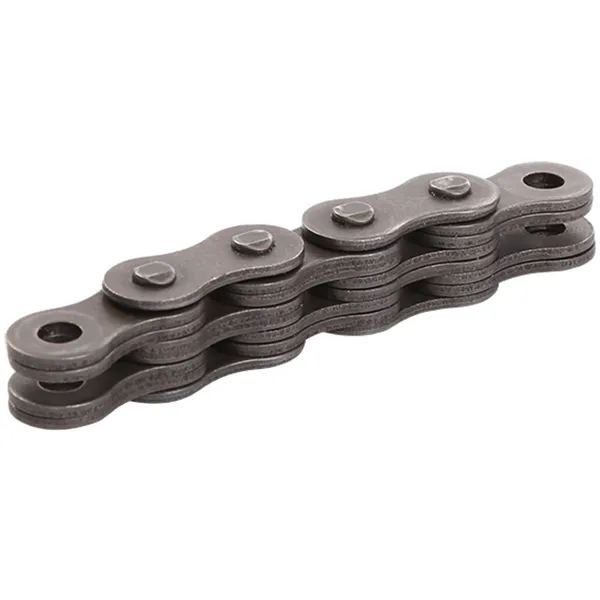
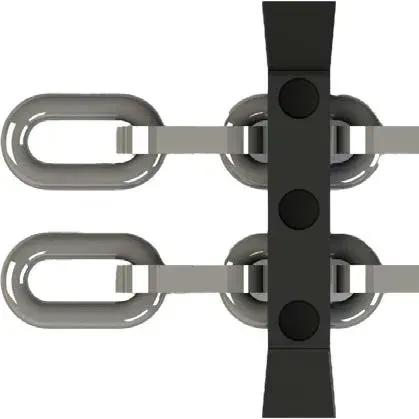
Leaf chains are precision roller chains specifically constructed for applications involving pulling, lifting, and tensioning where high load capacity with minimal stretch is critical. Their construction differs significantly from standard roller chains.
| Chain Designation | Pitch (Inch/mm) | Minimum Ultimate Tensile Strength (lbs/kN) | Average Tensile Strength (lbs/kN) | Standard Attachment Options |
|---|---|---|---|---|
| AL 0622 | 0.375" / 9.525mm | 6,200 lbs / 27.6 kN | 7,400 lbs / 32.9 kN | Clevis, Bent Link, Square Eye |
| BL 0842 | 0.500" / 12.70mm | 12,500 lbs / 55.6 kN | 15,000 lbs / 66.7 kN | Clevis, Bent Link, Combination |
| CL 1062 | 0.625" / 15.875mm | 20,500 lbs / 91.2 kN | 24,000 lbs / 106.8 kN | Square Eye, Round Eye, Hogan |
| DL 1282 | 0.750" / 19.05mm | 30,000 lbs / 133.4 kN | 35,000 lbs / 155.7 kN | Clevis, Bent Link, Special Forging |
Hoisting chains are designed for direct vertical lifting. They are typically made from high-grade alloy steel and are "calibrated" or "grade" chains, meaning their dimensions and breaking forces are tightly controlled to meet international safety standards.
| Chain Size (mm) | Grade | Minimum Breaking Force (kN) | Working Load Limit (WLL) in Mode 1 (kN) | Approximate Weight per Meter (kg) | Typical Application |
|---|---|---|---|---|---|
| 6 | 80 | 38 | 9.5 | 0.9 | Light hoists, utility lifting |
| 8 | 80 | 64 | 16.0 | 1.5 | General purpose hoists, slings |
| 10 | 80 | 100 | 25.0 | 2.3 | Industrial hoists, standard crane applications |
| 13 | 100 | 185 | 46.3 | 4.1 | Heavy-duty hoists, high-performance lifting |
| 16 | 100 | 280 | 70.0 | 6.2 | Cranes, offshore, severe duty cycles |
Q: What is the fundamental difference between a standard roller chain and a leaf chain?
A: The core difference lies in construction and application. Standard roller chains (like ANSI series) are designed for power transmission, featuring rollers and bushings to engage with sprocket teeth smoothly under high speeds. Their design allows for some articulation and flexibility. Leaf chains, however, are built for pure linear load-bearing and lifting. They consist of solid, stacked link plates without rollers, providing vastly higher tensile strength and significantly less elongation (stretch) under identical loads. Using a roller chain in a high-tension lifting application meant for a leaf chain is dangerous and will lead to premature failure.
Q: How do I correctly identify the "Grade" of my hoisting chain, and why does it matter?
A: The chain grade is a critical identifier of its strength and intended use. It is usually embossed or stamped directly onto every link of quality alloy chain (e.g., "8", "80", or "G80" for Grade 80). It matters because it dictates the Working Load Limit (WLL). Grade 80 chain has a safety factor of 4:1, Grade 100 typically 4:1 or 5:1, meaning the minimum breaking force is 4 or 5 times the WLL. Using a lower-grade chain (like a Grade 30 transport chain) for overhead lifting is extremely hazardous. Always verify the grade marking matches the required WLL for your application, as supplied in the manufacturer's documentation, such as those from Raydafon Group.
Q: My leaf chain on a forklift mast is showing wear. When should it be replaced?
A: Regular inspection is non-negotiable. Key wear indicators for leaf chains include:
Q: Can I use a hoisting chain with any type of hook or connector?
A: No, this is a common and dangerous misconception. Hooks, shackles, and other connectors must be matched to the chain's grade and Working Load Limit. The entire assembly—chain, master links, coupling links, hooks, and sling hardware—must be of a compatible grade and have a collective WLL rated for the total load. Furthermore, the connection method is crucial. Using improper, non-rated, or makeshift connecting links (like bolts or screw pins not designed for the chain) creates a severe weak point. Always use components from a complete, certified lifting set or consult with a technical specialist to ensure compatibility.
Q: What are the best practices for storing and maintaining leaf and hoisting chains to maximize their service life?
A: Proper care extends chain life and ensures safety.
Q: What does certification mean for hoisting chains, and what documentation should I expect from a supplier like Raydafon Group?
A: Certification is formal proof that the chain has been manufactured and tested according to a specific international standard (like EN 818 or ASME). For legally compliant lifting equipment in most jurisdictions, this is mandatory. When purchasing certified hoisting chains, you should receive a traceable "Certificate of Conformity" or "Test Certificate" from the manufacturer. This document typically includes:

 Raydafon