
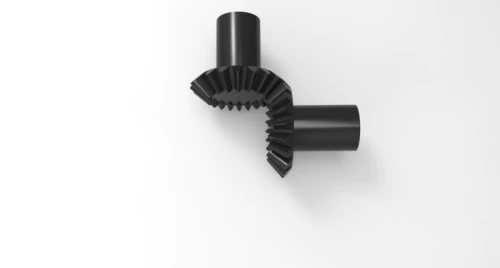
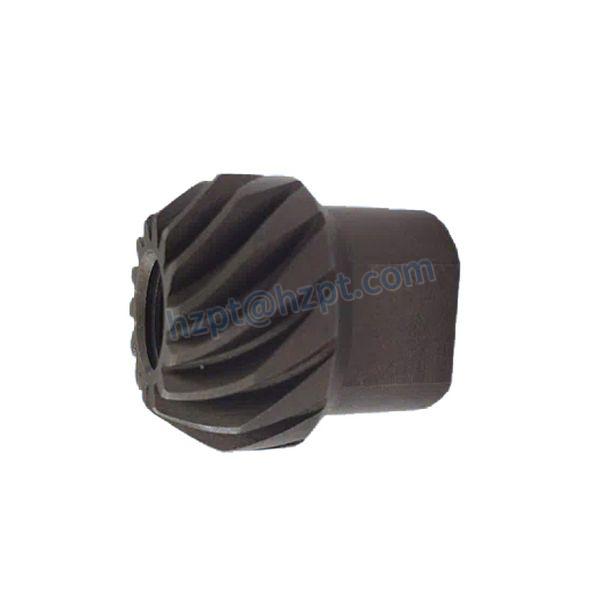
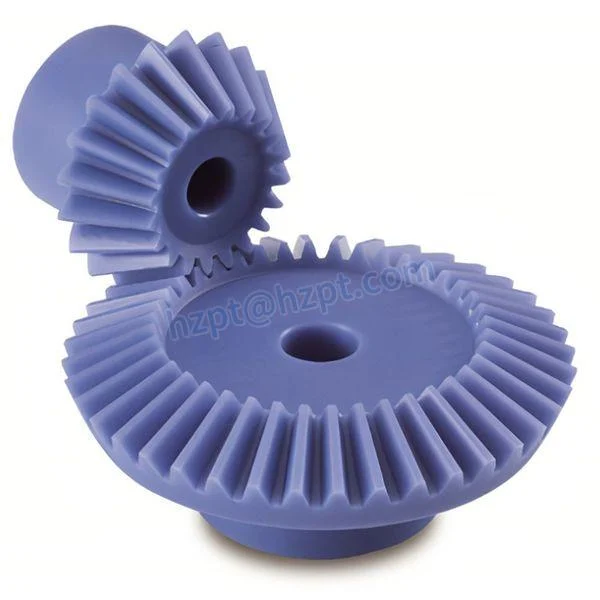
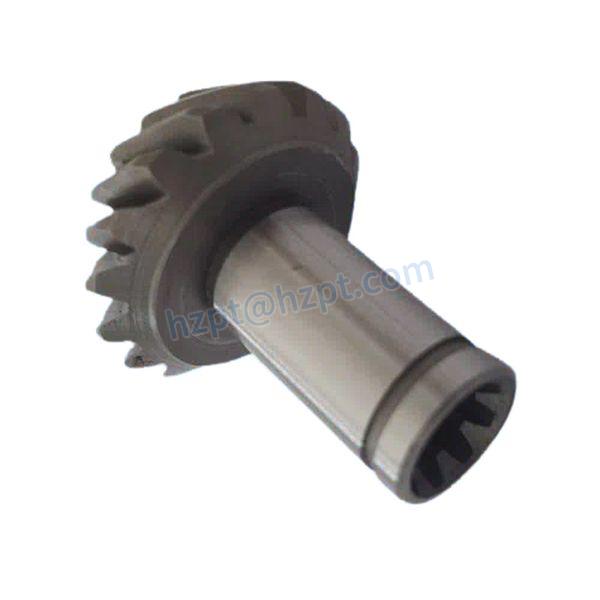
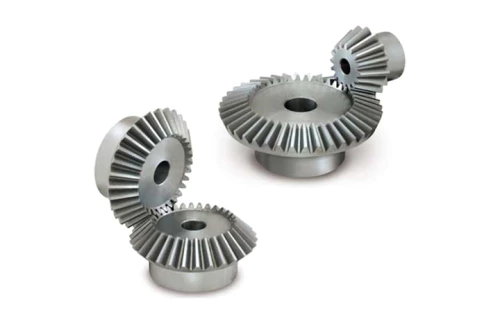
In the realm of mechanical power transmission, few components are as critical and versatile as Bevel Gears. These gears are engineered to transmit motion and power between intersecting shafts, typically at a 90-degree angle, though other angles are possible. Their unique conical shape allows for efficient and reliable changes in the axis of rotation, making them indispensable in a vast array of applications, from automotive differentials and hand drills to industrial mixers and marine propulsion systems. At Raydafon Group, we have dedicated decades to mastering the design, engineering, and manufacturing of high-precision bevel gears, understanding that their performance is foundational to the success and durability of complex machinery worldwide. This guide delves into the technical specifications, design considerations, and practical applications of bevel gears, showcasing the expertise and quality that define the Raydafon Group standard.
Raydafon Group's bevel gears are manufactured to exacting standards, utilizing advanced materials and cutting-edge processes. Our product range is characterized by precision, durability, and optimal performance. Below are the detailed parameters that define our offerings.
| Parameter | Range / Standard | Description |
|---|---|---|
| Gear Type | Straight, Spiral, Zerol, Hypoid | Defines the tooth geometry and engagement characteristics. |
| Module (Metric) / Diametral Pitch (Imperial) | Module: 1 to 10 mm DP: 20 to 3 |
Defines tooth size. A critical factor in load capacity and gear size. |
| Shaft Angle | Standard 90°, Custom 30° to 120° | The angle between the intersecting axes of the two shafts. |
| Pressure Angle | 20° (Standard), 14.5°, 25° | Affects tooth strength, smoothness of operation, and backlash. |
| Tooth Hardness | Up to 60-62 HRC (Case Hardened) | Achieved through carburizing, nitriding, or induction hardening for wear resistance. |
| Accuracy Grade (AGMA / ISO) | AGMA Q10 to Q13, ISO 5 to 8 | Specifies tolerances for pitch, profile, and runout. Higher numbers indicate tighter tolerances. |
| Surface Finish (Tooth Flank) | Ra 0.4 μm to 1.6 μm | Improved finish reduces friction, heat generation, and noise. |
| Maximum Outer Diameter | Up to 1000 mm (Custom designs available) | Determines the physical size and power transmission capability of the gear. |
| Performance Metric | Typical Range (Raydafon Standard) | Notes |
|---|---|---|
| Transmission Efficiency | 95% - 98% | Depends on gear type (spiral higher than straight), lubrication, and alignment. |
| Torque Capacity | From 50 Nm to over 15,000 Nm | Varies significantly with size, material, tooth design, and heat treatment. |
| Operating Speed | Up to 10,000 RPM (Precision Balanced) | High-speed applications require special balancing and accuracy grades. |
| Noise Level | Optimized for <75 dB(A) at 1 meter | Spiral and Zerol bevel gears offer quieter operation than straight bevel gears. | Service Life (L10) | 20,000+ hours under rated load | Based on proper installation, adequate lubrication, and avoidance of overload conditions. |
What is the main difference between straight and spiral bevel gears?
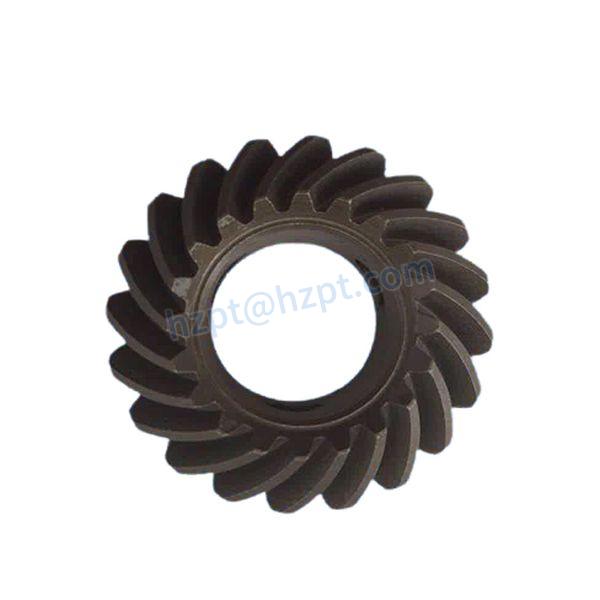
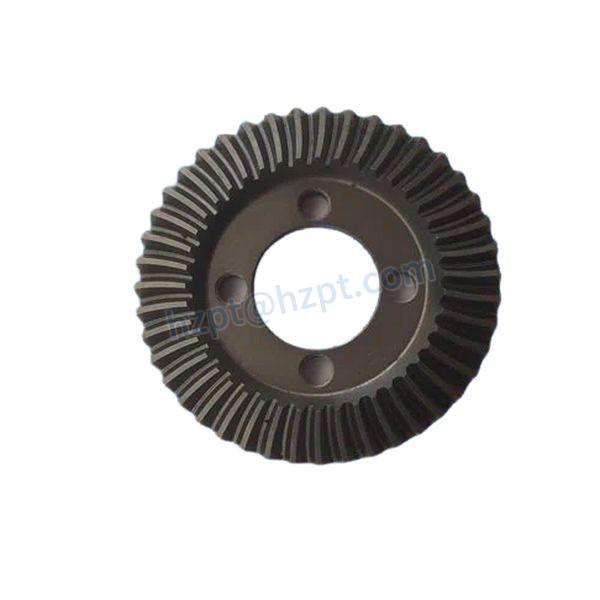
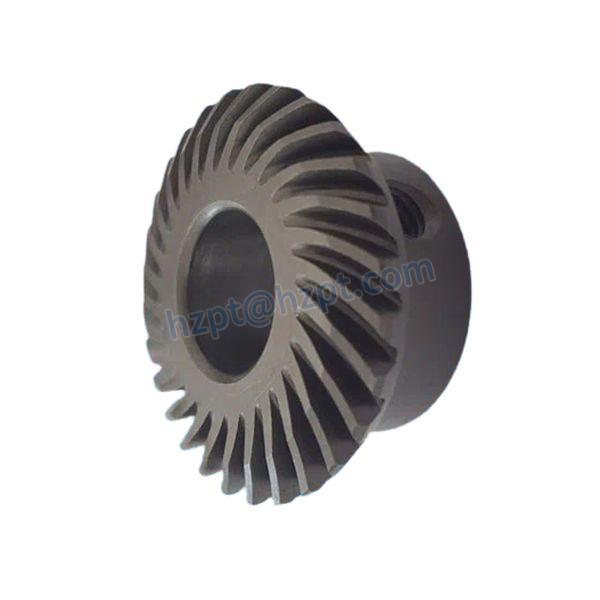
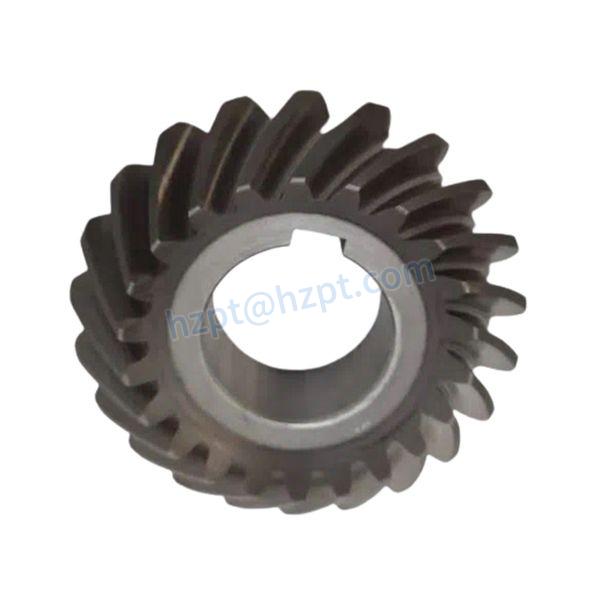
Straight bevel gears have teeth that are straight and tapering towards the apex of the cone. They are simpler to manufacture but engage with a single tooth at a time, which can lead to more noise and vibration at higher speeds. Spiral bevel gears, a specialty of Raydafon Group, have curved, oblique teeth that engage gradually. This results in multiple teeth being in contact simultaneously, providing smoother, quieter operation, higher load capacity, and greater durability, making them ideal for high-speed, high-torque applications like automotive axles and helicopter transmissions.
When should I consider using a hypoid bevel gear instead of a standard spiral bevel gear?
Hypoid gears are a specialized type of spiral bevel gear where the axes of the pinion and gear are offset (non-intersecting). This design allows for a larger, stronger pinion with more tooth contact. The primary advantages are even higher torque capacity, smoother operation, and the ability to mount the pinion lower in automotive differentials, lowering the driveshaft and creating a lower vehicle floor. They are more complex and require high-quality, specialized lubrication. Raydafon Group engineers can advise if a hypoid design is optimal for your specific spatial and load requirements.
How critical is proper lubrication for bevel gear longevity?
Extremely critical. Bevel gears, especially high-precision spiral types, operate under significant sliding and rolling contact pressures. Proper lubrication forms a protective film that minimizes metal-to-metal contact, reduces wear, dissipates heat, and prevents corrosion. Using the wrong viscosity or type of lubricant, or allowing the system to run dry, will dramatically accelerate wear, pitting, and scuffing, leading to premature failure. Raydafon Group provides specific lubrication recommendations for each gear set based on its material, operating speed, temperature, and environment.
What are the key factors in ensuring correct bevel gear assembly and alignment?
Precise alignment is paramount. Incorrect mounting distance, shaft misalignment, or improper backlash will cause concentrated load on a small portion of the tooth, leading to noise, vibration, and rapid failure. Key steps include: using precise mounting fixtures, verifying the correct axial position of both gears (mounting distance), setting the specified backlash using gauges, and ensuring the housing and bearings are rigid enough to maintain alignment under load. Raydafon Group supplies detailed installation manuals and can provide technical support for critical assembly procedures.
Can Raydafon Group provide custom-designed bevel gears for non-standard applications?
Absolutely. While we maintain a comprehensive inventory of standard bevel gears, our core strength lies in custom engineering. Our design team at Raydafon Group can develop bevel gear solutions for unique shaft angles, unusual space constraints, extreme operating conditions (high temperature, vacuum, corrosive environments), or specific noise/performance targets. We utilize advanced design software and simulation tools to prototype and validate custom designs before manufacturing, ensuring they meet the exact functional requirements of your application.
What quality control measures does Raydafon Group implement during manufacturing?
Raydafon Group enforces a rigorous multi-stage quality control protocol. This includes incoming material certification, in-process inspections during cutting and heat treatment, and final inspection using state-of-the-art coordinate measuring machines (CMMs) and gear analyzers. We verify critical parameters such as tooth profile, pitch, runout, hardness depth, and surface finish against AGMA, ISO, or customer-specific drawings. Each batch is traceable, and comprehensive inspection reports can be provided to ensure compliance with the most demanding industry standards.


 Raydafon