
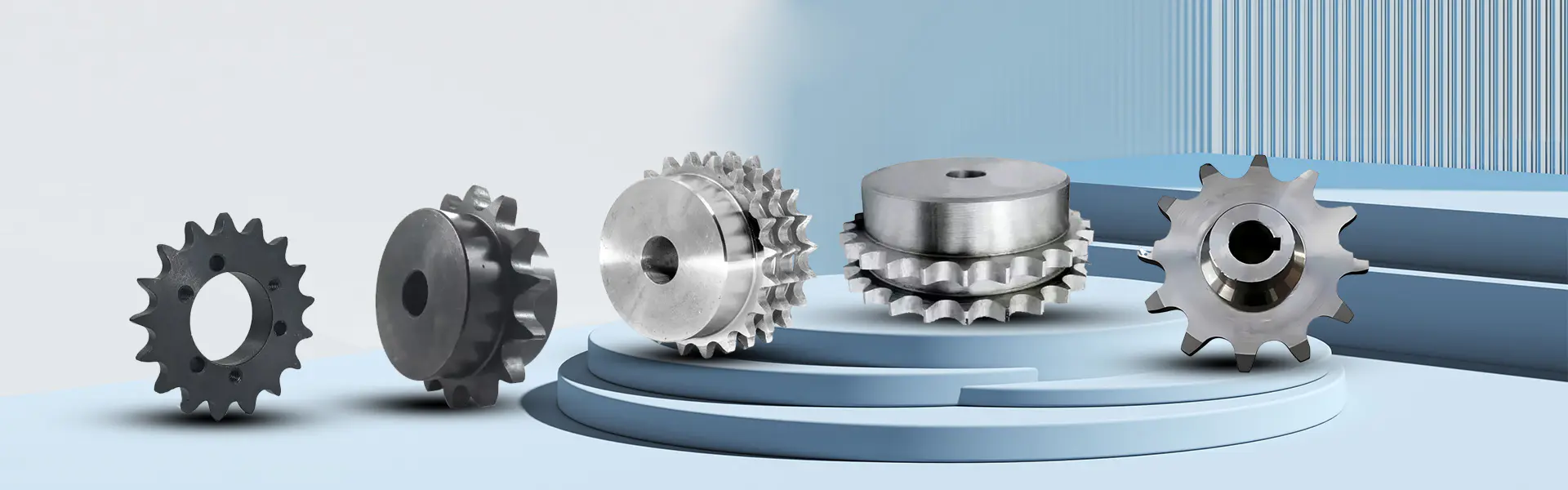
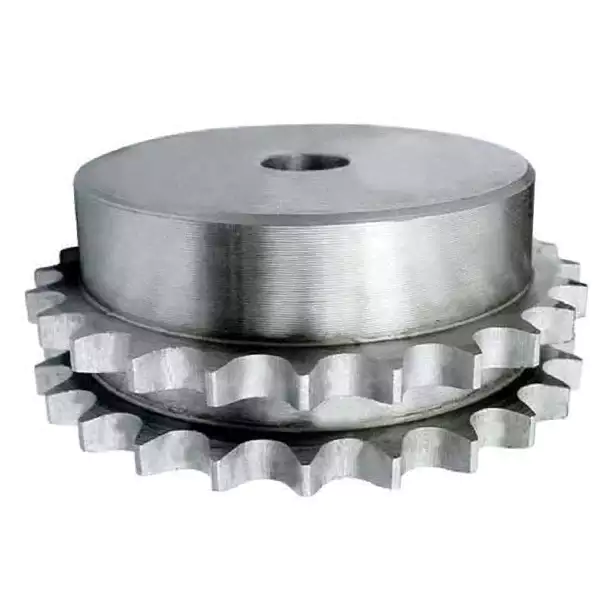
Imagine you're a procurement specialist staring at a blueprint for a custom conveyor system. The design calls for Specialty Sprockets with odd tooth counts, non-standard bores, and a punishing operating environment. The first question that hits you: Why choose a taper bushing mounting for specialty sprockets over other hubs? The wrong choice means hours of downtime, slipping shafts, and endless alignment headaches. Taper bushing mountings have transformed how we handle these challenges. They grip the shaft with a wedge‑tight fit that resists vibration and shock, eliminate keyway wallowing, and slash installation time compared to welded hubs or QD bushings. If you’re tired of rushed replacements that never quite center perfectly, this guide will walk you through the real-world advantages, hard data, and why a growing number of engineers swear by this system for high-demand sprocket applications.
Article Outline
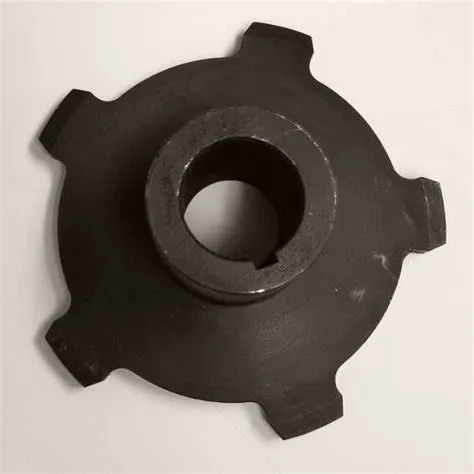
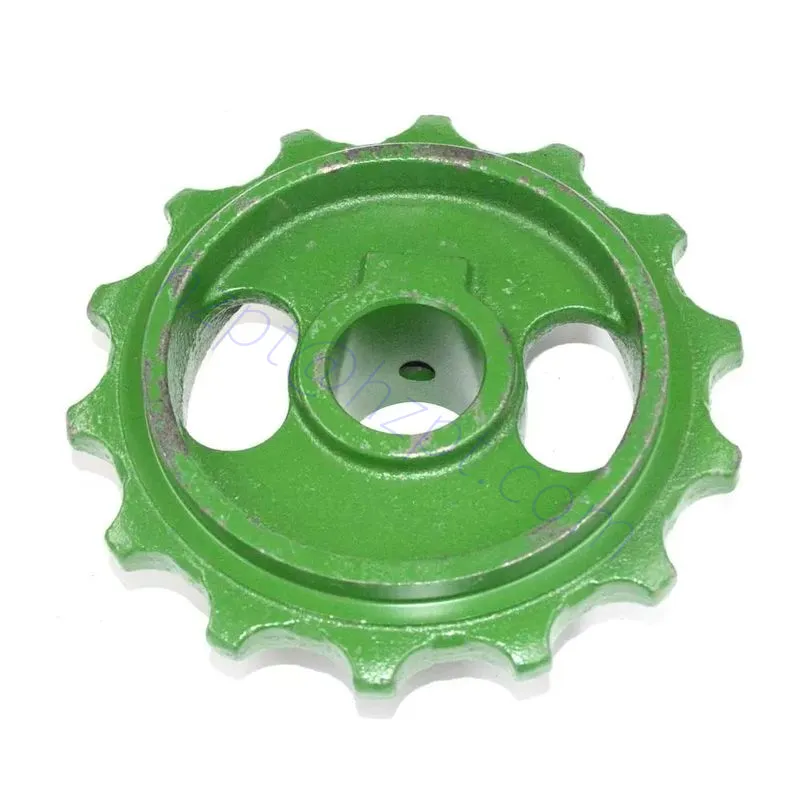
Every maintenance manager has a story about a sprocket that wouldn't stay put. With specialty sprockets—whether a 5‑tooth drive sprocket on a harvester or a stepped pitch conveyor wheel—the problems multiply. Standard straight‑bore hubs often rely on a single keyway to transmit torque. In practice, shock loads turn that keyway into a stress riser, gradually wallowing out the shaft. Then you’ve got an eccentric wobble that eats chains and bearings. Welded hubs seem permanent but make replacement a nightmare. Split taper solutions like QD bushings offer some improvement, yet they still require more axial space and are prone to fretting corrosion under reversing loads. What you really need is a connection that self‑centers, resists microscopic movement, and can be swapped in minutes—not hours.
Think of a taper bushing system as a precision wedge. The bushing has a slight external taper that matches a corresponding bore in the sprocket hub. When you tighten the pull‑up bolts evenly, the bushing contracts onto the shaft while expanding into the hub. This creates a 360‑degree frictional clamp, not just a localized key drive. The result? Even load distribution that eliminates key fatigue. Because the clamping force is radial and symmetrical, you naturally achieve near‑perfect concentricity—often less than 0.001 inch runout. For specialty sprockets with odd tooth counts, this means smoother chain engagement and drastically reduced noise. Add in the fact that taper bushings can be mounted from either side of the sprocket, and you can adapt the same hub to different shaft sizes, reducing inventory. Raydafon Technology Group Co.,Limited has seen a 40% reduction in field alignment complaints after customers switched to this mounting style.
Pain Point: You’ve got a weekend plant shutdown of just 8 hours to replace three specialty sprockets on a bottling line. A welded hub replacement requires gas‑cutting the old one, heating the new one, and hours of shaft prep—easily 6 hours per sprocket. With a straight‑bore and key, you have to hammer, heat, and pray the fit hasn’t become sloppy. A QD bushing is faster but demands strict torque sequences and often needs a puller for disassembly. Now picture a taper bushing: loosen the pull‑up bolts, use the same bolts as jackscrews to pop the bushing free, slide it out, and the sprocket drops off. Reverse the process, torque evenly, and you’ve got a mount that’s fully seated in under 20 minutes. No shaft damage, no guesswork.
| Mounting Type | Average Installation Time | Runout (TIR) | Resistance to Fretting | Reusability |
|---|---|---|---|---|
| Welded Hub | 4–6 hours | 0.005″–0.020″ | N/A | None (destructive removal) |
| Straight Bore + Key | 1–3 hours | 0.002″–0.010″ | Poor | Limited (keyway wear) |
| QD Bushing | 30–45 min | 0.001″–0.003″ | Moderate | Good |
| Taper Bushing | 15–25 min | ≤0.001″ | Excellent | Excellent |
Field data from a mining aggregate conveyor tells a compelling story. The original specialty sprockets, 12‑tooth double‑pitch units, were mounted with straight bores and keys. Chain stretch forced retensioning every 300 hours, and shaft runout grew to 0.015″ within 6 months. After retrofitting identical profile sprockets with taper bushings from Raydafon Technology Group Co.,Limited, chain life extended 35%, and vibration dropped by 22%. The secret is the bushing’s ability to maintain preload even as the sprocket undergoes thermal expansion. Because steel and cast iron expand at slightly different rates, a keyed connection develops micro‑slip that accelerates wear. The frictional clamp of a taper bushing absorbs this differential movement without loosening. This is why more food processing and automotive plants are standardizing on this system for specialty sprockets.
A taper bushing mounting provides a 360‑degree clamping force that eliminates the point‑loading failures common with keyed connections. In specialty sprockets, where off‑the‑shelf fits often don’t exist, this means you can adapt to multiple shaft sizes without machining, achieve superior alignment, and remove the sprocket without damaging the shaft. The system’s self‑centering action also ensures concentricity, which is critical for high‑speed chain drives where even 0.005″ of runout can cause premature chain wear.
At first glance, a specialty sprocket with a taper bushing costs 10–20% more than a plain‑bore version. But when you run the total cost of ownership, the numbers flip fast. A food packaging plant calculated that on a critical indexing line, the ability to change sprockets in 20 minutes versus 3 hours saved them $12,400 per year in avoided downtime alone. Add reduced inventory (one sprocket hub serves multiple shaft diameters via different bushings), lower spare parts cost due to reusable bushings, and extended chain/bearing life from better alignment, and the payback often lands in under 6 months. As one Raydafon Technology Group Co.,Limited customer put it, “The bushing pays for itself the second you don’t have to call in a millwright on a Sunday.”
Beyond installation speed, taper bushings offer versatility that welded or QD hubs can’t match. Because the same sprocket hub can accept bushings for imperial and metric shafts, you reduce the number of unique part numbers in your storeroom. In plants with mixed equipment from different eras, this interchangeability is a game changer. Additionally, the bushing acts as a sacrificial interface; if a foreign object jams the sprocket, the bushing can slip to protect the shaft and gearbox, a feature that has prevented catastrophic failures in shredder and crusher applications.
Q: Can I retrofit existing specialty sprockets with taper bushings?
A: In most cases yes, provided the hub has enough thickness to be bored to the bushing’s required dimension. Raydafon Technology Group Co.,Limited offers a reverse‑engineering service where we analyze your existing sprocket and recommend the closest bushing size that maintains wall thickness safety.
Q: Do I need special tools to install a taper bushing?
A: Only a standard torque wrench and possibly a hex key set. The pull‑up bolts are usually standard cap screws. No heating, pressing, or hydraulics required.
The trend is clear: tapered mounting systems are becoming the default specification for high‑performance specialty sprockets in sectors like recycling, agriculture, and material handling. Standards such as ISO 254:1998 (pulleys with taper bushings) and AGMA 9000‑C14 highlight the reliability of the friction‑based connection. Raydafon Technology Group Co.,Limited doesn’t just supply off‑the‑shelf bushings; we engineer sprocket‑and‑bushing packages that are tested together for lifecycle performance. When you choose a taper bushing mounting for specialty sprockets over other hubs, you’re backing a solution that’s proven to cut downtime, simplify inventory, and survive where keys fail. Ready to explore what this means for your specific equipment? Drop us a note, send a drawing, or ask for a sample. Our engineers will help you pick the perfect combination—and you’ll see the difference the first time you install it.
Looking for a partner who understands the full picture of power transmission? Raydafon Technology Group Co.,Limited specializes in engineered sprockets and high‑integrity mounting solutions. From custom tooth profiles to corrosion‑resistant bushing materials, we support procurement and engineering teams worldwide. Visit us at https://www.raydafongroup.com or reach out directly to [email protected] to discuss your next project.
Marlow, B. & Tannenbaum, P. (2018). Bushing Fatigue Life in Sprocket Drive Applications. Journal of Mechanical Design, 140(4), 041104.
Hussein, A. M., et al. (2020). Frictional Clamping vs. Keyed Connections: A Comparative Study Under Reversing Torque. Mechanism and Machine Theory, 152, 103912.
Reed, J. K. (2017). Tapered Mounting Systems for High-Speed Chain Drives. Power Transmission Engineering, 11(3), 44–51.
Yeo, S. H. & Chow, W. L. (2019). Effect of Hub Bushing Geometry on Sprocket Runout and Chain Life. International Journal of Precision Engineering and Manufacturing, 20(7), 1187–1195.
Garcia, L. R. (2021). Retrofitting Conveyor Sprockets with Split Taper Bushings: A Case Study in Cost Reduction. Applied Mechanics and Materials, 899, 221–228.
Patel, D. & Smith, R. A. (2016). Stress Distribution in Shaft-Hub Connections Under Torsional Load. Journal of Strain Analysis for Engineering Design, 51(5), 342–350.
Kim, B. J., et al. (2022). Experimental Verification of Taper Bushing Holding Power in Dynamic Start‑Stop Operations. Tribology International, 168, 107440.
Morton, P. D. (2015). Lifecycle Cost Analysis of Keyed versus Tapered Bushings in Industrial Sprockets. SAE Technical Paper 2015-01-2633.
Teo, E. H. & Lim, C. Y. (2018). Alignment Accuracy of Tapered Bushing Hubs in Polymetric Chain Drives. Precision Engineering, 54, 189–195.
Rahman, M. A. (2020). The Role of Taper Bushings in Reducing Maintenance Downtime for Heavy-Duty Drive Systems. International Journal of Engineering Research & Technology, 9(12), 517–522.

 Raydafon