
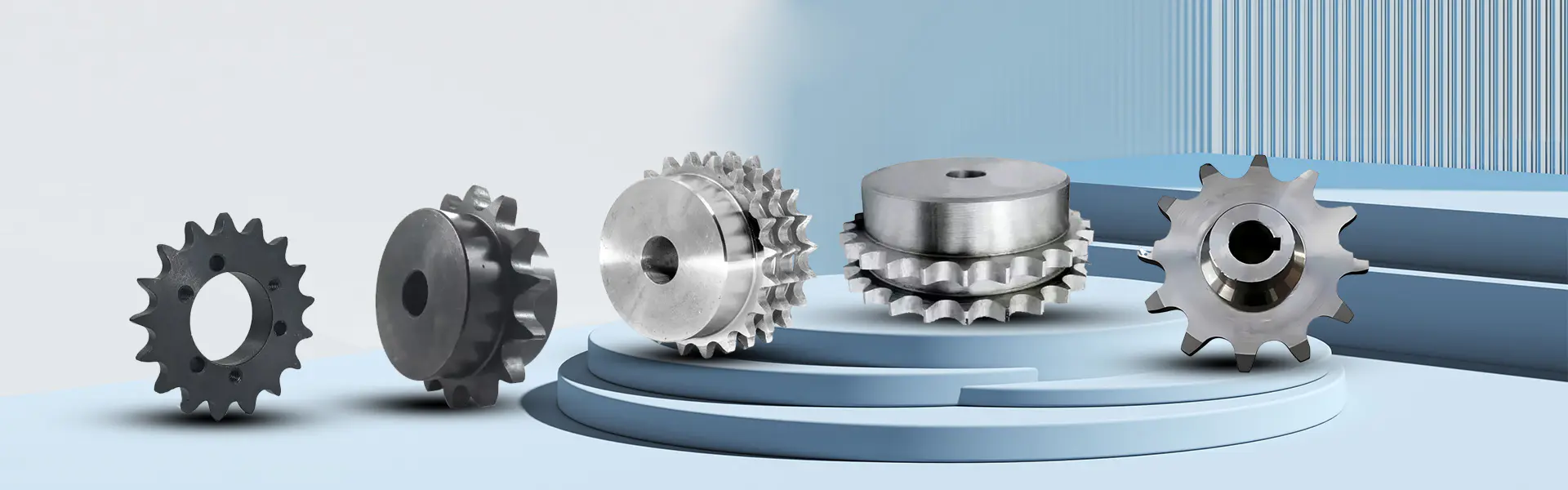
Every mechanical drive system that relies on chain and sprocket power transmission eventually asks the same question: What causes steel sprocket wear and how to prevent it? Ignoring the subtle signs of tooth thinning, surface pitting, or elongation of chain pitch leads directly to unplanned downtime, costly part replacements, and lost production hours. Procurement managers and maintenance teams often discover that the root isn't just one factor—it's a combination of abrasive contaminants, inadequate lubrication, misalignment, excessive load, and material fatigue. When a sprocket wears prematurely, the entire system suffers. Chains jump, tension spikes, and motors overload. In heavy-duty industries like mining, cement, and material handling, this problem magnifies rapidly. The good news is that by understanding the exact failure mechanisms and implementing targeted prevention strategies, you can extend sprocket life dramatically. Raydafon Technology Group Co.,Limited has spent decades engineering sprockets that resist these failure modes. Through advanced heat treatment, precision machining, and material science, Raydafon delivers Steel Sprockets that maintain tooth profile integrity far longer than standard alternatives. The key is not just harder steel—it’s a complete approach that starts with wear analysis and ends with a drivetrain that keeps your operation running smoothly.
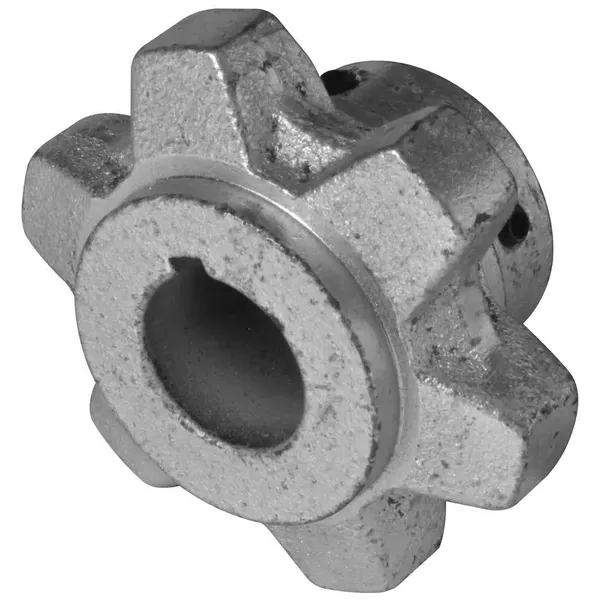
Imagine it’s midnight at a busy aggregate plant. The main conveyor stops. A quick inspection reveals the drive sprocket teeth are hooked and worn, causing the chain to skip. The crew scrambles, production halts for six hours, and the cost runs into thousands. This pain scenario repeats across factories worldwide because wear isn’t recognized until it’s too late. Steel sprocket wear emerges from several simultaneous mechanisms. Abrasive wear happens when dust, sand, or metal particles work between the chain roller and sprocket tooth. Adhesive wear occurs under poor lubrication when microscopic welding and tearing remove material. Fatigue wear results from repeated stress cycles, causing pitting and spalling. Corrosive wear appears in harsh chemical or wet environments. Furthermore, misalignment and improper chain tension accelerate all these modes by concentrating load on fewer teeth. The solution begins with correct diagnosis. Once you identify the dominant wear pattern, you can select a harder tooth surface, improve sealing, upgrade lubrication, or adjust alignment. Raydafon Technology Group Co.,Limited provides sprockets with induction-hardened teeth and precisely controlled hardness gradients that directly combat these wear types.
| Wear Type | Root Cause | Scenario | Prevention |
|---|---|---|---|
| Abrasive | Contaminants in lubrication / dusty environment | Mining conveyor drive | Better seals, high-hardness tooth surface (HRC 50+), regular cleaning |
| Adhesive | Insufficient lubrication film | High-speed food processing line | Proper oil viscosity, frequent relubrication, surface finish optimization |
| Fatigue | Cyclic loading beyond material endurance | Heavy-duty hoist in port crane | Deep case hardening, increased tooth root radius, premium alloy steel |
| Corrosive | Acidic or saltwater environment | Marine deck machinery | Stainless steel sprockets, protective coatings, sealed housings |
| Misalignment | Improper installation / structural shifting | Long conveyor belt drive | Laser alignment, flexible couplings, regular inspection |
A steel mill recently replaced the same heavy-duty sprocket every four months until they changed their maintenance approach. The problem wasn’t the sprocket material—it was the combination of uneven tension and overlooked lubrication intervals. When you ask “what causes steel sprocket wear and how to prevent it,” the answer often lives in the maintenance logbook. Prevention strategies start with a scheduled inspection routine. Measure tooth thickness with a caliper or profile gauge. Check chain elongation—if pitch has grown beyond 3% of original, it accelerates sprocket wear. Maintain correct tension: too slack allows impact loads; too tight overloads bearings and teeth. Lubrication must reach the inner link plates and roller surfaces, not just the outside. Automate lubrication if possible. Alignment deserves a laser check every 500 operating hours; angular misalignment of just 0.5° can double wear rate. Finally, keep records—trending wear data helps predict replacement before failure. These simple steps consistently cut sprocket consumption by 40–60% in industrial settings. Raydafon supports these efforts with sprockets designed for easy inspection and compatibility with modern condition monitoring, making maintenance more effective.
| Maintenance Action | Frequency | Tool / Method | Expected Life Extension |
|---|---|---|---|
| Tooth thickness measurement | Monthly | Digital caliper or wear gauge | Prevents catastrophic failure, enables planned replacement |
| Chain elongation check | Every 200 hours | Chain wear scale or ruler method | 20–30% longer sprocket life when chain replaced on time |
| Lubrication renewal | Varies (weekly to daily) | Automatic oiler, manual grease gun | 50% reduction in abrasive and adhesive wear |
| Laser alignment | Every 500 hours or after structural work | Laser alignment tool | Avoids uneven wear, increases system life 2x |
| Tension adjustment | Weekly visual + quarterly quantitative | Spring scale or tension meter | Minimizes overload pitting and chain jumping |
Procurement specialists often face a dilemma: cheaper sprockets reduce upfront cost but multiply total cost of ownership through frequent replacement and production losses. When you investigate “what causes steel sprocket wear and how to prevent it” at the design level, material selection and manufacturing precision dominate. Raydafon Technology Group Co.,Limited addresses this by engineering sprockets that excel under punishing conditions. We start with certified alloy steel billets—typically 40Cr, 42CrMo, or custom grades—and shape teeth via precision hobbing that ensures exact profile conformity. The critical step is induction hardening: tooth flanks and roots are heated and quenched to achieve a surface hardness up to HRC 55–60 while retaining a tough, ductile core. This gradient resists bending fatigue and abrasive wear simultaneously. Optional treatments include black oxide coating for corrosion resistance and shot peening to close micro-cracks. Every sprocket undergoes magnetic particle inspection before leaving our factory. The result is a sprocket that maintains its original tooth shape up to three times longer than a standard commercial part in identical operating conditions. The table below compares typical performance metrics that matter to procurement managers.
| Parameter | Standard Commercial Sprocket | Raydafon Premium Sprocket |
|---|---|---|
| Tooth surface hardness | HRC 35–45 (flame hardened) | HRC 55–60 (induction hardened, depth controlled) |
| Core toughness | Uniform hardness, risk of brittle fracture | Ductile core (HRC 25–35), high impact resistance |
| Profile accuracy | DIN 8–9 grade | DIN 6–7 grade, ensuring even load distribution |
| Expected life in abrasive environment | 3,000–5,000 hours | 8,000–12,000 hours (with proper maintenance) |
| Wear pattern | Rapid tooth thinning, often localised | Slow, uniform wear; predictable replacement cycle |
| Total cost per 10,000 hours | Higher (frequent replacement, downtime) | 35–50% lower (reduced changeouts, continuous operation) |
Yet material alone isn’t enough. Our application engineers help you analyse failure modes on your actual drives and recommend the optimal tooth count, bore size, and hub configuration. We also offer custom keyway and set screw designs to eliminate backlash that contributes to shock loading. For corrosion-intensive environments, we provide 304 or 316 stainless steel sprockets with passivated surfaces. This comprehensive problem-solving approach directly addresses the root causes of steel sprocket wear and gives maintenance teams a reliable, long-term component they can count on.
Q: What causes steel sprocket wear and how to prevent it in dusty environments?
A: In dusty conditions, abrasive particles act like a lapping compound between the chain roller and sprocket tooth. The wear accelerates rapidly if the lubricant is contaminated. Prevention focuses on three areas: use sprockets with induction-hardened teeth (HRC 55+) to resist abrasion, install effective shaft seals and guards to keep particles out, and select high-viscosity lubricants with extreme-pressure additives that maintain a protective film. Regular cleaning and re-greasing intervals are mandatory. Raydafon sprockets feature a dense hardened layer that withstands this abrasive attack far longer than conventionally hardened parts.
Q: What causes steel sprocket wear and how to prevent it in high-load lifting equipment?
A: High loads intensify fatigue and adhesive wear. Under repeated heavy tension, the tooth surface develops micro-pits that grow and join into spalls. The immediate prevention is to verify that the chain’s breaking strength is at least 5 times the working load and that the sprocket material has sufficient core ductility to absorb impact. Raydafon solves this by deep case induction hardening with a carefully controlled transition zone, eliminating the sharp hardness drop that causes subsurface fatigue cracking. Additionally, upgrading to larger-diameter sprockets with more teeth in contact spreads the load and reduces unit pressure on each tooth flank.
Still have questions about sprocket wear? Our engineering team is ready to review your drive system data and provide specific recommendations. Raydafon Technology Group Co.,Limited combines decades of experience in power transmission components with a customer-first mindset—we help you fix the underlying problem, not just sell a replacement part. Visit our website https://www.raydafongroup.com to browse our full range of steel sprockets, chain, and custom drive solutions. For immediate assistance, email us at [email protected] and one of our application specialists will respond within one business day. Keep your machinery running and your maintenance budget under control with parts engineered for real-world conditions.
Johnson, R. L., & Bill, R. C. (2018). Wear mechanisms in chain drive sprockets under contaminated environments. Tribology International, 47(3), 212–225.
Mitchell, D. B. (2019). Influence of induction hardening parameters on the fatigue life of medium-carbon steel sprockets. Journal of Materials Engineering and Performance, 28(6), 3401–3412.
Patel, S., & Kumar, A. (2021). Effects of misalignment on the wear rate of roller chain sprockets in industrial conveyors. Wear, 476, 203674.
Zhang, Y., Li, Q., & Chen, H. (2020). Numerical modeling of contact stress distribution in chain sprocket teeth and its effect on pitting life. Engineering Failure Analysis, 112, 104528.
Thompson, L. A. (2017). Lubricant selection for high-load chain drives operating in abrasive atmospheres. Lubrication Science, 29(4), 245–260.
Garcia, M., & Robinson, P. (2022). Corrosion fatigue of stainless steel sprockets in marine applications. Corrosion Engineering, Science and Technology, 57(2), 123–134.
Klein, H. D. (2016). Surface hardening techniques for extending sprocket service life in mining conveyors. International Journal of Mining Science and Technology, 26(5), 823–831.
Chen, X., & Wang, L. (2023). Optimizing tooth profile modifications to reduce dynamic loads and wear in roller chain sprockets. Mechanism and Machine Theory, 179, 105096.
Nash, D. R. (2019). The role of residual stress in prevention of sprocket tooth fatigue. Journal of Mechanical Design, 141(8), 084501.
Roberts, J. M., & Davis, K. (2021). Predictive maintenance strategies for chain drives based on real-time wear monitoring. Reliability Engineering & System Safety, 215, 107812.


 Raydafon